


Gold Amethyst Pendant Necklace
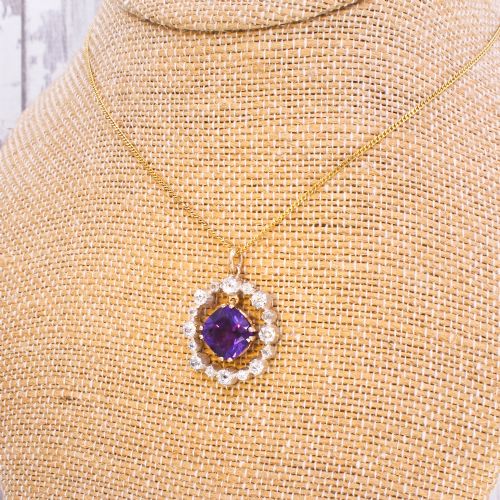
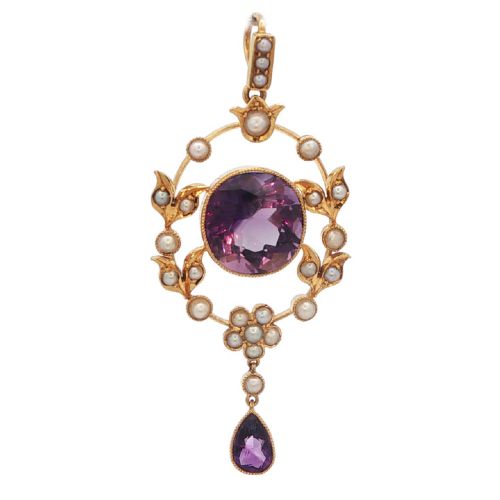
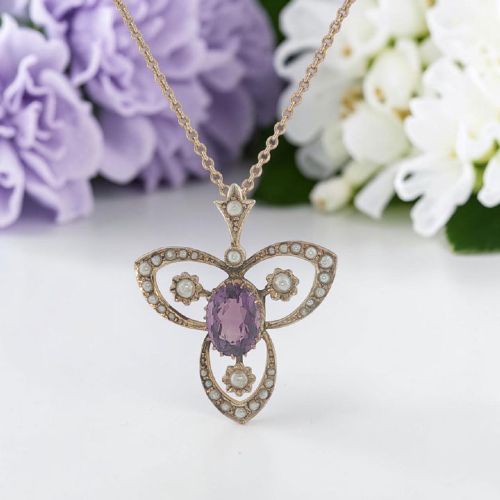
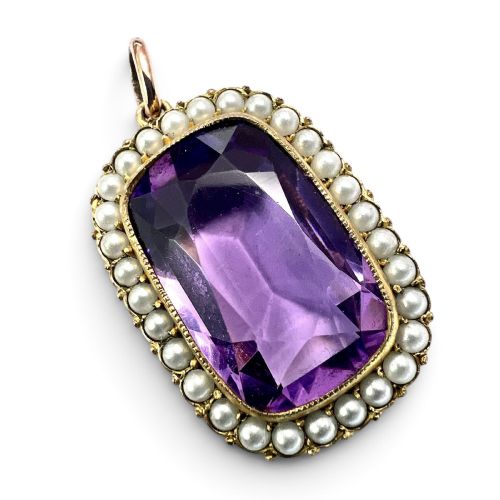
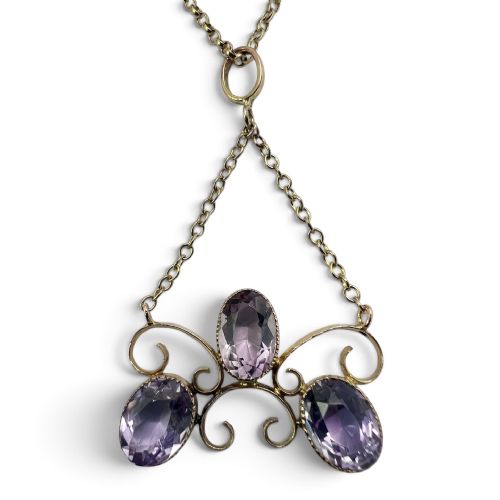
A gold amethyst pendant necklace brings together rich purple quartz and warm precious metal in designs spanning the Victorian and Edwardian eras.
Gold Amethyst Pendant Necklace
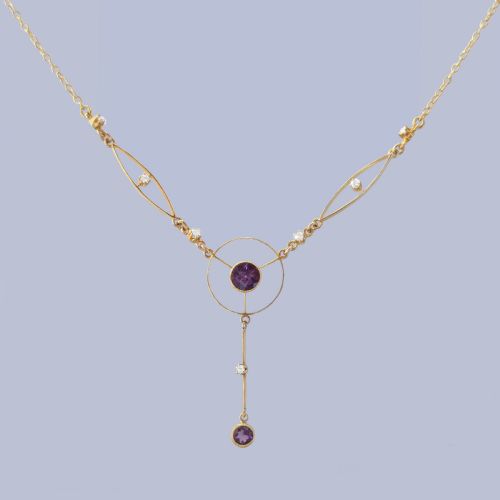
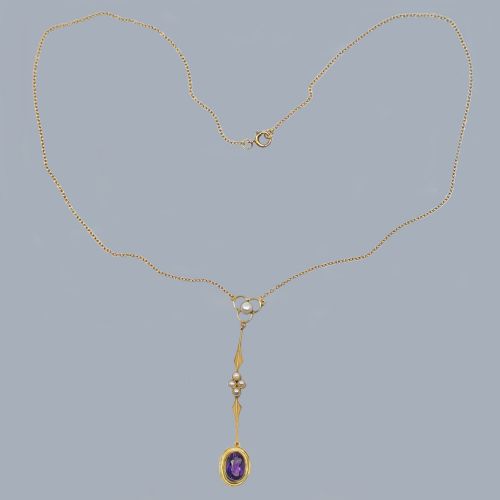
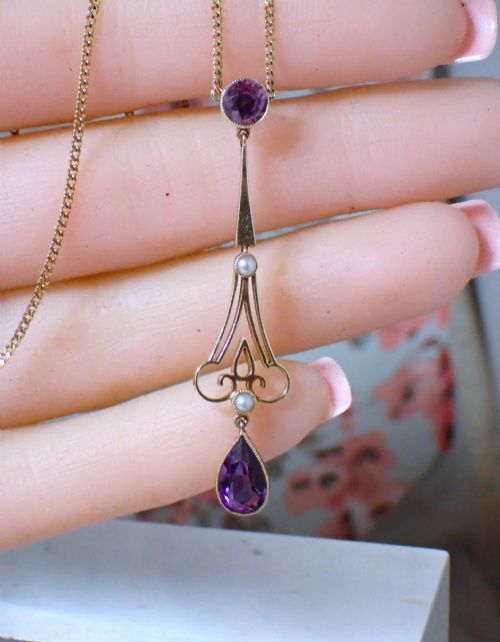
A gold amethyst pendant necklace is a wearable piece of historic jewellery, most frequently encountered in delicate Edwardian lavaliere formats and flowing Art Nouveau organic drops.
The selections span the Victorian, Edwardian, and later twentieth-century periods, capturing shifts from rigid geometric clusters to fluid floral motifs.
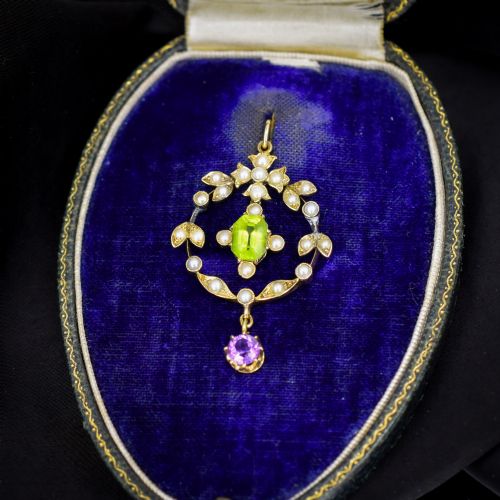
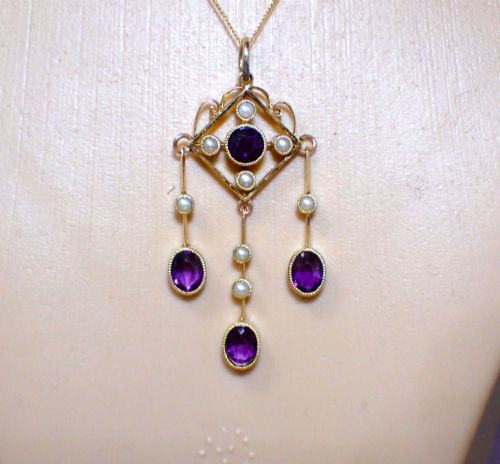
Makers paired deep purple quartz with smaller accent gems, creating pendants designed to sit centrally on fine chains or integrated neck wires.
How they were made
Goldsmiths utilised nine-carat, fifteen-carat, and eighteen-carat yellow gold, shaping metal through casting, wire-work, and hollow stampings to form elaborate frames.
Amethysts were cut into oval, pear, and round facets to maximise light reflection, occasionally accompanied by old-cut diamonds or foil-backed pastes.
Seed pearls were threaded on fine silk or pinned with tiny pegs, clustered closely around central stones to mimic natural flower buds and foliage.
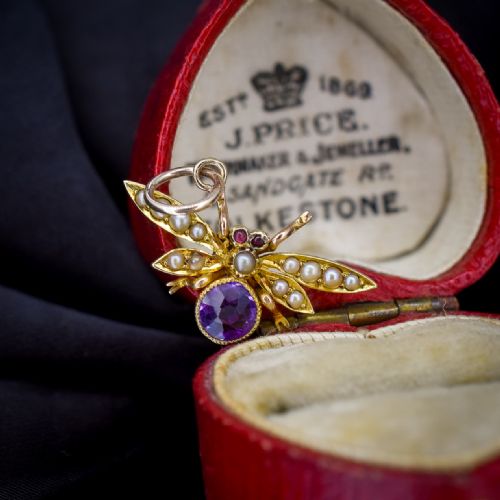
Certain Edwardian pieces hide tiny flying insect motifs tucked discreetly among floral amethyst clusters.
What varies in quality
Superior examples demonstrate meticulous stone matching, where every seed pearl matches in lustre and size while the central amethyst displays a saturated, even violet hue.
Artisanal execution separates standard commercial output from exceptional work, visible in the precision of pierced gold scrollwork and secure prong settings.
Pendants retaining their original fitted presentation boxes or matching original gold chains command greater historical completeness.
S. Blanckensee & Son·Hamilton & Co
The Gold Amethyst Pendant Necklace Glossary
- Lavaliere
- A pendant design featuring a central suspended drop, popular during the Edwardian period. These pieces often swing freely from delicate articulated links.
- Seed pearl
- A very small, natural or saltwater pearl used extensively in Victorian and Edwardian clusters. They provide a soft contrast to faceted purple quartz.
- Art Nouveau
- A design style spanning roughly 1890 to 1910, characterised by asymmetrical whiplash lines and botanical motifs. Pendants from this period often incorporate enamel or plique-à-jour.
- Old-cut diamond
- A hand-faceted diamond shape common in antique jewellery before modern machine cutting developed. These stones possess smaller tables and deeper pavilions.
- Negligé necklace
- A style featuring two asymmetrical drops suspended from a central motif. This Edwardian design creates a slender line down the wearer's chest.
Gold Amethyst Pendant Necklace: Frequently Asked Questions
How do I date my pendant?
Dating relies on stylistic clues, gold hallmarks, and construction methods. Edwardian pieces often display delicate millegrain edges and fluid botanical forms, whereas Victorian examples tend to be heavier and more geometric.
Examining the reverse of the setting and the clasp type also provides reliable evidence of the manufacturing decade.
Are seed pearls fragile?
Seed pearls require careful handling because historic pearls are secured on original silk threads that weaken over decades. Avoid submerging pearl-set jewellery in water or chemical ultrasonic cleaners.
Store the necklace flat in a lined box to prevent tension on the delicate pendant mountings and chains.
What is a lavaliere necklace?
A lavaliere is a drop pendant style where one or more stones dangle below the main body. This configuration became extremely fashionable during the early twentieth century.
The swinging components allow the gems to catch the light from multiple angles during wear.
How should I clean antique gold?
Cleaning antique gold and amethysts requires only a soft microfibre cloth to remove surface oils. Harsh chemical dips strip the natural patina and can damage organic seed pearls.
Professional jewellers should inspect older prong settings periodically to ensure the stones remain secure.