
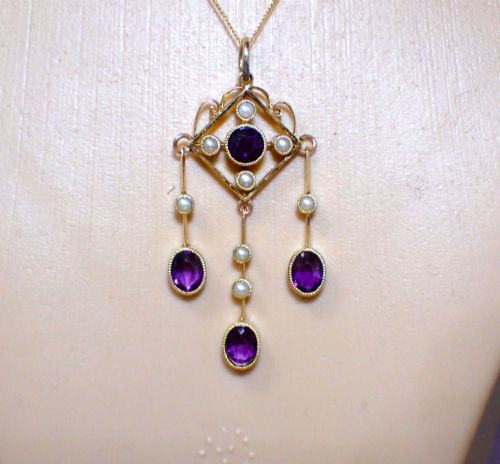


Purple Stone Pendant Necklace
These purple stone pendant necklace examples range from Victorian gold lavalier pieces to Edwardian silver designs, offering deep amethyst colour and period craftsmanship.
Purple Stone Pendant Necklace
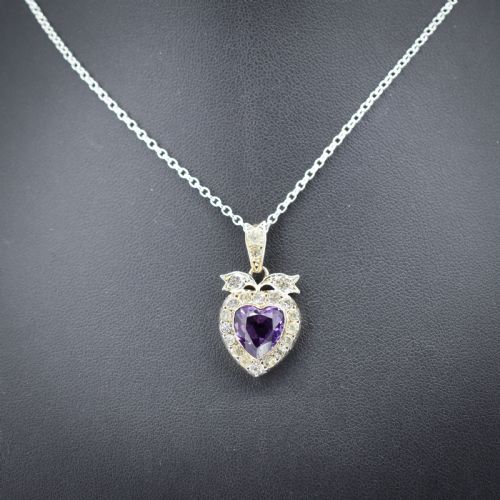
A purple stone pendant necklace brings together historical gold or silver work with central amethyst gemstones, often accented by seed pearls and old cut diamonds. When you search for a purple stone pendant necklace, you encounter designs spanning from the early Victorian era through to mid-century styles.
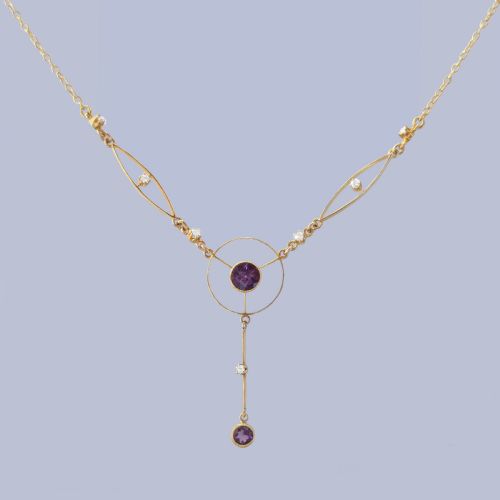
The most common examples on this page are Edwardian and Victorian pieces featuring amethyst set in nine carat gold or silver. These items range from delicate lavalier necklaces to substantial cluster pendants and foliate designs.
How they were made
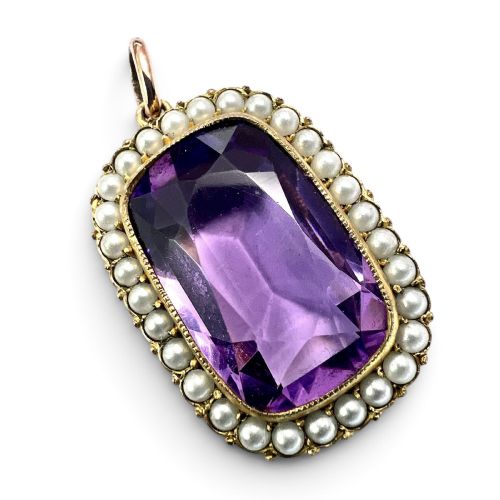
Goldsmiths utilised nine carat, fifteen carat, and eighteen carat yellow gold alongside silver to mount the purple stones. Many Edwardian and Victorian examples incorporate seed pearls and diamonds set around the central amethyst.
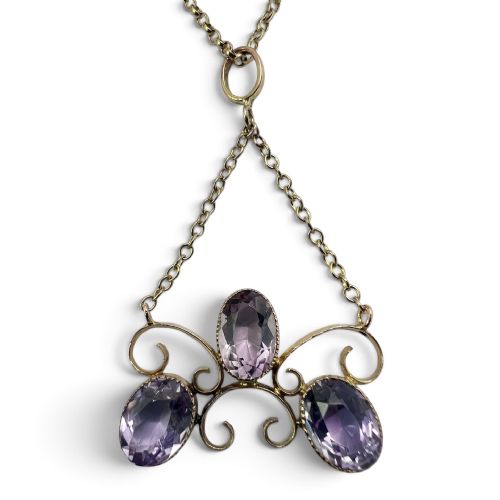
Techniques include cluster settings, lavalier drops, and intricate wirework typical of the Art Nouveau and Arts and Crafts movements. Paste stones also appear as alternatives to natural amethyst in period pieces.
Listings feature amethysts mounted in gold and silver across Victorian, Edwardian, Arts and Crafts, and mid-century twentieth-century periods.
What varies in quality
The choice of metal purity creates a distinction between standard nine carat gold mounts and heavier fifteen or eighteen carat gold settings. Stone size and clarity, from modest pastes to large multi-carat natural amethysts, also define the grade of the piece.
The complexity of the surrounding work, such as integrated seed pearl halos and hand-cut diamond accents, separates standard production items from finer jeweller-made pieces of the Edwardian and Victorian periods.
S. Blanckensee & Son
The Purple Stone Pendant Necklace Glossary
- Amethyst
- A purple variety of quartz utilised extensively in Victorian and Edwardian pendant necklaces. Its violet hue deepens in higher quality specimens.
- Lavalier
- A pendant necklace featuring a central drop stone suspended below the main chain line. This style gained popularity during the Edwardian period.
- Seed Pearl
- Tiny natural or cultured pearls used as delicate accents around central gemstones. They appear frequently in Edwardian and Art Nouveau cluster designs.
- Paste
- Hand-cut glass utilised as a gemstone substitute in period jewellery. It provides the visual depth of amethyst with alternative material composition.
- Foliate
- A decorative style incorporating leaf and plant motifs into the metalwork of the pendant. This design approach characterises many Arts and Crafts and Art Nouveau pieces.
Purple Stone Pendant Necklace: Frequently Asked Questions
How do I date a purple stone pendant necklace?
Dating relies on material hallmarks, the style of the gold or silver mount, and accompanying stones like seed pearls. Edwardian pieces often show lighter wirework, while Victorian items typically feature heavier bezels.
Examining the chain type and clasp mechanism alongside the cut of the amethyst helps place the necklace within the nineteenth or twentieth century.
What metals are common in these necklaces?
Yellow gold in nine carat, fifteen carat, and eighteen carat weights appears frequently alongside silver and white gold. These metals reflect the prevailing preferences of the Victorian, Edwardian, and later twentieth-century makers.
Silver is particularly common in Arts and Crafts and paste-set pieces from the early nineteen hundreds.
Are all the purple stones natural amethyst?
While natural amethyst forms the primary purple stone in these necklaces, some period examples utilise amethyst paste. Paste provides a durable alternative that mimics the appearance of mined quartz.
Listings specify the exact material makeup where known, distinguishing between genuine quartz and glass-based alternatives.
How were lavalier necklaces worn?
Lavalier pendant necklaces were designed to sit lower on the chest, often featuring a central drop that moved independently. Edwardian women wore them as daytime or evening dress accessories.
The elongated drop design suits higher necklines and works well with period garments.