


Glazed Stoneware Pitcher
A glazed stoneware pitcher brings robust utility and distinctive historic texture to a table, combining durable ceramic bodies with rich surface decoration.
Glazed Stoneware Pitcher
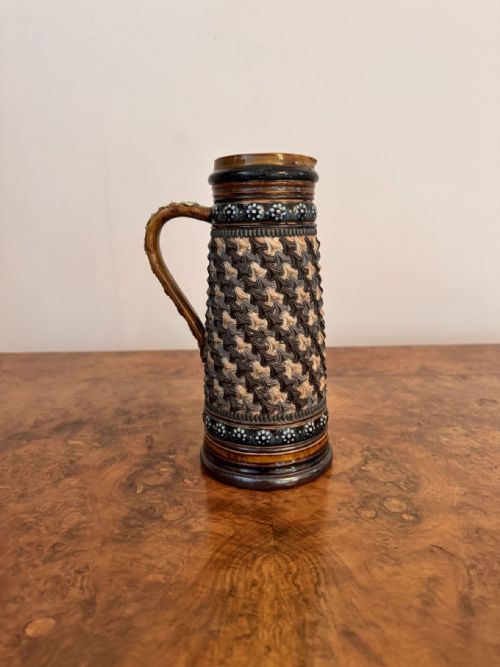
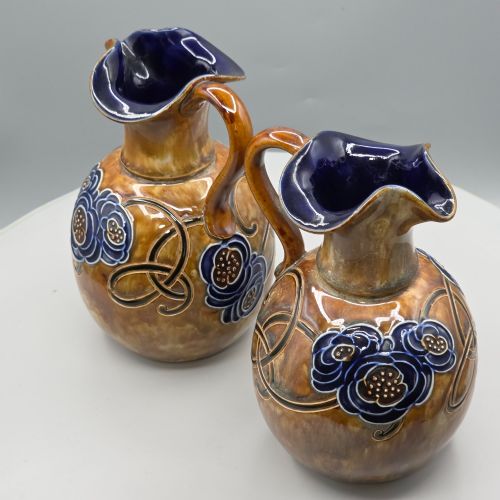
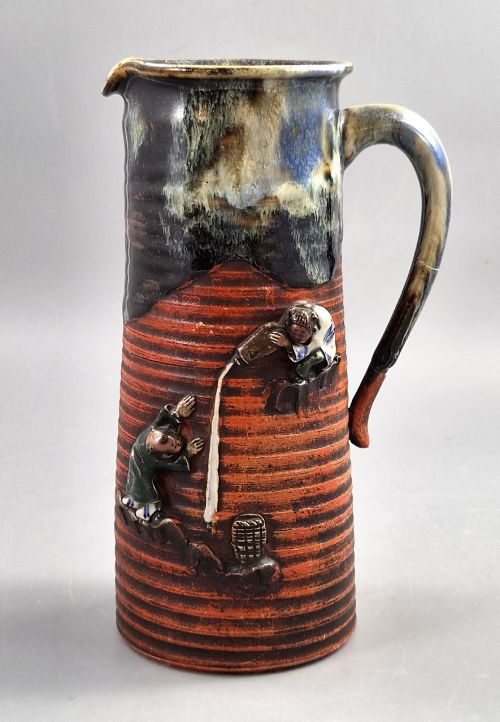
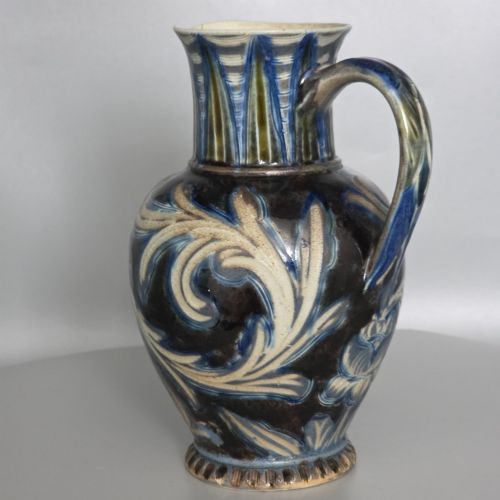
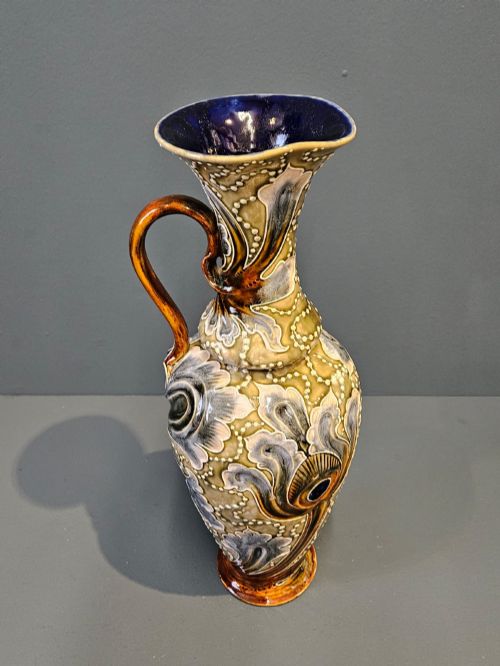
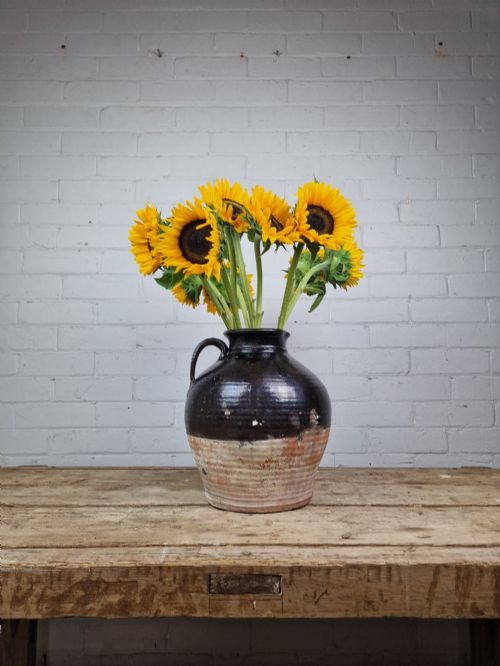
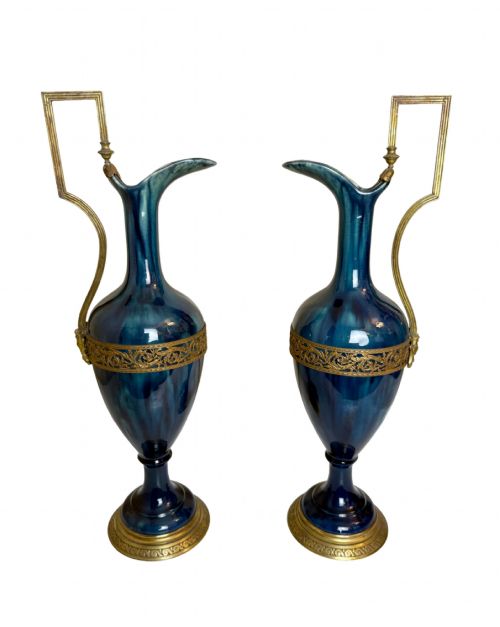
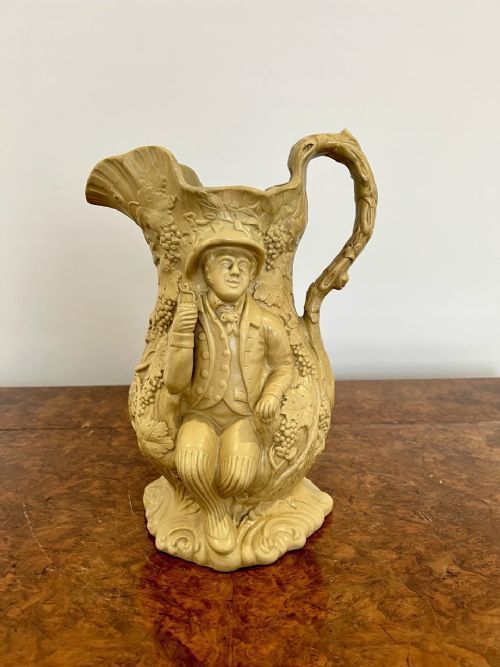
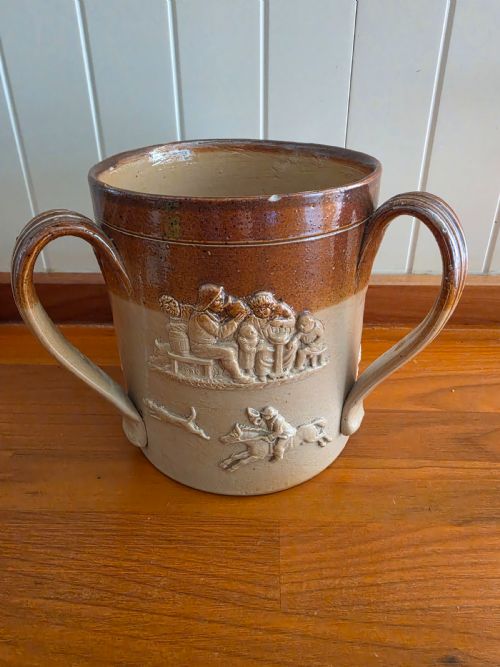
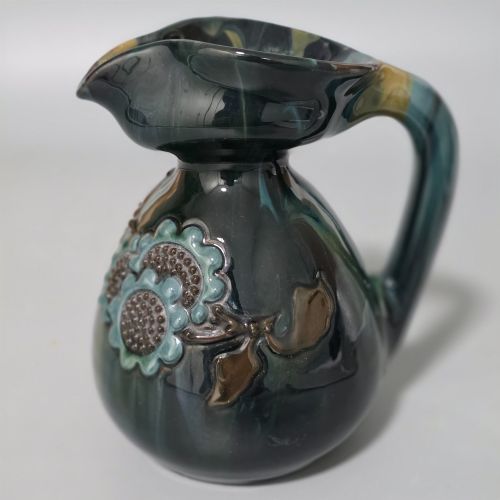
A glazed stoneware pitcher is a sturdy vessel designed for holding liquids, appearing across these listings in forms ranging from tall Victorian tavern jugs to German salt-glazed containers. These objects bridge the gap between functional kitchenware and decorative art pottery, often featuring robust handles and capacious bellies suited for pouring ale, water or cider.
The pieces you encounter most frequently on this page date from the nineteenth century, particularly the Victorian era, alongside earlier seventeenth and eighteenth-century German imports. Many bear the marks of prominent English potteries like Doulton Lambeth, displaying characteristic salt glazes, incised foliage, or applied reliefs in blue and brown tones.
Materials and production techniques
Makers shaped these vessels from dense clay bodies fired at high temperatures, rendering the material vitrified and naturally impervious to liquids even before the application of a glaze. Common methods included throwing on a potter's wheel followed by hand-incising, mould-pressing, or sprigging decorative motifs directly onto the leather-hard surface.
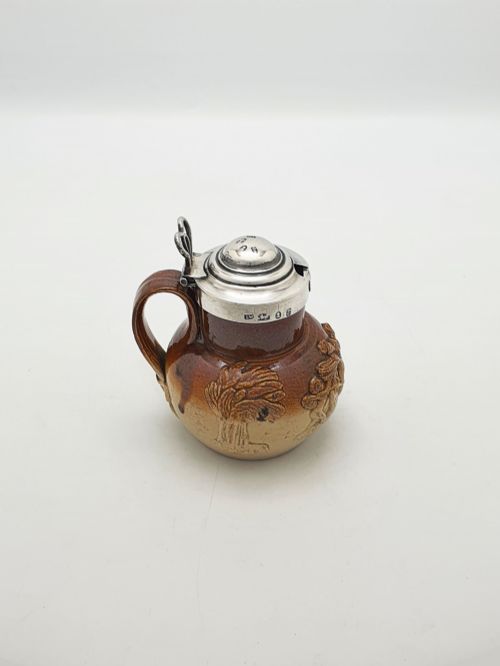
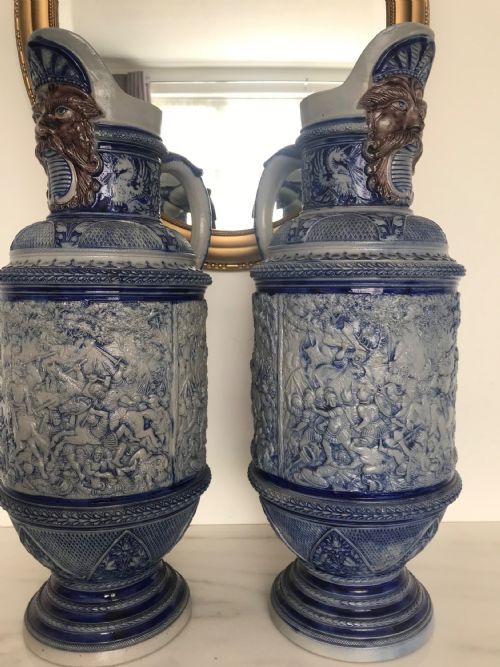
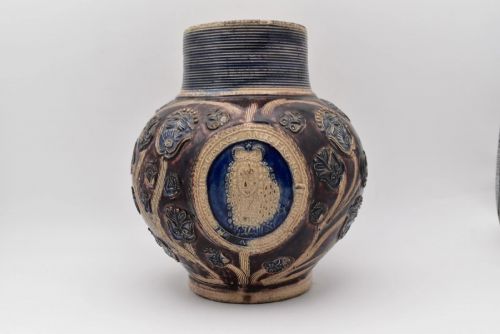
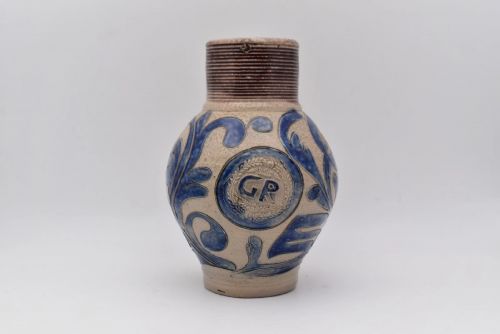
Surface finishes relied heavily on salt-glazing, where salt thrown into the kiln during firing reacted with the silica in the clay to produce an orange-peel texture. Artisans also utilised cobalt blue pigments to highlight stamped portraits, heraldic ciphers, and battle scenes, whilst others applied rich metallic rims of silver or pewter to reinforce the lips.
Listings feature stoneware bodies spanning from the seventeenth century through the Victorian period, utilising salt glazes, terracotta, and applied cobalt pigments.
Judging quality and execution
Quality in a glazed stoneware pitcher rests on the crispness of the moulded or incised details and the uniformity of the kiln firing. Superior pieces exhibit sharp, deeply carved patterns and well-defined cobalt coloration without muddy bleeding into the surrounding clay.
The presence of precious metal mounts, such as sterling silver collars and hinged lids, typically denotes a higher-status commission intended for parlour use rather than tavern service. Furthermore, signed studio pieces or named makers elevate the standing of a vessel far above standard commercial production.
Doulton Lambeth·Royal Doulton·Simon Peter Gerz·Sir Edmund Elton
The Glazed Stoneware Pitcher Glossary
- Salt-glaze
- A type of ceramic finish produced by throwing common salt into the kiln during the high-temperature firing phase, creating a distinctive textured surface resembling orange peel.
- Sprigged
- A decorative technique where moulded clay reliefs are applied to the surface of a vessel using slip as an adhesive before firing.
- Tyg
- A large drinking vessel featuring three or more handles designed to be passed around a company of drinkers.
- Puzzle jug
- An interactive drinking vessel with a perforated neck and multiple spouts that requires the drinker to solve a riddle or cover secret holes to consume the liquid without spilling.
- Incised
- A decorative method involving lines and patterns carved directly into the soft clay body prior to glazing and firing.
Glazed Stoneware Pitcher: Frequently Asked Questions
What were glazed stoneware pitchers used for?
These pitchers served primarily for storing, carrying, and pouring liquids such as ale, beer, water, and cider in domestic households and taverns.
Their dense, non-porous ceramic construction kept contents cool and secure, whilst larger examples often functioned as flagons for communal table service.
How do I care for an antique stoneware pitcher?
Display your pitcher away from direct heat sources and dramatic temperature fluctuations to protect the ceramic body and any attached metal mounts.
Wash the piece gently by hand using lukewarm water when necessary, avoiding harsh detergents or abrasive scourers that might damage historic surfaces.
How can I tell the age of a stoneware pitcher?
Dating relies on examining stylistic indicators, manufacturing techniques, maker's marks, and the specific composition of the salt glaze or body clay.
Early examples often feature Westerwald blue-and-grey Westerwald designs with royal ciphers, whereas Victorian pieces frequently display Doulton Lambeth stamps and Art Nouveau or Arts and Crafts motifs.
Are these pitchers waterproof?
Stoneware is naturally vitrified during high-temperature firing, meaning the dense clay body itself is largely non-porous and capable of holding liquids safely.
Historic pieces with metal collars or historical repairs, however, are best enjoyed as decorative objects rather than active tableware.