
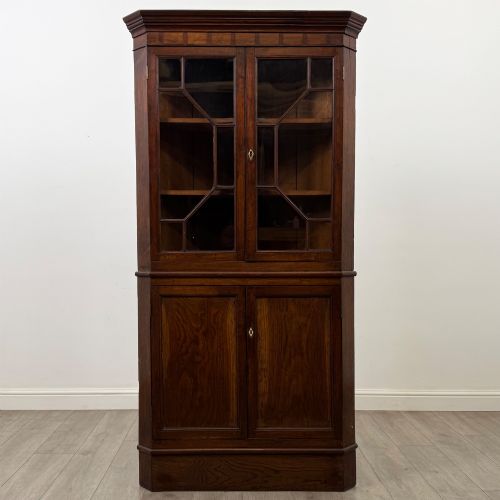
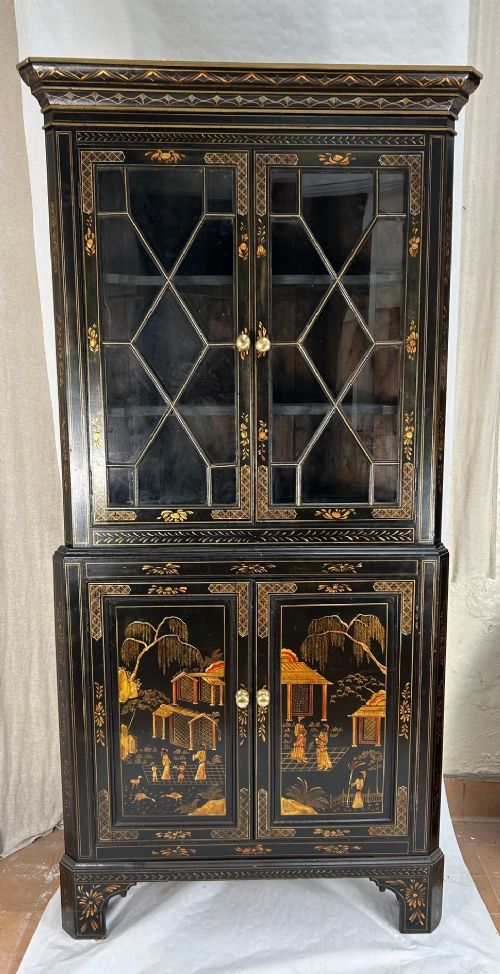
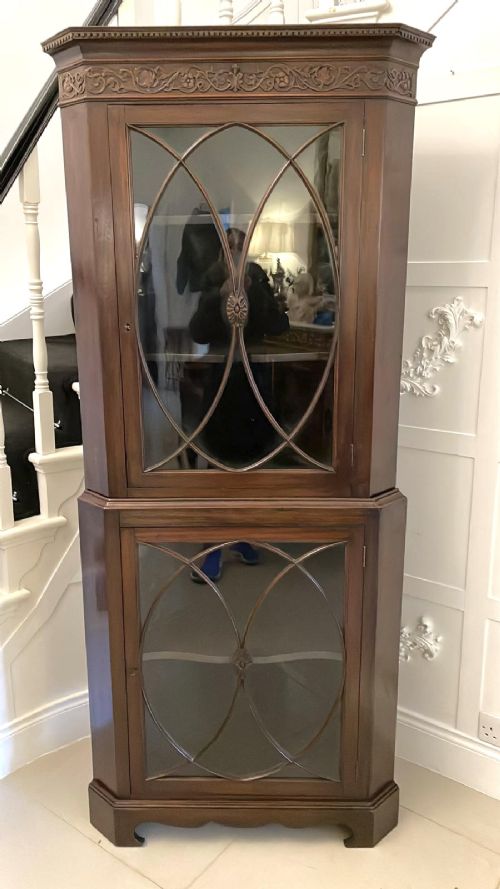
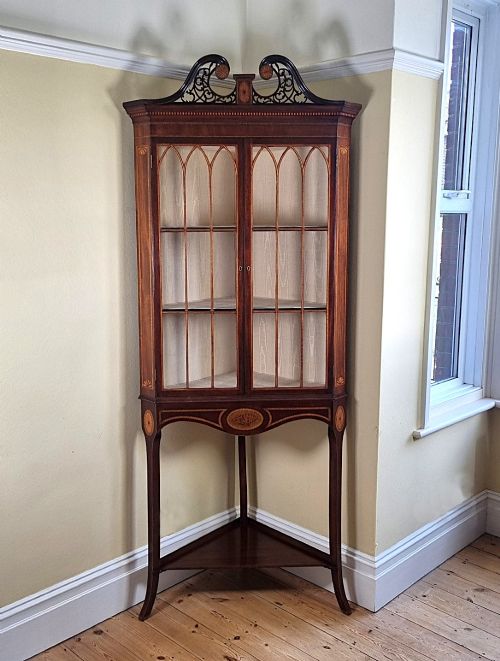
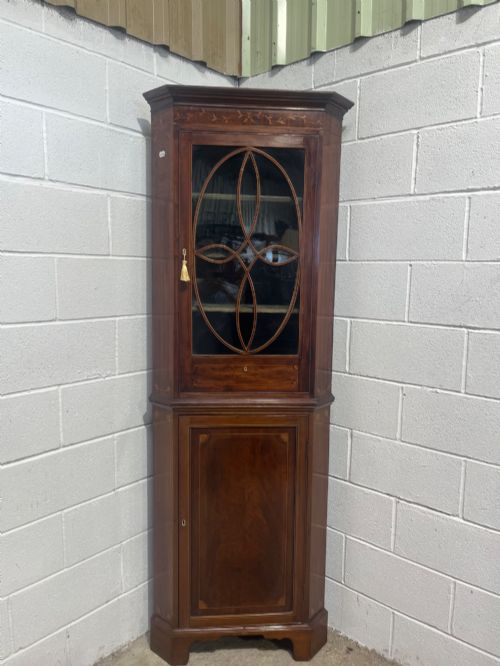
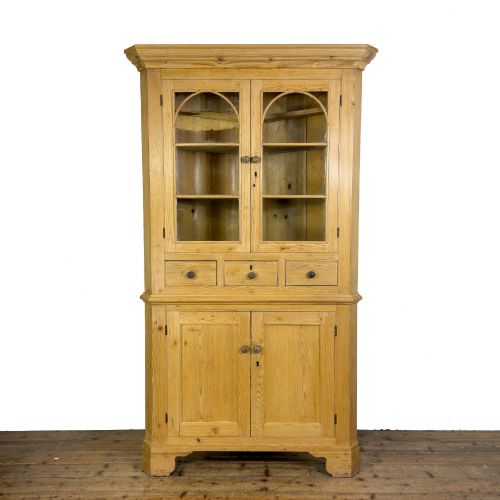
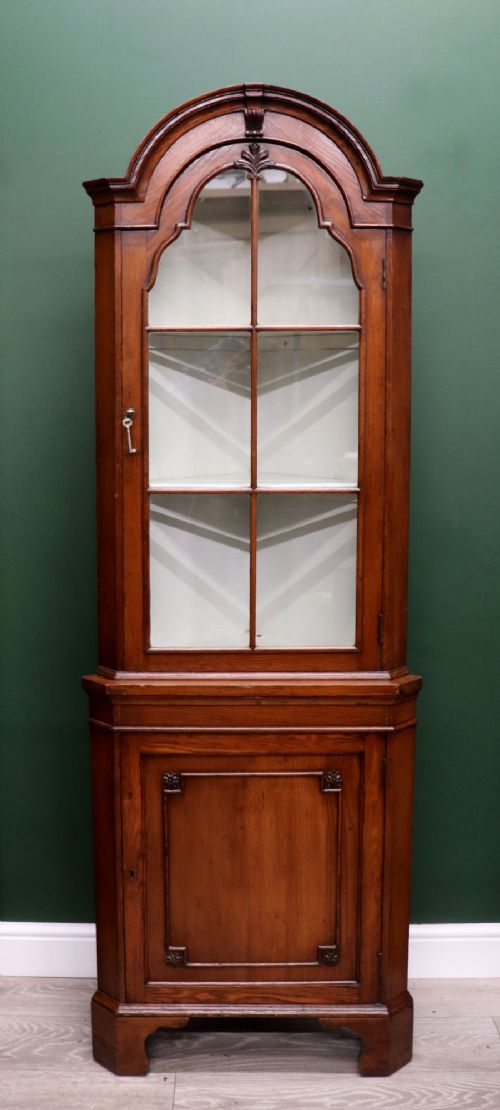
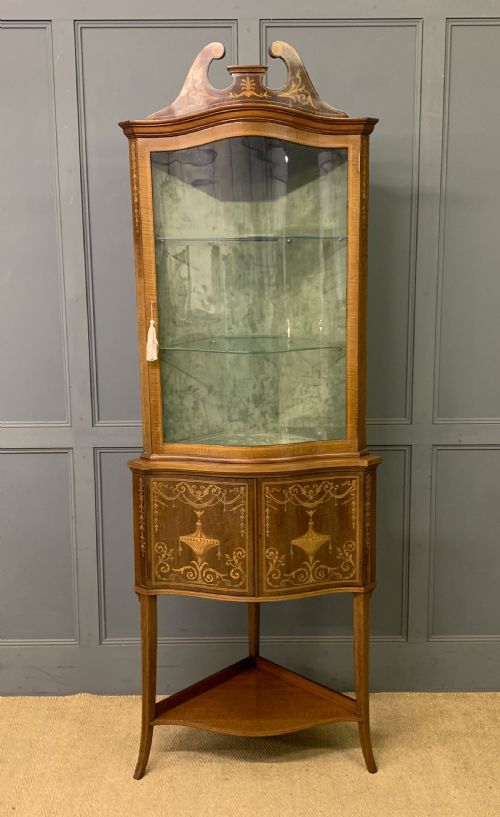


Glazed Standing Corner Cupboard
A glazed standing corner cupboard takes a neglected room angle and turns it into a display space for china or books.
Glazed Standing Corner Cupboard
A glazed standing corner cupboard turns unused angles into architectural display space. You will find these pieces spanning the Georgian, Victorian and Edwardian periods.
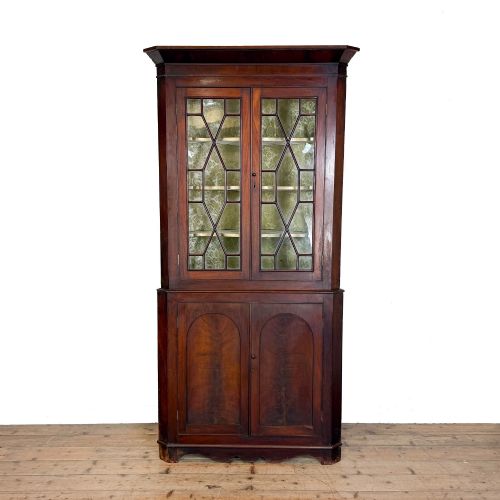
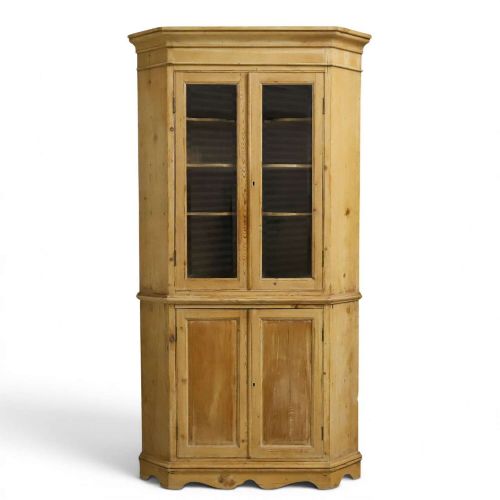
The form appears as single-section units or taller two-part cupboards with glazed upper doors and enclosed lower sections. Oak and mahogany dominate the offerings, often fitted with astragal glass bars.
How they were made
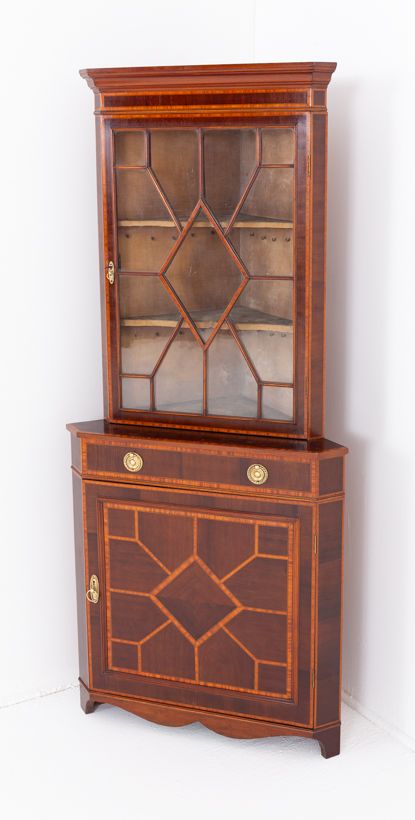
Cabinet makers utilised solid timbers alongside veneered surfaces, pairing mahogany or oak with contrasting satinwood inlay. Glass was glazed into frames using timber astragal bars to form geometric window patterns.
Many examples employ a two-part construction, stacking a glazed display section upon a matching cupboard base. Brass hardware secures the doors, while internal wooden shelving holds the intended display items.
A key is usually included, because hiding a dusty shelf behind glass only works if you can lock the door on your clutter.
What varies in quality
Quality rests in the precision of the cabinet work and the selection of timber grains. Finer examples display delicate marquetry, well-figured mahogany or walnut, and finely proportioned glass astragals.
The distinction between standard utility pieces and finer workshop output shows in the handling of internal shelving, cornices, and the overall balance of the two-part proportions.
Edwards And Roberts
The Glazed Standing Corner Cupboard Glossary
- Astragal glazed
- Glass secured within a timber framework of narrow moulding bars. These divide the window into smaller panes.
- Two-part form
- A cabinet built in two separate sections placed one upon the other. This aids in transport and placement.
- Serpentine
- A front profile shaped with a central convex curve flanked by concave sweeps. It requires skilled woodworking.
- Marquetry
- Decorative patterns formed by fitting together small pieces of wood veneer. These are set into the primary timber surface.
- Bracket feet
- Small supporting feet shaped like architectural brackets. They lift the cabinet base off the floor.
Glazed Standing Corner Cupboard: Frequently Asked Questions
What is a glazed standing corner cupboard?
A tall cabinet designed to fit directly into a room corner without wall mounting. It provides enclosed storage below and glazed display space above.
Most examples stand on the floor as a single unit or in a two-part stacked formation.
How were these cupboards used?
These pieces served to store and display valuable china, glassware or books while protecting them from dust. The upper glazed doors kept items visible yet secure.
The lower cupboard section held bulkier items out of sight.
How do I date an Edwardian piece?
Edwardian cupboards often feature Sheraton Revival influences, including lighter mahogany timbers and detailed satinwood inlay. They date from around the turn of the twentieth century.
Construction methods and cleaner interior surfaces help distinguish them from earlier Georgian originals.
Are these cupboards heavy?
Floor-standing corner cabinets possess substantial weight due to solid timber construction and glass panels. Two-part models divide into two sections for easier moving.
Their triangular footprint anchors them firmly into room angles.