



Glazed Pottery Spill Vase
These glazed pottery spill vase examples are classic Staffordshire figures designed to hold matches, bringing colour and character to a Victorian mantelpiece.

Glazed Pottery Spill Vase
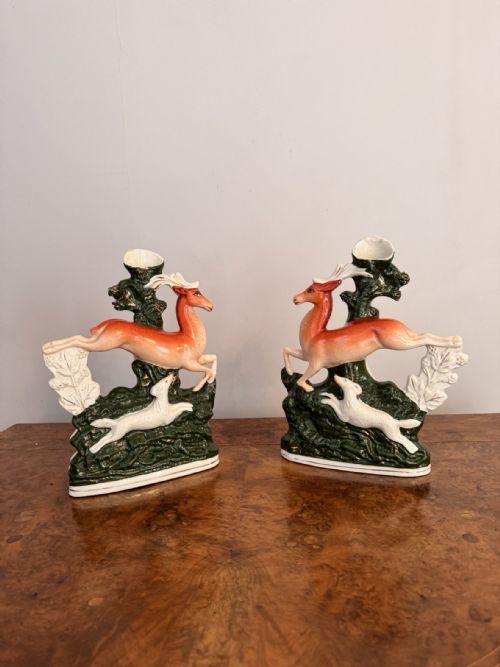
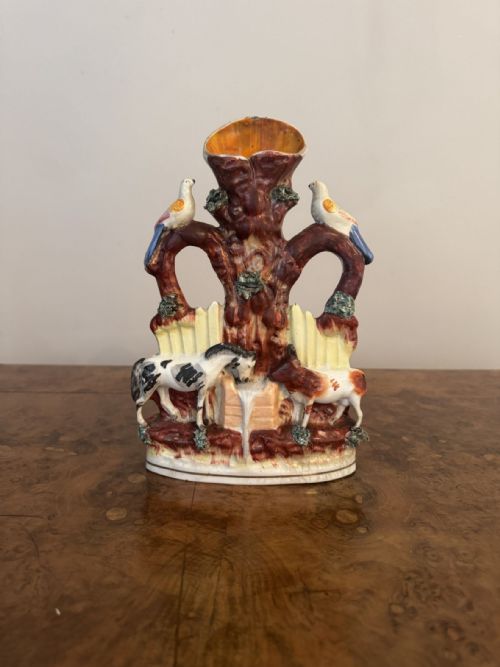
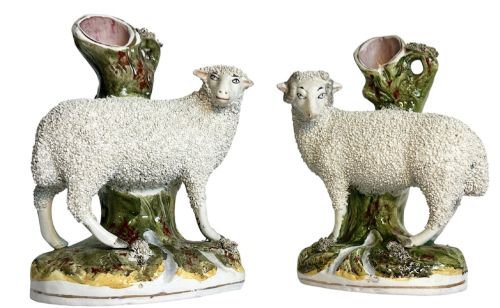
When you search for a glazed pottery spill vase, you are looking at Staffordshire figures and pottery forms that combine ornamental modelling with a practical hollow tube for holding tapers or matches near the fireplace. The pieces on this page span the Regency period through to the late Victorian era, featuring sculptural animals, pairs of sheep or deer, and human figures alongside castles and turret designs.
You are most likely to meet Victorian Staffordshire figures, often modelled as pairs of sheep or deer flanked by spill holders, or architectural flatbacks such as castles and bridges. These objects reflect the domestic tastes of the nineteenth century, rendered in earthenware and finished with lead glazes or pearlware glazes that give them a distinctive glossy surface.
How they were made
The construction typically involves a hollow ceramic body formed in moulds, featuring a flat back designed to sit neatly against a wall. The attached spill vase tube is integrated directly into the modelling, serving as a functional holder while maintaining the symmetry of the paired animal and human compositions.
Glazed Pottery Spill Vase Retail Price Guide 2026
Typical asking prices for glazed pottery spill vase among the pieces listed under this phrase on Sellingantiques today, from the lower quarter to the upper quarter. They describe what is for sale here now, not the wider market.
Listings feature earthenware bodies finished with lead glaze and pearlware glaze across the Victorian and Regency periods.
What varies in quality
The presence of distinct architectural or narrative elements, such as Walton-marked pieces or intricate bridge and castle backdrops, distinguishes the more ambitious productions from standard domestic shelf ornaments.
The Glazed Pottery Spill Vase Glossary
- Spill vase
- A hollow ceramic tube designed to hold thin wooden tapers for lighting candles or fires. These vessels are frequently incorporated into the backs of Staffordshire animal and human figures.
- Pearlware glaze
- A refined earthenware glaze developed in the late eighteenth and early nineteenth centuries. It contains a small amount of cobalt to counteract the natural yellowish tint of the lead glaze, resulting in a pale, bluish-white appearance.
- Flatback
- A style of Staffordshire figure where the rear of the piece is unglazed and flattened. This allowed the object to stand flush against a mantelpiece or wall.
- Earthenware
- A porous ceramic body fired at lower temperatures than stoneware or porcelain. It requires a glaze to render it waterproof and forms the structural base for the majority of these figures.
Glazed Pottery Spill Vase: Frequently Asked Questions
What is a glazed pottery spill vase used for?
These vessels were placed on mantelpieces to hold wooden spills or wax tapers. Before the widespread availability of safety matches, people used these tapers to transfer a flame from the fireplace to candles and oil lamps.
The hollow tube integrated into the figure kept the tapers upright and close at hand. This practical function was combined with decorative animal and human modelling to suit nineteenth-century domestic interiors.
How do I date a Staffordshire spill vase?
Dating relies on observing the stylistic characteristics, clay body, and glaze types present on the piece. Regency examples often feature pearlware glazes and specific maker attributes, while Victorian pieces tend to use heavier earthenware and distinct flatback construction.
Changes in modelling styles and the complexity of the enamel colours also assist in placing a piece within the nineteenth century. Comparing the potting technique and glaze pooling helps confirm the period of production.
Are these spill vases usually found in pairs?
Many nineteenth-century Staffordshire figures and spill vases were produced as matching pairs for mantelpiece display. Pairs of deer or sheep are particularly common, designed to sit symmetrically on either side of a fireplace.
Single figures and architectural subjects like castles or bridge spill vases also exist. The survival of a matched pair adds visual balance to a collection.
How should I clean my antique ceramic figure?
Cleaning requires gentle dusting with a soft, dry brush to prevent the accumulation of dirt in the crevices of the glaze. Avoid submerging antique earthenware in water, as moisture can penetrate through any microscopic crazing in the glaze.
Harsh cleaning agents and chemical solvents must be avoided entirely to protect the delicate enamel colours and gold leaf highlights. Careful handling preserves the original surface finish of the ceramic.