



Antique English Ceramic Spill Vase
An antique English ceramic spill vase holds tapers for lighting fires, bringing colourful Victorian figures and Regency porcelain to any mantelpiece.

Antique English Ceramic Spill Vase
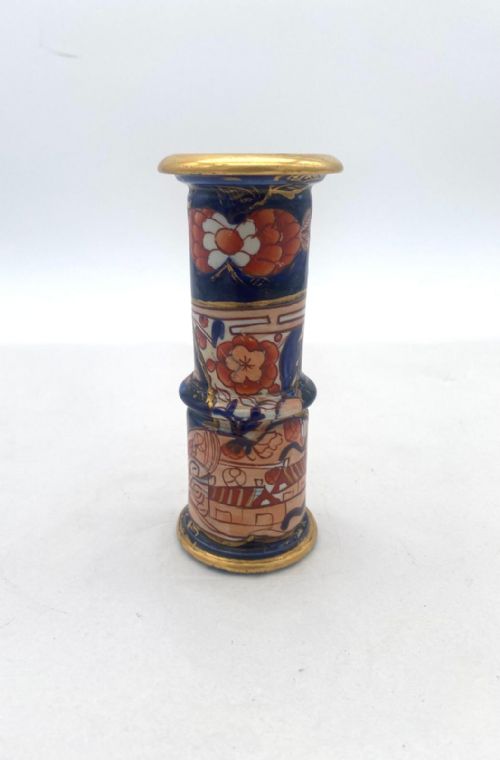
An antique English ceramic spill vase takes many shapes, from figurative groups to classical vessels used to hold matches or paper tapers near the hearth. The pieces on this page span the Georgian, Victorian, and Edwardian eras, reaching into the early twentieth century.
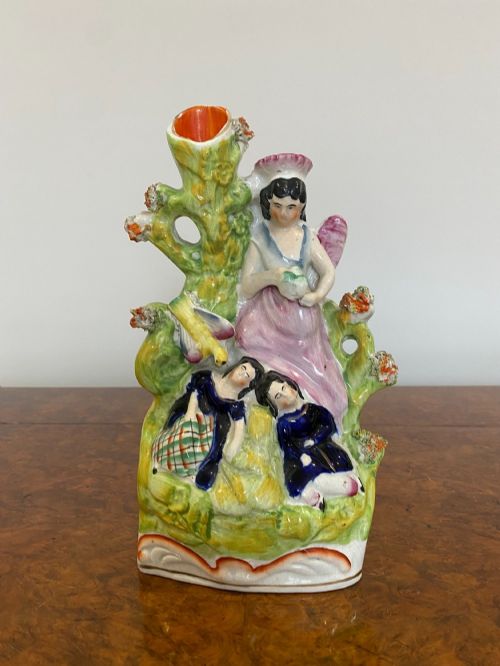
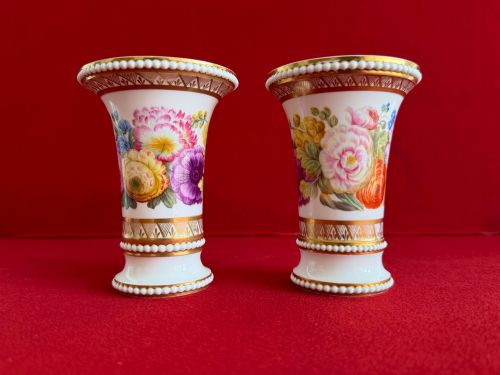
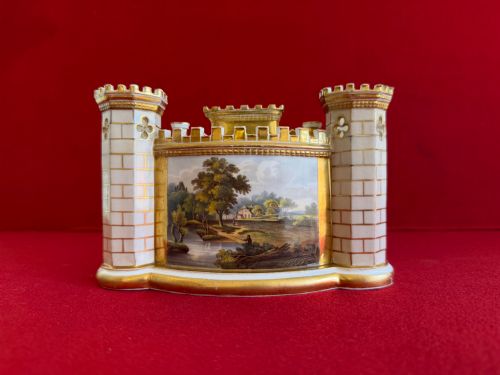
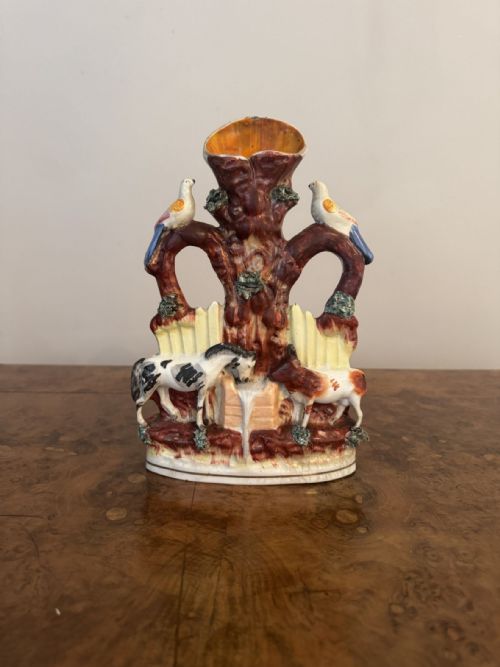
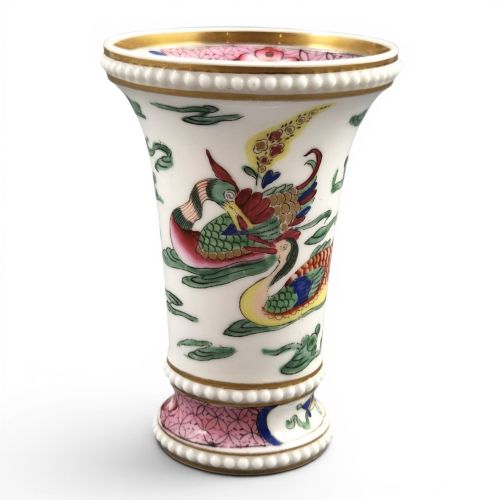
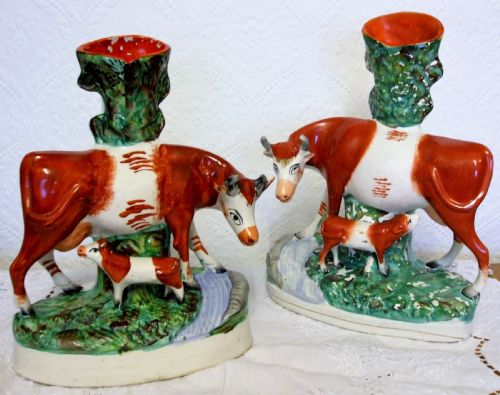
Staffordshire pottery dominates the selection, frequently depicting animals, castles, and figures such as Scots harvesters or the Babes in the Wood. Alongside these rustic earthenware groups, buyers will find refined porcelain vessels from makers like Spode and Royal Worcester.
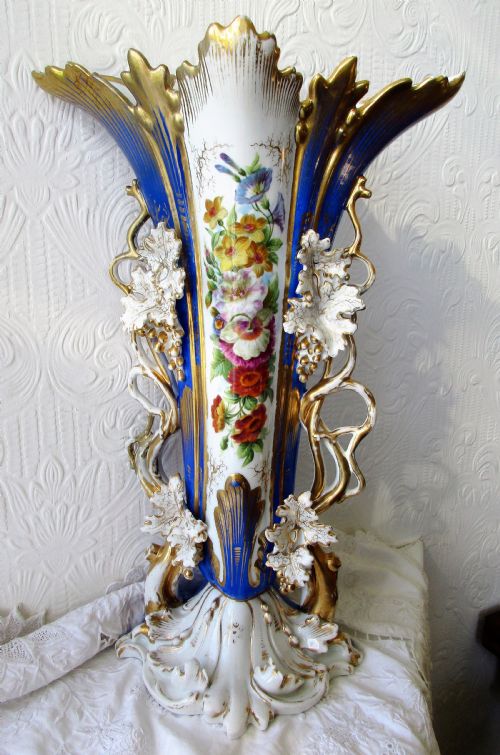
Moulded figures with integrated holders form the core of the Victorian offerings, often finished with flat backs designed to sit flush against a wall. Earlier Regency and Georgian examples lean towards classical cornucopia forms or botanical motifs.
Materials and technique
Potters shaped these vessels using earthenware and fine porcelain, applying detailed glazes and enamel colours to the fired clay. Many figures and vases received hand-painted details over the glaze.
Antique English Ceramic Spill Vase Retail Price Guide 2026
Typical asking prices for english ceramic spill vase among the pieces listed under this phrase on Sellingantiques today, from the lower quarter to the upper quarter. They describe what is for sale here now, not the wider market.
Cows and calves dominate the pasture scenes, proving that nineteenth-century mantelpieces needed bovine companionship just as much as we do.
Judging the work
The fineness of the painting separates standard production pieces from superior works, particularly on porcelain vases bearing artist signatures. Delicate brushwork and precise gilding elevate the status of an object.
Spode·Royal Worcester
The Antique English Ceramic Spill Vase Glossary
- Spill vase
- A small hollow vessel designed to hold slender slips of wood or paper used for transferring a flame from the fire to a candle or pipe. These form the primary category on this page.
- Staffordshire pottery
- Earthenware produced in the industrial potteries of Staffordshire, famous for its animal groups, flatback figures, and cottage models. These items date predominantly from the nineteenth century.
- Flatback
- A style of Staffordshire figure moulded with a finished front and sides but left flat at the back, intended for display on a mantelpiece against a wall.
- Gilding
- The application of gold leaf or a gold-coloured mixture to the surface of ceramic pieces to add decorative highlights. This finish appears frequently on Regency and Victorian porcelain.
- Enamel
- A durable, opaque vitreous material fused to the ceramic surface during firing, or applied as low-fired paint to provide rich colour on figures and vases.
Antique English Ceramic Spill Vase: Frequently Asked Questions
What is an antique English ceramic spill vase?
These ceramic vessels were made to hold thin wooden or paper tapers close to the fireplace for lighting candles and fires.
They appear as earthenware figures, animal groups, and porcelain vases decorated with enamels and gilding.
How do I date a Staffordshire spill vase?
Dating relies on the style of modelling, glaze characteristics, and subject matter, with nineteenth-century pieces showing characteristic flat backs and bright enamel colours.
Victorian examples often depict specific literary scenes, historical events, or popular animal pairs like cows and calves.
Where were these pieces made?
Many of the earthenware figures originate from the Staffordshire potteries, while the finer porcelain vases come from established English porcelain factories.
Artist-signed porcelain pieces point towards specialised production centres like Worcester during the late nineteenth and early twentieth centuries.
How should I display them at home?
Flatback Staffordshire figures and spill vases suit narrow mantelpieces, window sills, and bracket shelves where depth is limited.
Their bright enamel colours and varied forms allow them to stand alone or sit alongside other nineteenth-century ceramics.