


Glazed Pottery Dog Figures
Glazed pottery dog figures bring character and history to a mantelpiece, offering a glimpse into domestic life across the nineteenth century.
Glazed Pottery Dog Figures
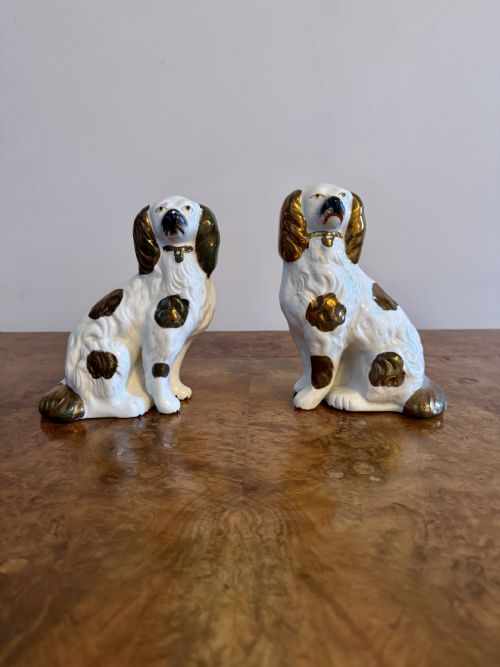
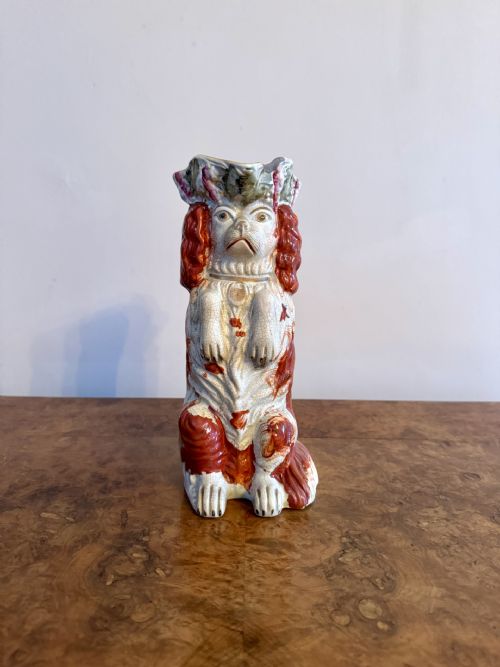
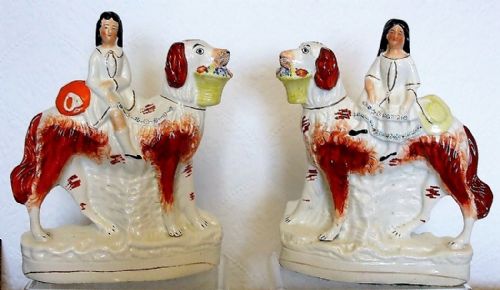
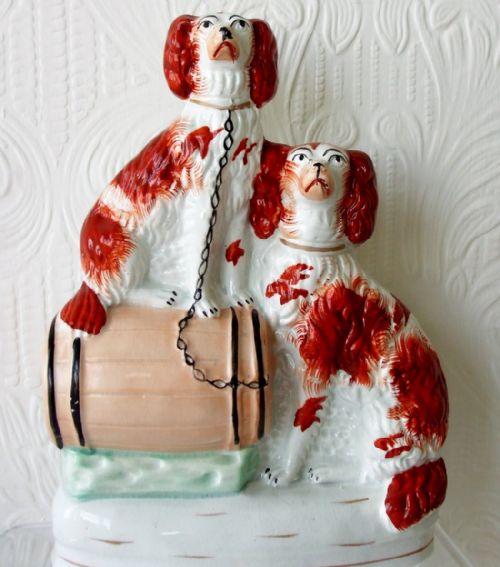
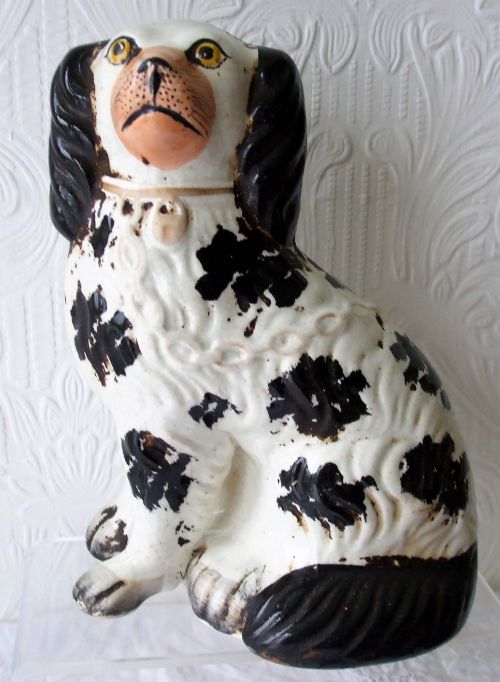
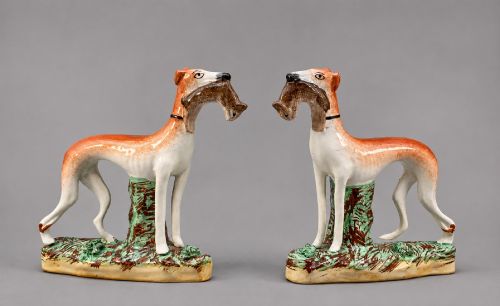
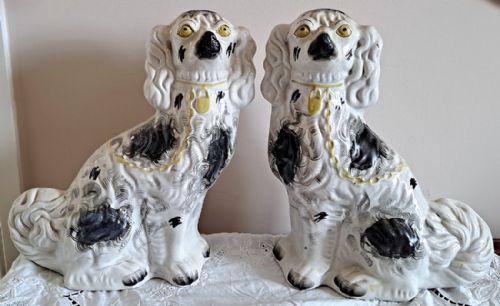
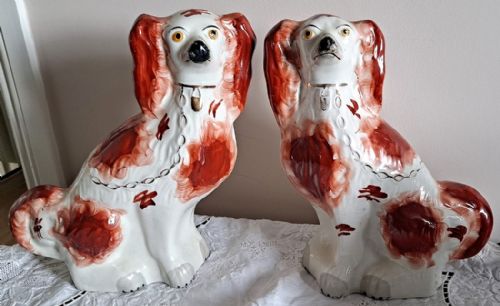
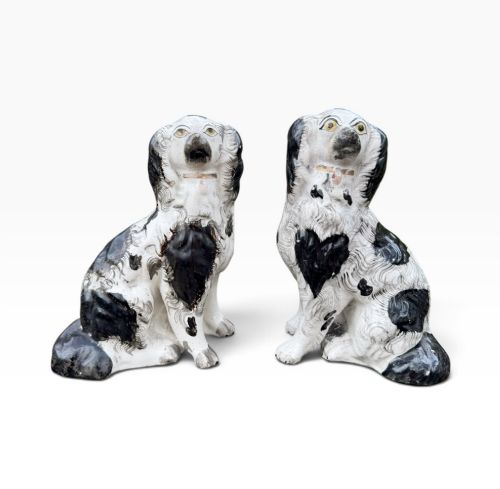
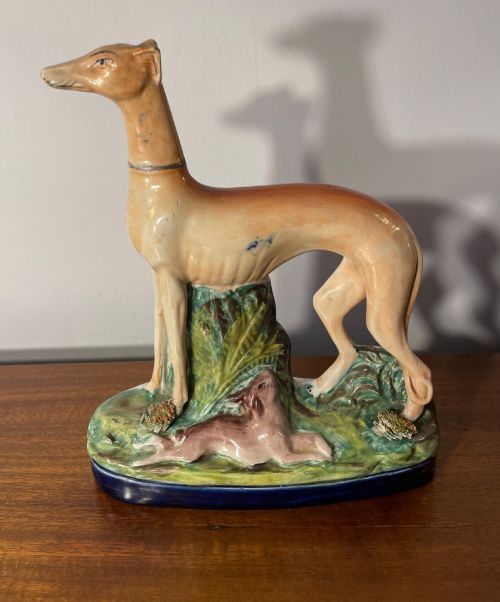
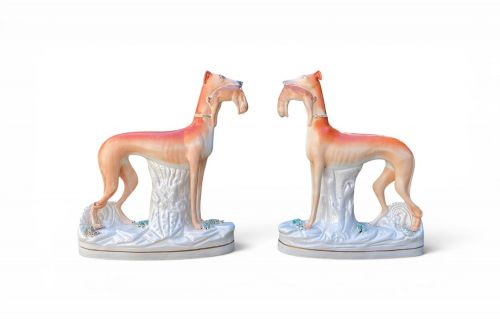
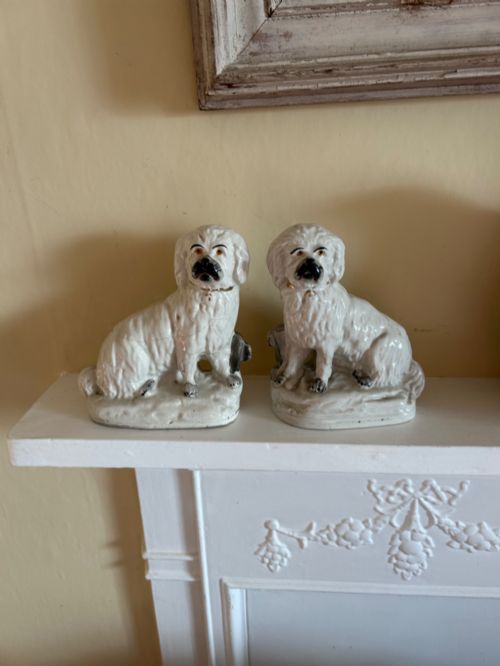
Glazed pottery dog figures span several decades of domestic ornament, capturing everything from spaniels and greyhounds to pugs and poodles. Buyers searching for these pieces will frequently encounter pairs of Staffordshire comforter spaniels designed to sit on hearths.
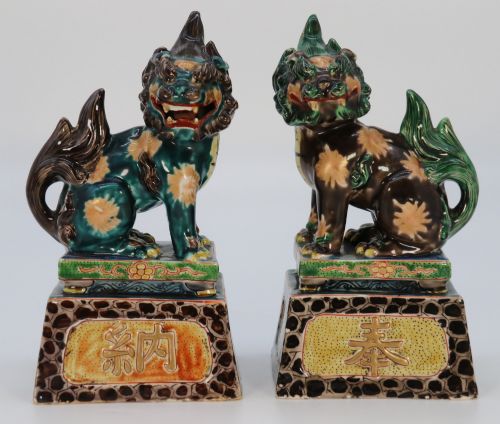
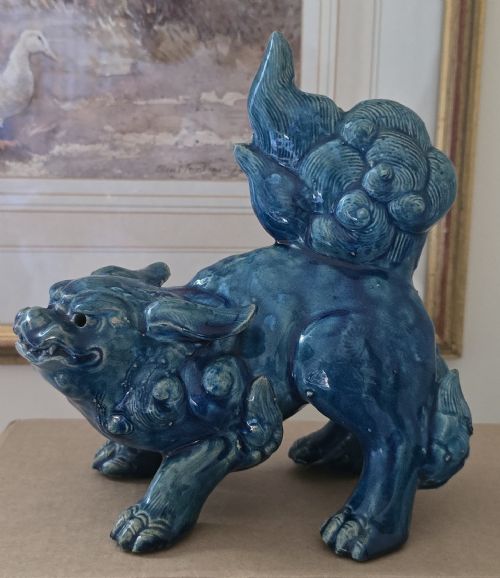
The selection includes functional pieces alongside purely decorative ornaments, such as inkwells, quill holders, and clock groups. Works originate from English traditional workshops as well as international makers, including Chinese Qing Dynasty and Japanese Meiji Period pieces.
Production stretches from the Georgian era through the Victorian period and into the Edwardian years. Staffordshire pottery dominates the offerings, alongside porcelain enamelled and turquoise-glazed examples.
Materials and methods
Potters utilised earthenware, ceramic, and stoneware as the primary bodies for these figures. Artisans shaped the clay using moulds before applying lead glazes, enamel, or copper lustre to the surface.
Glazed Pottery Dog Figures Retail Price Guide 2026
Typical asking prices for glazed pottery dog figures among the pieces listed under this phrase on Sellingantiques today, from the lower quarter to the upper quarter. They describe what is for sale here now, not the wider market.
Watch out for mischievous pugs and watchful poodles sharing shelf space with traditional fireplace spaniels.
What separates the best from the rest
Painting precision dictates visual success, particularly in the rendering of facial expressions and surface markings. Crisp execution in the moulding ensures the fur texture and anatomical details remain sharp rather than blurred by thick glaze accumulation.
Completeness of pairs and the survival of secondary functions, such as inkwells or quill holders intact, elevate specific groupings. The depth and evenness of the lead glaze or copper lustre finish also signal superior workshop standards.
Thomas Parr·Wedgwood and Co Ltd·Beswick
The Glazed Pottery Dog Figures Glossary
- Comforter spaniel
- A Staffordshire pottery dog figure modelled after Queen Victoria's own pets, typically displayed on either side of a fireplace. These mantel dogs were produced in vast quantities during the nineteenth century.
- Lead glaze
- A glossy coating containing lead oxide applied to earthenware before firing. It provides a shiny finish that protects the painted decoration underneath.
- Copper lustre
- A metallic glaze technique that produces a reflective, coppery sheen on pottery surfaces. This finish was especially popular on Victorian Staffordshire figures.
- Foo dog
- A traditional Chinese guardian lion figure, often depicted in pairs to protect a home. These ceramic and porcelain versions utilise sancai or enamel glazing.
- Quill holder
- A desk accessory featuring a modelled animal with specific apertures designed to hold writing feathers. These combine practical desk utility with decorative figural art.
Glazed Pottery Dog Figures: Frequently Asked Questions
Where did comforter spaniels sit?
Comforter spaniels traditionally sat upon the mantelpiece on either side of the fireplace in Victorian homes. They faced inward toward each other to mirror domestic harmony.
Pairs often anchored the visual balance of the hearth and served as steady companions in the parlour.
How do I spot a quill holder?
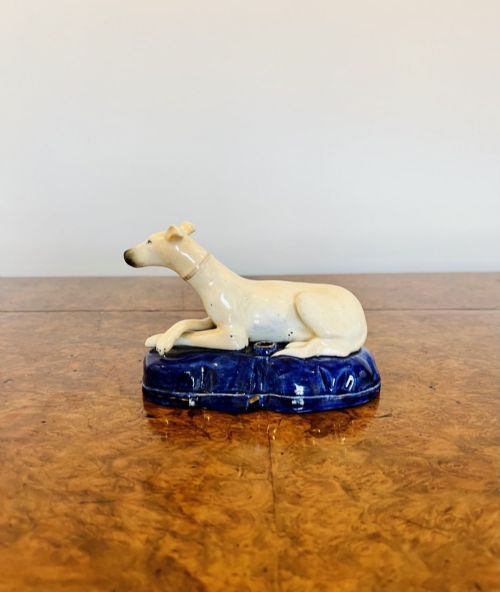
Quill holders feature small moulded openings or holes incorporated into the base or back of the pottery dog figure. These allowed writers to rest their feather pens upright between uses.
Many examples depict greyhounds or hounds stretched along a base that doubles as an inkwell stand.
What periods do these figures span?
The pieces span from the Georgian era through the Victorian and Edwardian periods, stretching into the early twentieth century. Victorian Staffordshire dominates the selection.
Asian traditions are represented by Chinese Qing Dynasty and Japanese Meiji Period examples from around 1900.
Were these figures purely decorative?
While many served purely as decorative mantel ornaments, numerous examples fulfilled practical household functions. Artisans integrated inkwells, clock housings, and quill holders into the ceramic designs.
This blend of utility and figural sculpture made them popular desk and shelf accessories.