

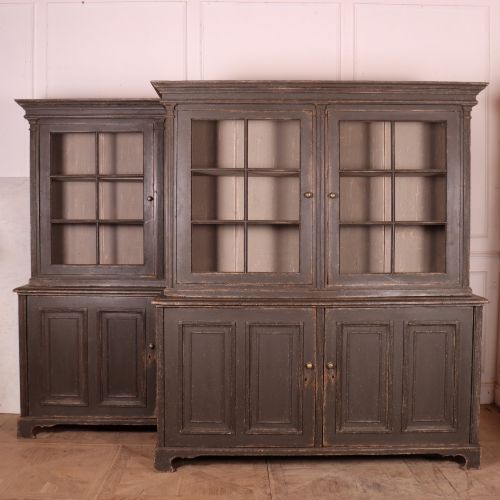
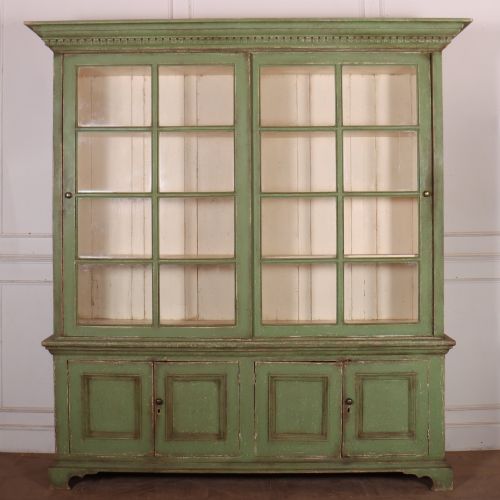
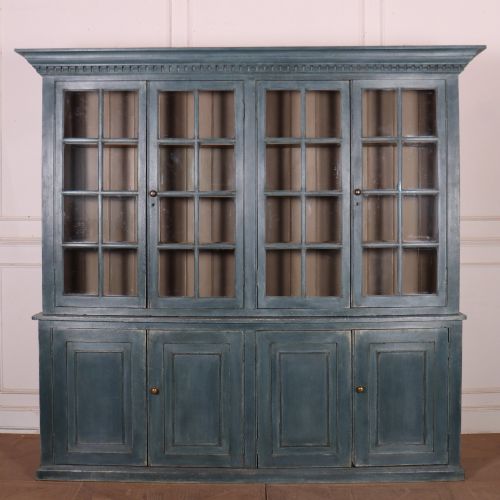
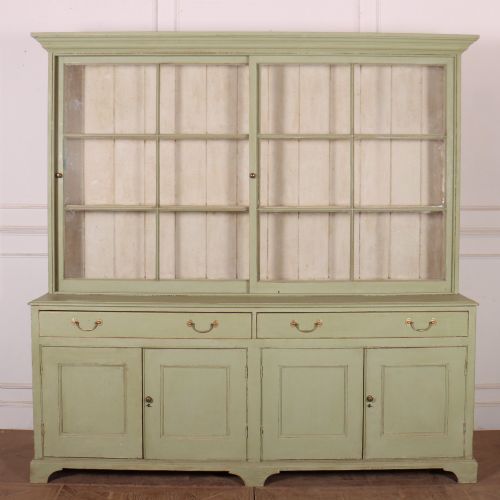

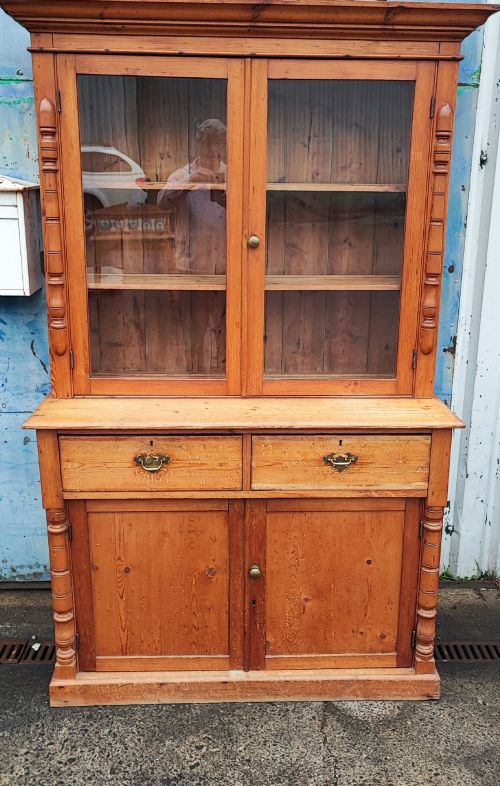
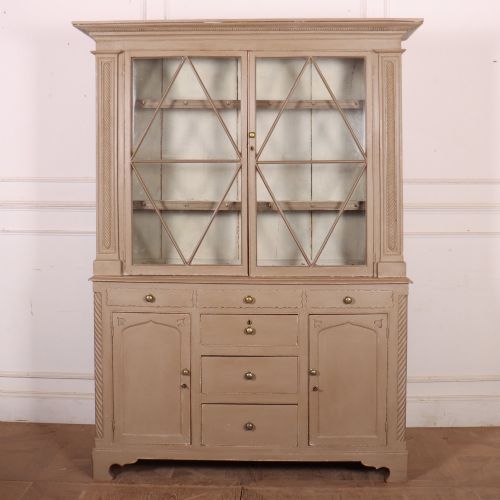
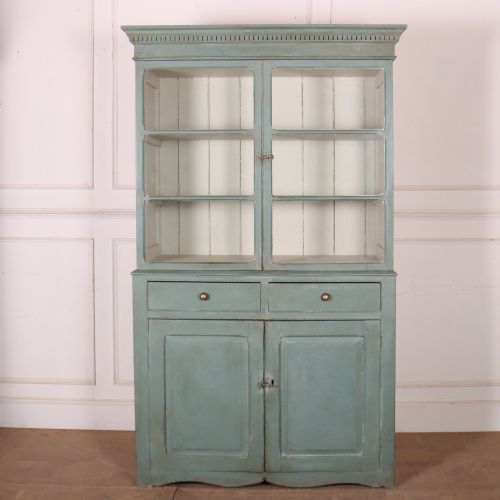
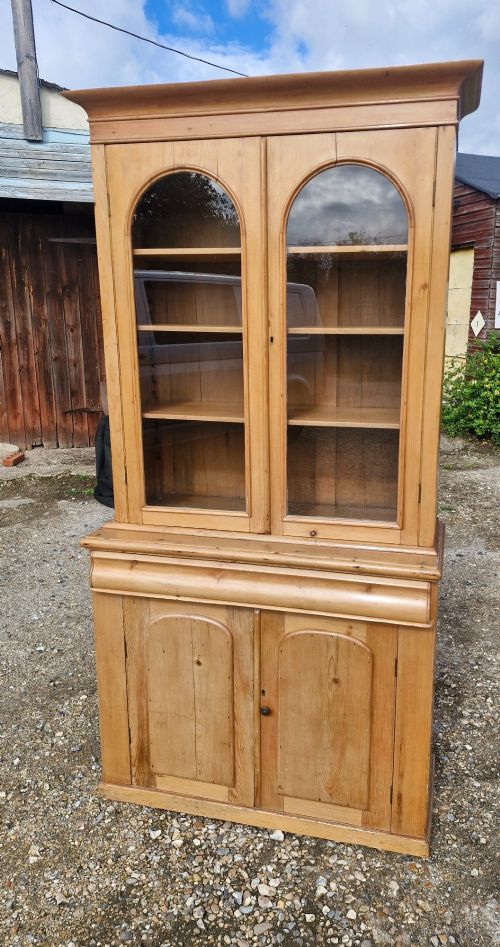
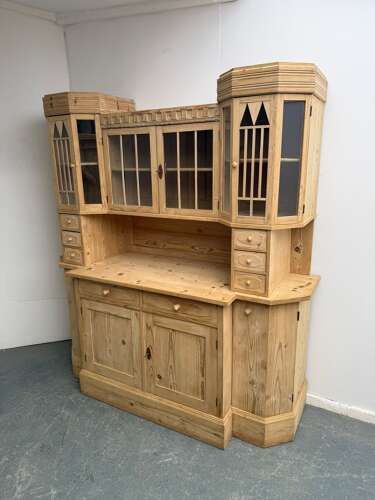
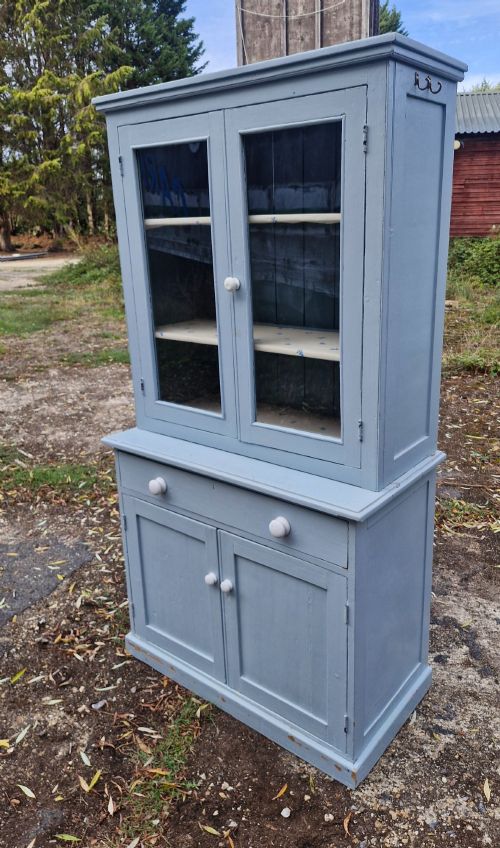
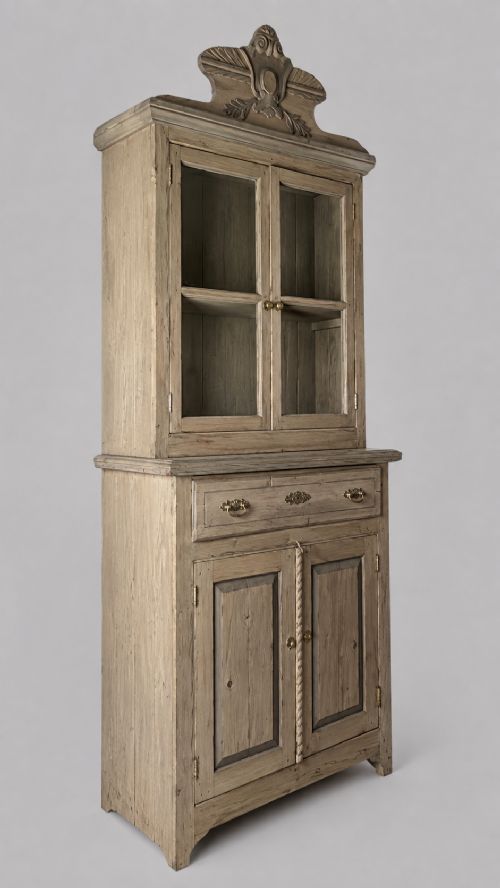
Glazed Pine Kitchen Cupboard
A glazed pine kitchen cupboard brings utilitarian warmth and everyday display into a room, offering glazed upper doors and practical storage below.
Glazed Pine Kitchen Cupboard
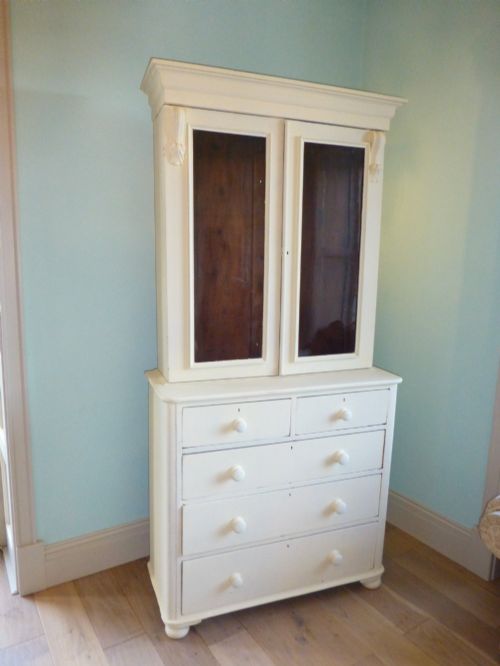
A glazed pine kitchen cupboard usually appears as a two-part dresser, a kitchen cabinet, or a tall larder unit designed for domestic storage and display. These pieces range from compact Edwardian and 1930s examples to substantial nineteenth-century specimens originating across English regions like the West Country, as well as Scotland, France, Denmark, and Hungary.
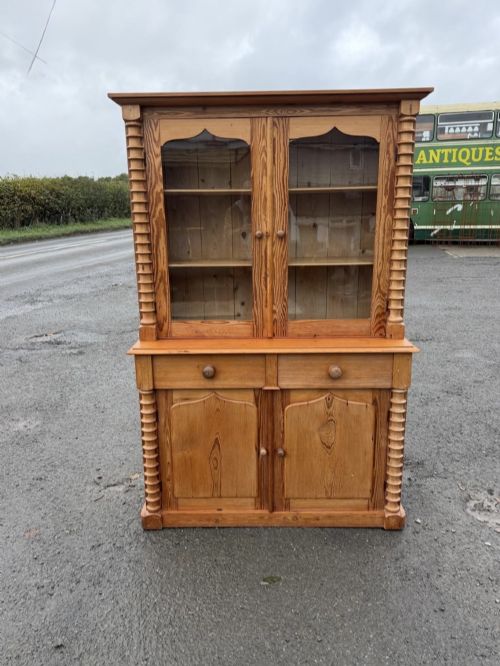
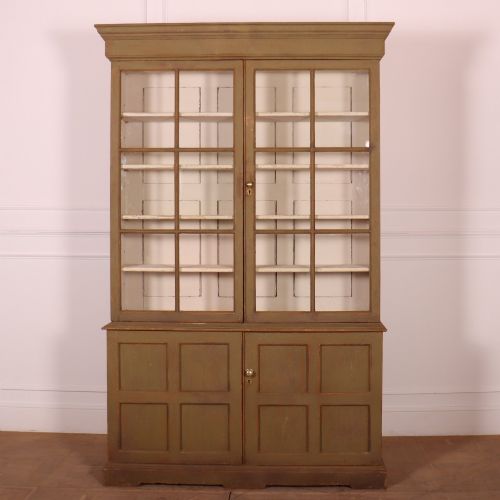
The most common formats combine open or glass-fronted upper shelving with enclosed wooden doors beneath, though single-piece display cabinets and housekeepers cupboards also emerge. Makers built these items to hold crockery, provisions, and household goods, employing regional vernacular styles such as English Country, Rustic Farmhouse, and French Provincial.
Materials and Construction
Makers constructed these cupboards primarily from solid pine, often utilising brass fittings, ceramic elements, and metal hardware to hinge doors and secure catches. Glass panes were glazed into the upper doors to protect tableware while keeping it visible from the room.
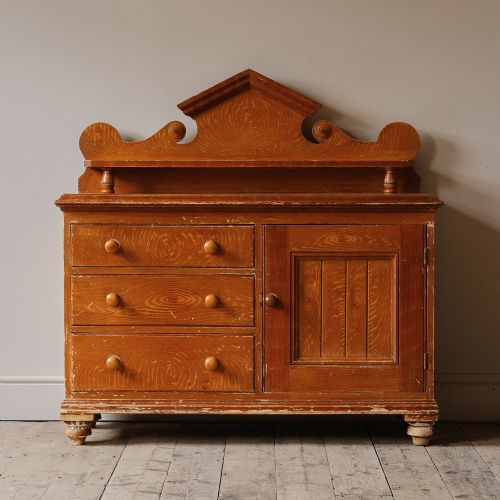
Surface treatments vary widely between natural waxed pine, original painted finishes, cream and teal schemes, and scumble paint effects applied over the wood. Some pieces feature decorative turns, such as bobbin turning, or applied tiles, reflecting the practical yet decorative demands of nineteenth and early twentieth-century domestic life.
Glazed Pine Kitchen Cupboard Retail Price Guide 2026
Typical asking prices for glazed pine kitchen cupboard among the pieces listed under this phrase on Sellingantiques today, from the lower quarter to the upper quarter. They describe what is for sale here now, not the wider market.
Listings feature pine kitchen cupboards spanning the nineteenth century through to the 1930s, incorporating glass, brass, ceramic, and painted wood finishes.
Evaluating Quality
Quality in a glazed pine kitchen cupboard rests on the integrity of its proportions, the honesty of its surface finish, and the construction methods used by the original cabinetmaker. Pieces retaining their original paint schemes or historic scumble decoration carry greater visual interest than those stripped down to bare wood in later decades.
Structural harmony between the upper glazed section and the lower base distinguishes superior examples, alongside well-balanced glazing bars and robust internal shelving. The depth of the timber's patina and the survival of original brass or ceramic hardware complete the hierarchy from standard utility items to finer regional masterworks.
The Glazed Pine Kitchen Cupboard Glossary
- Scumble paint
- A decorative surface technique where a translucent top coat is manipulated over a lighter base colour to simulate grain or texture.
- Cornish dresser
- A regional kitchen cupboard style typically featuring an open rack or glazed upper section above a base of drawers and cupboards.
- Breakfront
- A cabinet design where the central section projects forward from the flanking outer wings, adding architectural presence to large cupboards.
- Bobbin turned
- A form of woodturning characterised by a series of rounded, spool-like shapes repeating along the length of a support or leg.
- Housekeepers cupboard
- A tall storage piece traditionally used for linens and dry goods, often incorporating both glazed and solid panelled doors.
Glazed Pine Kitchen Cupboard: Frequently Asked Questions
What rooms suit a glazed pine kitchen cupboard?
These cupboards work naturally in kitchens and dining spaces where crockery and glassware benefit from visible, dust-free storage. Their practical proportions also allow them to function effectively in hallways or living areas for books and collections.
Placing one in a room introduces both display space and closed storage beneath, helping to balance open shelving and modern units with traditional warmth.
How do I care for painted pine surfaces?
Original painted and scowled finishes require gentle treatment using a soft, dry cloth for dusting rather than harsh chemical cleaners. Maintaining a stable indoor humidity prevents the underlying pine from shrinking and protects the historic paint layers from flaking.
Waxed pine surfaces benefit from occasional application of traditional beeswax to nourish the wood and preserve its characteristic sheen over decades of use.
Are these cupboards in one piece or two?
Many larger examples, particularly kitchen dressers and tall display cabinets, are constructed as two separate sections to ease transport and placement. The upper glazed bookcase or dresser top simply rests upon or secures to the lower sideboard base.
Smaller cabinets and food cupboards usually arrive as single solid structures, so checking the dimensions and construction format helps ensure smooth delivery into your home.
How can I tell a Victorian pine cupboard from later ones?
Nineteenth-century examples typically display hand-cut joinery, older glass with minor imperfections, and timber boards selected for maximum utility and strength. Details such as original brass locks, cut nails, and layered historic paint surfaces point clearly towards the Victorian period.
Later Edwardian and 1930s pieces often feature lighter construction, more uniform machine-sawn timber, and different hardware styles that reflect changing manufacturing methods.