




Glazed Mahogany Music Cabinet
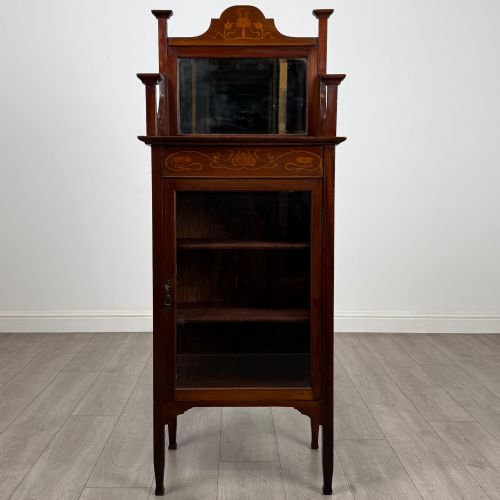
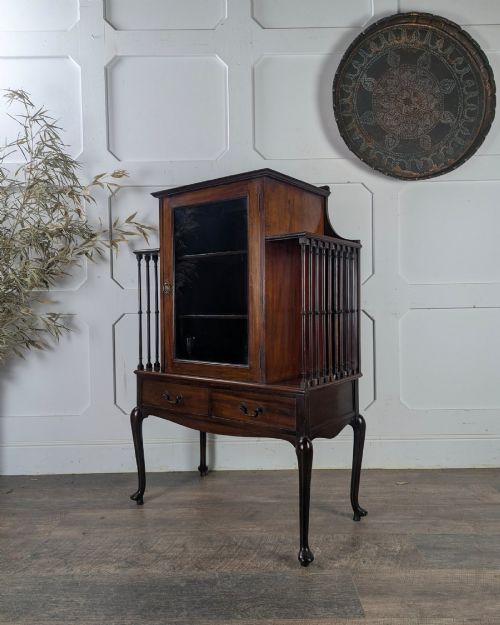
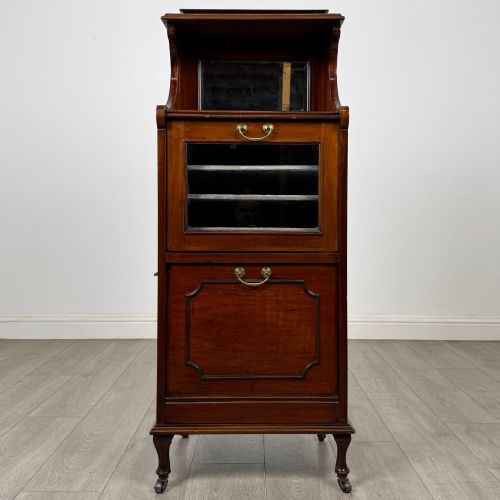
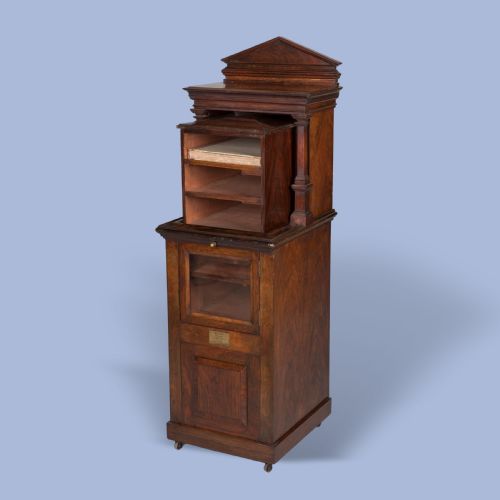
A glazed mahogany music cabinet holds scores behind glass while adding period timber tone to a room.
Glazed Mahogany Music Cabinet
A glazed mahogany music cabinet is a specialised storage piece designed to keep sheet music tidy behind glass doors. Most examples seen here date from the Victorian and Edwardian eras, reflecting the domestic piano culture of the nineteenth and early twentieth centuries.
The form typically combines timber construction with a glazed upper or front section, often enhanced by inlaid detailing or satinwood stringing. While some specimens function purely for display or drinks storage today, their original purpose remains tied to musical performance at home.
How they were made
Cabinetmakers built these pieces primarily from mahogany, frequently pairing it with contrasting inlay timbers such as satinwood and rosewood. Brass hardware secures the doors and internal fittings, while mirrored elements occasionally appear within the internal backing.
Construction methods rely on traditional joinery suited to upright cabinetry, supporting glass panels within timber frames. Decorative work often incorporates fine stringing and period-specific motifs characteristic of late Victorian and Edwardian workshops.
Sheet music cabinets quietly prove that our great-grandparents had an immense amount of paper to hide.
What varies in quality
Quality separates pieces through the precision of their timber selection and the crispness of any inlaid decoration. Finer examples display carefully matched mahogany grain and intricate stringing rather than simple printed or stamped ornamentation.
The refinement of the brass hardware and the clarity of the glazed door panels further distinguish superior specimens. Construction depth, such as solid internal drawer linings rather than secondary woods, marks the difference between standard and better-executed pieces.
The Glazed Mahogany Music Cabinet Glossary
- Inlay
- A decorative technique where contrasting pieces of wood or other materials are inserted into recesses in the primary surface. This method creates geometric or floral patterns across the timber.
- Satinwood
- A lustrous, yellowish timber often used for contrasting stringing and banding on darker woods like mahogany. It provides a bright visual accent to Edwardian and Victorian furniture.
- Stringing
- Thin lines of contrasting wood inlaid into channels cut into the surface of a piece. It outlines panels and drawers to define the proportions of the cabinet.
- Gilt strung
- Timber edged with thin lines of gilded material or light wood treated to resemble metallic thread. This technique adds subtle highlights to darker cabinet frames.
Glazed Mahogany Music Cabinet: Frequently Asked Questions
What fits inside a music cabinet?
These cabinets were originally built to hold standard-sized sheet music and scores for domestic piano players.
Today, the internal shelving or shallow drawers accommodate paperwork, art supplies, or small collectibles just as easily.
How do I date a cabinet?
Dating relies on stylistic clues such as the presence of Edwardian stringing, Victorian proportions, or Art Nouveau motifs.
Construction methods and timber choices also point toward specific decades between the late nineteenth and early twentieth centuries.
Are all glazed doors original?
Most surviving cabinets retain their original glass panes, which often show minor manufacturing bubbles and slight surface waves.
Inspecting the putty or wooden glazing bars helps confirm whether the glass matches the age of the surrounding mahogany frame.
Can I use it as a display case?
Many examples double as display cabinets because their glass doors allow contents to be seen clearly from across the room.
Their upright proportions make them suitable for showcasing ceramics, glassware, or books in a modern interior.