


Edwardian Style Music Cabinet
These edwardian style music cabinet pieces combine period practicality with fine timber work, offering dedicated storage for sheets and folios.
Edwardian Style Music Cabinet
An edwardian style music cabinet provides compact storage designed specifically for sheet music, folios and periodicals, typically featuring multiple drop-down or sliding drawers. You will frequently encounter mahogany and walnut constructions originating from the opening decades of the twentieth century, alongside related forms like canterburys and bedside cabinets.
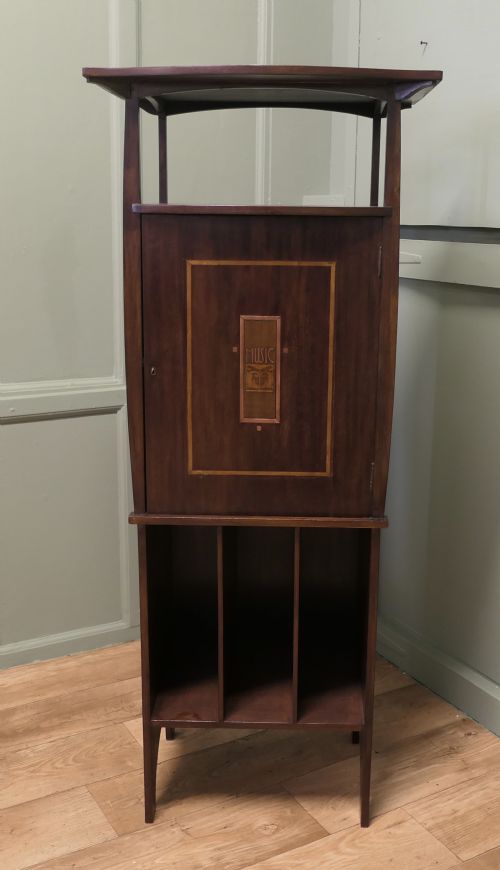
The selection ranges from Arts and Crafts pieces by makers such as GM Elwood for JS Henry to Sheraton style interpretations and later variations from the nineteen thirties. These items serve equally well today as bedside tables, small display units or specialised filing cabinets within a traditional study.
Many examples incorporate decorative wood inlay, satinwood detailing or brass hardware, reflecting the aesthetic preferences of the period. While some pieces adhere strictly to Edwardian design principles, others draw upon Victorian, Art Nouveau or Chippendale revival idioms.
Materials and construction
Cabinets of this type rely heavily on solid mahogany and burr walnut, often enhanced with contrasting boxwood and satinwood inlay to create delicate banding and floral motifs. Carpenters utilised traditional joinery techniques to construct the internal drop-down fronts and slim drawer banks required to hold heavy paper folios.
Brass handles, drop pulls and castors appear frequently across the pieces, providing both functional operation and subtle decorative contrast against the dark timber. Glass panels are incorporated into specific display variants, while glazed doors protect contents from dust while maintaining visual access.
Drop-down fronts saved Victorian pianists from wrestling with stubborn stacks of sheet music.
Evaluating quality and execution
Superior examples distinguish themselves through the crispness of their wood inlay and the selection of highly figured burr walnut or dense mahogany veneers. The integration of maker attributions, such as specific Arts and Crafts workshop involvement, elevates certain pieces above standard commercial production.
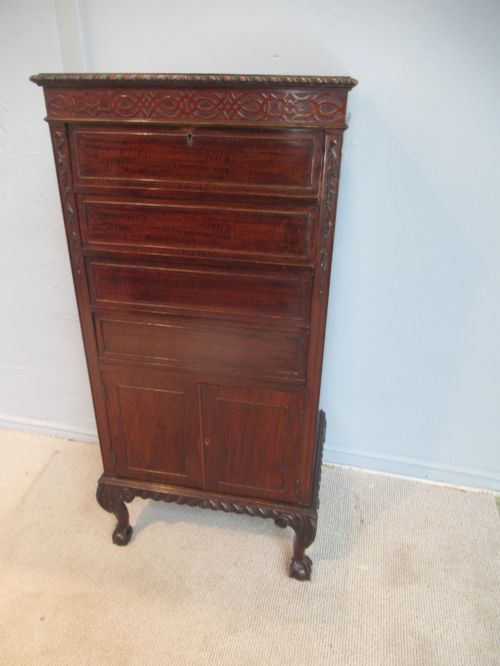
Mechanical execution in the drawer actions and drop-down fronts determines daily usability, where smooth operation reflects careful initial construction. The subtlety of carved details, such as Edwardian Chippendale fretwork or Art Nouveau organic lines, separates basic utility furniture from ambitious cabinet work.
GM Elwood for JS Henry·Liberty
The Edwardian Style Music Cabinet Glossary
- Canterbury
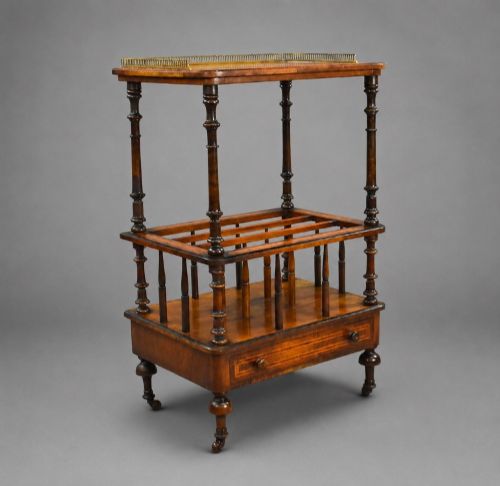
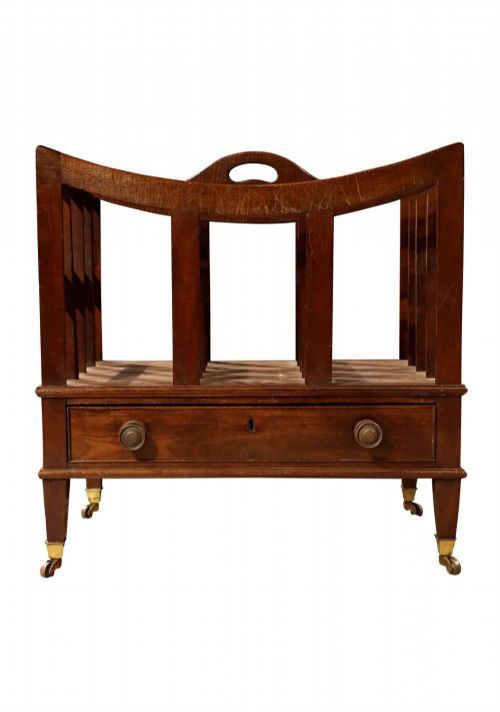
- A low, compartmentalised stand traditionally used for holding sheet music or loose folios. These often feature slatted wooden divisions and an underlying drawer.
- Inlay
- A decorative technique where contrasting woods like boxwood and satinwood are inserted into recesses within the primary timber surface to form geometric or floral patterns.
- Fall Front
- A hinged front panel that drops downward to provide access to internal compartments or shelves. This mechanism appears frequently in music cabinets designed for easy filing.
- Folio Cabinet
- A tall, narrow piece of furniture built to store large sheets of paper, art prints or musical scores flat within shallow drawers.
Edwardian Style Music Cabinet: Frequently Asked Questions
What is an edwardian style music cabinet used for?
These cabinets were originally manufactured to store sheet music, folios and songbooks in domestic parlours during the early twentieth century.
Today, buyers repurpose them as bedside tables, hallway storage units or compact filing cabinets for modern documents and papers.
How do I identify an Edwardian music cabinet?
Look for characteristic materials such as mahogany or burr walnut, frequently embellished with delicate satinwood or boxwood stringing and inlay. The presence of drop-down drawer fronts designed specifically for holding sheet music distinguishes these pieces from standard chests of drawers.
Dating is supported by construction methods and stylistic crossover into Arts and Crafts or Sheraton revival designs typical of the era.
Can I use these cabinets for modern storage?
The shallow drawers and compartmentalised interiors make them well suited for storing paperwork, stationery, art supplies or modern media.
Their compact footprints allow them to fit easily into smaller rooms where traditional large furniture would overwhelm the space.
What styles are common in these cabinets?
While Edwardian and Victorian influences predominate, you will also encounter Arts and Crafts examples, Art Nouveau details and Chippendale revival motifs.
Maker involvement and specific regional cabinet-making traditions often dictate whether a piece leans toward austere utility or decorative flourish.