
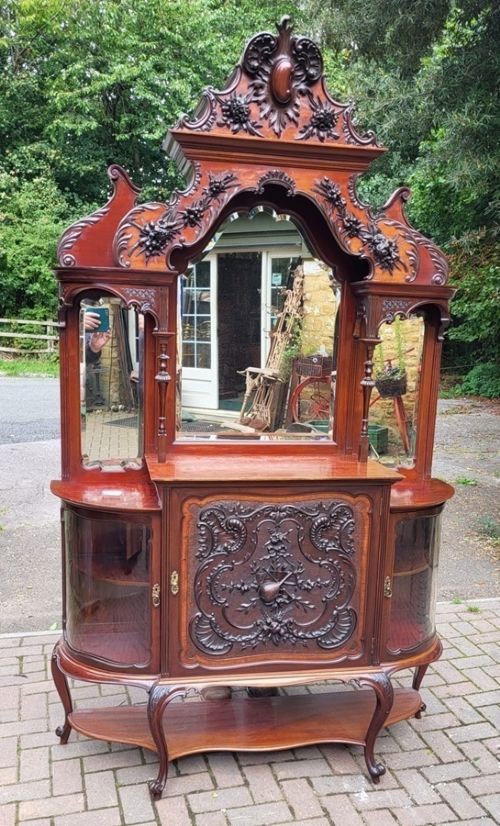


Glazed Mahogany Credenza
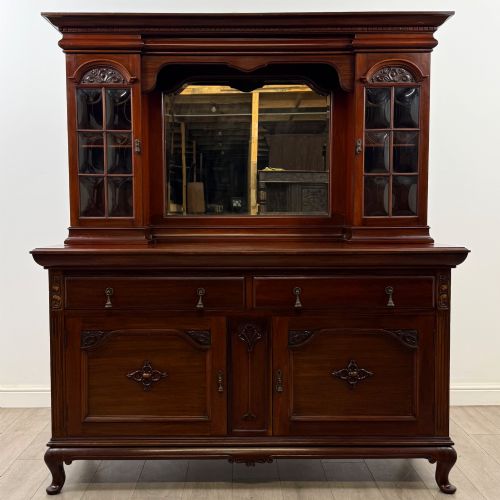
A glazed mahogany credenza offers refined storage and display, bringing rich timber and glass together to anchor a formal interior.
Glazed Mahogany Credenza
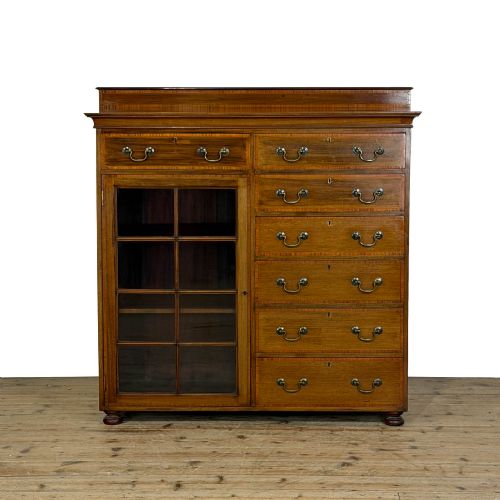
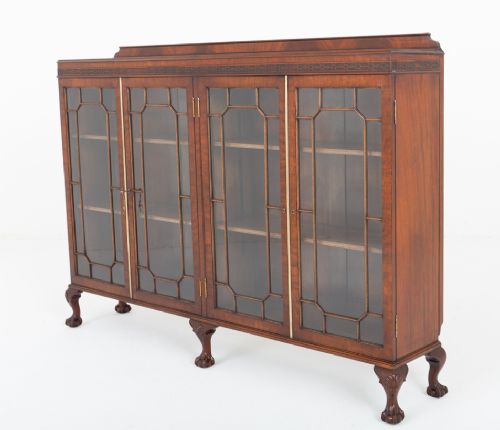
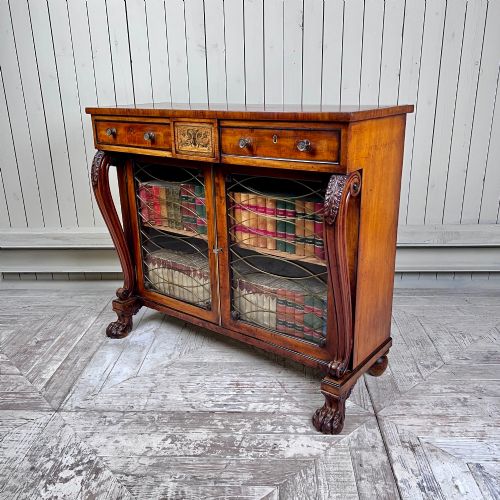
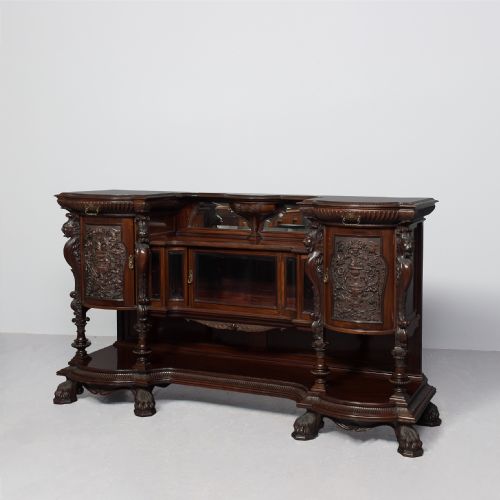
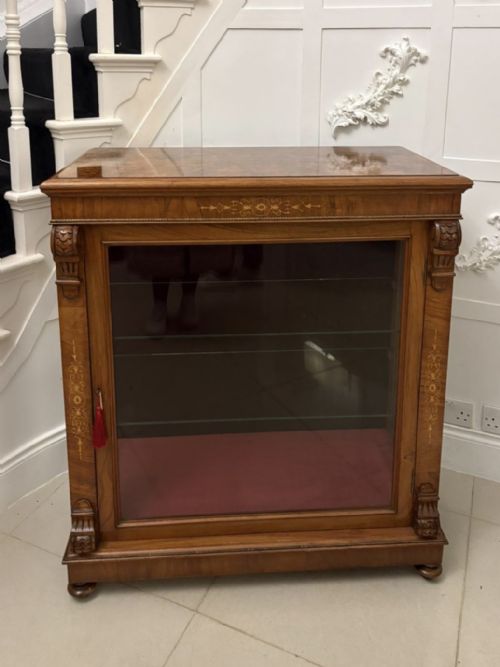
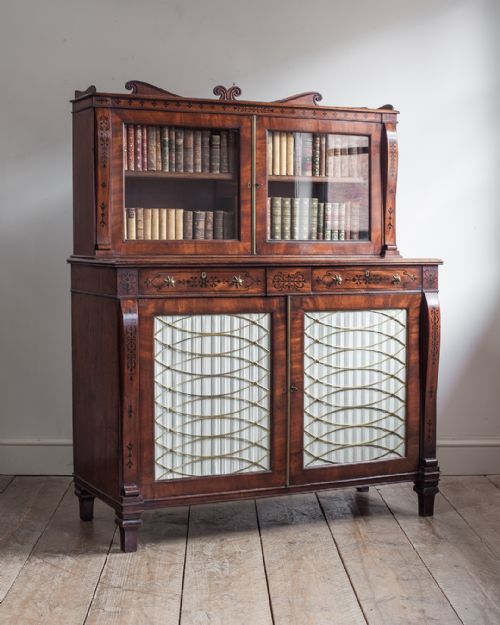
When you search for a glazed mahogany credenza, you encounter a selection of side cabinets, display cabinets, and bookcases spanning the nineteenth and early twentieth centuries. These pieces encompass Victorian, Edwardian, and Regency periods alongside revival styles such as Sheraton, Chippendale, and French.
The most common formats on this page combine timber shelving behind glass doors with enclosed lower cupboards, frequently incorporating mirror-backs or brass mounts. Originating as functional reception and morning room furniture, they serve equally well today for displaying collections or housing books.
Materials and Technique
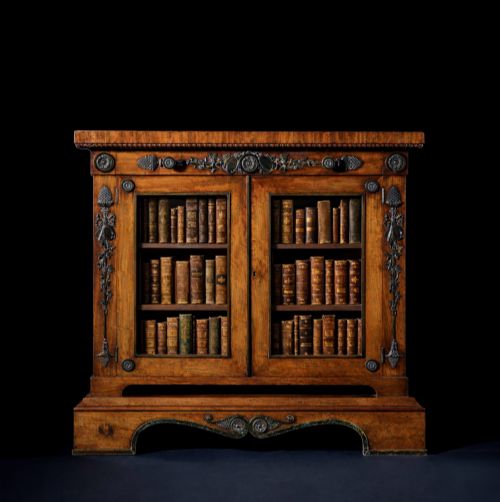
Makers constructed these cabinets primarily from solid mahogany and mahogany veneers, often enriching the surfaces with satinwood inlay, ebony stringing, or elaborate marquetry. Structural hardware relies on brass, while decorative accents include bronze mounts and ormolu.
Glazing takes the form of transparent glass panels set into timber doors, sometimes paired with mirrored panels at the rear to reflect light through the interior shelves. Carved details and turned elements appear across Victorian and revival examples to accent the cabinet framing.
Listings span from the early nineteenth century through the Edwardian era, incorporating mahogany, satinwood inlay, glass, and brass.
Evaluating Quality
The distinction between standard and superior pieces rests on the precision of the cabinetmaker's joinery and the selection of timber figures. Richly grained mahogany paired with delicate satinwood inlay or crisp bronze mounts indicates higher workshop standards.
Proportion and decorative restraint elevate certain examples above others, particularly where revival styles adhere closely to classical proportions. The integration of functional elements, such as fitted interior shelving and sound door alignment, marks the work of premier makers.
Edwards and Roberts·Gillows
The Glazed Mahogany Credenza Glossary
- Credenza
- A side cabinet or sideboard used for storage and display, often featuring enclosed cupboards flanked by glass doors or open shelving.
- Marquetry
- Decorative veneer work forming pictures or geometric patterns using various woods, shells, or ivory set into the primary timber surface.
- Ormolu
- Gilded bronze or brass applied as a decorative mount to furniture frames and feet during the eighteenth and nineteenth centuries.
- Inlay
- A technique where pieces of contrasting material are inserted into a recessed portion of the base timber to create flat surface ornamentation.
- Chiffonier
- A small, low sideboard or cupboard popular during the Regency and Victorian periods, frequently surmounted by a bookshelf or mirror.
Glazed Mahogany Credenza: Frequently Asked Questions
How do I date a mahogany cabinet?
Dating relies on observing structural characteristics, timber selection, and decorative motifs that align with specific design periods. Regency pieces show classical restraint and brass inlay, whereas Edwardian revivals often exhibit lighter satinwood marquetry.
Secondary woods inside drawers and back panels provide further clues to the manufacturing decade. Comparing these details against known historical styles helps narrow the origin.
Where should I place a display cabinet?
These cabinets suit dining rooms, libraries, or spacious hallways where their glass panels can showcase collections of porcelain or glassware. Placing them away from direct sunlight protects the mahogany timber from fading.
Ensure the floor is level so the glazed doors hang correctly and latch smoothly without straining the hinges.
How do I care for antique mahogany?
Maintain the finish by dusting regularly with a soft, dry cloth and avoiding silicone-based polishes that build up over time. Natural wax applied sparingly preserves the lustre of the wood.
Keep the cabinet away from extreme temperature fluctuations and radiators to prevent the mahogany and veneers from drying out or splitting.