


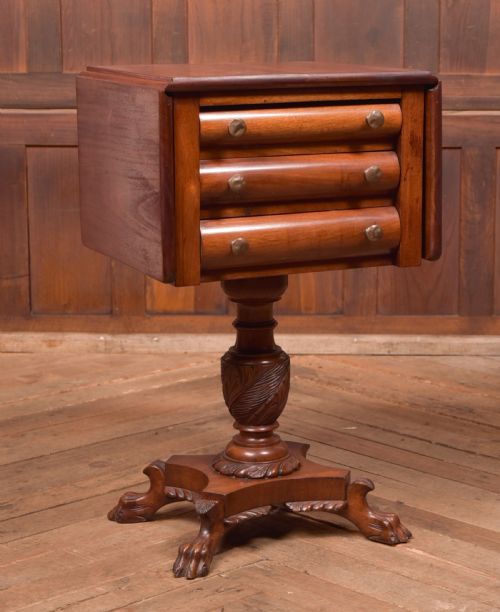


Claw Foot Side Cabinet
These claw foot side cabinet pieces combine substantial timber frames with distinct foundational supports, offering practical storage with decorative presence.
Claw Foot Side Cabinet
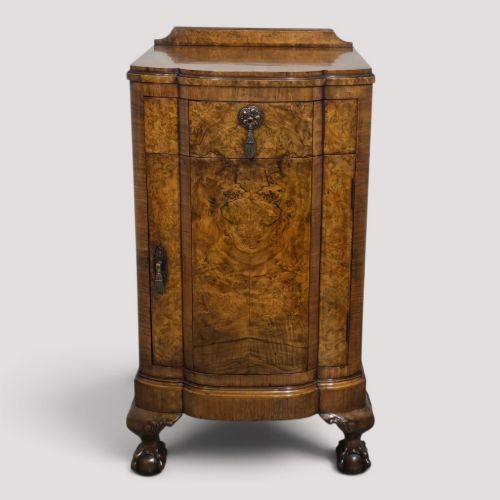
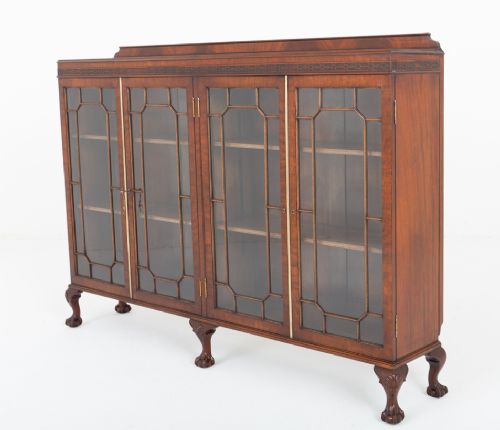
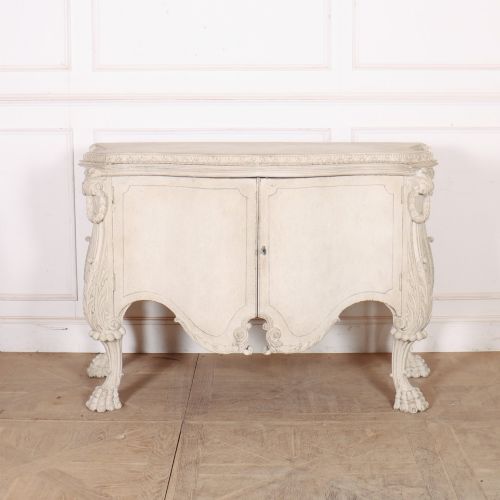
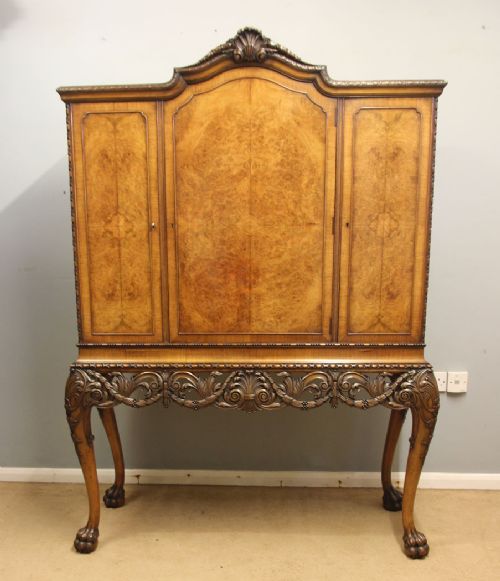
When you search for a claw foot side cabinet, you encounter a range of forms spanning from the early nineteenth century through the Edwardian period and into nineteen-twenty. These items appear in various guises, including display cabinets, music cabinets, linen cupboards, and bedside tables.
Mahogany and burr walnut veneer dominate the selection, often accompanied by glass, marble, and brass detailing. Stylistic influences draw heavily upon revival movements such as Chippendale and Queen Anne, alongside Regency, French Empire, and Italian Rococo designs.
The version you are most likely to meet on this page is a mahogany or burr walnut piece dating from nineteen-ten or nineteen-twenty, featuring glazed doors or open shelving supported by characteristic foot forms.
Materials and construction
Cabinet makers utilised dense hardwoods such as mahogany and rosewood, frequently applying burr walnut veneer to create richly figured surfaces on the main body of the furniture. Brass inlay and metal mounts provided structural contrast and decorative accent.
Glazed panels and marble tops were incorporated into specific forms like display cabinets and bedside tables, requiring precise joinery to house fragile elements safely within the timber framework.
The listings span the nineteenth century through to nineteen-twenty, featuring materials including brass, mahogany, burr walnut veneer, glass, and marble across diverse revival styles.
Assessing quality
Quality rests upon the depth of figure in the wood veneer and the precision with which decorative elements like brass inlay are integrated into the primary timber. Finer examples display meticulous attention to proportion across revival styles such as Chippendale and Regency.
The integrity of secondary materials, including the clarity of glass panels and the fit of marble inserts, distinguishes superior pieces from standard utilitarian storage forms.
Walker and Hall Sheffield
The Claw Foot Side Cabinet Glossary
- Burr walnut veneer
- A thin slice of decorative wood taken from the wart or burl of a walnut tree, exhibiting swirling patterns. This material was applied to carcass furniture to create highly figured surfaces.
- Demi-lune
- A half-moon shape used to describe console tables and cabinets designed to sit flush against a wall. The curved front softens the linear geometry of a room.
- Simulated rosewood
- A painted or stained finish applied to a less expensive timber to imitate the dark grain and reddish hues of genuine rosewood. This technique was popular during the Regency period.
- Waterfall bookcase
- A tiered piece of furniture with graduated open shelves that recede like steps. This form appeared in rosewood with brass detailing during the early nineteenth century.
Claw Foot Side Cabinet: Frequently Asked Questions
What is a claw foot side cabinet?
A claw foot side cabinet is a storage piece elevated on distinctive carved foot supports, encompassing forms like linen cupboards, music cabinets, and display units.
These items date from the nineteenth and early twentieth centuries, reflecting revival styles and periods including Regency and Edwardian.
How do I date these cabinets?
Dating relies on identifying the primary wood, veneer type, and stylistic revival cues such as Chippendale or French Empire motifs. Nineteenth-century examples often utilise rosewood with brass inlay, while nineteen-twenty pieces favour burr walnut veneer.
Construction methods and hardware also indicate the era of manufacture, moving from hand-finished Regency designs to Edwardian and later revival production.
Where were these cabinets used?
These cabinets served multiple domestic functions, acting as bedside storage, music cabinet enclosures, or principal display furniture in reception rooms.
Their varied forms allowed them to adapt to parlours, bedrooms, and dining spaces depending on whether they featured shelving, cupboards, or cutlery storage.
Are these pieces made of solid wood?
Construction typically involves a primary timber frame, such as mahogany, overlaid with burr walnut veneer on the visible surfaces to create decorative grain patterns. Secondary woods were used for internal carcass work and drawer linings.
Glass and marble were also integrated into specific forms like glazed display cabinets and bedside tables.