
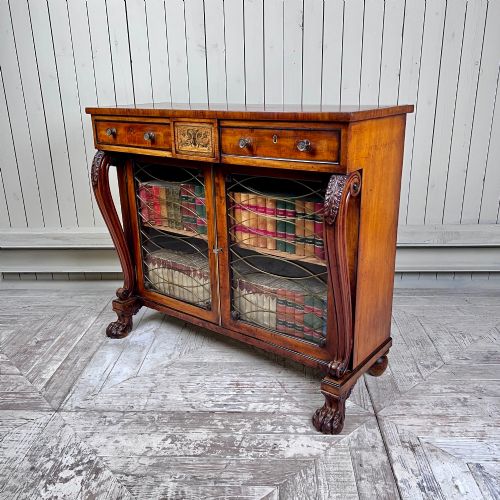
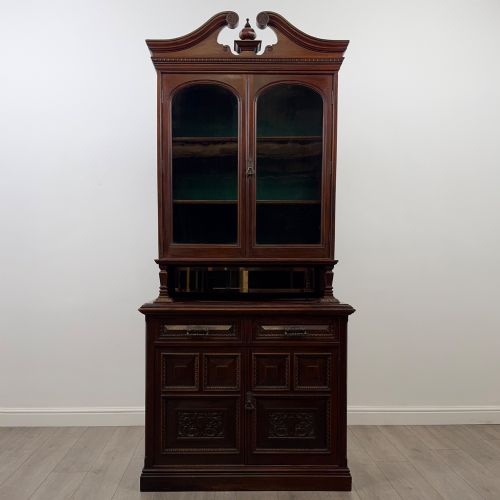
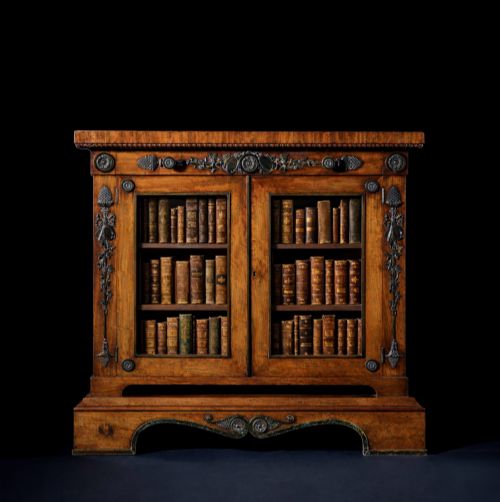
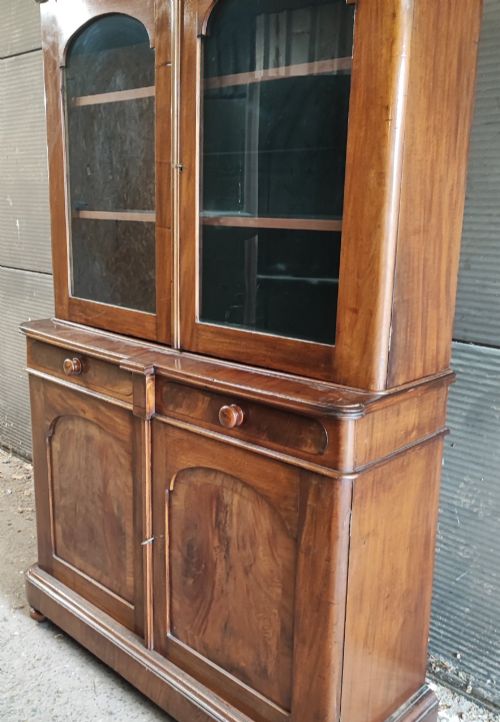
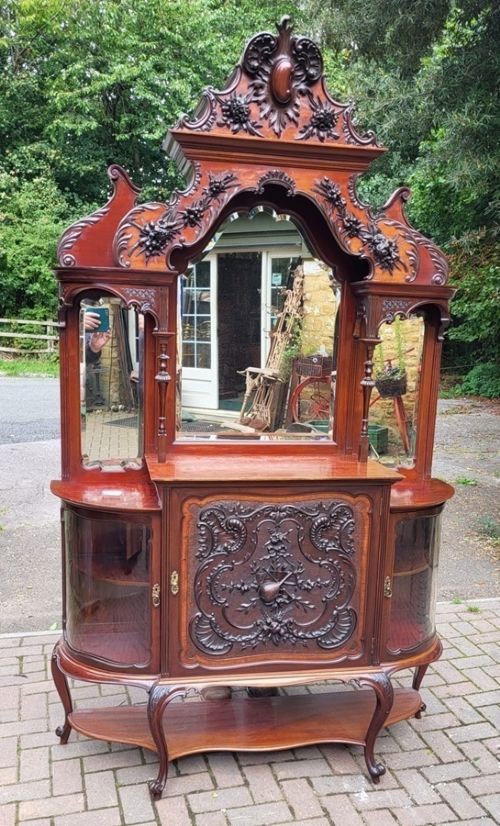


Glazed Mahogany Chiffonier
A glazed mahogany chiffonier brings architectural timber and glass together to display books and objects with period elegance.
Glazed Mahogany Chiffonier
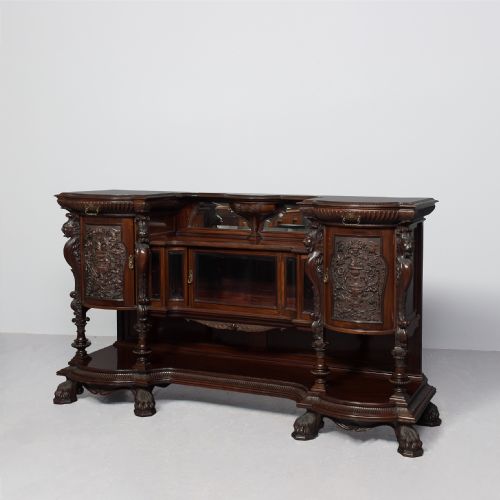
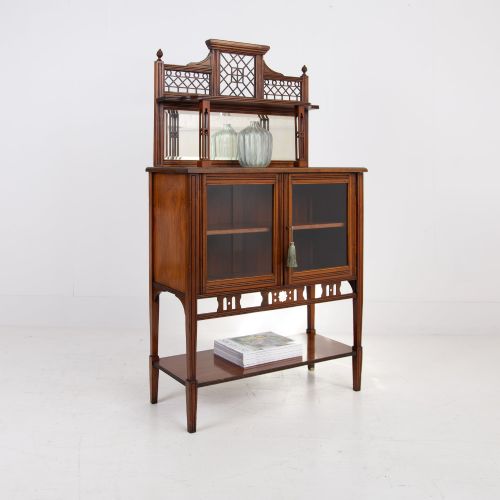
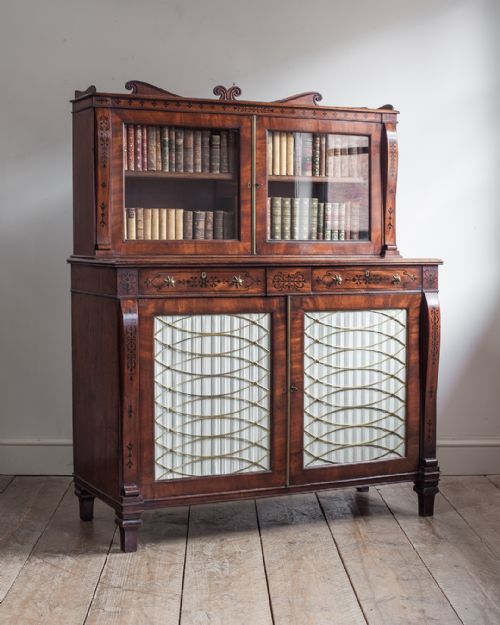
A glazed mahogany chiffonier combines enclosed lower cupboards with upper glass doors to form a practical display piece for the home. These items originate primarily from the Regency and Victorian periods, extending through to Edwardian and later revival styles.
The versions most frequently met here span the nineteenth century, including side cabinets, mirror-back cabinets, and bookcase hybrids. Makers adapted proportions to suit morning rooms and libraries, ranging from compact cabinets to large country house sideboards.
Materials and Technique
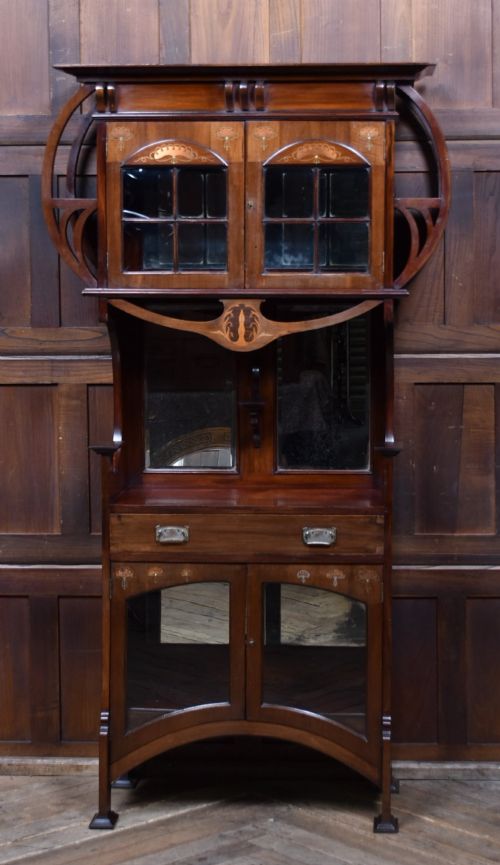
Construction relies heavily on solid and veneered mahogany, often enriched with satinwood inlay, ebony stringing, and brass mounts. Glass panels are fitted to upper doors to protect the contents while maintaining visibility.
Carved details, mirror backs, and marquetry enrich the structural timber framework. Cabinets frequently separate into two parts to facilitate transport and placement.
Some drop-centre mirror-back cabinets include hidden ledges designed specifically for displaying pocket watches.
Craftsmanship and Proportion
Quality reveals itself in the selection of timber figures, the precision of inlaid details, and the integration of mirror-back glass. Superior examples exhibit balanced proportions and refined carving rather than heavy-handed ornamentation.
The refinement of the brass mounts and the clarity of the glass contribute significantly to the distinction between standard production items and pieces of high quality.
Edwards & Roberts
The Glazed Mahogany Chiffonier Glossary
- Chiffonier
- A low sideboard or cabinet, typically featuring cupboards below and sometimes shelving or a bookcase above. It developed during the nineteenth century as a versatile room furnishing.
- Marquetry
- Decorative veneer work forming pictures or geometric patterns using various coloured woods. Craftsmen cut contrasting veneers to create ornamental surfaces on cabinet doors.
- Aesthetic Movement
- A late nineteenth-century design style emphasising artistic expression and simplicity. Pieces from this movement often incorporate clean lines and Japanese-inspired motifs.
- Credenza
- A sideboard or cabinet originally used for displaying plate and serving food. In nineteenth-century contexts, it often refers to a low side cabinet with glass doors.
Glazed Mahogany Chiffonier: Frequently Asked Questions
What is a glazed mahogany chiffonier?
A glazed mahogany chiffonier is a wooden storage and display unit featuring glass doors and timber construction. These cabinets serve to exhibit books or decorative objects while storing items in lower cupboards.
Originating largely in the nineteenth and early twentieth centuries, they combine utility with the distinctive grain and warmth of mahogany timber.
How do I date a mahogany cabinet?
Dating relies on observing stylistic markers, construction methods, and secondary woods. Regency pieces often show brass mounts and classical restraint, whereas Victorian examples may feature heavy carvings or mirror backs.
Revival styles from the Edwardian period borrow earlier motifs like Chippendale details while utilising machine-cut veneers and distinct interior hardware.
Where should I place a chiffonier?
These cabinets suit dining rooms, libraries, and sitting rooms where books and decorative objects require display and protection. Their shallow depth compared to full sideboards makes them adaptable to narrower reception spaces.
Positioning them away from direct sunlight preserves the mahogany finish and prevents the timber veneers from drying out over time.
Are these cabinets made in two parts?
Many larger bookcase cabinets and tall chiffoniers are constructed in two separate sections. A base cupboard section supports an upper glazed bookcase or mirror-back superstructure.
This sectional construction aids movement and placement within historic homes with tight staircases or low doorways.