
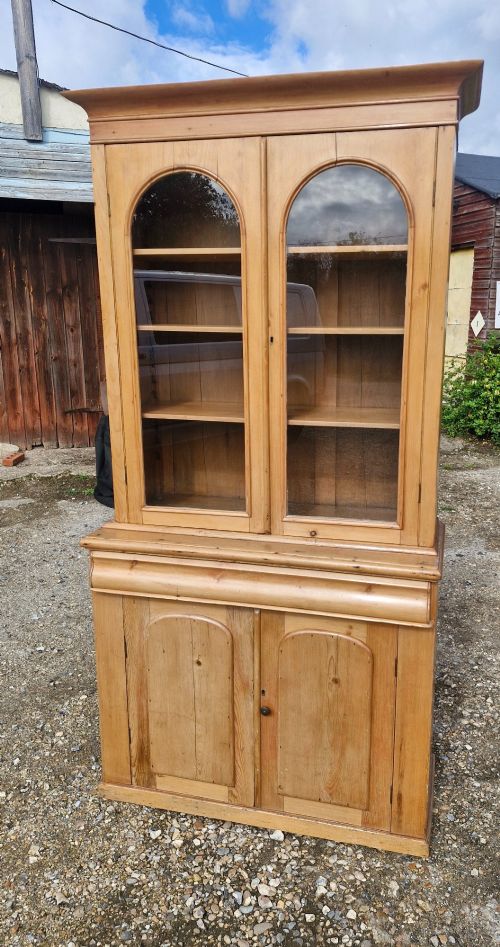
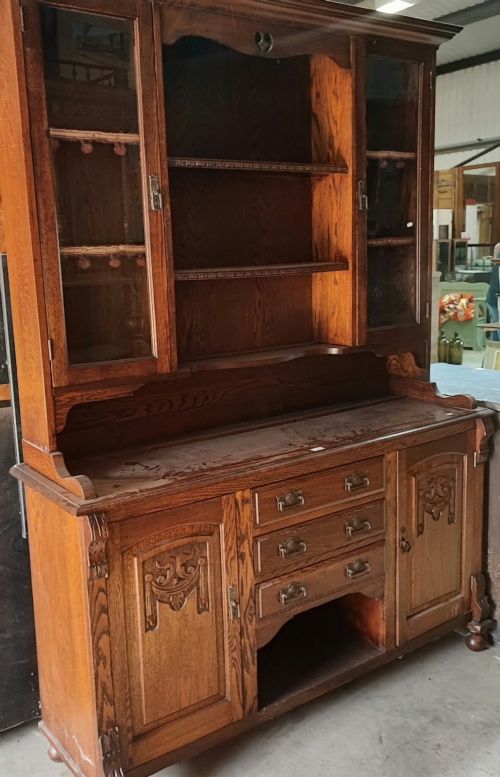
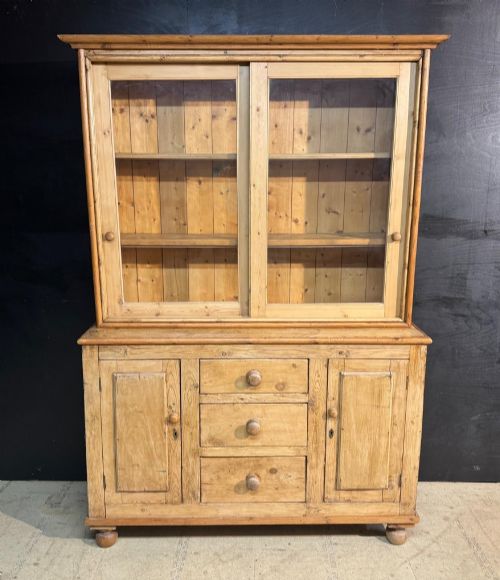
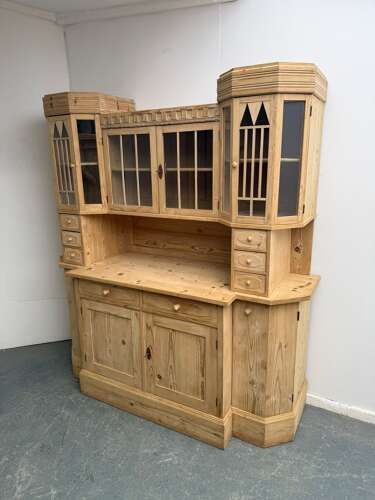


Glazed Kitchen Hutch
These glazed kitchen hutch pieces bring enduring utility and timber warmth to domestic spaces.
Glazed Kitchen Hutch
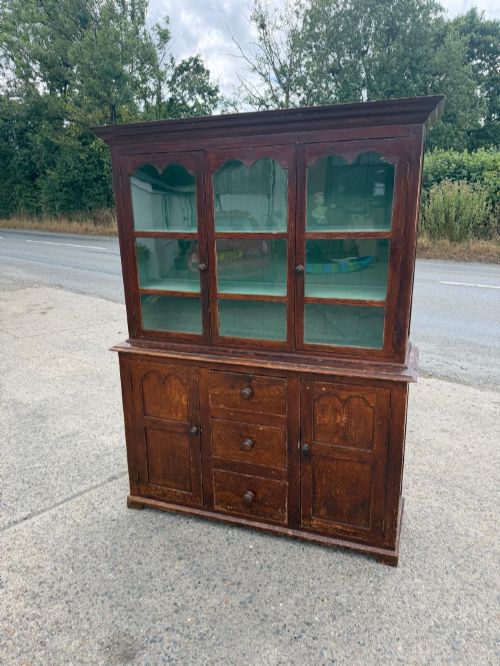
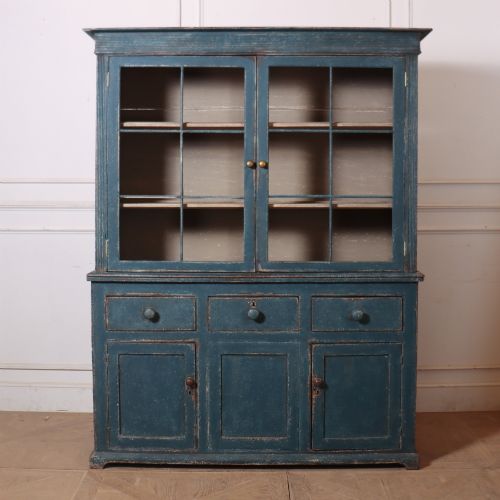
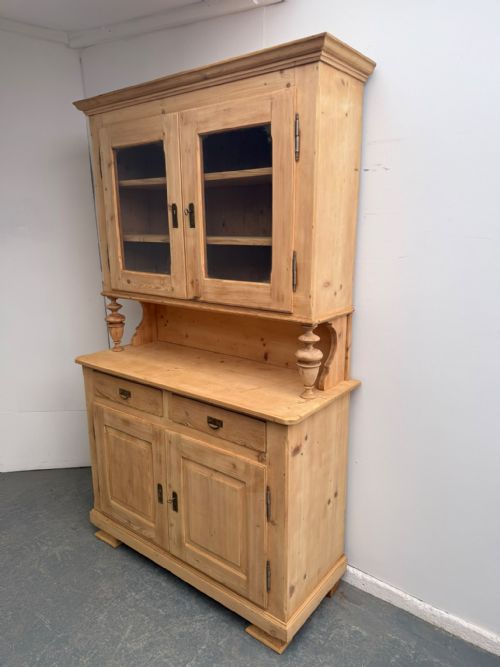
When you search for glazed kitchen hutch items, you are looking at utilitarian storage furniture designed for displaying crockery and provisions. These pieces encompass regional forms such as West Country dressers, Welsh dressers, and two-piece kitchen cabinets.
The versions you are most likely to meet on this page hail from the nineteenth century, the Edwardian era, and the nineteen-thirties. They appear predominantly in pine and oak, often featuring glass-fronted upper sections paired with lower cupboards or drawers.
How they were made
Cabinet makers utilised solid timber, primarily pine and oak, constructing carcasses designed to withstand daily domestic service. Joinery methods relied on traditional pegged and dovetailed joints to ensure long-term structural stability.
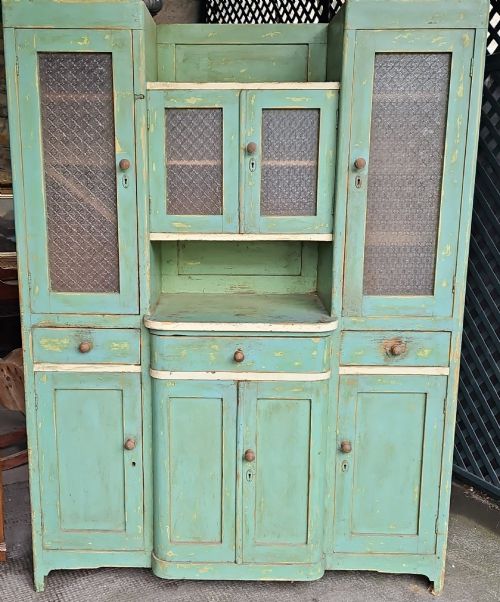
Surfaces received various treatments including clear wax, scrubbed finishes, decorative scrumbled paint, or applied layers of cream and teal pigments. Glazing was fitted into wooden door frames using putty, occasionally utilising textured glass panes.
Listings span the nineteenth century, the Edwardian period, and the nineteen-thirties, dominated by pine and oak construction.
What varies in quality
The standard of a glazed kitchen hutch depends upon the integrity of its timber selection and the retention of original surface treatments. Pieces retaining their early paint finishes or natural patinated wax sit at the upper end of the scale.
Construction details also dictate distinction, separating utilitarian workshop items from finer regional examples. The survival of original brass hardware and undamaged glass panes further elevates the standing of an individual piece.
The Glazed Kitchen Hutch Glossary
- Breakfront
- A piece of furniture where the central section projects forward from the flanking outer sections.
- Scrumbled
- A decorative paint technique involving translucent layers dragged or combed over a lighter base colour to simulate grain.
- Welsh dresser
- A traditional kitchen unit comprising an open-shelved or glazed upper rack above a base of drawers and cupboards.
- Tiger oak
- Quartersawn oak timber displaying distinctive medullary ray figuring resembling tiger stripes.
Glazed Kitchen Hutch: Frequently Asked Questions
What is a glazed kitchen hutch?
A glazed kitchen hutch is a piece of utilitarian furniture featuring glass-fronted upper compartments for display and lower storage cupboards. They were traditionally used in domestic kitchens and pantries to house tableware and dry goods.
On this page, the pieces take the form of regional dressers, breakfront cabinets, and two-section units dating from the nineteenth century onwards.
How were these hutches used?
These pieces served as the primary storage and display hub in historic domestic kitchens. The upper glazed sections protected delicate ceramics from dust while keeping them visible.
The lower cupboards and drawers held heavier pots, pans, linens, and provisions required for daily household management.
How do I live with pine furniture?
Living with nineteenth-century pine involves embracing the natural movement and developing patina of soft timber. Regular waxing helps nourish the wood and maintain its surface resilience against minor household spills.
Positioning pieces away from direct heat sources prevents timber shrinkage and keeps panel joints stable over time.
How do I identify Victorian pieces?
Victorian examples are identified through construction traits like hand-cut dovetail joints, solid timber carcases, and period-appropriate hardware. The integration of tiger oak or early painted finishes also points towards this nineteenth-century manufacturing window.
Comparing regional variations, such as West Country styling, helps narrow down the specific geographic origin of the cabinet.