
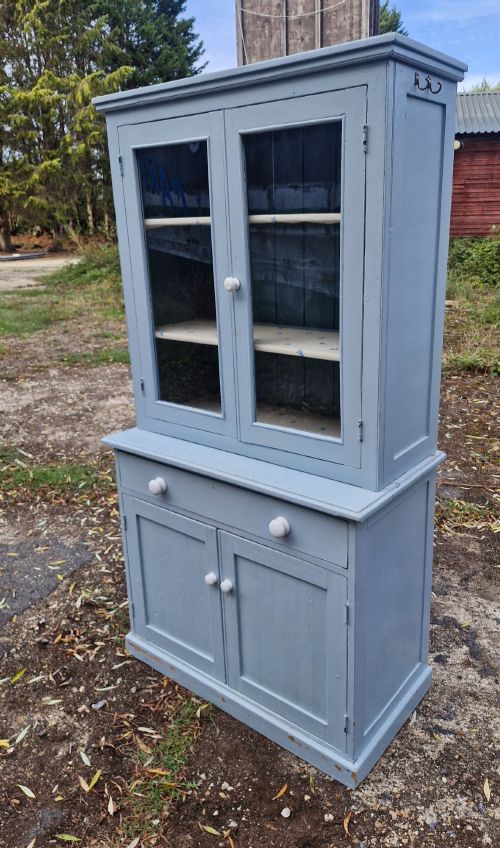
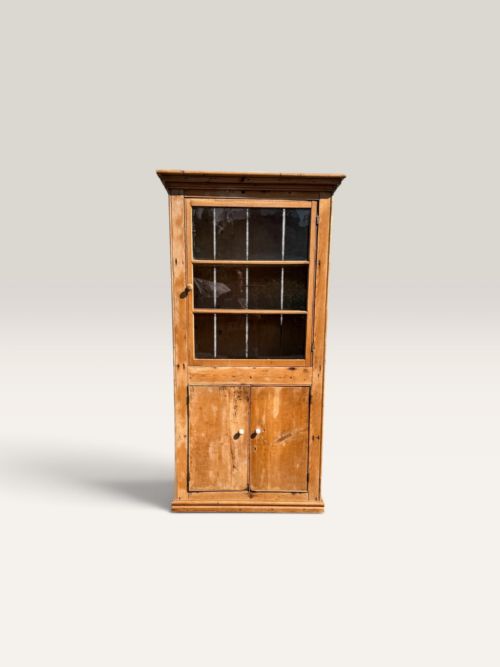
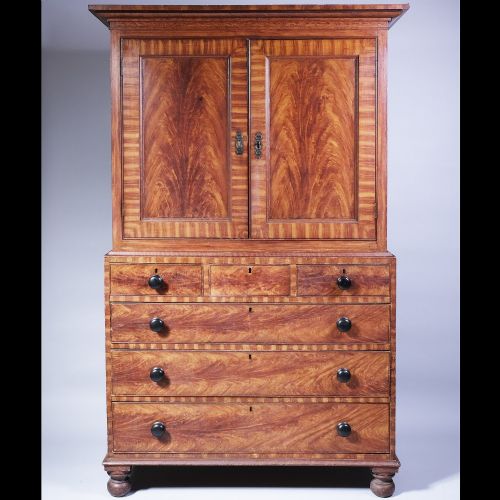
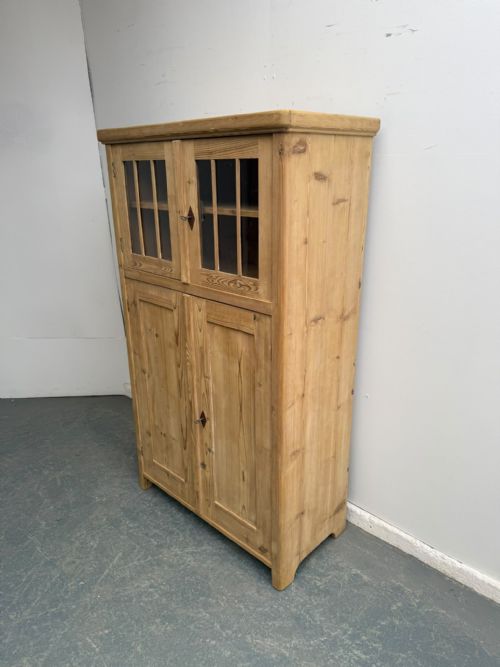
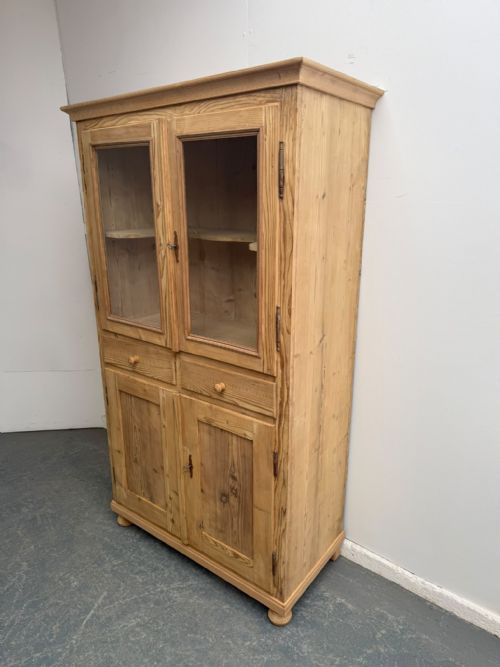
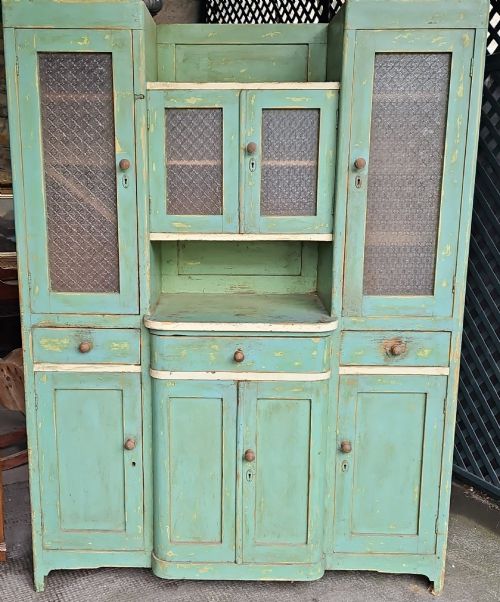


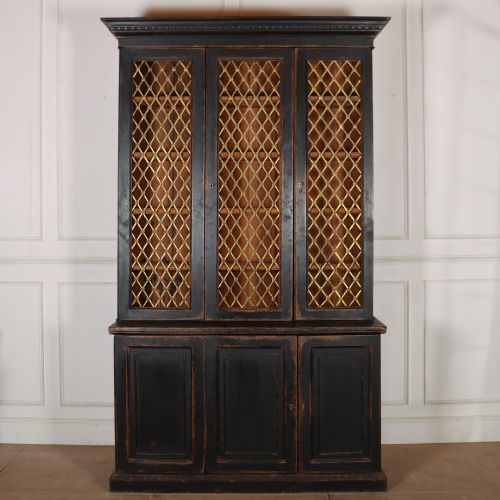


Glazed Housekeepers Cupboard
A glazed housekeepers cupboard offers generous storage and display space for kitchen or larder use, built to last for generations.
Glazed Housekeepers Cupboard
When you search for a glazed housekeepers cupboard, you are looking at substantial storage furniture designed for domestic service and provisions. These pieces typically combine a glazed upper section for display with a closed lower cabinet for storage.
The versions you are most likely to meet on this page date from the nineteenth century and the Edwardian era. They originate from various regions including England, Scotland, Ireland, and Denmark, reflecting practical country craftsmanship.
Forms span across kitchen dressers, linen presses, and larder cabinets, often constructed in two parts to aid movement and placement. Pine, oak, and pitch pine dominate the selection, frequently finished with paint, scumble, or natural wax.
Materials and construction methods
Makers relied primarily on sturdy timbers such as pine, pitch pine, and oak to build these functional cupboards. Glass panelling was fitted into doors for the upper display sections, held in place by wooden glazing bars.
Surface treatments varied from plain wax to decorative scumble paint and solid colour finishes. Iron and brass hardware, including hinges and handles, secured the heavy doors and drawers during daily use.
Listings feature pieces from the nineteenth century, Victorian era, eighteen-fifty, eighteen-eighty, nineteen-ten, and the Edwardian period.
Distinguishing quality in construction and finish
Quality in these cupboards rests on the selection of timber and the integrity of the joinery. Heavier, taller timbers and well-fitted two-part construction indicate careful original making.
The character of the finish also sets pieces apart, particularly where original scumble paint or surface patination remains intact. Thoughtful proportions and balanced door arrangements distinguish finer regional examples from simpler utility pieces.
The Glazed Housekeepers Cupboard Glossary
- Scumble paint
- A decorative paint technique involving translucent layers dragged or brushed over a base coat to imitate finer grained woods. It was widely used in country furniture during the nineteenth century.
- Pitch pine
- A durable resinous pine timber utilised for its strength and distinct grain pattern. It appears frequently in nineteenth-century cabinetry.
- Two part
- Construction comprising a separate upper cabinet resting upon a lower base unit. This design aided transport into large country houses.
- Glazed cabinet
- Furniture featuring glass-fronted doors designed for viewing contents while keeping dust away. They served varied roles from kitchen storage to bookcase display.
Glazed Housekeepers Cupboard: Frequently Asked Questions
What is a glazed housekeepers cupboard?
A glazed housekeepers cupboard is a large storage unit traditionally used in domestic service for linens, china, and dry goods. The upper glazed section allowed staff to view provisions while keeping them protected.
Today, these pieces function well as kitchen larders, bookcase displays, or dining room storage cabinets.
Where were these cupboards made?
Surviving examples originate from various regions including English, Scottish, Irish, and Danish workshops. Regional carpentry traditions influenced the choice of local timbers and paint finishes.
Pine and oak were standard choices across these different geographic areas, often shaped by local vernacular styles.
How do I care for a painted pine cupboard?
Painted and waxed pine surfaces require gentle maintenance using soft cloths and mild beeswax formulations. Avoid placing them in areas of high humidity or direct sunlight to protect the timber and paint.
Regular light dusting preserves the historic surface finish without stripping away the patination accumulated over decades.
Can these cupboards be separated for transport?
Many larger examples, particularly those described as two-part cupboards, are built in distinct sections. This modular approach made it easier to move heavy furniture through narrow doorways and up staircases.
Checking the construction details helps confirm whether a specific tall cabinet disassembles into manageable parts.