



Glazed Earthenware Decorative Charger
These glazed earthenware decorative chargers span centuries of pottery tradition, offering bold wall display and table presence.
Glazed Earthenware Decorative Charger
A glazed earthenware decorative charger is a wide, shallow dish created primarily for display rather than dining. When you search for this phrase, you encounter large platters intended to hang on walls or sit upon sideboards.
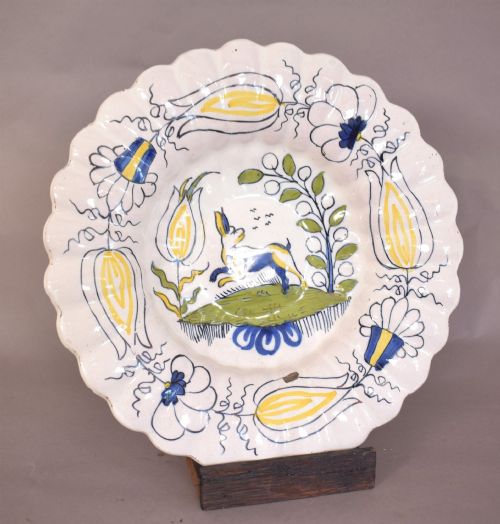
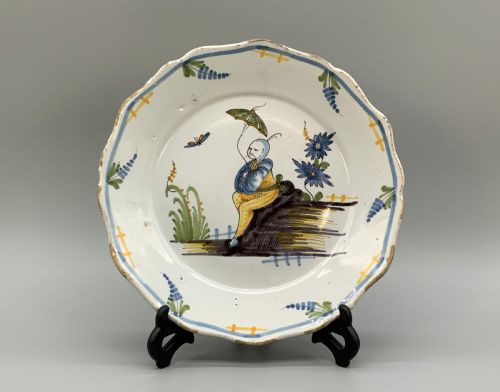
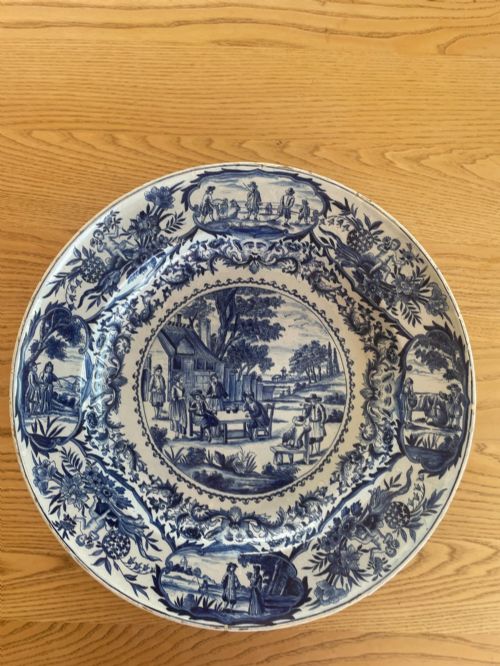
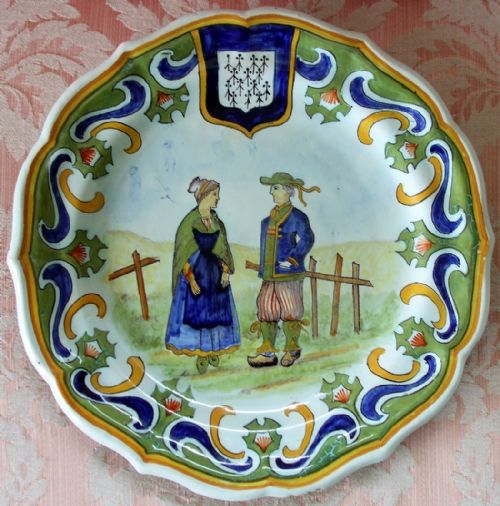
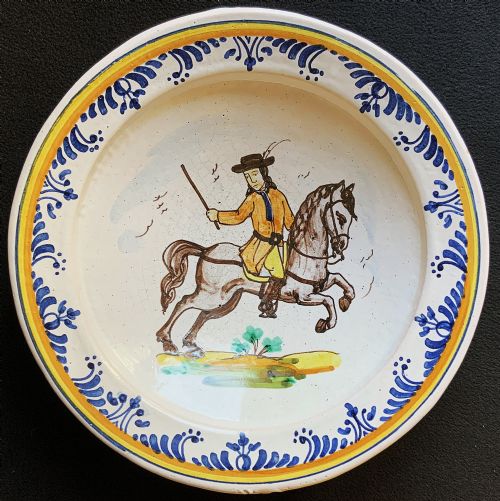
The pieces on this page span several centuries, with the eighteenth century providing numerous examples of Delft and faience production. Dutch, French, English, and Spanish potteries all contributed to this tradition of large-scale decorative plates.
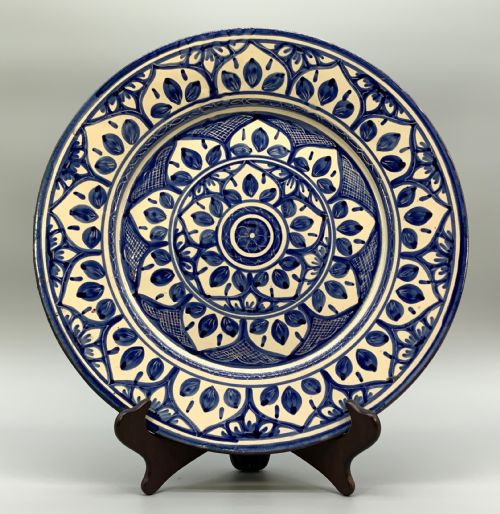
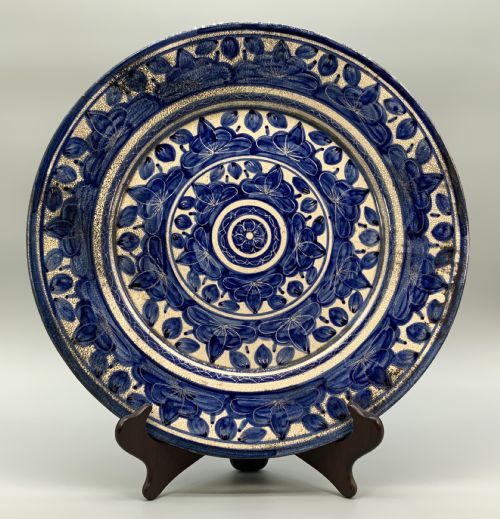
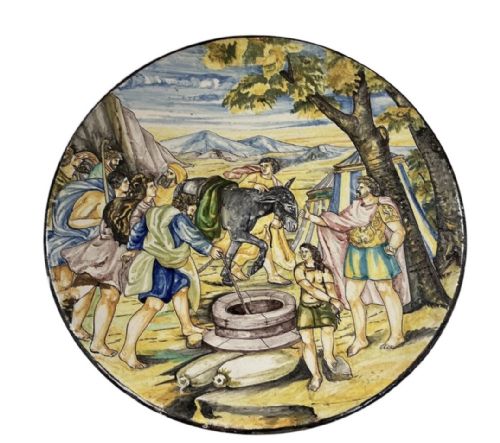
Alongside eighteenth-century Delftware, you will find nineteenth-century Italian maiolica revival pieces and twentieth-century art pottery. Forms range from classical historical scenes to blue and white Chinoiserie and Moorish Revival patterns.
Materials and production methods
Potters shaped earthenware bodies on the wheel or pressed them into moulds before applying tin glaze to create an opaque white or coloured surface. Tin-glazed earthenware provided a smooth canvas for pigments.
Painters applied metal oxides such as cobalt and manganese directly onto the unfired glaze, allowing the colours to fuse during the kiln firing. Polychrome designs required careful layering of pigments to achieve rich contrasts.
Materials documented across the collection include tin glaze, cobalt oxide, and ceramic earthenware bodies.
Factors of quality and execution
Quality rests upon the crispness of the hand-painted brushwork and the complexity of the narrative or decorative scheme. Master painters working in traditions like the Pesaro school achieved remarkable detail in historical and figural scenes.
The stability of the glaze and the depth of the fired pigments distinguish finer pieces from standard production. Surface preservation and the absence of extensive restoration also influence the standing of an individual charger.
Clarice Cliff
The Glazed Earthenware Decorative Charger Glossary
- Charger
- A large decorative plate or platter, traditionally used on sideboards or hung for display. These wide vessels provide a generous canvas for painted ornamentation.
- Tin-Glazed Earthenware
- Pottery coated with a glaze containing tin oxide, which fires to an opaque white finish. This technique underpins traditional Delftware and faience.
- Maiolica
- Italian tin-glazed earthenware decorated with colours on an opaque white glaze. The tradition includes Renaissance styles and later nineteenth-century revivals.
- Chinoiserie
- European decorative motifs imitating Chinese artistic styles. Painters often used blue and white pigments to render fantastical landscapes and figures.
- Grand Feu
- A firing technique where raw glaze and pigments undergo a single high-temperature firing together. This process fuses the decoration deeply into the glaze surface.
Glazed Earthenware Decorative Charger: Frequently Asked Questions
How were glazed earthenware decorative chargers used historically?
These large vessels were primarily made for display on sideboards, dressers, and dining walls to signal status and taste. Households used them to present fruit or simply to showcase fine painted decoration.
Over time, their primary role shifted firmly toward wall decoration, supported by foot rings or mounting holes incorporated into the ceramic body during manufacture.
How do I hang a heavy antique charger safely?
Displaying a large earthenware charger requires a specialised wall hanger with coated springs that distribute weight evenly across the rim. Avoid wire or clip systems that apply localized pressure to the fragile edges.
Ensure the wall fixing engages directly with solid brick or uses adequate wall plugs for plasterboard, as these ceramic pieces carry substantial weight.
What is the difference between Delftware and maiolica?
Delftware generally refers to tin-glazed earthenware produced in the Netherlands and England, famously known for blue and white or polychrome Chinoiserie designs. Maiolica describes the equivalent Italian tradition with its roots in Renaissance tin-glazed wares.
While both share a tin-glaze technique over an earthenware body, their regional painting styles, colour palettes, and ornamental motifs diverge distinctly.
How can I tell an eighteenth-century charger from a later revival piece?
Eighteenth-century pieces typically exhibit hand-thrown potting irregularities, thinner bodies, and specific glaze characteristics such as slight crazing or minor edge fritting from age. The pigments sink slightly into the tin glaze during firing.
Nineteenth-century revival pieces, such as those in the Urbino or Moorish styles, often feature heavier bodies, brighter uniform pigments, and different potting techniques characteristic of industrial-era ceramic production.