



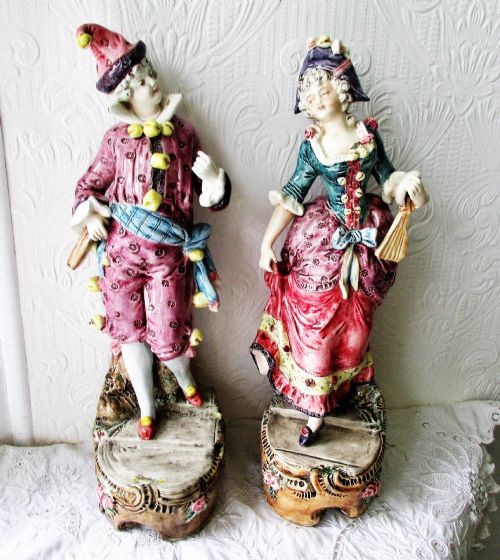
Glazed Earthenware Ceramic Figure
These glazed earthenware ceramic figure examples bring domestic and historical character into a room through moulded clay and colour.
Glazed Earthenware Ceramic Figure
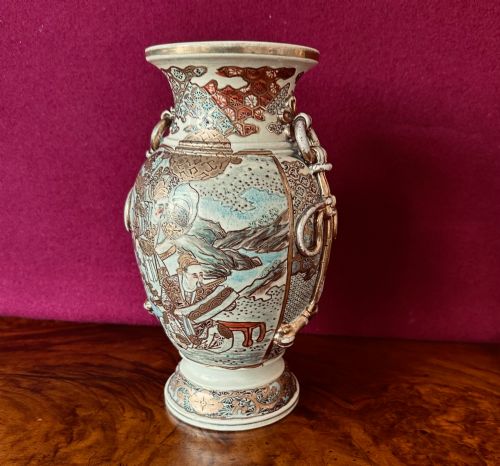
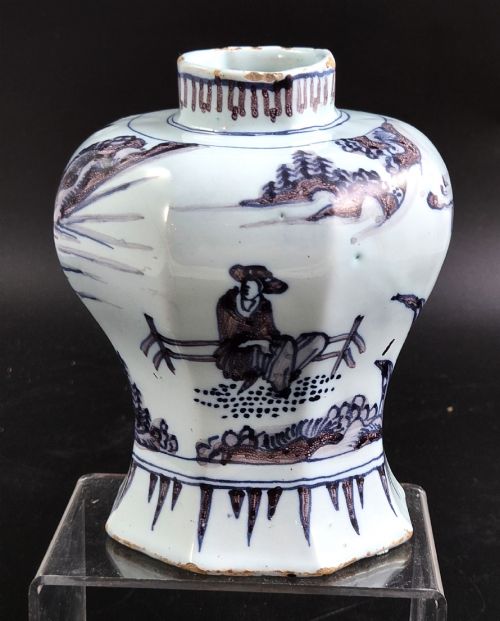
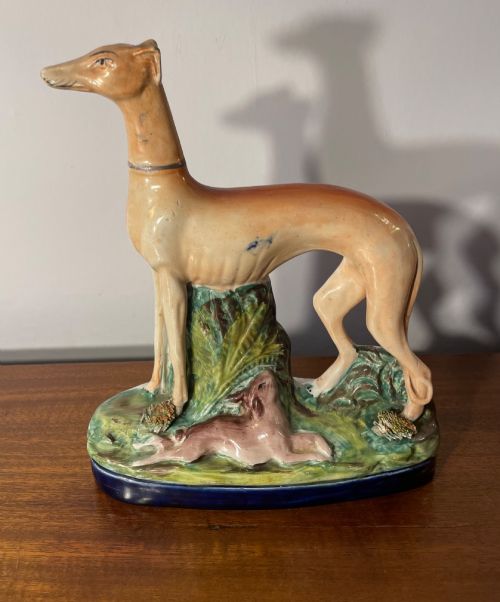
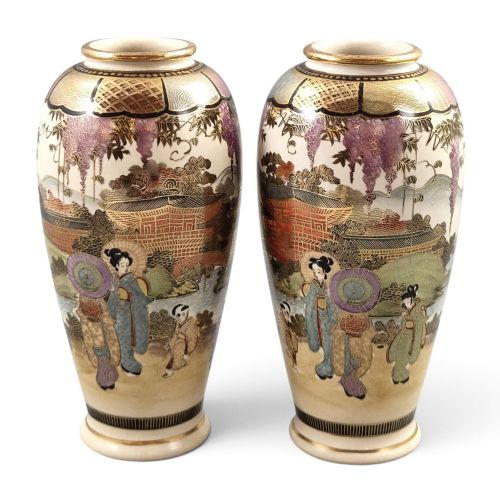
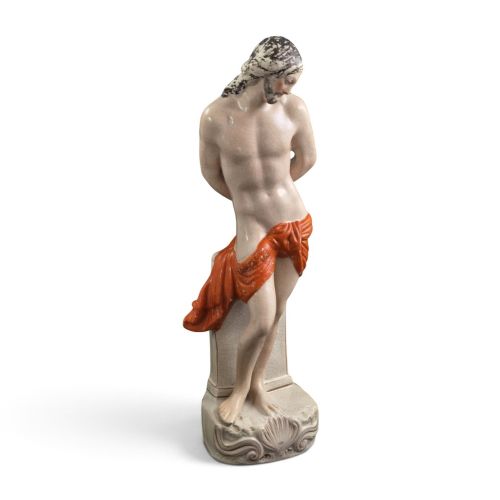
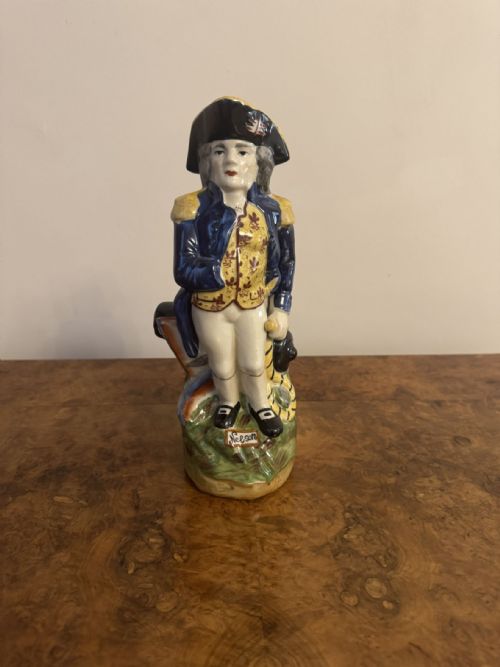
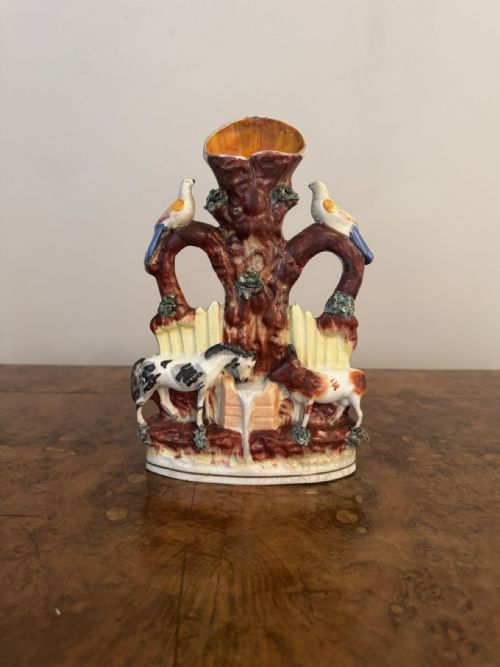
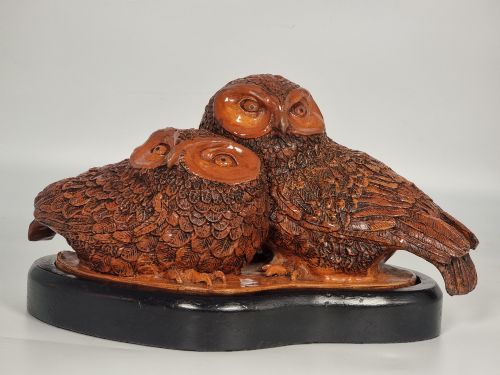
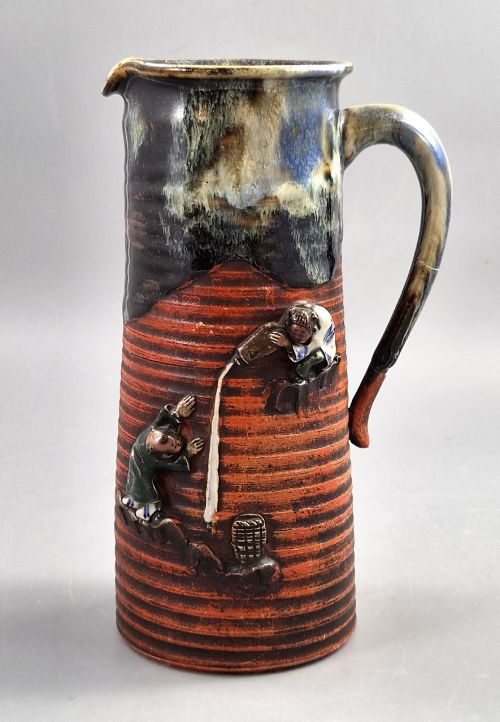
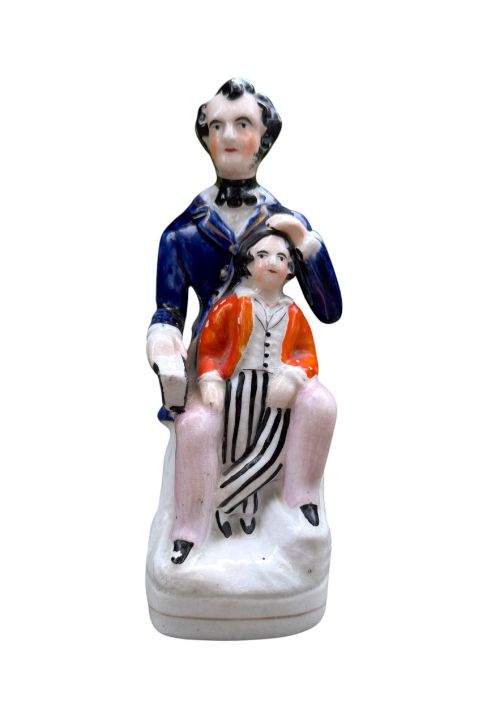
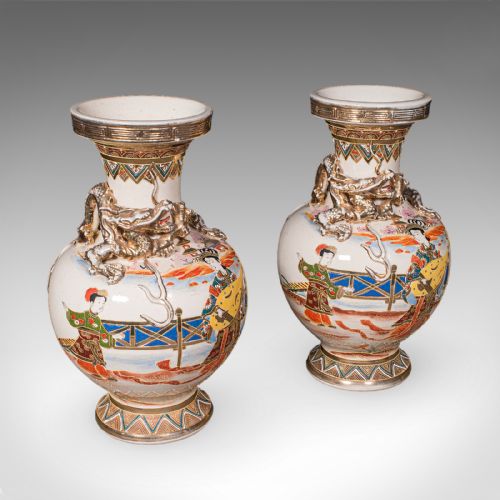
A glazed earthenware ceramic figure spans British Staffordshire pottery, continental faience, and Asian ceramics, taking the form of human portraits, animals, and mythological subjects. Collectors encounter Victorian flatbacks, Staffordshire portrait figures, and Japanese Sumida Gawa wares alongside studio pottery figurines.
The domestic mantelpiece and cabinet provided the original home for these glazed earthenware ceramic figure objects, which often commemorated historical events, literary characters, or popular personalities of the nineteenth century.
Makers utilised earthenware bodies covered in lead glaze, enamel, or treacle glaze to bring texture and narrative depth to subjects ranging from political leaders to household pets.
Materials and production techniques
Potters shaped the earthenware body either by pressing clay into two-part moulds or by hand sculpting individual elements, sometimes adding applied figures before firing.
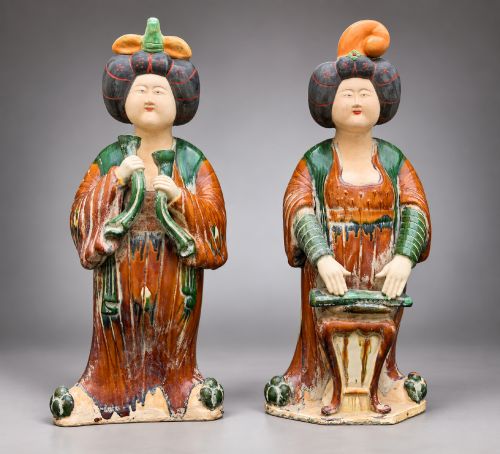
Glazing involved coating the fired clay with lead glaze, tin enamel, or specialised coloured glazes such as the amber treacle glaze or the multi-coloured sancai palette.
Enamel colours and occasional gold leaf details were painted over the glaze and subjected to a lower temperature kiln firing to fix the palette to the ceramic surface.
Listings feature earthenware bodies decorated with lead glaze, enamel, and gold leaf across Victorian, Georgian, and twentieth-century periods.
Distinguishing quality in modelled ceramics
Skill in the application of enamel painting and glaze distribution dictates visual success, with master potters achieving controlled runs and vibrant, distinct palettes rather than muddy or pooled colour.
Completeness of original components, such as spill vases, paired animals, or associated bases, preserves the intended composition and historical integrity of the piece.
Charles Vyse·Inoue Ryōsai Workshop·Thomas Parr·Ralph Wood
The Glazed Earthenware Ceramic Figure Glossary
- Earthenware
- Porous ceramic fired at a relatively low temperature and requiring a glaze to achieve impermeability to liquids. It forms the structural body for the majority of nineteenth-century portrait figures and Staffordshire pottery.
- Flatback
- A figure moulded with a decorated front and a mostly unglazed, flat reverse designed to sit flush against a wall on a mantelpiece. This construction method saved labour and materials for Staffordshire potters.
- Sancai
- Three-colour glaze tradition originating in China, typically combining amber, green, and cream or straw tones on an earthenware body. The technique creates characteristic runs and pooling across modelled surfaces.
- Pearlware
- Refined earthenware developed by British potters in the late eighteenth century, featuring a thin lead glaze over a whitish body that pools blue in recesses. It served as an improved canvas for underglaze and enamel painting.
- Spill vase
- A hollow cylindrical holder integrated into a ceramic figure group, designed to hold wooden spills for lighting candles or fires. These vessels combine utilitarian function with sculptural portraiture.
Glazed Earthenware Ceramic Figure: Frequently Asked Questions
What is a Staffordshire flatback?
A Staffordshire flatback is a figural ceramic moulded primarily for display on a shelf or mantelpiece, featuring a detailed front and a flat, unglazed back.
Potters designed these earthenware pieces to be viewed entirely from the front, which reduced production time and allowed the figures to sit flush against interior walls.
What distinguishes pearlware from earthenware?
Pearlware is a refined, whiter variant of earthenware achieved by adding small amounts of cobalt to the transparent lead glaze.
This addition creates a slight bluish pooling in crevices and provides a brighter background for painted enamel decoration compared to standard creamware or darker earthenware bodies.
Why do some figures feature a hollow tube?
The hollow cylindrical tube found beside many figures serves as a spill vase for holding thin wooden tapers used to transfer flames.
In nineteenth-century homes, these combination pieces offered a practical household accessory alongside decorative portraiture or animal modelling.