



Glazed Drinks Cabinet
These glazed drinks cabinets bring period character to modern hosting, offering glass-fronted storage for bottles and glassware.
Glazed Drinks Cabinet
A glazed drinks cabinet unites display with containment, protecting glassware while keeping bottles visible behind glass doors. When you search for a glazed drinks cabinet, you encounter forms ranging from corner wall-hanging cupboards to substantial sideboards and credenzas.
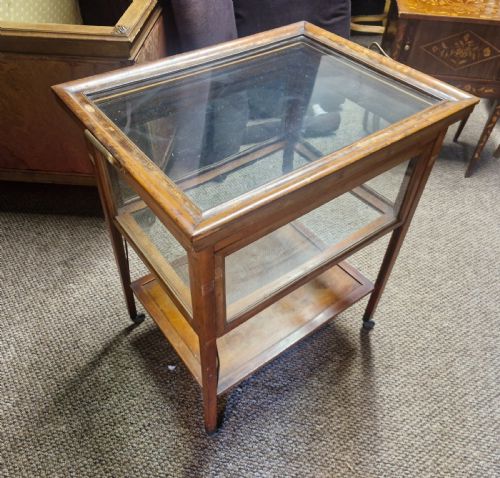
The pieces appearing on this page span several eras, crossing Victorian, Edwardian, Georgian, and twentieth-century decades. Alongside dedicated drinks furniture, the selection includes related serving forms such as tea trolleys and display cabinets utilised for bottle storage.
Makers adapted traditional cabinet forms to suit changing social habits across the nineteenth and twentieth centuries. Buyers find everything from compact wall cabinets to freestanding walnut and mahogany pieces equipped for modern entertaining.
Materials and construction
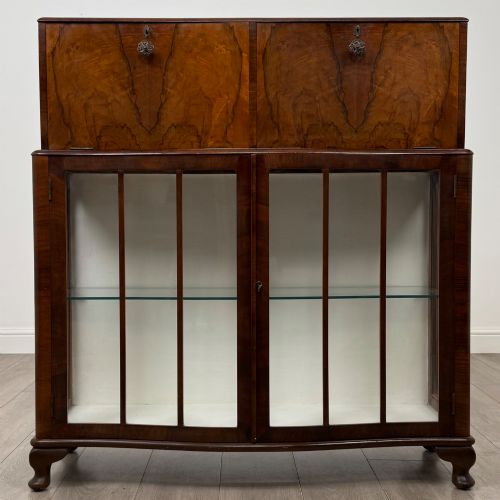
Cabinet makers utilised dense hardwoods such as mahogany and walnut, frequently selecting figured burr walnut veneers for decorative impact on primary surfaces. Solid oak and rosewood also appear, sometimes paired with inlaid details and carved ornamentation.
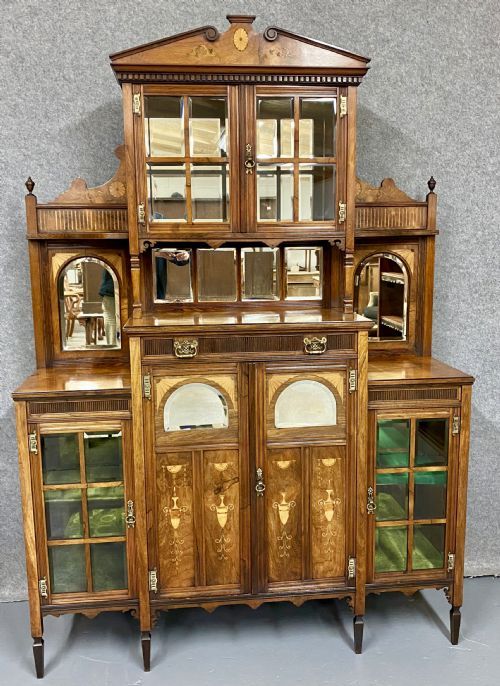
Glass panels are fitted into doors to allow visibility of the contents within, while brass hardware provides functional hinges, locks, and handles. Ormolu mounts, porcelain details, and mirror glass feature on specific examples from the Victorian and Edwardian periods.
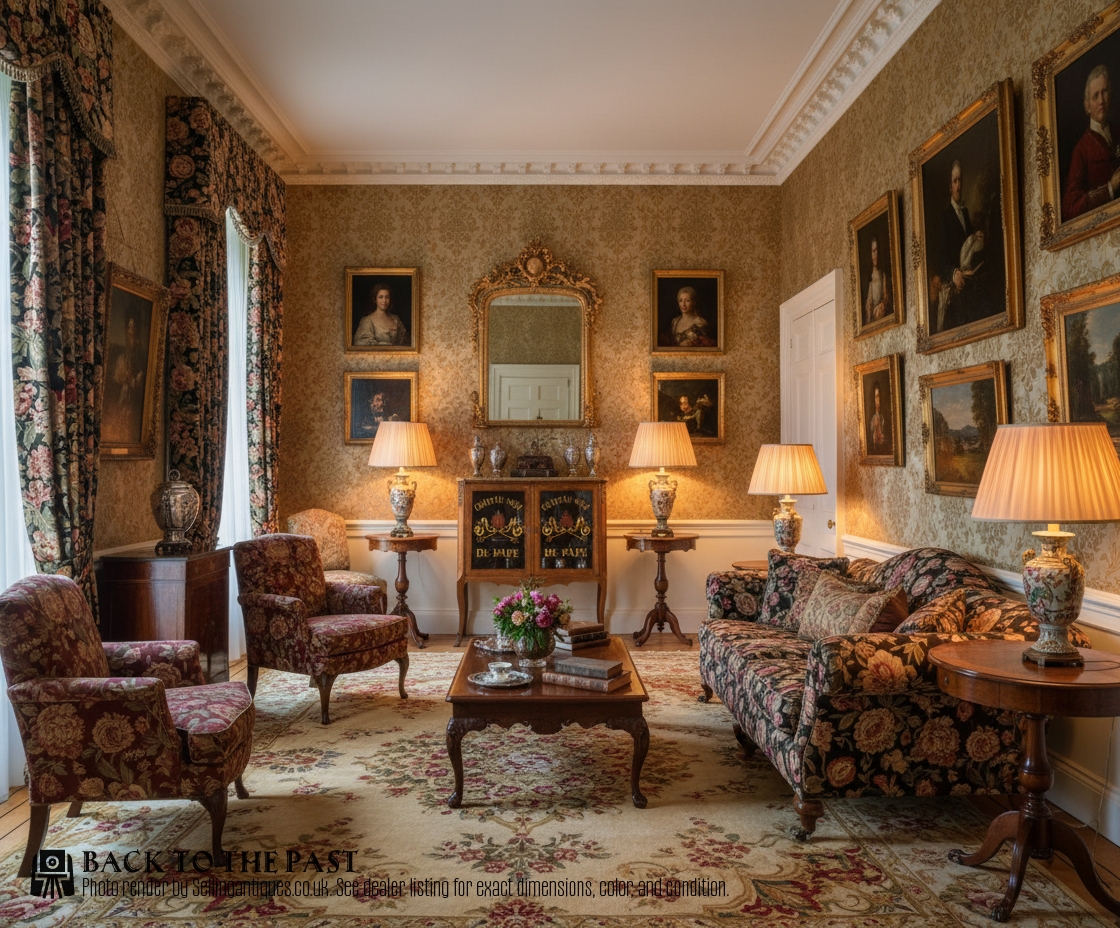
One twentieth-century French display cabinet arrives with hand sign-written references to the Rhone valley vineyards of Chateauneuf-du-Pape.
Variations in quality
Quality rests in the selection of timbers and the precision of the joinery rather than mere age or decorative flourish. Fine timber grain, particularly in figured walnut and mahogany, indicates careful material selection by the maker.
Hardware integrity and the smoothness of operating drawers and locking doors separate standard utility furniture from finer examples. The integration of glass panels and internal fittings reflects the tier of craftsmanship involved in production.
The Glazed Drinks Cabinet Glossary
- Burr walnut
- A figured wood grain obtained from walnut tree growths, prized for its swirling patterns. Cabinet makers applied it as a veneer to highlight primary display surfaces.
- Ormolu
- Gilded bronze ornamentation applied to furniture, popular in various nineteenth-century revival styles. It adds metallic contrast to dark timber surfaces.
- Credenza
- A sideboard or buffet unit used for storage and serving, often featuring cupboards and display space. Examples on this page include nineteenth-century burr walnut construction.
- Drop side
- A hinged table leaf that lowers when not in use, seen on tea and cake trolleys. This mechanism allows furniture to save space in smaller rooms.
Glazed Drinks Cabinet: Frequently Asked Questions
What is a glazed drinks cabinet?
A glazed drinks cabinet is a piece of furniture designed to store and display bottles and glassware behind glass panels.
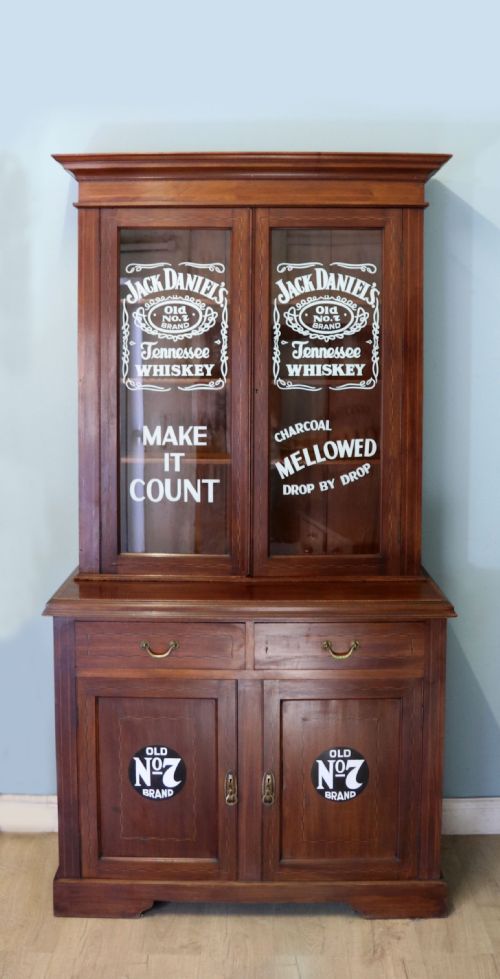
These cabinets range from compact wall-hanging corner cupboards to large freestanding credenzas and bookcases adapted for entertaining.
How do I date a cabinet?
Dating relies on observing construction methods, timber choices, and stylistic traits associated with specific periods like the Victorian or Edwardian eras.
Makers incorporated design elements specific to their decades, though many forms evolved slowly across the nineteenth and twentieth centuries.
Where should I place it?
These cabinets suit dining rooms, living spaces, or home bars where bottles and glassware require accessible storage.
Consider the door swing space and lighting conditions to ensure the glass panels adequately showcase the contents.
Are tea trolleys drinks cabinets?
Tea trolleys serve a related function in hospitality, featuring drop sides and trays for mobile serving rather than fixed wall or floor storage.
They offer an alternative method for presenting glassware and bottles during gatherings.