
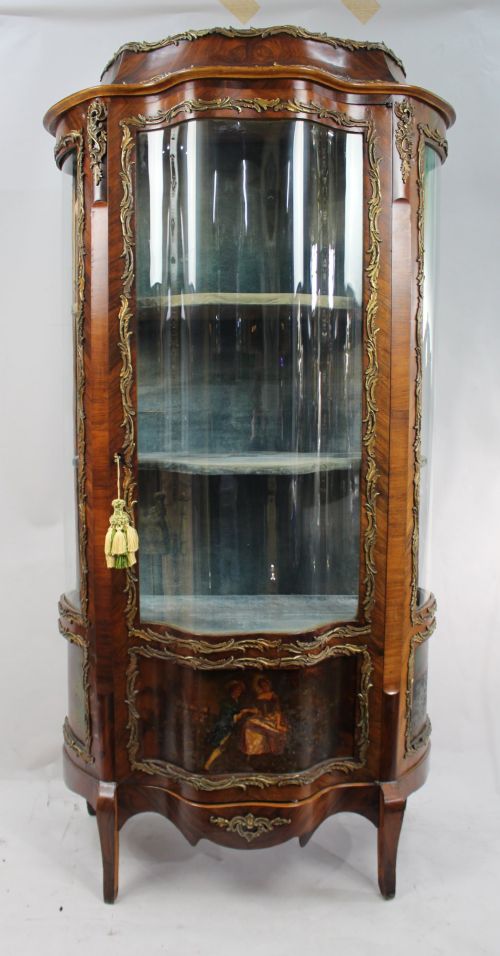
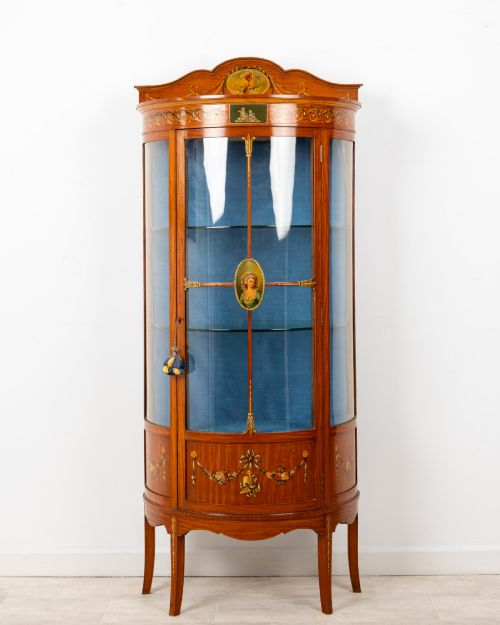


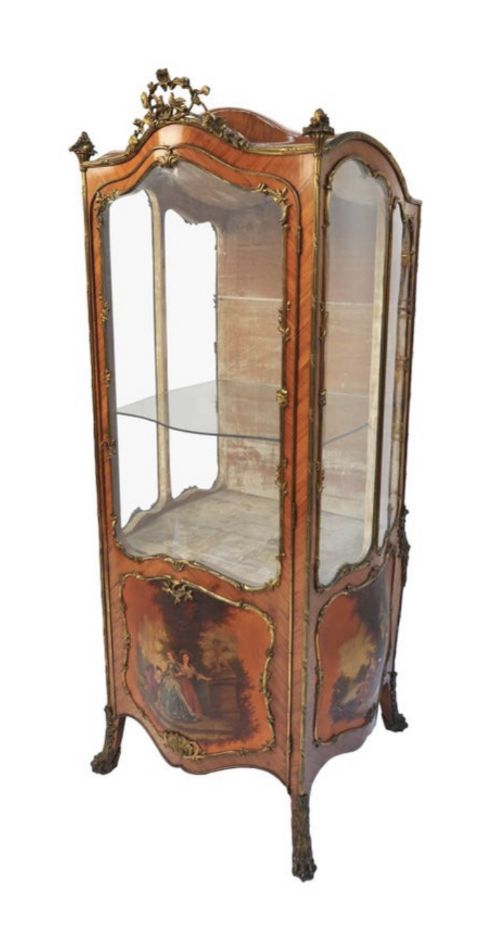


Hand Painted Glass Cabinet
These hand painted glass cabinet examples are decorative display pieces designed to showcase objects while adding colour to a room.
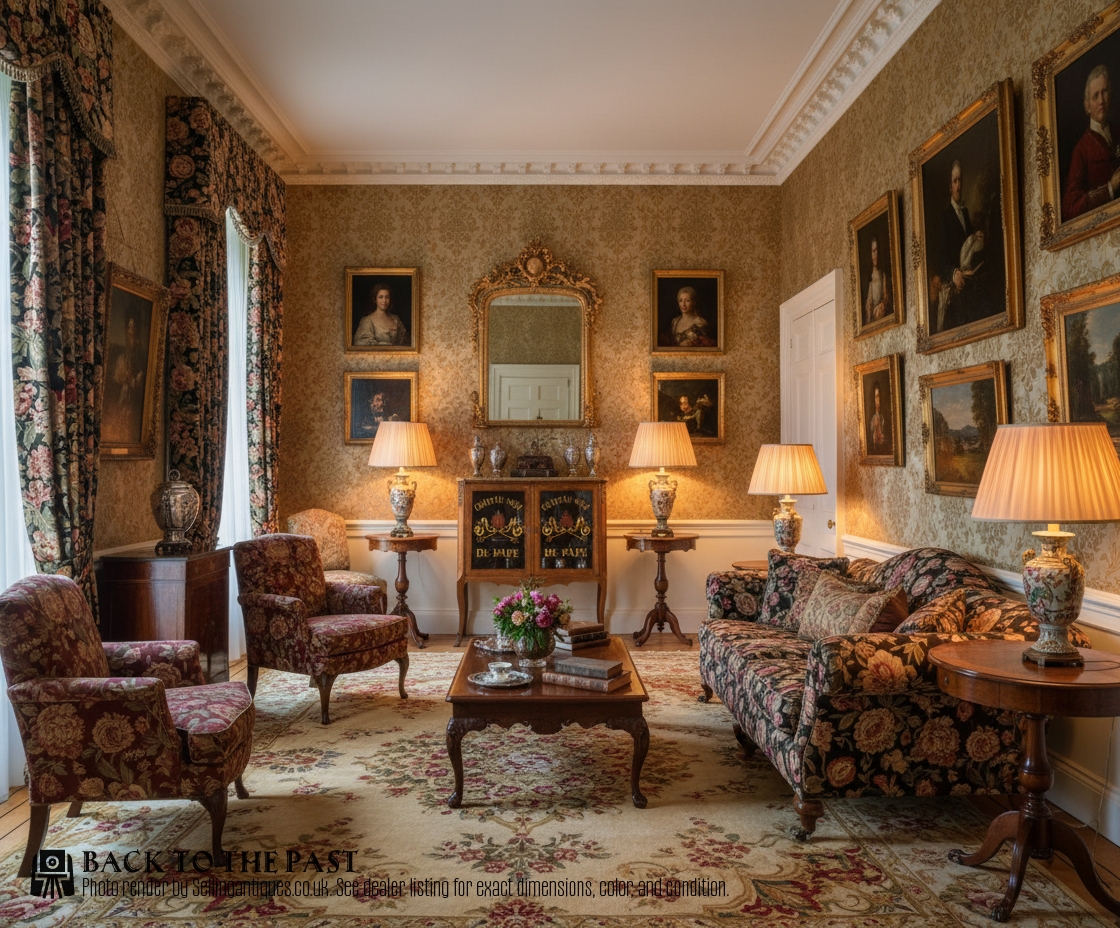
Hand Painted Glass Cabinet
A hand painted glass cabinet brings together fine cabinetmaking and delicate surface decoration, serving as both a functional showcase and a visual focal point in a room. When searching for a hand painted glass cabinet, buyers encounter forms ranging from freestanding vitrines and serpentine display units to bow front cabinets, corner cupboards, and occasional bijouterie tables.
The selections span the nineteenth century through the early twentieth century, taking in Edwardian interpretations alongside French Revival pieces. Common formats include satinwood cabinets on stands, glazed bookcases, and lacquer work, reflecting the varied domestic tastes of their periods.
How they were made
Construction relies on timber foundations of mahogany, satinwood, and kingwood, frequently enhanced with intricate crossbanding and floral painted decoration or lacquer work. Glazed panels and doors form the primary display housing, allowing light to reach the interior shelves.
Many examples incorporate decorative metalwork, utilising brass, gilt bronze, and ormolu mounts to accent the framework. Surface finishes often feature vernis martin techniques, imparting layered translucent varnish to painted panels.
Materials recorded across these listings include satinwood, mahogany, kingwood, glass, fabric, gilt bronze, brass, and ormolu.
What varies in quality
Quality shows in the execution of the painted decoration and the selection of timber veneers, where finer pieces display crisp floral details and well-figured satinwood or mahogany grains. The integration of structural mounts, such as gilt bronze or ormolu, distinguishes standard work from superior examples.
The joinery of curved elements like serpentine fronts, bow fronts, and corner angles requires considerable skill to execute cleanly. Better pieces maintain balanced proportions between their glazed upper display sections and their supporting stands or lower cabinets.
The Hand Painted Glass Cabinet Glossary
- Vitrine
- A glass-fronted display cabinet or showcase designed specifically for exhibiting porcelain, curiosities, or small decorative objects. They often feature extensive glazing to maximise light penetration.
- Vernis Martin
- A type of simulated Japanese lacquer developed in eighteenth-century France and emulated later, using multiple layers of translucent varnish over painted decoration. The technique creates a smooth, glossy surface finish.
- Satinwood
- A lustrous, hard timber native to India and Ceylon, prized for its golden-yellow colour and silky sheen. It was widely utilised as a veneer or solid wood in refined eighteenth and nineteenth-century cabinetmaking.
- Ormolu
- Gilded bronze ornamentation applied to furniture and decorative objects, providing metallic contrast against wood surfaces. The finish is achieved through the application of a mercury-gold amalgam or modern electroplating.
- Bijouterie table
- A small glass-topped display table intended for holding jewellery, medals, or small ornaments. These tables typically feature hinged or lift-off glazed lids.
Hand Painted Glass Cabinet: Frequently Asked Questions
What goes inside a display cabinet?
These cabinets suit the display of porcelain, glass, miniatures, and small collectables where visibility and protection from dust are priorities. The glass panels and internal shelving allow items to be viewed clearly from multiple angles.
Positioning the cabinet away from direct sunlight helps protect delicate contents and the painted timber surfaces from fading over time.
How do I clean satinwood?
Maintenance involves gentle dusting with a soft, dry cloth to prevent the accumulation of particles on the timber and glass. Moisture should be kept away from the painted panels and polished surfaces to preserve the finish.
Harsh chemical cleaners or abrasive pads will damage the varnish and the underlying painted decorations, so simple dry maintenance is best.
Where should I place a cabinet?
Placing these pieces in principal reception rooms or hallways allows the decorative painted panels and gilt mounts to be seen properly. Stable room temperatures prevent the wood and veneers from drying out or warping.
Wall clearance and floor levelness matter particularly with serpentine and bow front pieces to ensure the doors close squarely.
Are these cabinets French or English?
The pieces span multiple design traditions, including French styles like Louis XV Revival and Vernis Martin works alongside English Edwardian satinwood and Chippendale Revival pieces. Makers drew on continental decorative vocabularies as well as domestic revival fashions.
Examining the timber types, mount styles, and painted motifs helps indicate the specific regional origin and period of manufacture.