
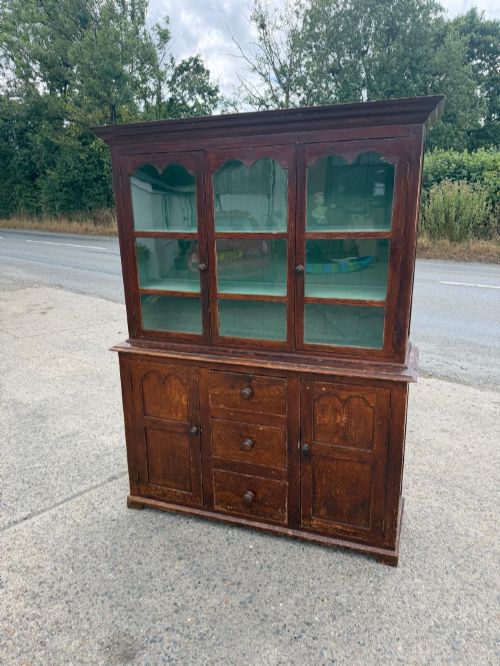
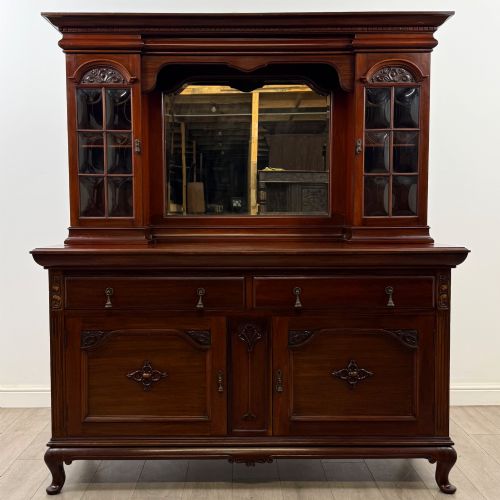
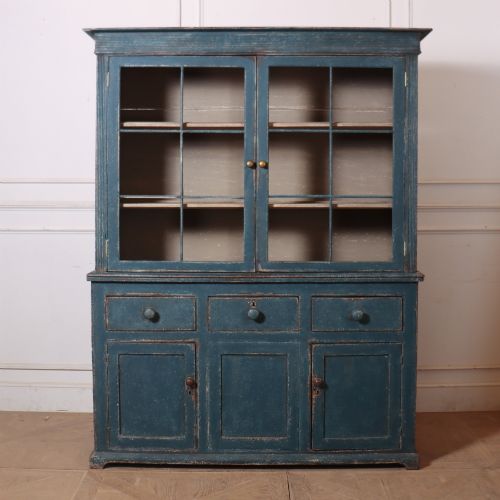
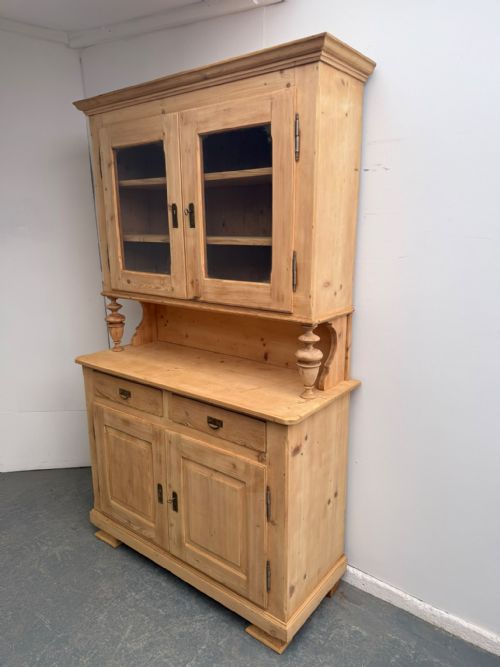


Glazed Display Hutch Cabinet
These glazed display hutch cabinet pieces combine practical storage with glass-fronted display, offering a traditional way to organise and exhibit china or books.
Glazed Display Hutch Cabinet
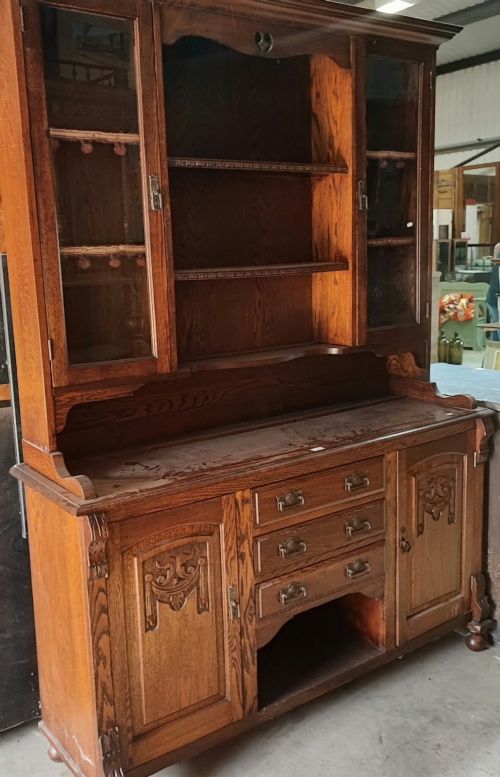
A glazed display hutch cabinet brings together lower storage cupboards and upper glass-fronted shelving units to form a practical focal point for a room. These pieces span kitchen dressers, bookcase cabinets, and dedicated display furniture.
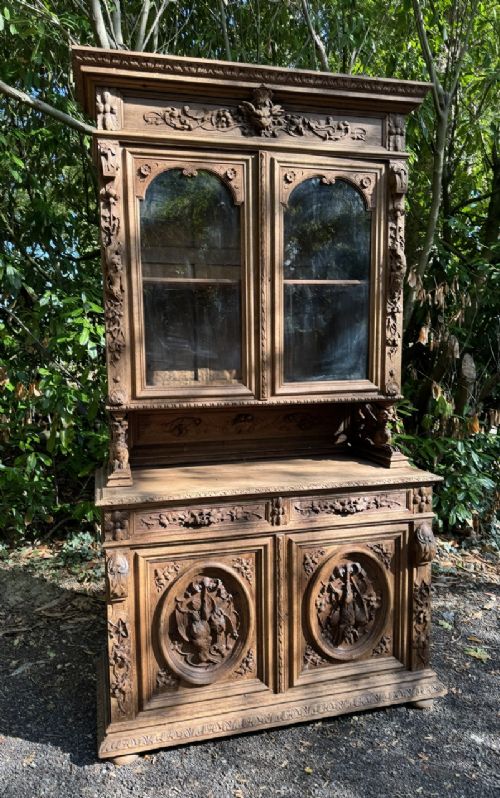
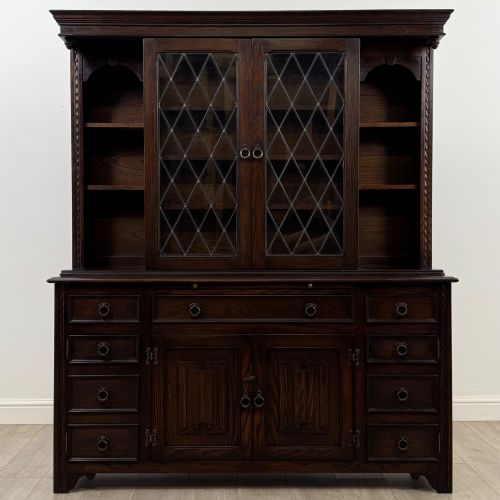
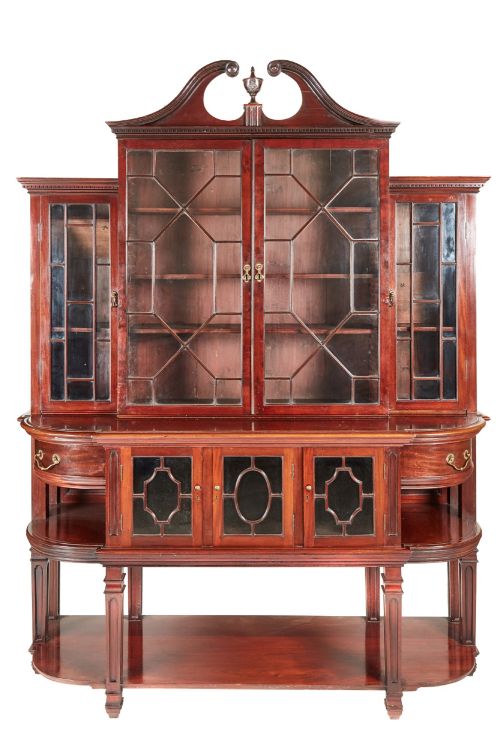
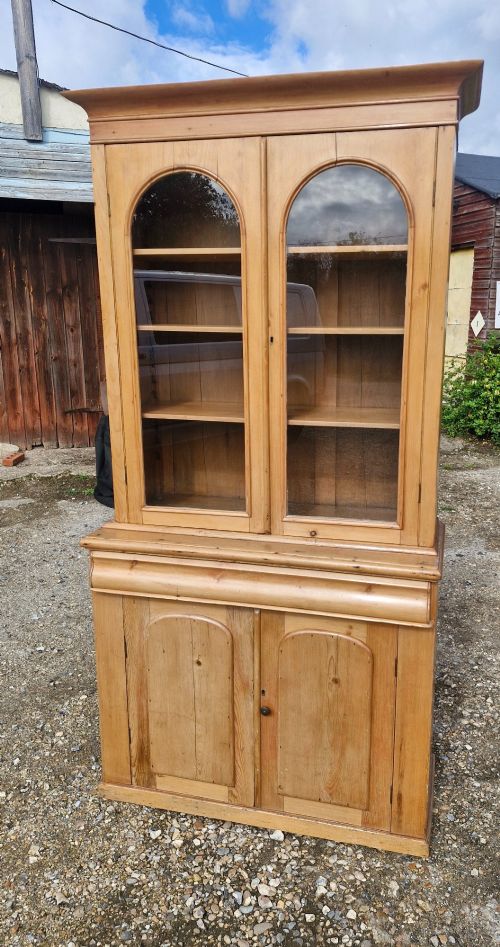
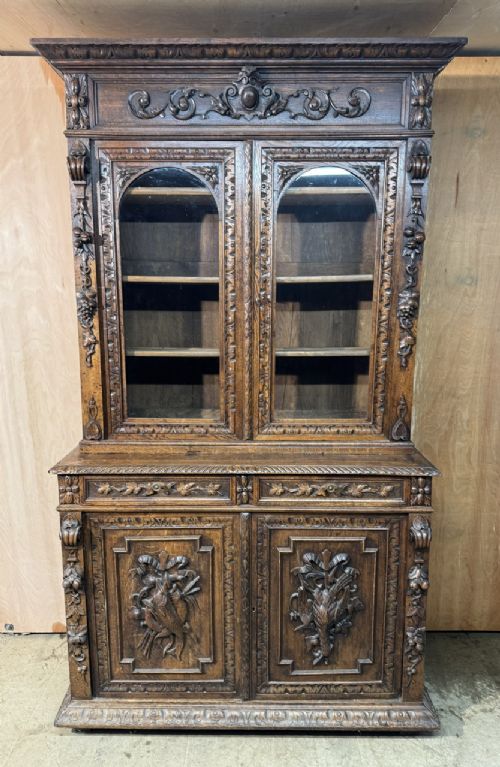
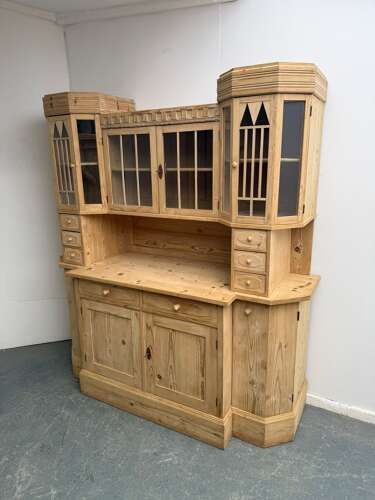
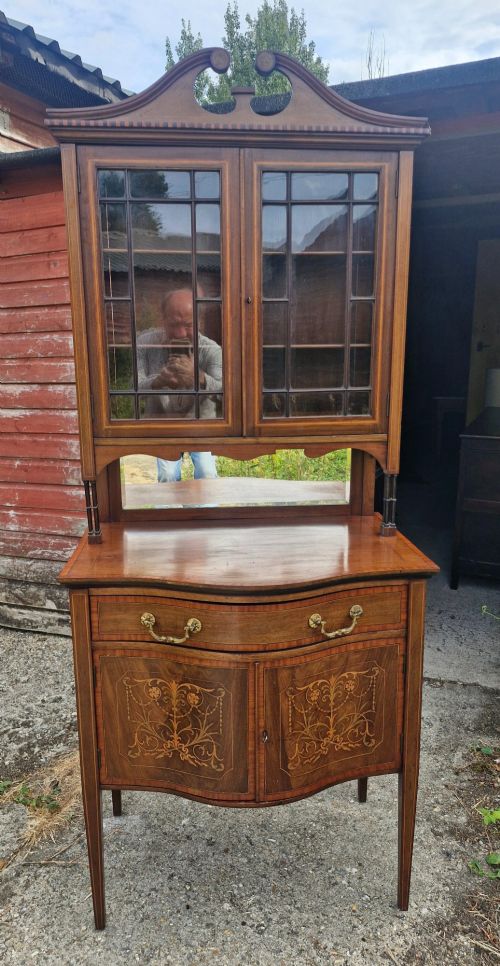
The versions most commonly met on this page range from nineteenth-century pine kitchen dressers to Edwardian mahogany display cabinets and oak breakfront bookcases. Many examples originate from regional workshops, including West Country and Cornish traditions.
Makers drew on vernacular English country styles alongside Revival aesthetics such as Jacobean, Tudor, and French Renaissance. This variety allows a buyer to select between rustic painted finishes and formal polished hardwoods.
How they were made
Cabinet makers relied primarily on solid timbers such as pine, oak, and mahogany for the structural frames and shelving. Brass hardware, lead divisions for glass panes, and mirrored sections appear frequently to accent the design.
Construction techniques combine traditional joinery with glazed door panels, sometimes featuring astragal mouldings or leaded glass. Surfaces were left in natural waxed pine, polished hardwoods, or finished with traditional paint and scrumbled decoration.
Listings feature items from the nineteenth century through the Edwardian era and 1930s, constructed in pine, oak, mahogany, brass, and glass.
What varies in quality
The standard of a piece rests upon the choice of timber and the proportion of the upper glazed section to the lower base. Selected hardwoods and finely figured oak or mahogany elevate the visual weight of the furniture.
Design complexity also defines the range, moving from simple utilitarian pine dressers to elaborately carved French Renaissance revival cabinets or inlaid Edwardian display pieces. The integrity of original glass, brass fittings, and painted surfaces distinguishes finer examples.
The Glazed Display Hutch Cabinet Glossary
- Astragal
- A moulding profile used to divide glass panes within a door frame. It provides a slender grid pattern typical of finer breakfront bookcases.
- Breakfront
- A piece of furniture where the central section projects forward from the flanking wings. This architectural arrangement creates depth in large display cabinets.
- Scrumbled
- A decorative paint technique involving translucent glazes layered over an opaque base coat to simulate wood grain. It is frequently found on nineteenth-century country pine furniture.
- Welsh dresser
- A traditional combination of a lower sideboard base with an open or glazed plate rack above. These items originated for domestic kitchen use.
- Hutch
- An enclosed storage furniture form featuring upper shelving or cabinetry supported by a lower sideboard or counter. It serves both display and utility functions.
Glazed Display Hutch Cabinet: Frequently Asked Questions
What is a glazed display hutch cabinet?
A glazed display hutch cabinet is a dual-purpose storage unit featuring a solid lower base and a glass-fronted upper section designed for exhibiting tableware or books. They range from rustic pine kitchen dressers to polished Edwardian mahogany display cases.
These pieces were traditionally utilised in dining rooms and kitchens to store everyday crockery while keeping prized ceramic collections visible and protected from dust.
How do I date a glazed display hutch cabinet?
Dating relies on observing the timber species, construction methods, and stylistic revival influences present in the woodwork. Pieces from the early nineteenth century often utilise solid pine or oak with straightforward vernacular forms, while Edwardian examples favour inlaid mahogany and lighter display framing.
Hardware styles, glass clarity, and painted finishes also offer clear chronological markers. Examining the interior construction reveals whether secondary woods match the expected period.
Where were these cabinets traditionally used?
These cabinets found their primary home in the kitchen or dining parlour where food preparation and household hospitality centered. Dressers held serving dishes and pantry goods within easy reach of the hearth.
Later Edwardian variants moved into formal sitting rooms and reception spaces as dedicated display furniture for ornaments and collected volumes.
How do I care for a painted pine cabinet?
Painted pine surfaces benefit from gentle dusting with a dry microfibre cloth and protection from direct sunlight to preserve historic pigments. Avoid harsh chemical cleaners that can lift traditional paint or scrumbled finishes.
Maintaining stable room humidity prevents the timber from warping and keeps the glazed door frames moving smoothly within their rebates.