




Glazed Curio Display Table
A glazed curio display table lets you protect and examine small treasures through glass tops, drawing the eye to personal collections.
Glazed Curio Display Table
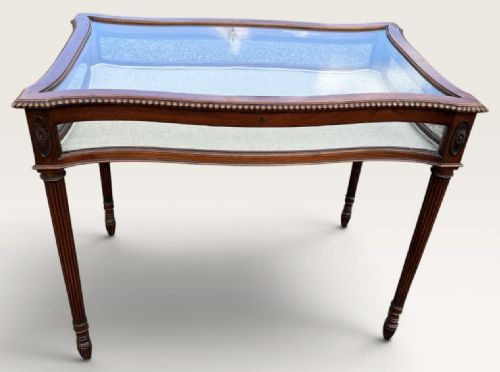
A glazed curio display table serves to exhibit small precious objects at a convenient height, combining surface utility with enclosed storage. These pieces appear across Victorian, Edwardian, and later periods in forms such as bijouterie tables, vitrines, and table top display cabinets.
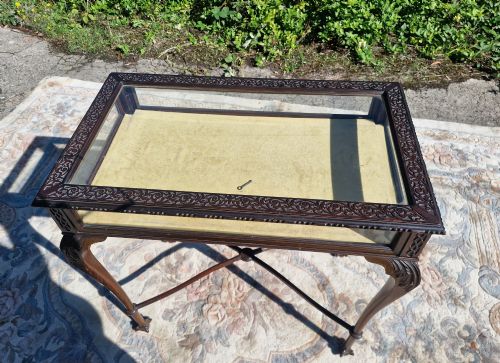
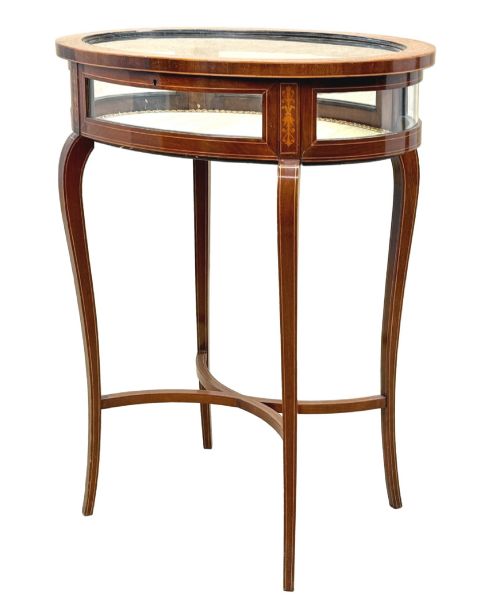
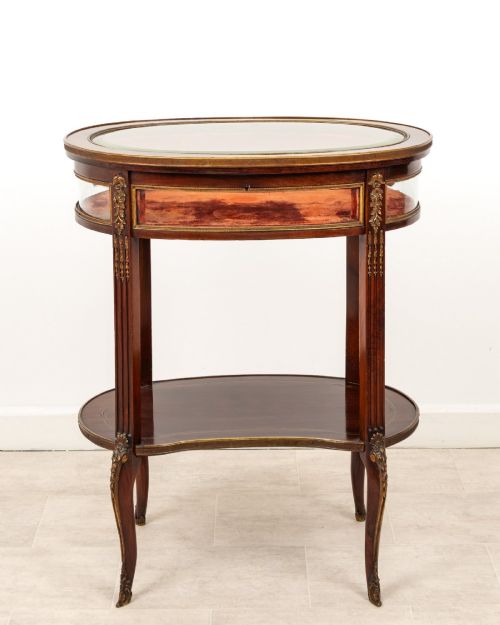
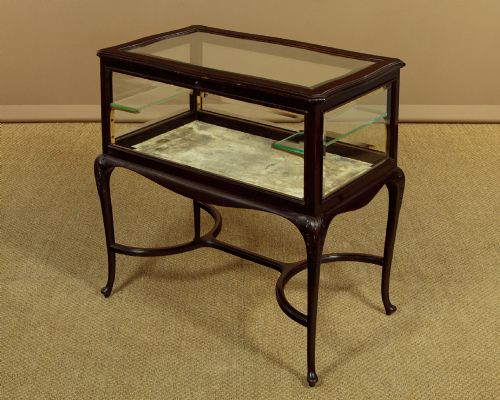
You will most frequently encounter Edwardian and nineteenth-century mahogany or satinwood examples on this page. Makers shaped these tables into oval, serpentine, kidney, and rectangular silhouettes designed to sit in a drawing room.
The primary function remains the display of medals, miniatures, and trinkets beneath hinged or lifting glass panels. Interiors often retain original fabric linings such as velvet or satin to cushion delicate items.
How they were made
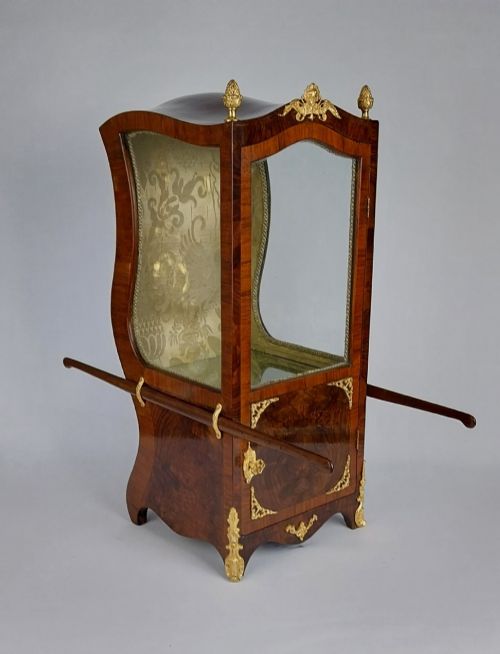
Cabinetmakers constructed the main framework using solid timbers like mahogany, rosewood, and walnut, frequently applying kingwood or satinwood veneers. Inlaid stringing in lighter woods outlines the panels, reflecting Sheraton and French revival influences.
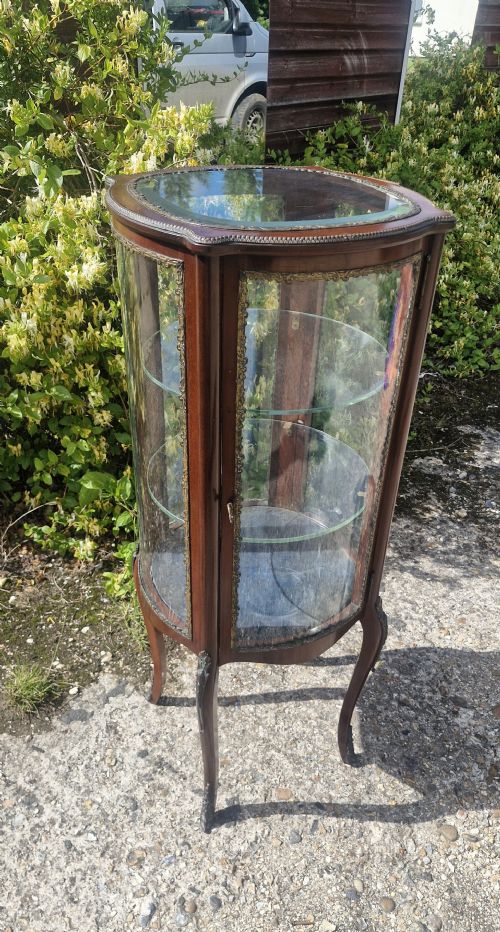
Glazing relies on clear bevelled or flat glass fitted tightly into wooden or brass frames. Ormolu mounts, cast bronze decorations, and brass hinges secure the glazed lids and add ornamental weight to French and English designs.
Listings feature mahogany, satinwood, and kingwood timbers alongside brass and ormolu mounts.
What varies in quality
The precision of the cabinetwork and the selection of timber dictate the standing of a piece. Finer examples display carefully matched veneers, crisp carving, and substantial cast ormolu mounts rather than stamped brass.
Interior detailing separates standard items from exceptional ones. Original velvet or silk linings, intact bevelled glass panes, and smoothly functioning mechanical hinges elevate the construction.
The Glazed Curio Display Table Glossary
- Bijouterie table
- A specialised display table featuring a glazed compartment for small trinkets and jewellery. These pieces lift open or feature sliding trays to allow easy viewing of contents.
- Ormolu
- Gilded bronze mounts applied to furniture for decoration. This technique gained wide popularity in French-influenced nineteenth-century cabinetmaking.
- Vitrines
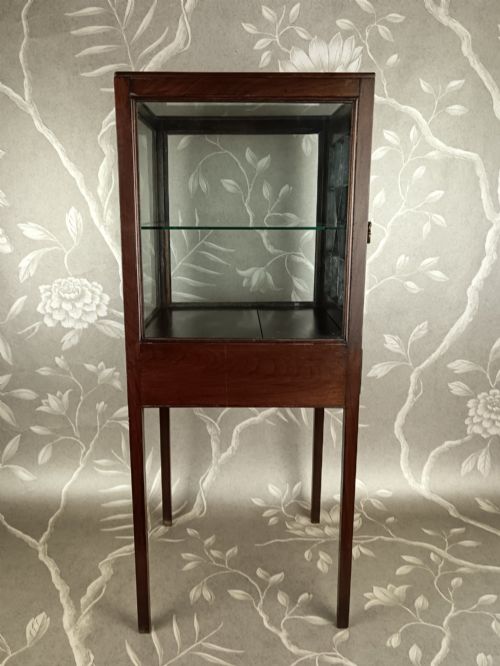
- Glass-fronted display cabinets intended for porcelain and curiosities. They range from tall standing units to smaller table top formats.
- Kingwood
- A dense, heavily figured timber used for decorativeveneers. It provides rich dark contrast in late nineteenth-century cabinet pieces.
Glazed Curio Display Table: Frequently Asked Questions
Where should I place a display table?
These tables suit drawing rooms, studies, or hallways where natural light can illuminate the glazed compartment from above.
Keep them away from direct sunlight to protect interior fabrics and vulnerable collection items from fading over time.
How do I access the interior storage?
Most examples feature a hinged glass top that lifts upward on brass or gilt metal pivots. Some pieces include supporting stays to hold the lid open safely while you rearrange your collection.
Table top models sit upon existing furniture, while floor-standing variants rely on slender legs joined by stretchers.
What items fit inside a bijouterie table?
The shallow glazed well suits pocket watches, medals, coins, miniatures, and small silver trinkets. The enclosed space protects fragile items from dust and handling.
Original fabric linings like velvet cushion these objects and prevent them from sliding when the lid opens.
How do I distinguish Edwardian from Victorian pieces?
Victorian examples often employ heavier mahogany, walnut, and elaborate carving with substantial ormolu mounts. They date from the mid to late nineteenth century.
Edwardian pieces tend to feature lighter satinwood, delicate Sheraton revival inlay, and brighter gilt metal mounts reflecting an early twentieth-century aesthetic.