



French Glass Vitrine Table
A french glass vitrine table brings the intimate display of treasured possessions into the centre of a room.
French Glass Vitrine Table
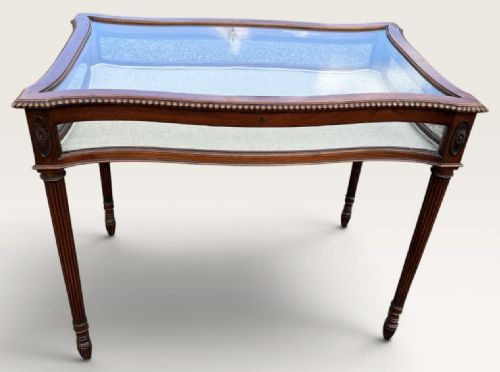
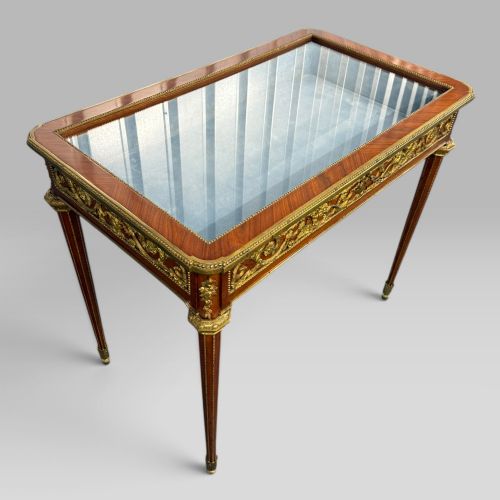
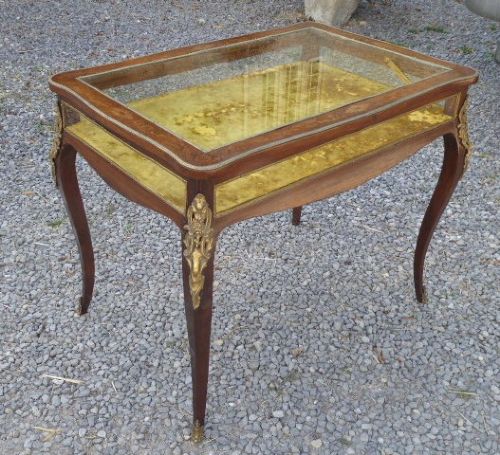
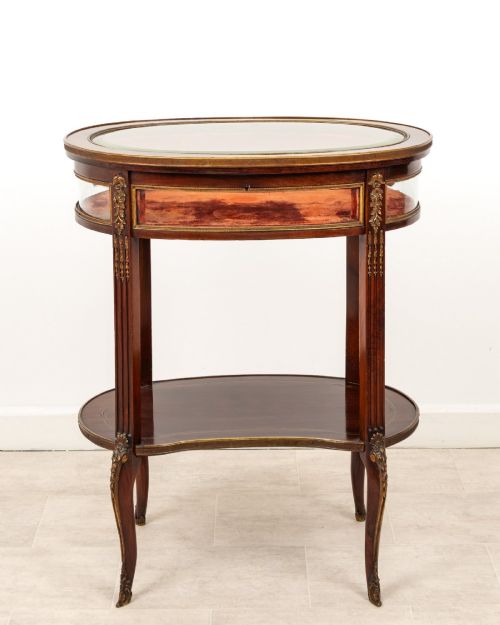
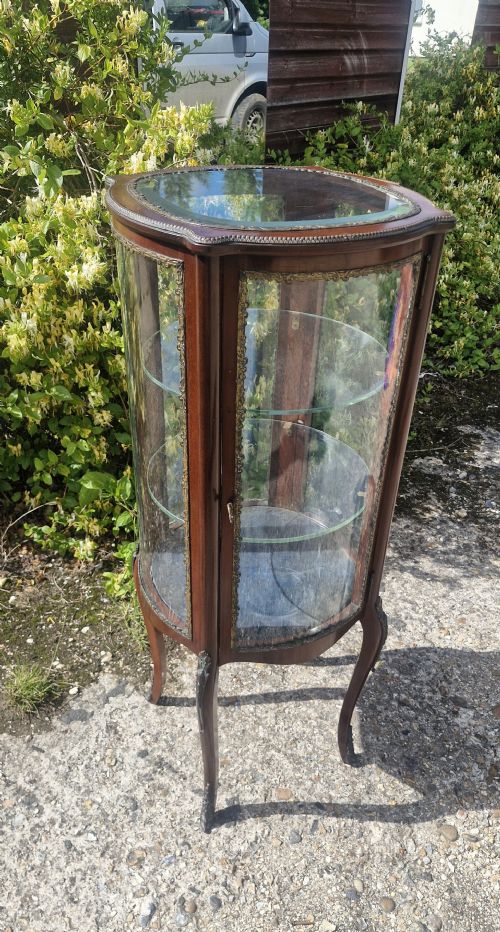
A french glass vitrine table is primarily encountered as a bijouterie table, display cabinet, or vitrine designed to showcase small valuables beneath a glazed surface. The pieces available span periods from the nineteenth century through the Edwardian era, incorporating revivals of Louis XV and Louis XVI styles.
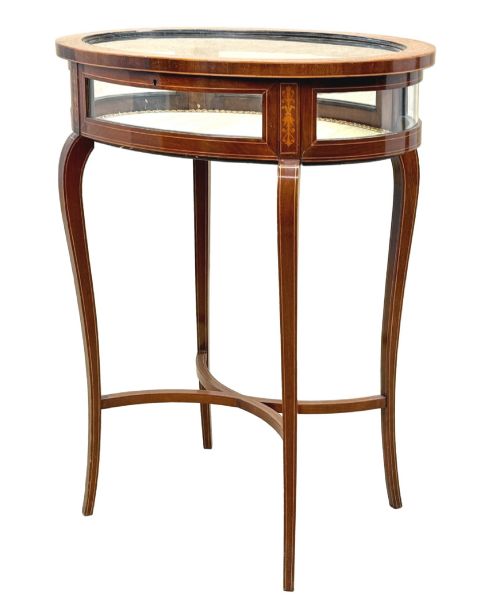
Most examples adopt mahogany, kingwood, or rosewood as their primary timber, often shaped with serpentine curves or oval profiles. These items served historically for the presentation of personal trinkets, medals, and jewellery within domestic reception rooms.
Materials and Technique
Cabinet makers constructed the foundational carcass from hardwoods such as mahogany or rosewood, frequently applying decorative veneers of kingwood alongside intricate marquetry inlay. Ormolu, gilt-bronze, or brass mounts were then cast and fixed to frame the glass panels and accentuate the structural lines.
The glazed upper compartments utilise hinged or lift-off glass lids, occasionally lined internally with velvet or fabric to cushion displayed items. Brass stringing and inlaid brass details frequently trace the contours of the timber tops and legs.
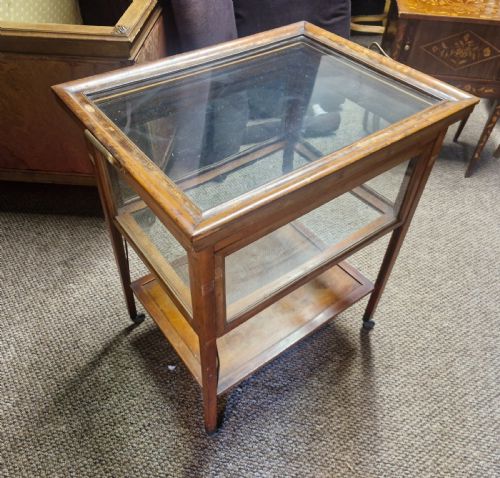
One twentieth-century hardwood example bears later sign-writing for Breitling watches, hinting at a past life in retail.
Judging Quality
Quality rests heavily upon the crispness of the cast ormolu mounts and the precision of the timber veneers. Finer items exhibit heavier, more deeply chiselled bronze fittings and seamless joinery along serpentine or heart-shaped forms.
The calibre of the wood selection also dictates standing, with rich kingwood and detailed marquetry indicating superior workshops compared to plain mahogany carcasses. Interior linings and the smoothness of opening mechanisms further separate standard commercial pieces from exceptional examples.
François Linke
The French Glass Vitrine Table Glossary
- Bijouterie table
- A specialised display table featuring a glass-topped compartment specifically designed for small ornaments and jewellery. These pieces elevate small objects to eye level for casual inspection.
- Ormolu
- Gilded bronze mounts applied to furniture for decorative effect. The material adds metallic contrast to dark cabinet timbers.
- Vitrine
- A glass-fronted or glass-topped cabinet intended for exhibition. The style allows light to enter from multiple angles to illuminate the contents.
- Marquetry
- Decorative veneer work forming pictorial or geometric patterns using various coloured woods. Craftsmen assemble thin wood slices into intricate designs before applying them to the carcass.
- Kingwood
- A dense, heavily figured timber prized for fine cabinet making. Its distinct grain patterns suit high-status nineteenth-century display furniture.
French Glass Vitrine Table: Frequently Asked Questions
What is a french glass vitrine table?
A french glass vitrine table is a glazed display piece created to hold small collectibles, medals, and personal ornaments. The top incorporates a glass panel allowing items to be viewed from above.
Such tables commonly appear in nineteenth-century and Edwardian variants, drawing heavily on Louis XV and Louis XVI decorative traditions.
How were they used historically?
These tables functioned as parlour furniture where hosts displayed conversation pieces to visiting guests. The enclosed glass protected delicate items from dust while keeping them visible.
Interior velvet or fabric pads provided a soft surface for resting jewellery, fans, and pocket watches.
How do I date a vitrine table?
Dating relies on timber choice, mount style, and construction methods. Nineteenth-century examples often employ solid mahogany or kingwood with cast ormolu, while Edwardian pieces may feature lighter marquetry.
Revival styles from the Victorian and Edwardian periods frequently emulate earlier French royal aesthetics closely.
How do I care for the wood and glass?
Maintenance requires gentle dusting of the timber and careful cleaning of the glass using standard non-abrasive solutions. Direct sunlight should be avoided to prevent fading of interior fabrics and veneers.
Ormolu mounts benefit from dry cleaning with a soft brush rather than harsh metal polishes.