
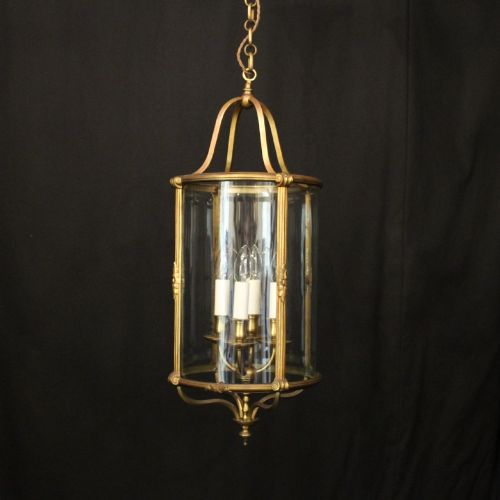
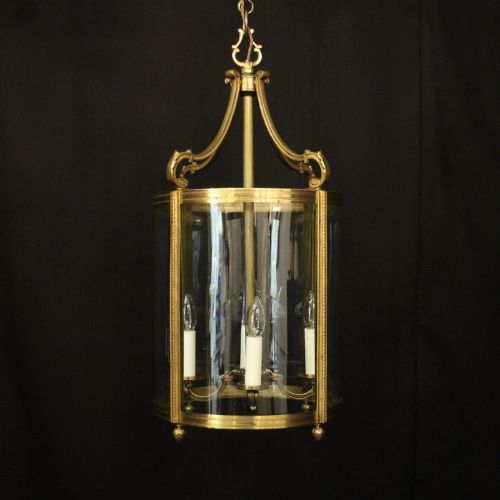


Glazed Bronze Lantern
These glazed bronze lantern examples bring French and English lighting into your hallway with glass and metal worked over a century ago.
Glazed Bronze Lantern
A glazed bronze lantern serves primarily as overhead or wall-mounted illumination for a hall or entranceway, drawing the eye upwards as soon as you step inside. When you search for a glazed bronze lantern, you are looking at items mostly originating from France and England, spanning the nineteenth century through the early twentieth century.
The majority of pieces you will meet on this page date to the nineteen-twenties, Edwardian period, and nineteen-tens, taking the form of ceiling lighting, hall lanterns, and pendant lights. Makers favoured hanging configurations designed to cast light downwards through glass panels while framing the bulb or candle holders in metalwork.
Styles lean heavily towards French motifs, including French Chateau, French Neoclassical, Rococo Revival, and Louis XVI style. These objects range from single-light fittings to larger four-light fixtures, sometimes appearing as pairs suited for symmetrical placement.
What varies in quality
The distinction between tiers of quality rests on the crispness of the cast metalwork and the complexity of the style applied. Pieces exhibiting refined French Neoclassical or Rococo Revival details display deeper relief in the bronze casting than simpler utilitarian forms.
The treatment of the glass also separates standard items from finer ones, particularly when bevelled or convex panes are utilised to enhance the optical play of light. Furthermore, the choice of original gilding or silvering over plain bronze or brass elevates the visual depth of the fixture.
Listings feature items dated across the nineteenth century, Edwardian era, and through the nineteen-thirties, utilising bronze, brass, and glass.
The Glazed Bronze Lantern Glossary
- Gilded bronze
- Bronze that has been coated with a thin layer of gold or gold leaf to give a rich, reflective surface finish. This technique protects the underlying metal while adding visual warmth to the lantern.
- Bevelled glass
- Glass panes cut with an angled edge around the perimeter to refract light and create a decorative border. It adds substantial weight and sparkle to hanging hall lights.
- Rococo Revival
- A nineteenth-century design style drawing on eighteenth-century French asymmetry, scrollwork, and naturalistic motifs. It appears frequently in ornate ceiling lighting and wall lights.
- Hall lantern
- A specialised hanging light fixture designed specifically for narrow entrance spaces and corridors. These pieces typically feature glass panels held within a protective metal frame.
Glazed Bronze Lantern: Frequently Asked Questions
Where should a glazed bronze lantern hang?
These lanterns suit entrance halls, corridors, and high-ceilinged landings where hanging ceiling lighting can serve as a central focal point. Their enclosed glass design protects the light source while casting illumination outward across the surrounding walls.
Ensure the ceiling height allows adequate clearance beneath the pendant light for foot traffic, particularly in smaller vestibules or narrow hallways.
How do I clean the glass panels?
Remove dust gently from the bronze or brass framework using a soft, dry brush before wiping the glass panes with a mild glass cleaner applied to a cloth. Avoid spraying liquids directly onto the metal parts, as moisture can alter aged finishes like gilding or silvering.
Take care around bevelled edges and older soldered joints to prevent loosening the panels within their metal housing.
Can these antique lanterns take modern bulbs?
Most antique lanterns have been adapted for modern electrical wiring, allowing standard bulb fittings to be used safely inside the metal cage. It is advisable to check the internal wiring condition or consult an electrician to ensure compatibility with contemporary wattage limits.
Warm-toned LED bulbs work particularly well inside tinted or bevelled glass to replicate the soft glow of older lighting without generating excessive heat.
How do I identify a French style piece?
French pieces often display specific decorative vocabularies such as Louis XV or Neoclassical motifs, including acanthus leaves, urns, and symmetrical scrollwork cast into the bronze. The attribution is further supported by the prevalence of nineteenth and early twentieth-century manufacturing techniques common in Parisian workshops.
Examining the weight, the quality of the gilding, and the joinery of the glass will help distinguish these continental designs from domestic English alternatives.