


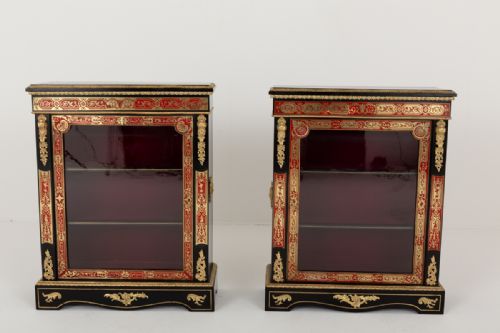


Glazed Boulle Display Cabinet
A glazed boulle display cabinet is a tortoiseshell and brass inlaid showpiece of French or Victorian design, prized for bringing nineteenth-century splendour into a room.
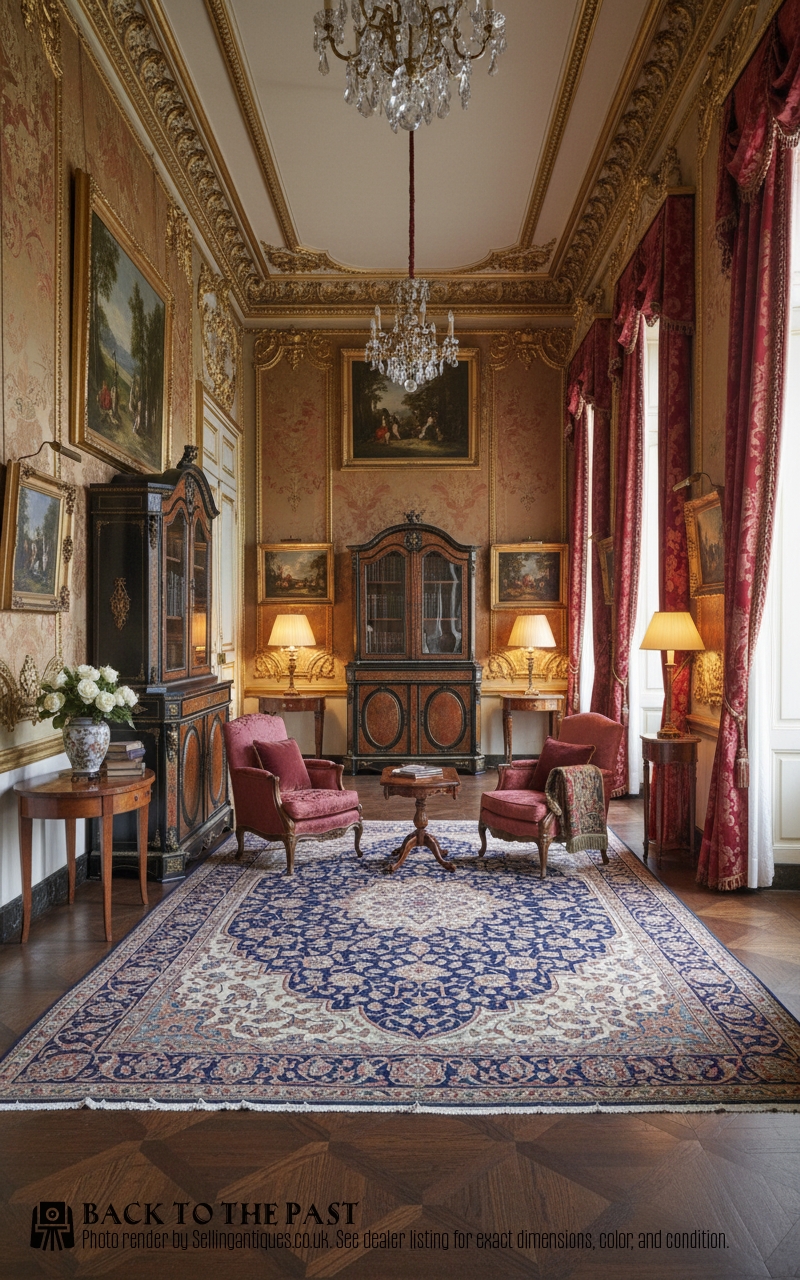
Glazed Boulle Display Cabinet
A glazed boulle display cabinet brings nineteenth-century French and Victorian design into a room, taking forms such as pier cabinets, credenzas, sideboards, and bookcases. These pieces serve to showcase precious objects behind glass doors while displaying ornate marquetry on their wooden surfaces.
The version most commonly met on this page is the French Napoleon III or Victorian boulle revival cabinet, dating from the mid to late nineteenth century around eighteen-fifty to eighteen-eighty. Such pieces often arrive as pairs or as single grand credenzas and pier cabinets.
The fundamental character of these items lies in their combination of glazed viewing areas and heavy ornamental framing. They occupy significant floor space and establish a strong decorative focal point within an interior.
How they were made
These cabinets rely on an ebonised wood foundation overlaid with intricate marquetry formed from brass and tortoiseshell. The contrasting metallic gleam against the dark shell creates the signature decorative effect of boulle work.
Gilt bronze or ormolu mounts are applied to corners, borders, and feet to accent the structure. Glass panes are fitted into doors to enclose the interior shelves, which are sometimes lined with velvet.
Tortoiseshell inlay was occasionally worked in reverse counter-part panels, meaning two matching cabinets could be made as perfect mirror images of each other.
What varies in quality
Quality rests upon the precision of the brass and tortoiseshell inlay and the crispness of the cast ormolu mounts. Finer examples show tight joints in the marquetry where the contrasting materials meet without heavy filler.
The depth and vigour of the overall proportions distinguish standard production from superior cabinet work. Heavier timber framing and more ambitious serpentine or breakfront contours separate the better workshop output from simpler boxes.
The Glazed Boulle Display Cabinet Glossary
- Boulle
- A form of marquetry using brass and tortoiseshell inlaid in contrasting patterns, named after the royal cabinetmaker André-Charles Boulle. This technique defines the primary visual surface of these cabinets.
- Ormolu
- Gilt bronze mounts used as decorative enrichment on furniture frames and feet. These metallic details highlight the structural corners and enrich the silhouette.
- Pier cabinet
- A narrow cabinet designed to stand against a wall between windows or architectural openings. These vertical pieces maximise display space in tighter wall sections.
- Credenza
- A low sideboard or cabinet with cupboards, often featuring glass doors in nineteenth-century revivals. They provide substantial surface storage and display capacity.
- Ebonised wood
- Timber treated to imitate ebony, creating a dense black surface. This dark ground provides high visual contrast for the bright brass and tortoiseshell inlay.
Glazed Boulle Display Cabinet: Frequently Asked Questions
What is a boulle cabinet?
A boulle cabinet is a nineteenth-century storage and display piece decorated with tortoiseshell and brass marquetry, often mounted with ormolu.
These items were produced in France and Britain during the Victorian and Napoleon III periods, combining dark ebonised wood with reflective metallic inlay.
How do I date a boulle cabinet?
Dating relies on observing the timber, the style of the ormolu mounts, and the construction methods typical of the mid to late nineteenth century.
Most examples on this page cluster around the eighteen-fifties to eighteen-eighties, reflecting Victorian and Napoleon III revival tastes.
Are these cabinets fragile?
These pieces incorporate delicate materials like tortoiseshell, brass inlay, and ormolu mounts that require careful placement away from direct heat and sunlight.
Maintaining stable room humidity helps prevent movement in the ebonised wooden carcase and protects the fine marquetry surface.