
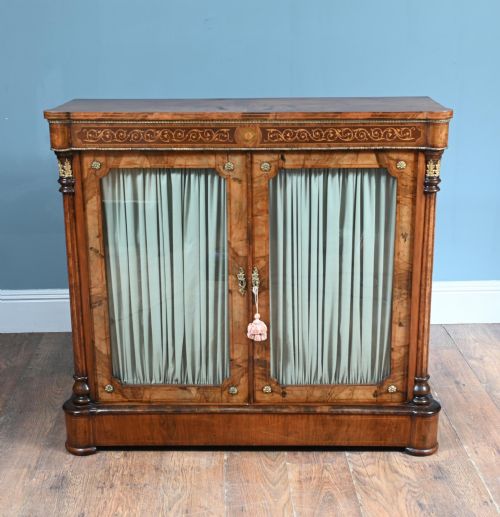
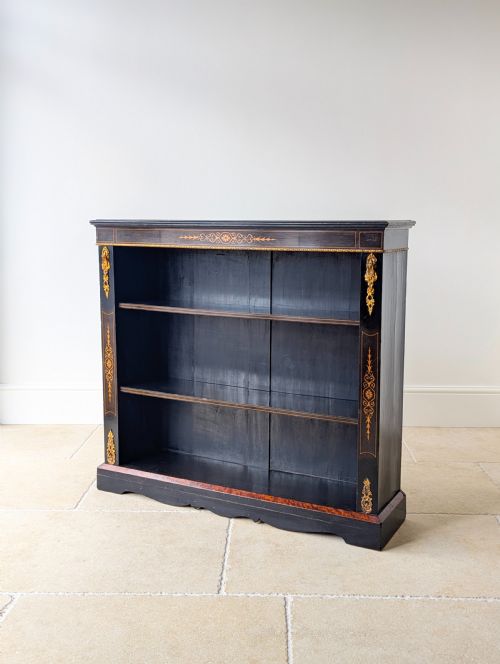


Brass Marquetry Bookcase
A brass marquetry bookcase brings together warm timber and gleaming metal inlay, offering a refined way to display a library.
Brass Marquetry Bookcase
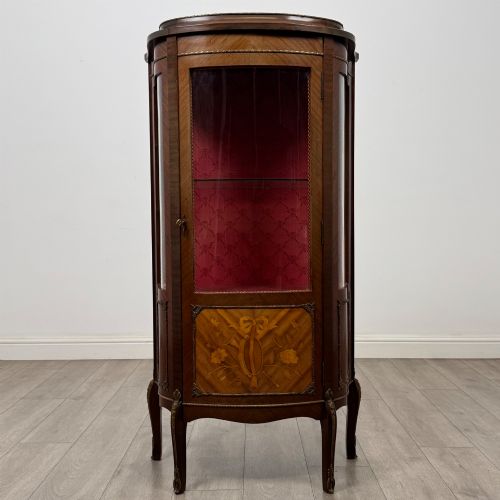
A brass marquetry bookcase combines fitted shelving with ornate cabinetwork, often appearing alongside related forms such as pier cabinets, sideboards, credenzas, and vitrines. These items span periods from the Georgian era through the Regency and Victorian periods up to Edwardian times.
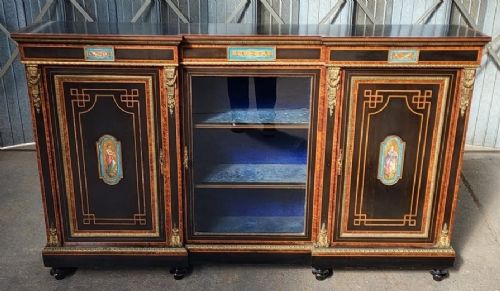
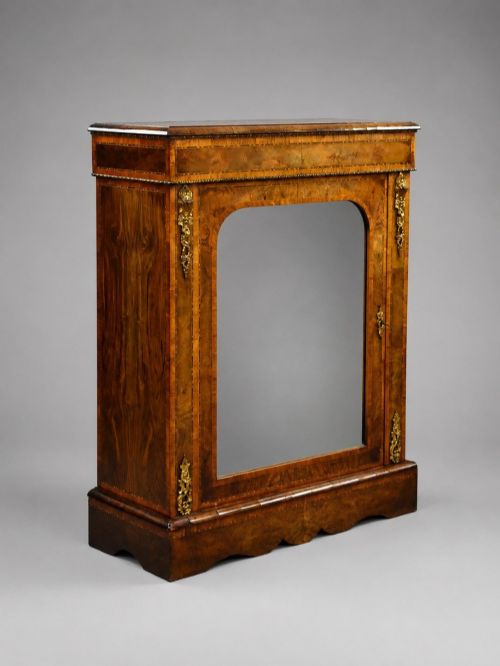
The version most commonly met on this page is the Victorian or 19th-century ebonised cabinet, frequently styled after French Napoleon III or Boulle designs. Walnut, burr walnut, mahogany, and kingwood form the primary bodies, fitted with glass doors and brass mounts.
Makers such as Edwards and Roberts contributed to this tradition during the Sheraton revival, producing refined display side cabinets and bookcases. Buyers select these pieces for their combination of storage and decorative brass inlay.
How they were made
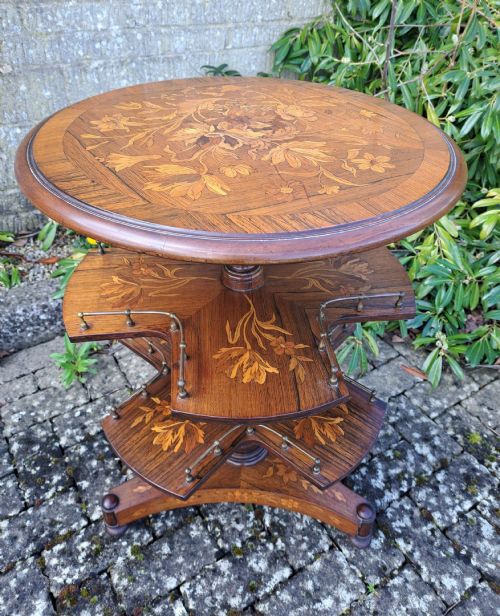
Cabinetmakers constructed these forms using hardwoods like walnut, rosewood, ebonised wood, and mahogany as the structural base. Surfaces received intricate marquetry in boxwood and brass, creating contrasting patterns across doors and panels.
Ormolu mounts cast in brass provide structural accents and framing around glass panels and corners. Traditional joinery secures the internal shelving and breakfront carcasses, while French polish seals the timber surfaces.
Listings feature pieces from the Georgian, Regency, Victorian, and Edwardian periods, constructed in walnut, mahogany, and ebonised wood.
What varies in quality
The crispness of the brass inlay and the fineness of the boxwood marquetry separate standard production from superior examples. Precision in the cutting of metal and wood veneers dictates the visual sharpness of the floral and scroll patterns.
The quality of the timber ground - whether figured walnut, rich kingwood, or deep ebonised wood - affects the overall presence of the cabinet. Heavier, more detailed ormolu mounts and well-figured internal timbers indicate a higher grade of manufacture.
Edwards and Roberts
The Brass Marquetry Bookcase Glossary
- Boulle
- A style of marquetry using brass and tortoiseshell inlaid into wood, named after French cabinetmaker André-Charles Boulle. It is frequently seen on 19th-century French and Victorian cabinets.
- Ormolu
- Gilt bronze or brass mounts applied to furniture for decorative effect. These mounts frame glass doors and accent corners on period pieces.
- Marquetry
- Decorative patterns formed by fitting veneer pieces of different woods, metals, or shell into a wooden ground. It creates pictorial or floral designs across cabinet doors.
- Pier Cabinet
- A narrow cabinet designed to stand against a wall pier between windows. They often feature glass doors and brass mounts.
- Ebonised Wood
- Timber treated with a dark stain or finish to imitate ebony. This dark background creates a high-contrast setting for brass inlay.
Brass Marquetry Bookcase: Frequently Asked Questions
What is a brass marquetry bookcase?
A brass marquetry bookcase is a cabinet designed for books or display, featuring inlaid metal work alongside wood veneers. These pieces often incorporate glass doors and brass mounts.
They combine practical shelving with decorative frontage, drawing on French and English cabinetmaking traditions from the 19th century.
How do I style a Victorian bookcase?
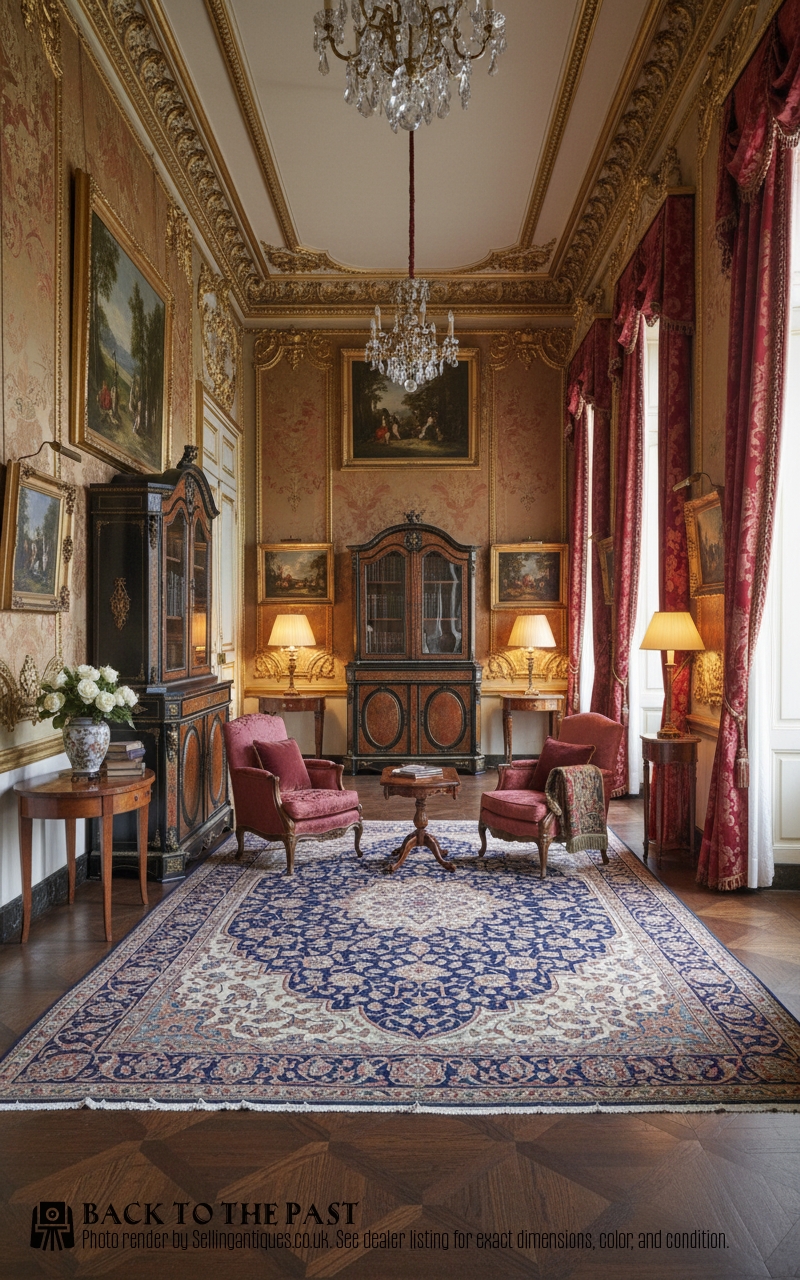
These cabinets suit traditional studies, libraries, or living spaces where dark timbers and brass work complement existing furniture. The glass-fronted versions protect books while keeping titles visible.
Pairing them with neutral walls allows the ebonised wood and metal inlay to stand out as focal points in the room.
What woods are used in these bookcases?
Makers utilised a variety of timbers including walnut, burr walnut, mahogany, rosewood, and kingwood. Ebonised wood is also common on pieces influenced by French Napoleon III styles.
Boxwood often appears alongside brass within the marquetry panels to create contrasting botanical or geometric motifs.
How do I tell a Regency piece from a Victorian one?
Regency pieces generally date from the early 19th century and display restrained classical lines with simpler brass inlay. Victorian examples often show heavier proportions, denser marquetry, and more elaborate ormolu mounts.
Examining the construction methods and secondary timbers helps clarify the period of manufacture.