
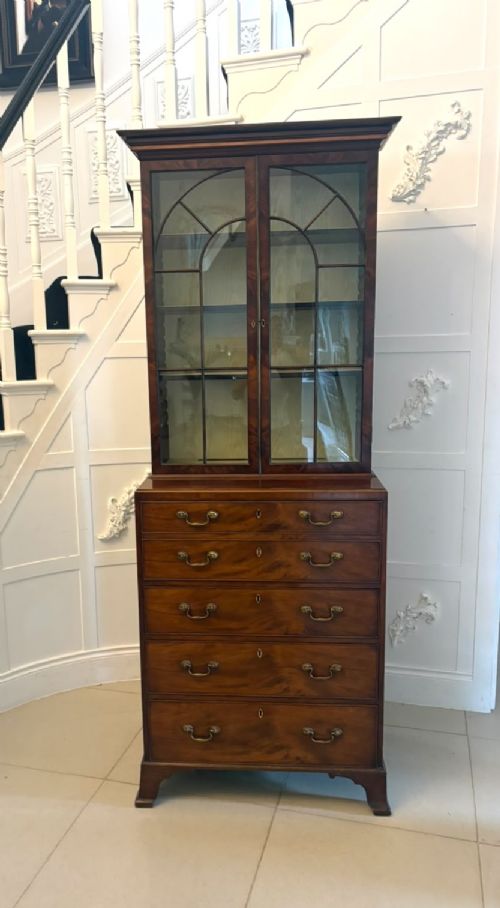
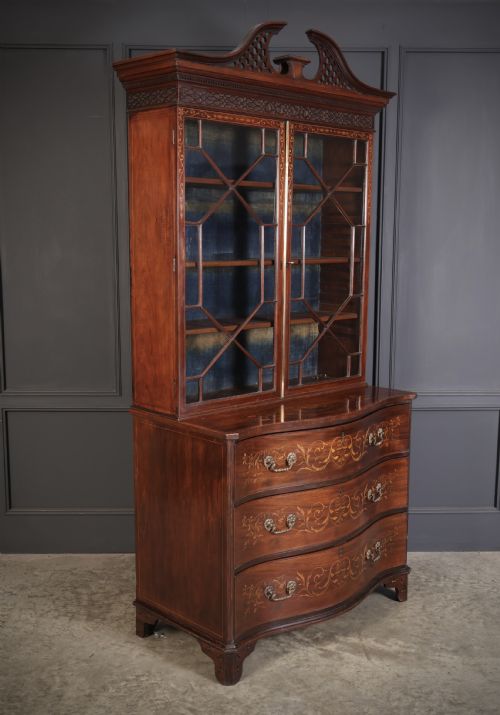


Glazed Bookcase on Chest
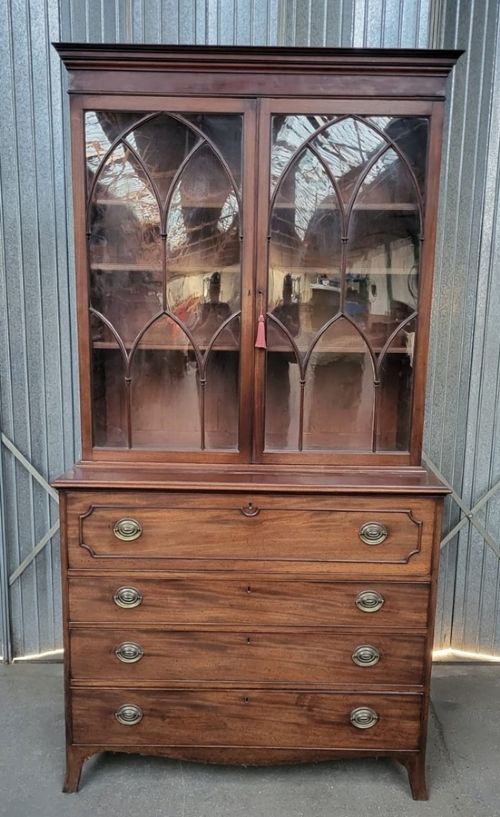
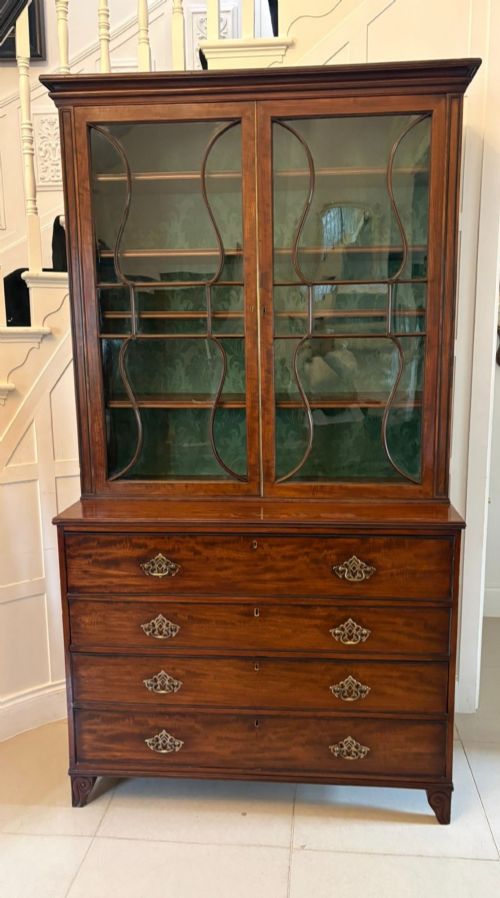
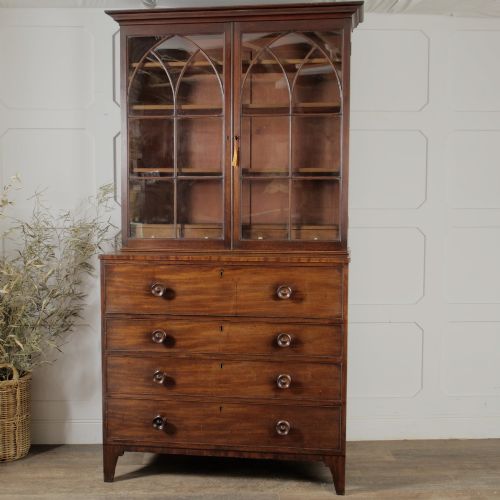
A glazed bookcase on chest combines a shelved display top with a functional lower storage base for a commanding piece of furniture.
Glazed Bookcase on Chest
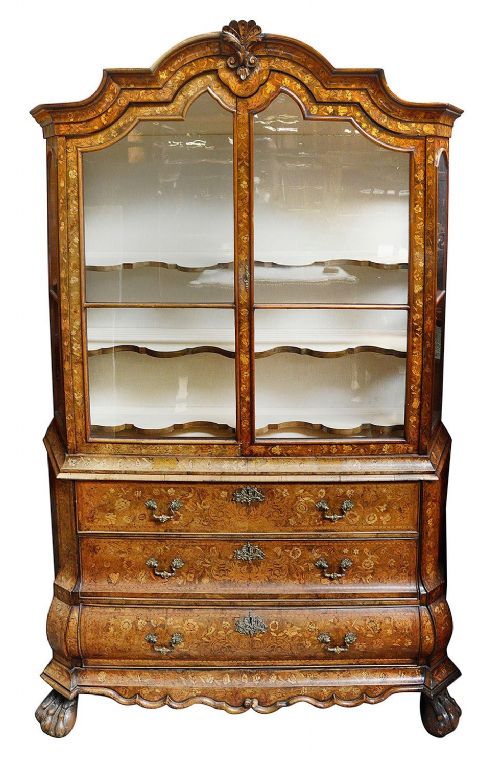
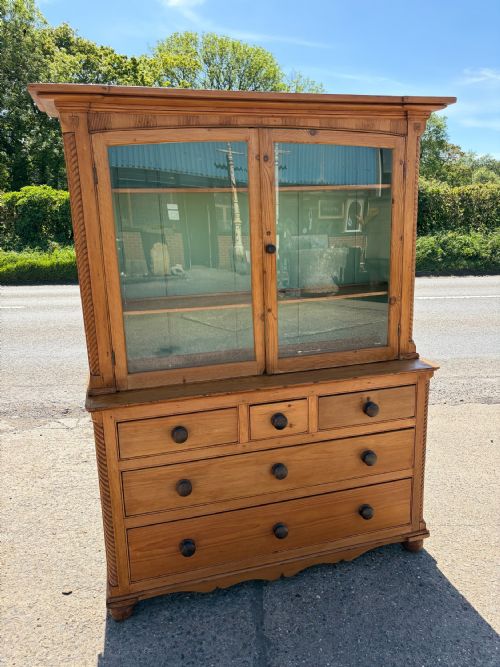
A glazed bookcase on chest pairs an upper cabinet enclosed by glass doors with a lower chest of drawers or bureau base. These tall storage units serve libraries, studies, and principal reception rooms by keeping books visible yet protected from dust while offering concealed compartment space below.
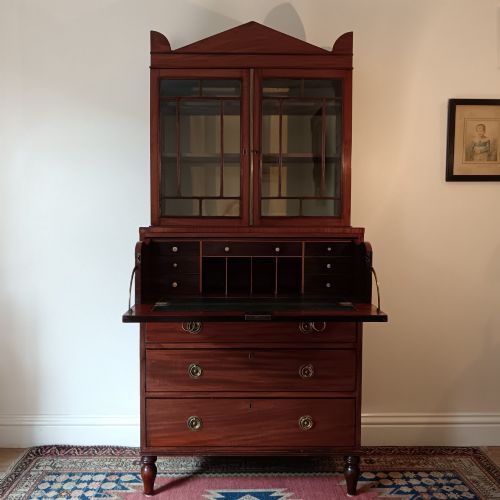
The versions met most frequently on this page date from the Georgian and Regency periods through the nineteenth century, executed predominantly in mahogany or walnut. Many examples incorporate a secretaire drawer with a drop-down writing surface, merging desk functionality directly into the upper section of the chest.
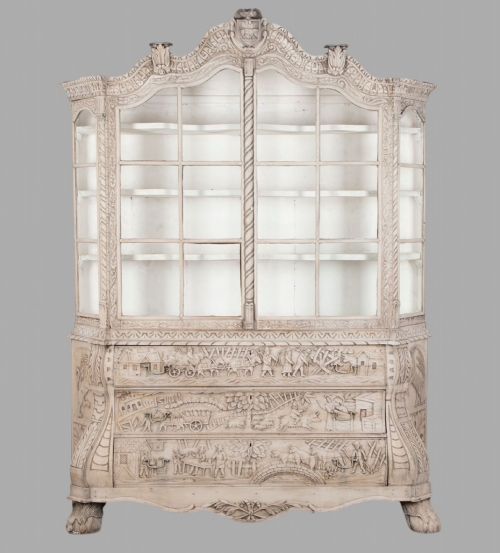
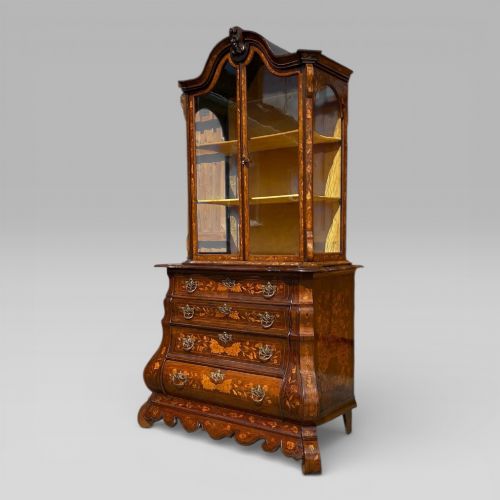
Makers occasionally shaped the lower base with a bombé profile or applied intricate marquetry inlay, drawing on Dutch Baroque and English cabinet-making traditions. Whether standing tall in figured mahogany or carved oak, the dual-carcass construction remains a defining characteristic of the form.
How they were made
Cabinet-makers constructed these two-part furniture pieces using solid timbers like mahogany, walnut, oak, and pine, frequently selecting highly figured veneers for the primary visible surfaces. Marquetry inlay of various decorative woods ornamented the exterior panels on specific regional variants.
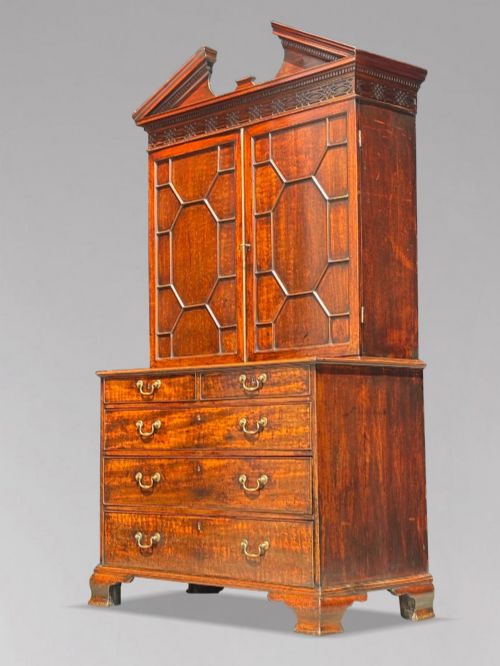
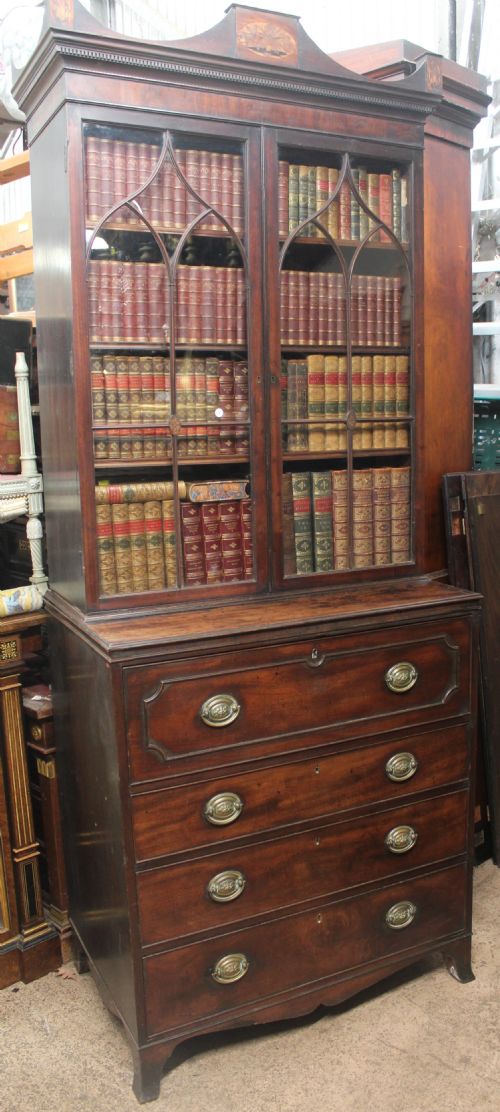
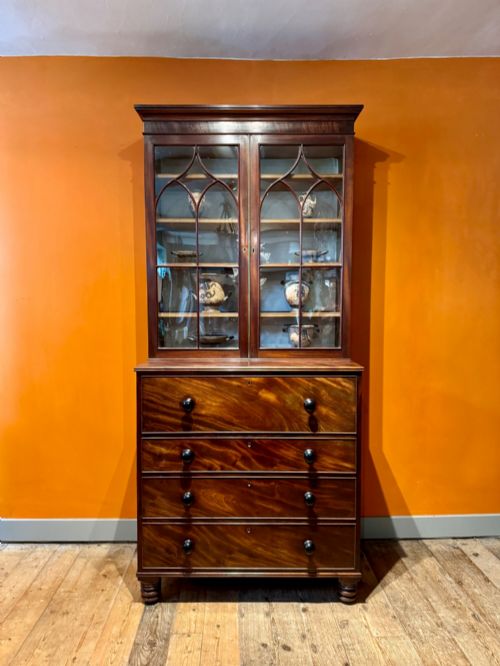
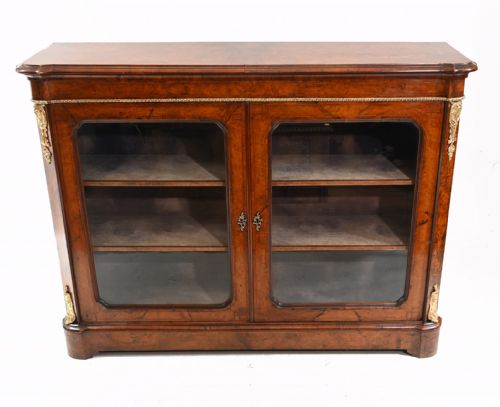
Glass panes within the upper doors were held securely by wooden glazing bars, often arranged in intricate geometric patterns such as astragal designs. Brass hardware, including drop handles, escutcheons, and hinges, fastened the doors and drawers while adding metallic contrast to the timber.
The documented pieces span the eighteenth century, the Georgian, Regency, and Victorian eras, up to Edwardian times.
What varies in quality
The selection of timber grain largely dictates visual merit, with well-figured mahogany or richly patterned walnut veneers marking superior examples. The crispness of carved details, such as those on Dutch bombé bases or applied mouldings, demonstrates the skill of the original workshop.
Interior execution also separates standard items from finer productions, seen in fitted pigeonholes, small drawers, and secret compartments within secretaire sections. Original glass panes, intact brass fittings, and harmonious proportions between the upper glazed cabinet and the lower chest further elevate a piece.
George Oakley·Thomas Chippendale·Edwards & Roberts·Gillows·Dawsons of Manchester
The Glazed Bookcase on Chest Glossary
- Secretaire
- A cabinet or drawer containing a writing surface and small compartments. This fold-down flap converts the upper chest drawer into a compact desk.
- Astragal
- A small convex moulding used to divide glass panes within a door. These wooden bars form a grid pattern across the glazed front.
- Bombé
- An outward-swelling convex shape characteristic of continental furniture bases. This curved profile creates a dramatic bulbous silhouette on chests and cabinets.
- Marquetry
- Decorative patterns formed by inlaying small pieces of veneered wood into a larger surface. Craftsmen utilise contrasting timbers to create floral or geometric designs.
- Vitrine
- A glass-fronted display cabinet designed to exhibit porcelain or curiosities. The term often describes continental pieces with visible side glass panels.
Glazed Bookcase on Chest: Frequently Asked Questions
How do I use a secretaire bookcase?
The drop-down front of the secretaire drawer opens to reveal a writing surface accompanied by small drawers and pigeonholes. This provides a dedicated writing space without requiring a separate standalone desk.
Beneath the writing section, the remaining drawers of the lower chest offer standard storage for household linens or paperwork.
Are the upper and lower sections attached?
These furniture pieces consist of two separate carcases built to be stacked one upon the other. The upper glazed bookcase rests securely on top of the lower chest base, held in place by its own substantial weight and retaining mouldings.
This two-piece construction assists with transport and manoeuvring through doorways before positioning the cabinet in a room.
What is an astragal glazed door?
An astragal glazed door uses narrow wooden bars to hold multiple smaller glass panes within the frame. This technique was necessary before large sheets of plate glass became common in furniture manufacture.
The resulting geometric patterns contribute significantly to the visual character of Georgian and Regency bookcase fronts.
How do I distinguish Georgian from Victorian pieces?
Georgian examples generally display restrained classical proportions, finer timber selection, and delicate astragal glazing bars. Cabinet-makers of this era favoured Santo Domingo mahogany and executed hand-cut dovetails with neat precision.
Victorian pieces often feature denser timber, grander scale, heavier mouldings, and machine-sawn components reflecting industrial production shifts.