
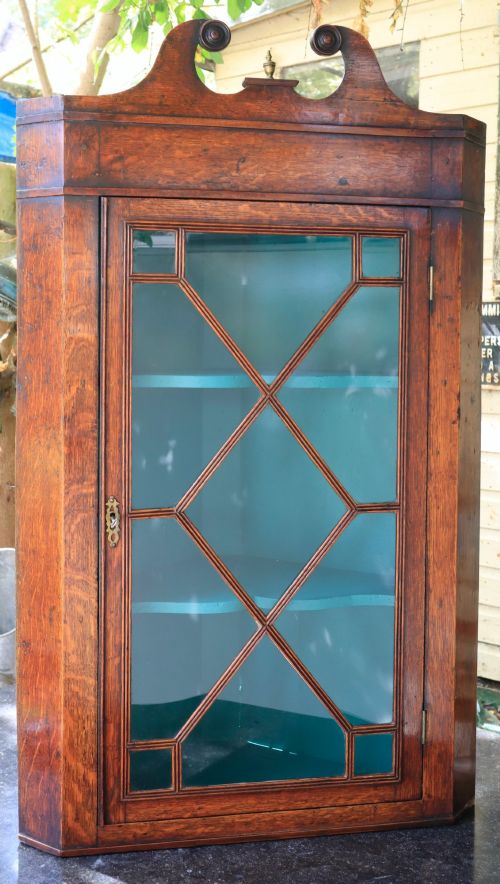


Glass Wall Cabinet
These glass wall cabinets provide practical display and secure storage for small collections, bringing period character directly to the room.
Glass Wall Cabinet
A glass wall cabinet is a hanging storage piece designed to display items while protecting them from dust. These units appear frequently in corner formats, utilising space efficiently in traditional rooms.
The selections span several eras, with Georgian, Victorian, and Edwardian examples forming the core of the available pieces. Buyers frequently encounter mahogany and oak constructions featuring glazed doors and internal shelving.
Makers produced these cabinets in various forms, including bow-fronted designs, flat wall units, and specialised display cases. Each piece serves to mount securely on the wall, keeping prized possessions at eye level.
Materials and construction
Craftsmen built these cabinets primarily using solid timbers like mahogany, oak, and walnut, frequently incorporating satinwood inlay for decorative contrast. Glazing methods involved securing individual glass panes within wooden frames to form the display doors.
Hardware played an essential structural and aesthetic role, with brass hinges, locks, and keys fitted to secure the contents. Mirrored interiors and velvet linings appeared in specific display cabinets to enhance light reflection and cushion items.
Listings feature mahogany, oak, walnut, and pine, demonstrating centuries of traditional cabinet timber choices.
Assessing quality
Quality rests in the precision of the timber selection and the refinement of the cabinetmaker's joinery. Superior examples display carefully matched wood grain, tight mitres on the frames, and intact original glass.
Finer pieces incorporate delicate inlay work, functional original brass locks with keys, and well-preserved mirrored backs. The handling of the cornice moulding and the weight of the timber distinguish standard utility pieces from high-status items.
SIEGEL
The Glass Wall Cabinet Glossary
- Glazing
- The fitting of glass into windows or cabinet doors. This technique allows clear visibility of the interior contents while keeping dust out.
- Cornice
- The decorative moulding crowning the top of a cabinet. It provides an architectural finish to the upper section of the piece.
- Inlay
- A technique where contrasting woods or materials are inserted into recessed areas of the primary timber. Satinwood is commonly used for this decorative detailing.
- Vitrine
- A glass-fronted display cabinet used for showing off fine objects or curiosities. The term derives from the French word for glass.
- Bow front
- A convex, outward-curving front profile on a cabinet. This curved design softens the room's angles and enlarges the internal viewing space.
Glass Wall Cabinet: Frequently Asked Questions
How do I hang a heavy antique cabinet safely?
Check the internal fixing points and ensure the weight of the solid timber is distributed evenly into wall studs or solid masonry. Use appropriate heavy-duty fixings rated well above the cabinet and contents weight.
Enlist a professional installer if the mounting brackets are historical or require custom reinforcement to protect fragile glass panels and aged joints.
Where should I place a corner cabinet?
Position the unit in an unused room corner to maximise floor space while creating a distinct focal point at eye level. These pieces suit dining rooms, hallways, or living spaces.
Keep the cabinet away from direct sunlight and strong heat sources to prevent the timber veneers and internal velvet linings from fading or drying out.
How do I date a Georgian glazed cabinet?
Examine the construction of the door frames, timber choice, and the characteristics of the glass panes. Earlier pieces often display hand-blown glass with minor surface ripples.
Look at the dovetailing on drawers and the style of the brass hardware, comparing them against documented cabinetmaking practices of the eighteenth century.
Can I adjust the shelves inside?
Most antique and vintage wall cabinets feature fixed wooden or glass shelving held in permanent grooves or resting on fixed wooden supports. Altering them requires professional joinery work.
Plan the height of your collection items before purchasing to ensure they fit comfortably within the static shelf clearances provided by the original maker.