



Glass Transfer Painting
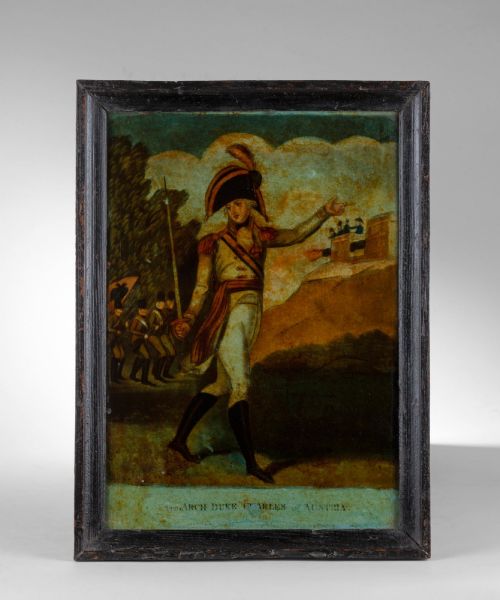
Glass transfer painting offers a window into Georgian and Regency portraiture, capturing monarchs and military heroes applied directly to glass.
Glass Transfer Painting
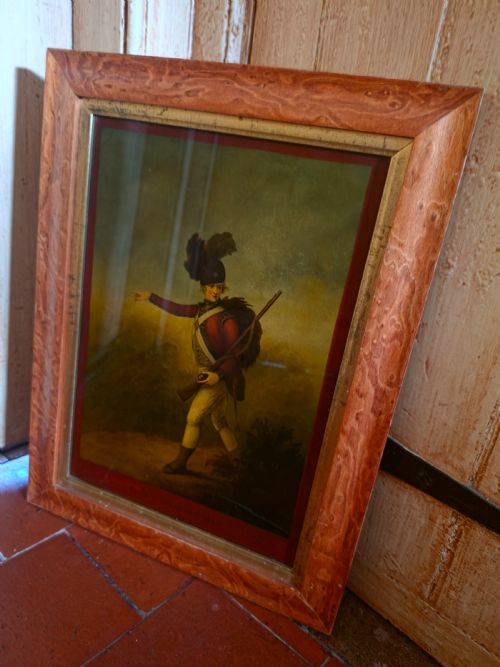
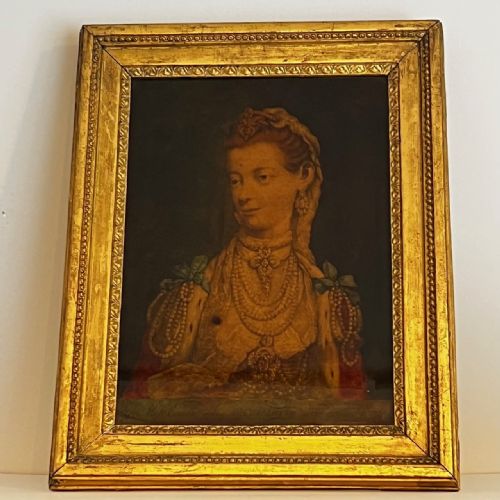
When you search for glass transfer painting, you encounter wall art created during the Georgian and Regency periods, rendered as reverse glass prints, mezzotints, and engravings. These works record royal portraits, military figures, and narrative scenes fixed onto glass supports.
The versions most frequently met on this page include framed portraits of figures such as King George III, Queen Charlotte, and Princess Caroline. Alongside these royal subjects appear depictions of soldiers, religious icons like St Peter, and character studies after artists such as Frye and Richard Phillips.
These pieces function primarily as wall art, housed within giltwood or maple frames. They represent a distinct British visual tradition of the eighteenth and nineteenth centuries, combining printed media with hand-applied pigment.
How they were made
Makers utilised paper prints transferred directly onto glass sheets, a technique that required precise adhesion before the paper backing was rubbed away to leave the ink. Artisans then applied oil paint and pigment by hand from the reverse side to tint the image.
Finished plates were set into wooden frames, frequently utilising giltwood or maple moulding to protect the fragile glass and complete the display. The combination of engraved lines and oil pigment gave these works their characteristic depth and sheen.
Glass Transfer Painting Retail Price Guide 2026
Typical asking prices for glass transfer painting among the pieces listed under this phrase on Sellingantiques today, from the lower quarter to the upper quarter. They describe what is for sale here now, not the wider market.
St Peter shares wall space here with light infantrymen and match boys, proving that early glass art embraced both the heavenly and the humble.
What varies in quality
The refinement of the initial mezzotint or engraving dictates the clarity of the underlying portrait before any pigment is applied. Finer plates capture subtle facial expressions and uniform details with greater precision.
The skill of the hand-applied oil paint determines the visual richness of the finished piece, separating simple tinted prints from carefully coloured works. The preservation of the paper and pigment behind the glass also shapes the integrity of the surface.
The Glass Transfer Painting Glossary
- Reverse glass print
- An image transferred onto glass and viewed through the transparent support. This technique protects the delicate ink and paint layers from atmospheric damage.
- Mezzotint
- A printmaking method that achieves rich tonal gradations through roughening the copper plate. Several pieces on this page utilise this tonal depth.
- Giltwood
- Wood carved and coated with gold leaf, frequently forming the frames for Georgian wall art. This material provides a bright border around the dark glass panels.
- Maple
- A light timber used for framing, valued for its distinctive grain pattern. It appears frequently on domestic wall art from the Regency era.
Glass Transfer Painting: Frequently Asked Questions
What is a glass transfer painting?
A glass transfer painting is an eighteenth or nineteenth century wall art piece created by adhering a printed image face-down onto glass. The paper is rubbed away, leaving the ink on the glass for hand-colouring with oil paint from behind.
These works range from royal portraits of monarchs like George III to military subjects and religious icons, framed in maple or giltwood.
How should I hang these fragile pictures?
These pieces require secure picture hooks fixed directly into solid wall studs rather than plaster alone. Because the image is painted on the reverse of the glass, avoid damp walls and direct sunlight that could degrade the pigments.
Ensure the frame holds the glass firmly without putting pressure on the corners, as replacement glass alters the historic character of the work.
How do I identify a Georgian piece?
Georgian examples often feature subjects from the late eighteenth century, including monarchs like Queen Charlotte or literary characters like the Lady of the Manor. The framing materials, such as figured maple or early giltwood, align with the aesthetic of the period.
Inscriptions on the glass or paper backing sometimes name the sitter, the publisher, or the artist after whom the print was made, such as Frye or Richard Phillips.
Were these works mass-produced?
Publishers produced these prints in workshops using engraved or mezzotint copper plates before transferring them to glass in quantity. However, each piece received individual attention when artisans applied oil paint by hand to the reverse side.
This combination of mechanical printing and individual brushwork means no two coloured examples are identical, even when they share the same subject.