

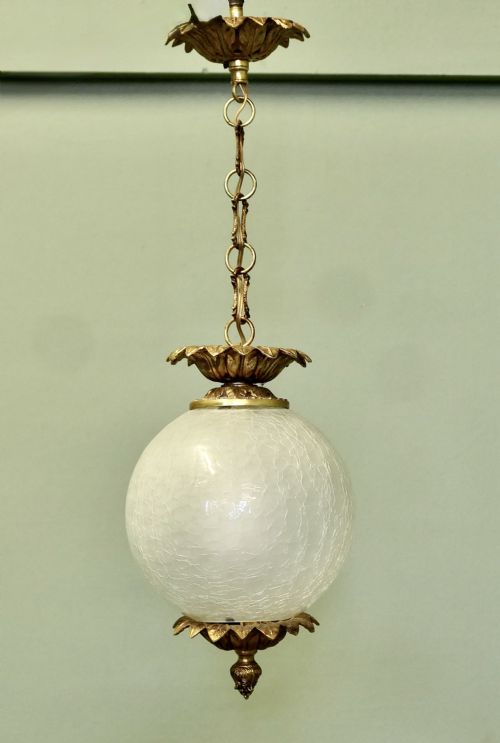
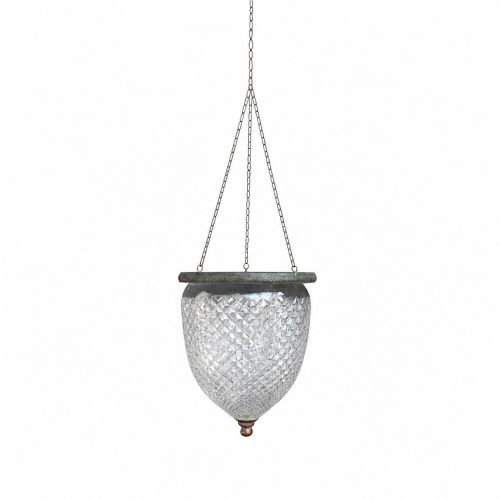
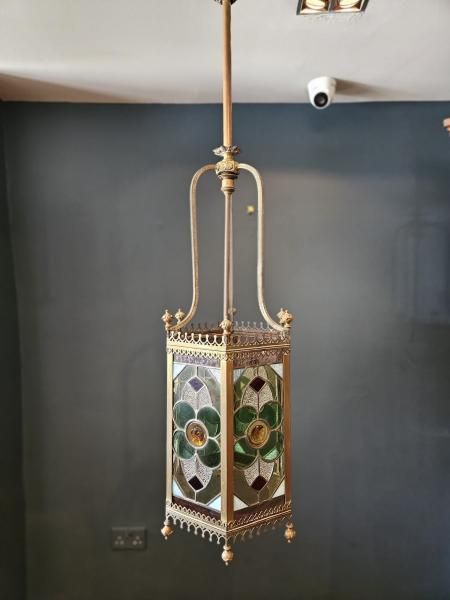
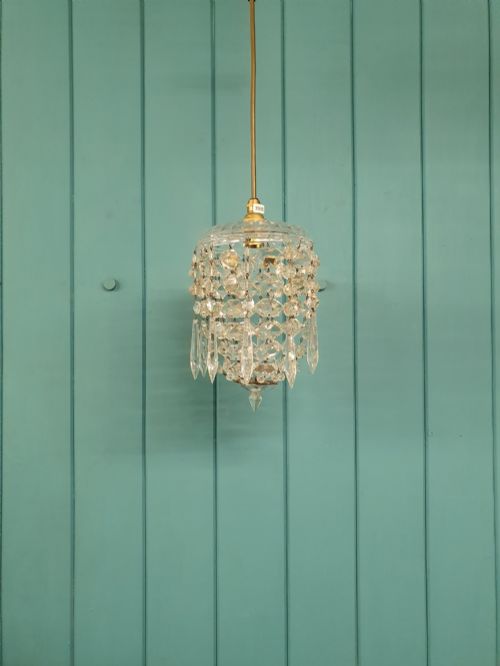
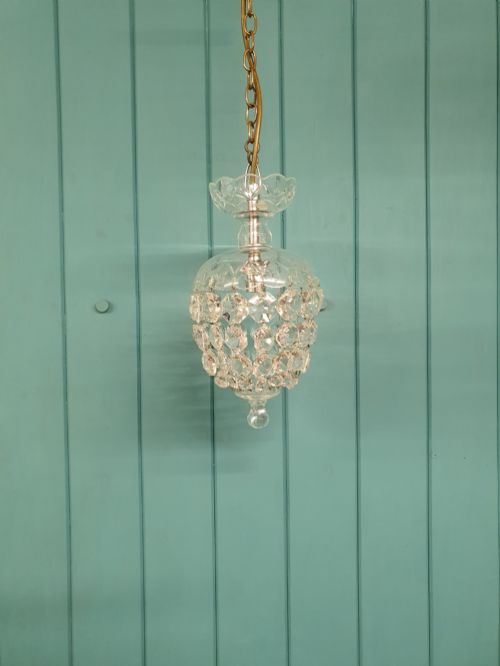
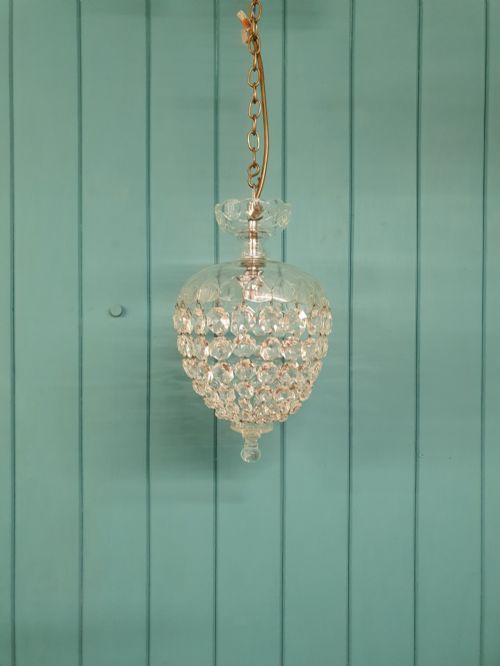
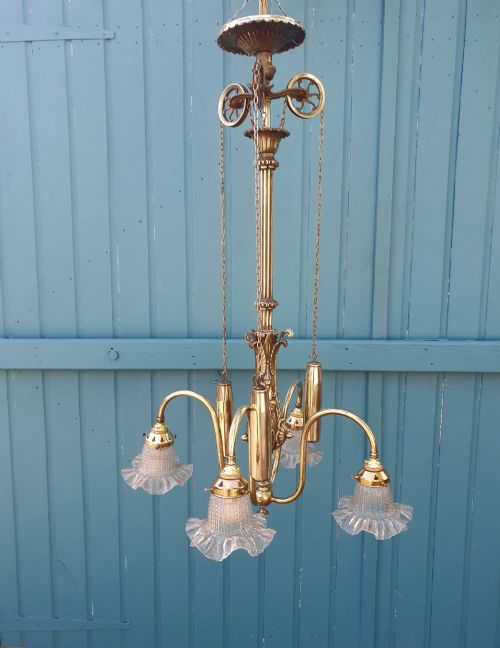
Glass Shade Chandelier
A glass shade chandelier brings character to a room through diffused light and period metalwork.
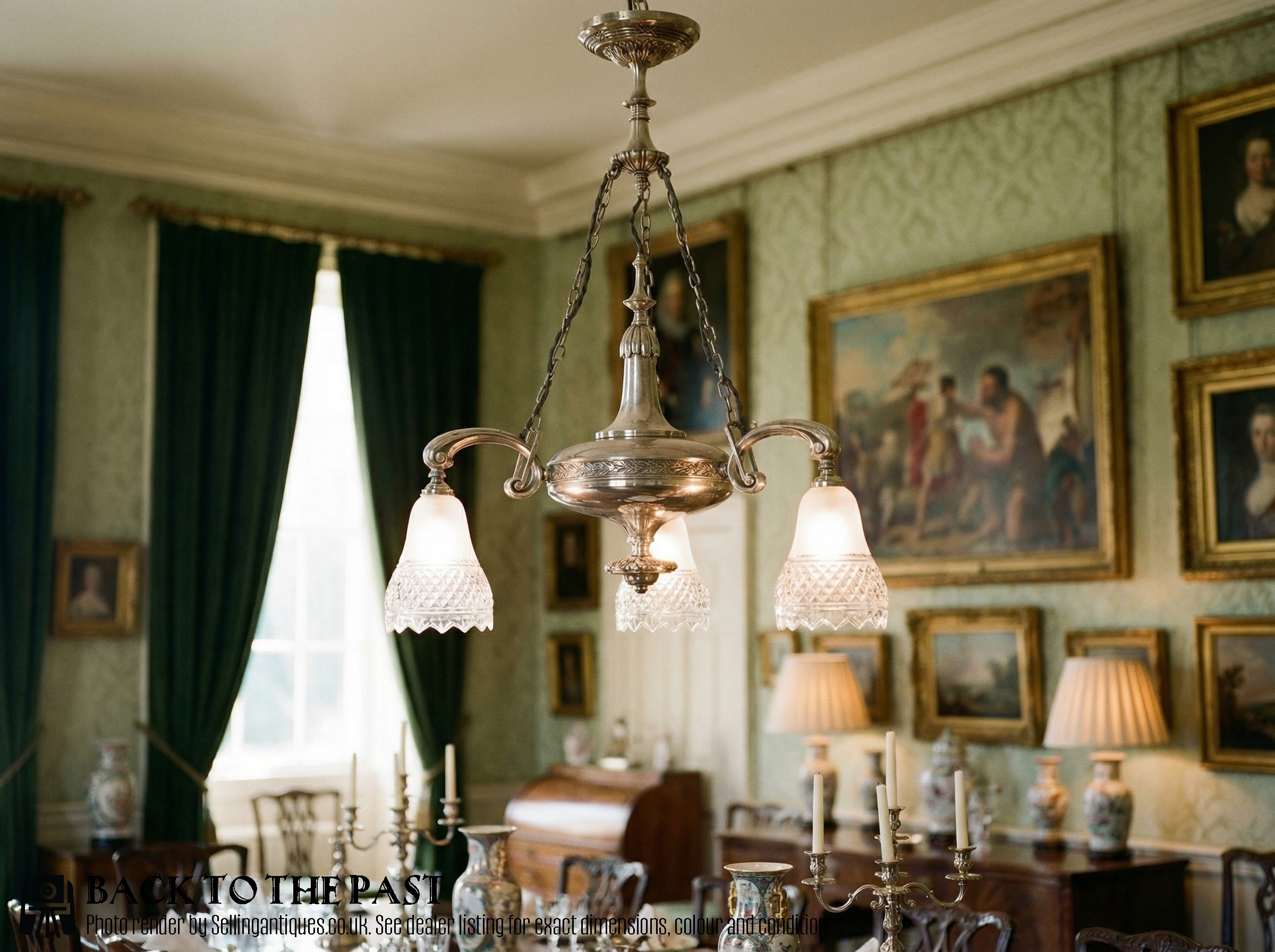
Glass Shade Chandelier
A glass shade chandelier is an overhead lighting fixture featuring glass shades suspended from a metal frame, spanning periods from the nineteenth century through the 1930s. Buyers look for these pieces to illuminate rooms with authentic period design, incorporating styles such as Victorian, Edwardian, and Art Deco.
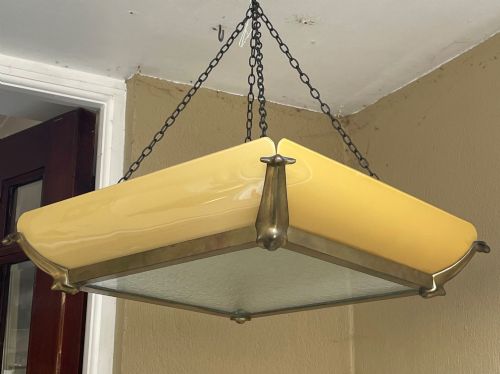
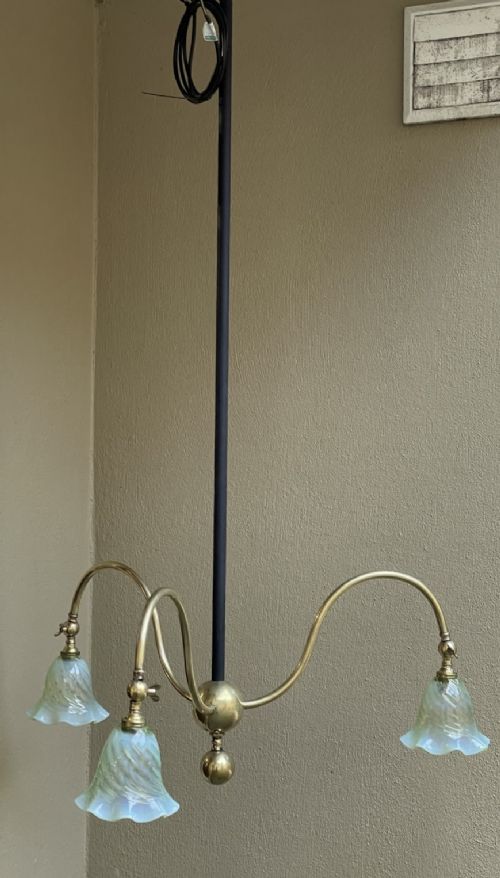
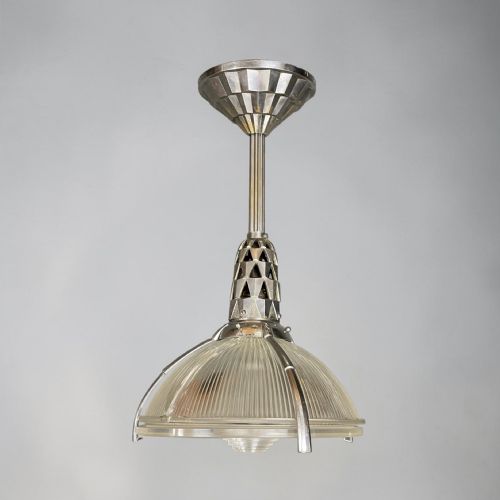
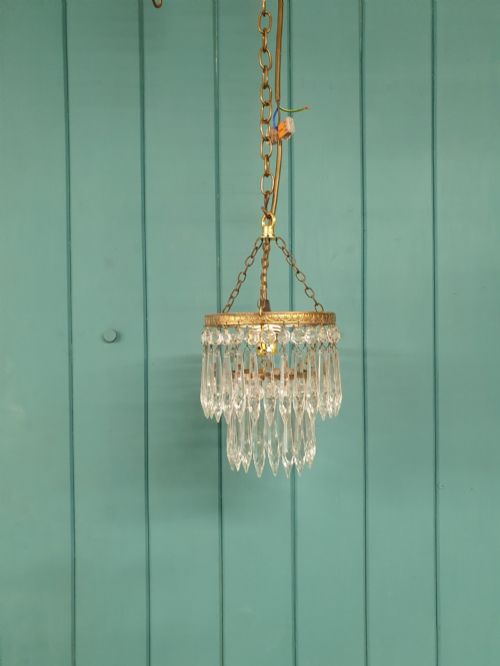
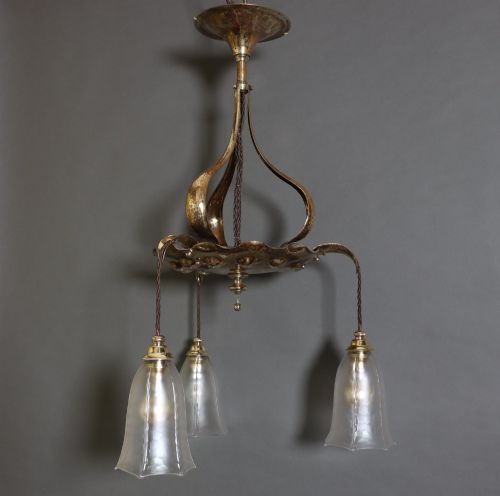
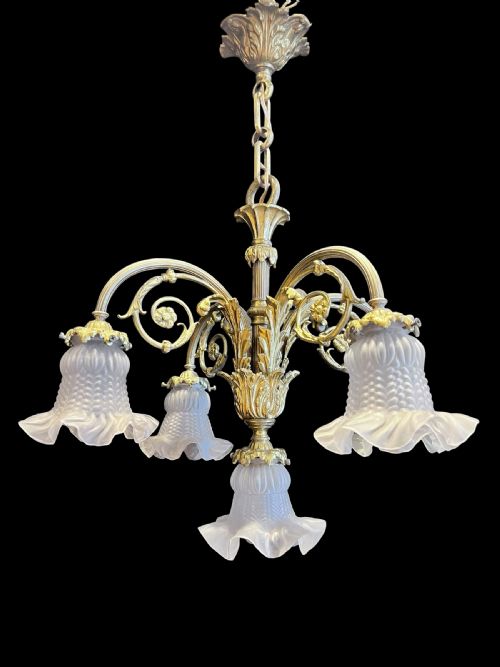
The most common examples on this page date from the Edwardian era and the 1920s to 1930s, typically constructed with brass frames and various glass forms. These range from slip shade pendants and moulded glass lanterns to multi-arm chandeliers fitted with frosted or cut glass.
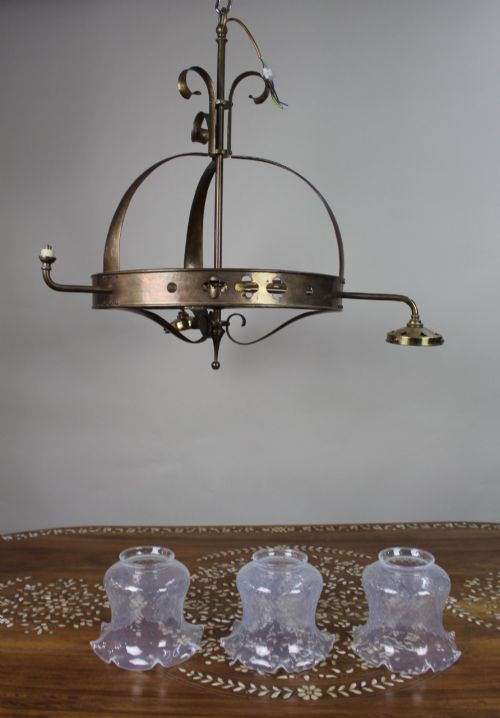
Forms vary from single pendant lights and small drop chandeliers to large multi-arm brass gasoliers and rise and fall fixtures. Origin styles span English, French, and American designs, offering both restrained Arts and Crafts work and decorative Art Deco statements.
How they were made
Makers constructed the primary frames of these chandeliers using cast, spun, or beaten metals such as brass, bronze, chrome, and copper. These metal components were joined to hold the weight of the glass shades and electrical or gas fittings securely.
The glass elements were produced through techniques including cutting, moulding, frosting, and leaded assembly. Artisans shaped crystal, ruby, cranberry, vaseline, and opalescent glass into domes, spikes, slip shades, and globes to soften and colour the illumination.
Periods represented span from the nineteenth century through Victorian, Edwardian, and Art Deco eras.
What varies in quality
Quality separates fixtures by the weight and casting crispness of the metal frame, alongside the depth and clarity of the glass work. Superior pieces display intricate detailing in brass or bronze and hand-finished glass components rather than simple pressed metal and plain glass.
The integration between the glass shades and the metal structure dictates the overall finish of the chandelier. Higher grade examples retain original matching shade sets, careful mounting hardware, and refined decorative elements such as crystals, prisms, or moulded motifs.
Émile-Jacques Ruhlmann·F&C Osler
The Glass Shade Chandelier Glossary
- Plafonnier
- A ceiling-mounted bowl light that sits close to the ceiling rather than hanging on a long drop. This form directs light downwards and suits rooms with lower ceiling heights.
- Slip shade
- A type of glass shade held in place by the metal frame of the fixture without traditional screws or shade rings. These shades are typical of Art Deco lighting designs.
- Gasolier
- A dual-purpose or converted gas and electric light fixture dating from the nineteenth or early twentieth century. These heavy brass fittings often feature cranberry, green, or opalescent shades.
- Rise and fall
- A mechanical pulley system allowing the height of the chandelier to be adjusted up and down. This mechanism was popular in Edwardian interiors for over tables or reading areas.
- Vaseline glass
- A transparent or translucent yellow-green glass made with uranium oxide that glows under ultraviolet light. It appears in nineteenth-century and early twentieth-century lighting.
Glass Shade Chandelier: Frequently Asked Questions
How do I date a glass shade chandelier?
Dating relies on stylistic clues in both the metalwork and the glass, crossing Art Deco, Edwardian, and Victorian design markers. Materials like chrome point toward the 1930s, while heavy brass gasoliers indicate the nineteenth century.
Construction methods and wiring channels also help determine the period. Early pieces often show gas conversion evidence or hand-cut crystal details typical of the Edwardian era.
Can these chandeliers be rewired for modern use?
Most antique and vintage chandeliers can be rewired to meet modern electrical safety standards. Professional rewiring ensures the internal components function correctly with current household supplies.
Many listings note whether a fixture has been rewired or adapted. Buyers should consult a qualified electrician to install older brass and metal frames safely.
What is a slip shade chandelier?
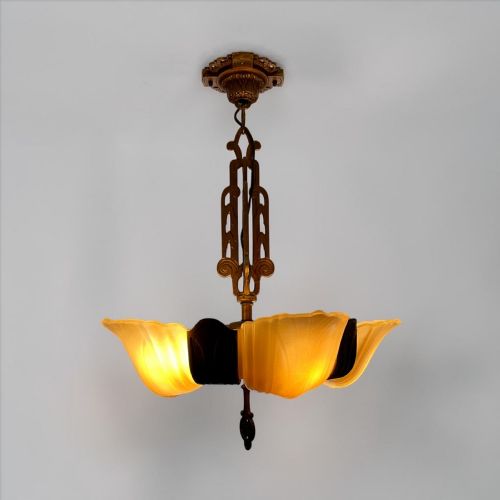
A slip shade chandelier uses individual moulded glass panels that slide into a metal cage or frame. This design is characteristic of the Art Deco period from the 1920s and 1930s.
The shades diffuse light evenly while creating a geometric silhouette. These fixtures often feature bronze, brass, or chrome metalwork.
How do I choose the right size chandelier?
Sizing depends on the room dimensions and ceiling height where the fixture will hang. Smaller spike and dome chandeliers work well in compact spaces, while multi-arm fixtures suit larger rooms.
Drop length is another consideration for ceiling clearance. Rise and fall mechanisms offer flexibility in rooms where height adjustment is useful.
What glass colours were used in period lighting?
Period lighting utilised a range of glass colours including frosted, opalescent, cranberry, vaseline, ruby, and pink. Coloured glass added warmth and atmosphere to Victorian and Edwardian interiors.
Art Deco and Arts and Crafts lighting often favoured frosted, crackle, or clam shell glass textures. Cut crystal and clear glass were used to maximise light refraction.