
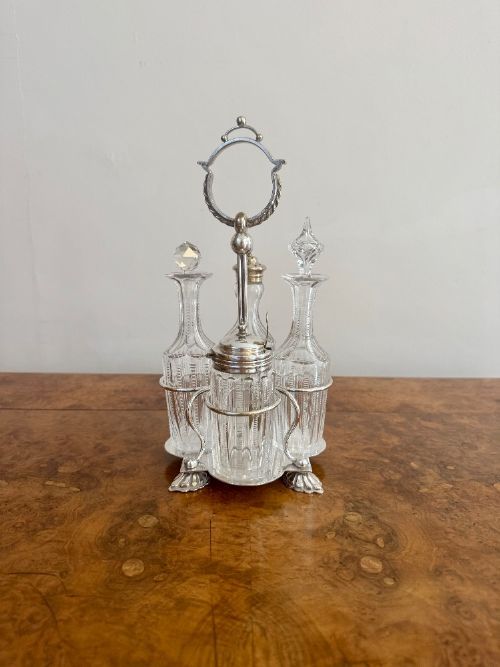
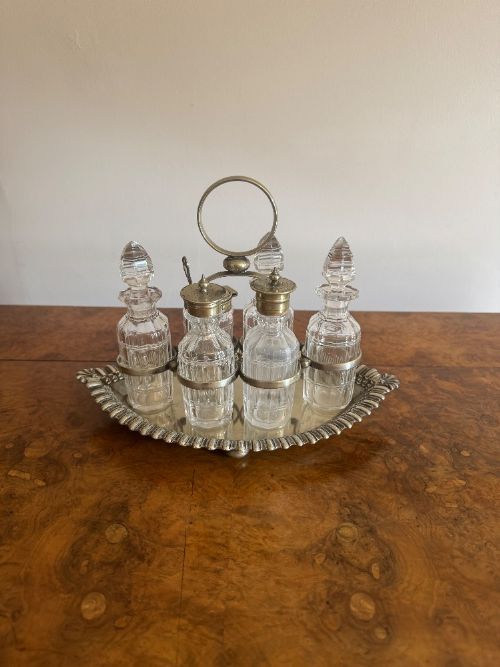


Glass Oil Vinegar Bottle
A glass oil vinegar bottle brings functional elegance to the dining table, pairing clear vessels with precious metal mounts.
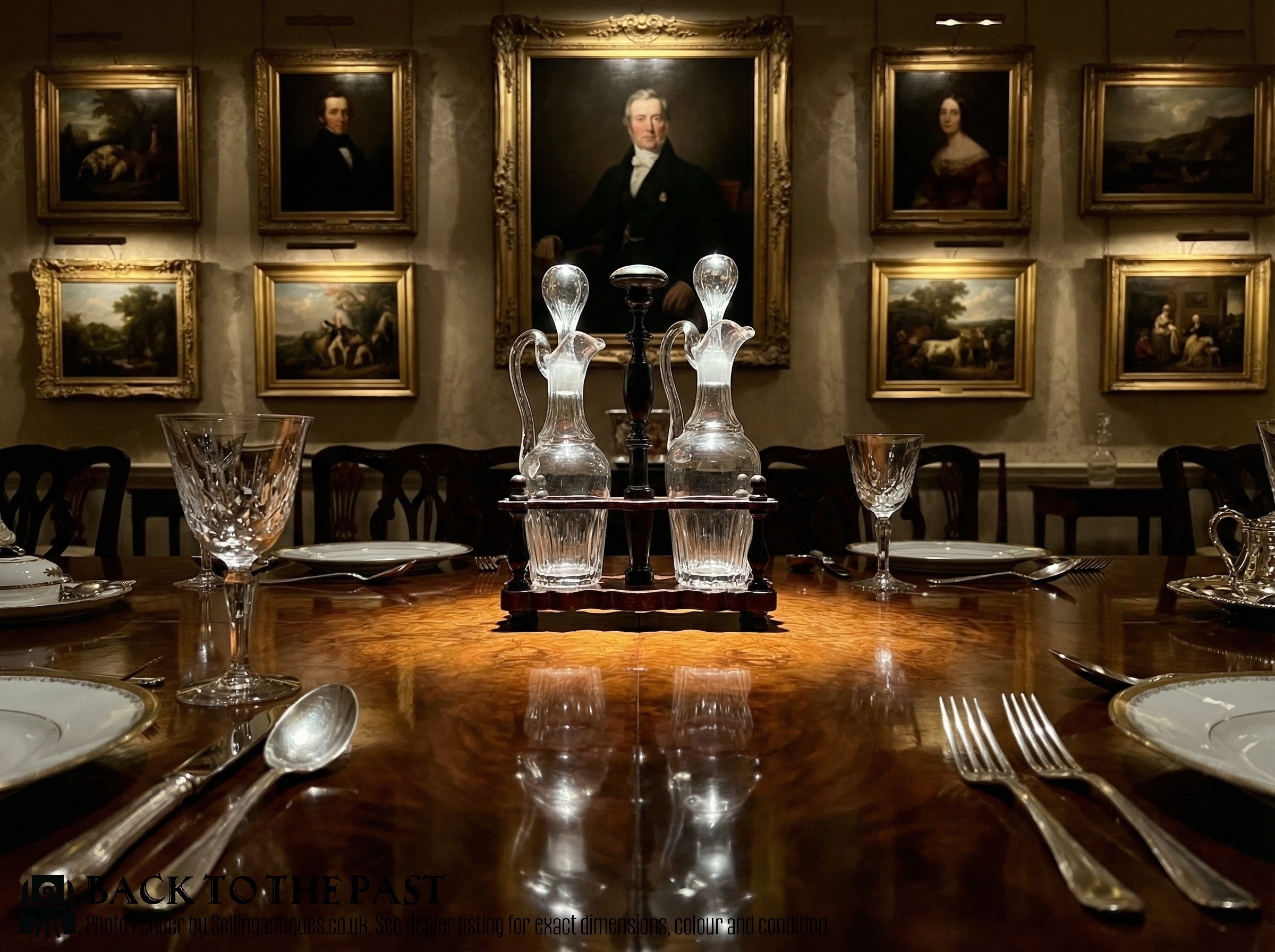
Glass Oil Vinegar Bottle
When searching for a glass oil vinegar bottle, buyers encounter individual cruet bottles alongside larger fitted cruet sets and stands. These pieces span multiple periods including the Georgian era, the Victorian age, and the Edwardian period, often appearing as matched pairs or integrated table frames.
The most common versions on this page are standalone glass bottles fitted with silver mounts or integrated within silver plated and sterling silver cruet stands. Formats range from single double-spouted bottles to multi-bottle sets designed for condiments and vinegars.

Materials and construction
The primary materials combine clear glass and lead crystal with sterling silver and silver plate. Makers shaped the glass through blowing and cutting techniques to catch the light, while metalworkers forged mounts, caps, and stands in silver or plated brass.
Wooden elements such as mahogany and ebonised wood occasionally form the base stands that cradle the glass vessels. Metal mounts are often hallmarked to indicate the year of creation and the silversmith's workshop.
Glass Oil Vinegar Bottle Retail Price Guide 2026
Typical asking prices for glass oil vinegar bottle among the pieces listed under this phrase on Sellingantiques today, from the lower quarter to the upper quarter. They describe what is for sale here now, not the wider market.
Some Victorian oil bottles feature double spouts, allowing the user to pour oil and vinegar simultaneously without swapping hands.
Standards of craftsmanship
Quality differentiates by the clarity of the glass and the precision of the hand cutting. Heavy lead crystal and deep hand-cut facets indicate superior production compared to simpler moulded glass.
The weight and thickness of the silver mounts or silver plating determine the durability and finish of the piece. Complete sets retaining their original matching bottles and undamaged stoppers represent a higher tier of preservation.

Charles Thomas Fox·Elkington & Co·Hester Bateman·Robert and David Hennell·Walker & Hall·Wade Wingfield Wilkins
The Glass Oil Vinegar Bottle Glossary
- Cruet set
- A matched collection of bottles, casters, or jars held together in a metal or wooden stand. These sets typically held oil, vinegar, mustard, and pepper for the dining table.
- Lead crystal
- A heavy, brilliant form of glass containing lead oxide that increases refractive index. This material allows for deep, sharp hand-cut decorative patterns.
- Hallmark
- An official stamp or series of marks applied to precious metals in Britain. It indicates the standard of silver purity, the assay office, and the maker.
- Silver plate
- A base metal coated with a thin layer of silver. This technique provided the appearance of solid silver at a more accessible cost during the Victorian and Edwardian periods.
Glass Oil Vinegar Bottle: Frequently Asked Questions
What did they hold?
These bottles served liquids and condiments used to season food at the dining table. Oil and vinegar stood alongside mustard, pepper, and sauces within the larger cruet arrangements.
Pairs of glass bottles specifically dispensed oil and vinegar for salads and dressings. The stoppers or spouts helped control the flow during pouring.
How do I date them?
Dating relies on metal hall-marks, stylistic details, and manufacturing methods. Georgian pieces often feature simpler neoclassical lines, while Victorian and Edwardian examples show heavier ornamentation and silver plating.
Art Deco items from the 1920s introduce modernist geometric cutting and streamlined frames. Comparing the glass cutting style alongside the silver mount design confirms the period.
Are original stoppers important?
Original stoppers and caps contribute significantly to the completeness of an oil and vinegar bottle. Matching glass stoppers or silver caps ensure the set remains in its original configured state.
Replacements alter the uniformity of the vessel and affect the historical integrity of the piece. Collectors prefer items where every bottle retains its correct matching top.
How do I clean the glass?
Cleaning requires gentle warm water and mild soap to protect historic silver mounts and plated surfaces. A soft bottle brush helps reach the interior without scratching the old glass.
Harsh chemical cleaners and abrasive cloths damage silver plating and wear down antique metalwork. Keeping moisture away from wooden stands during cleaning preserves the materials.