
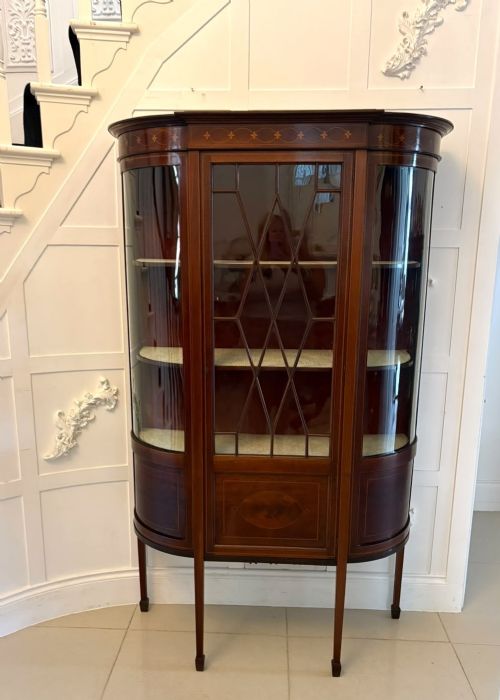
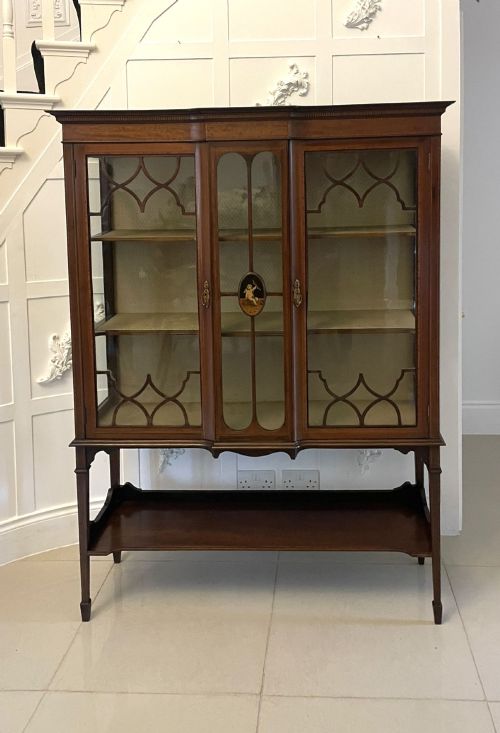
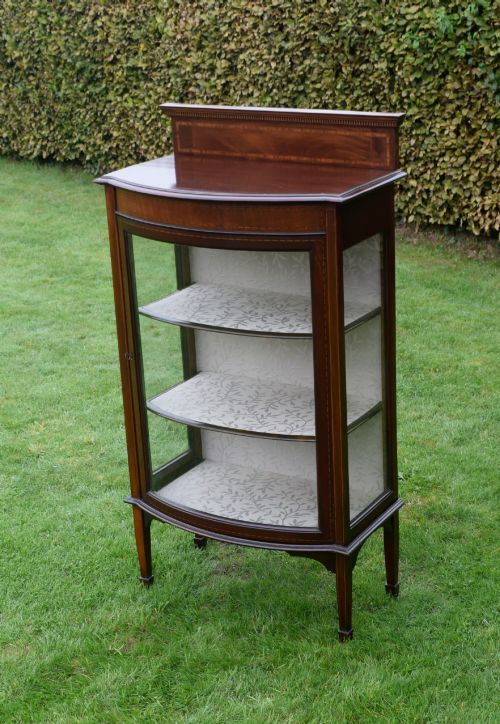
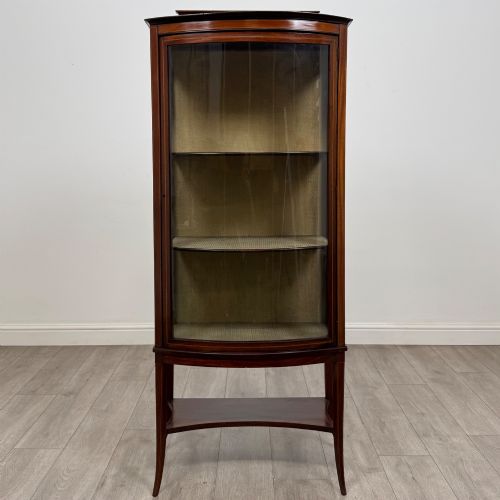
Glass Front Mahogany Cabinet
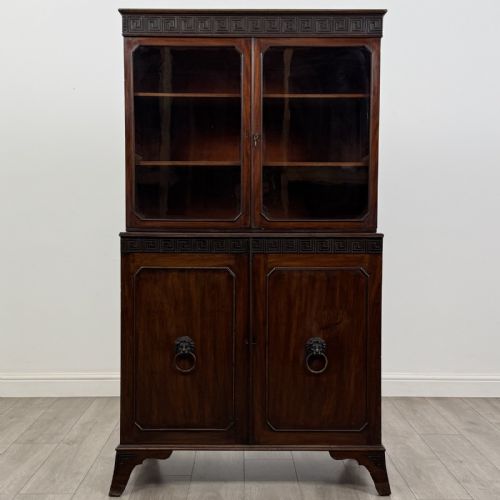
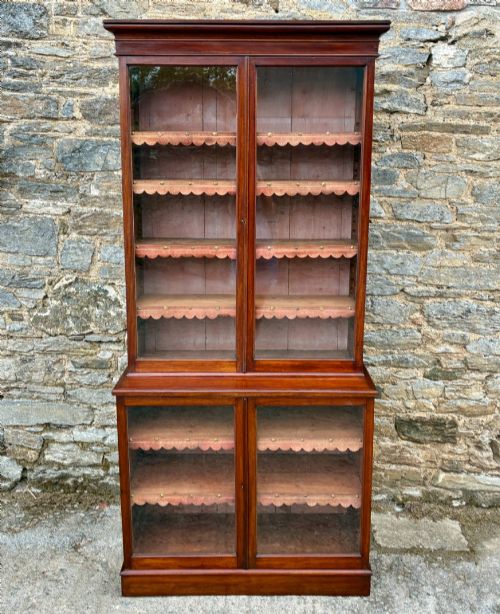
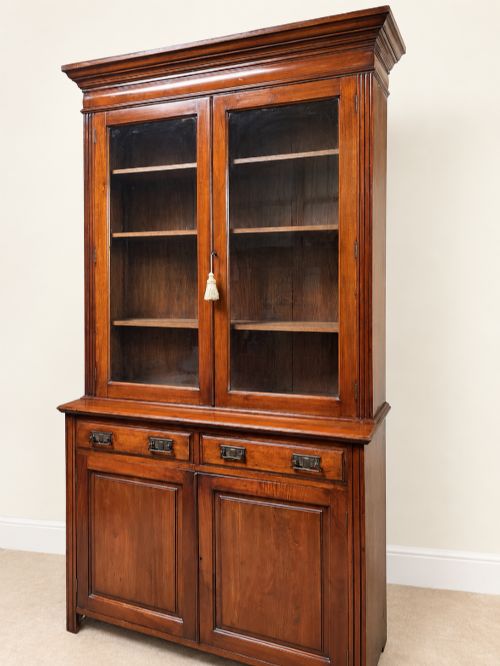
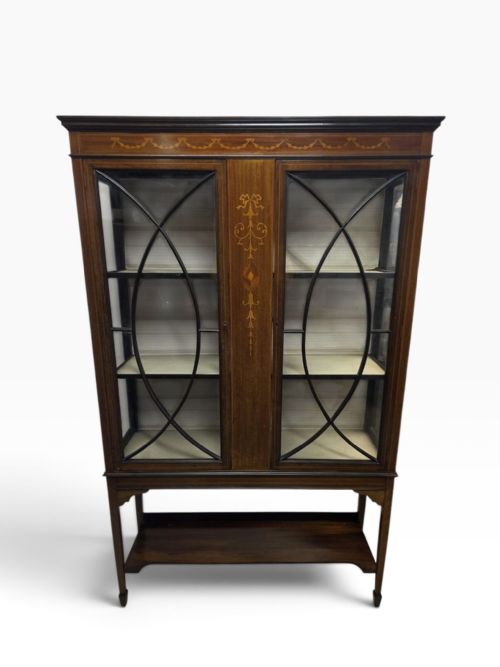
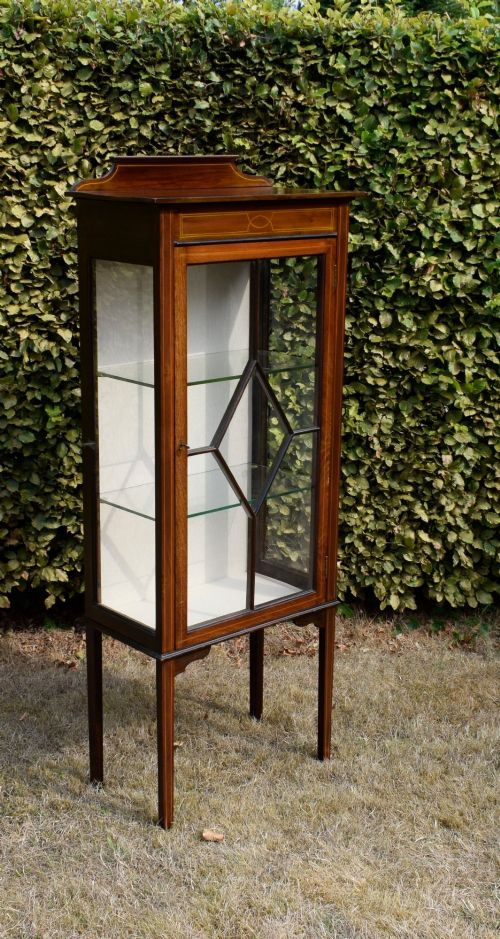
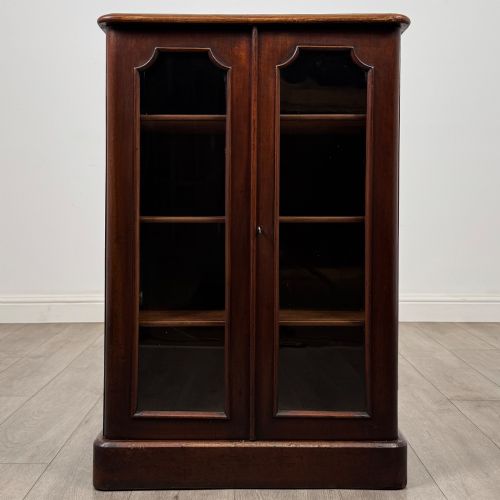
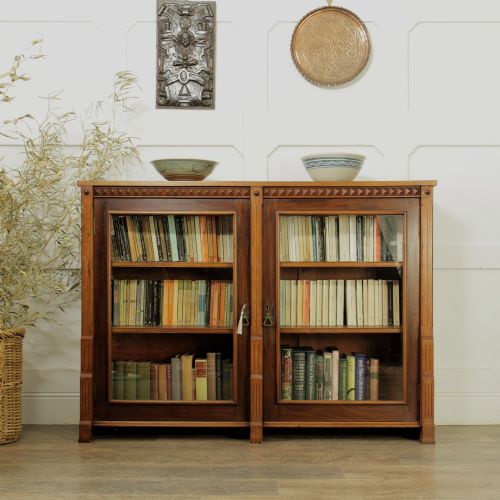
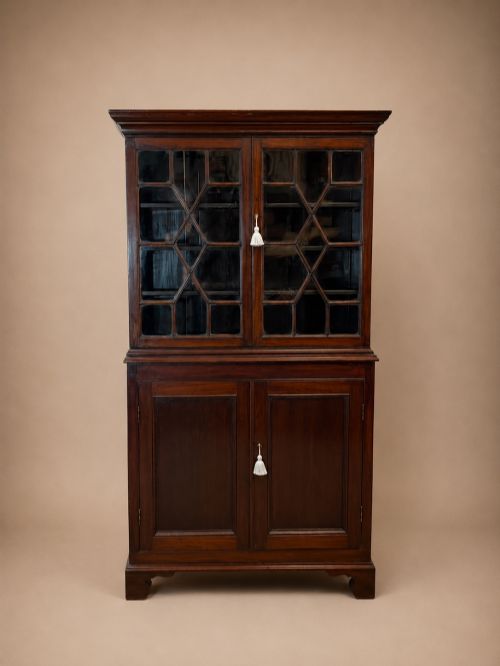
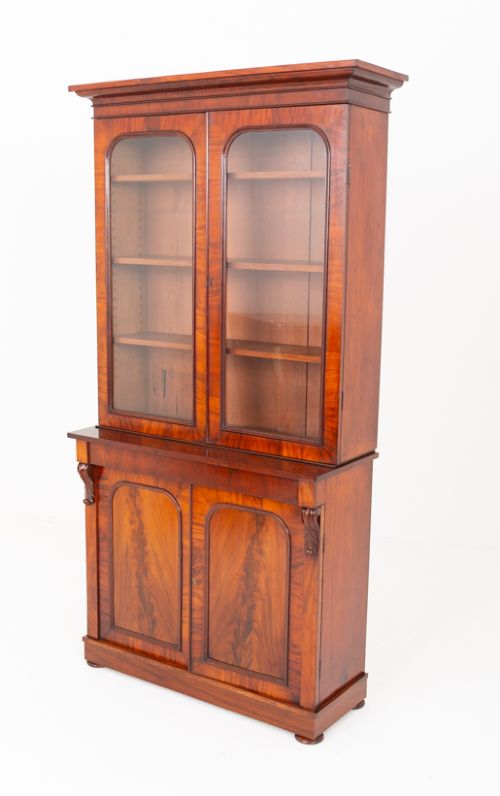
These pieces of glass front mahogany cabinet span Georgian, Victorian and Edwardian eras, uniting rich timber with glazed doors to protect prized books and ornaments.
Glass Front Mahogany Cabinet
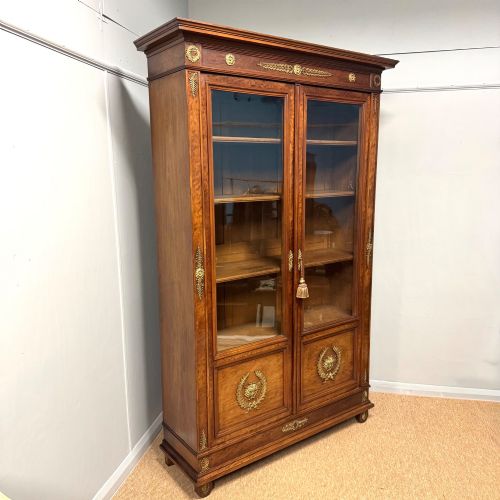
A glass front mahogany cabinet provides a clear view of its contents while shielding books, ceramics and curiosities from dust. When exploring a glass front mahogany cabinet, buyers encounter forms ranging from tall library bookcases and corner units to compact display cabinets and sectional stacking designs.
The pieces on this page emerge from the Georgian, Victorian and Edwardian periods, alongside early 20th-century workshop creations. Edwardian and late Victorian display cabinets dominate the selection, frequently featuring slender proportions and glazed panels designed to maximise light.
Makers and workshops adapted the timber to various domestic settings, producing everything from breakfront library furniture to small bow-front corner cupboards. Each variation serves the fundamental purpose of storage and display using solid and veneered mahogany bodies.
How They Were Made
Cabinet makers constructed these pieces using solid mahogany and mahogany veneers laid over secondary timbers, often incorporating brass hardware to secure doors and drawers. Glass panes are held within timber frames or astragal bars, while structural interiors utilise brass fittings and occasional fabric linings.
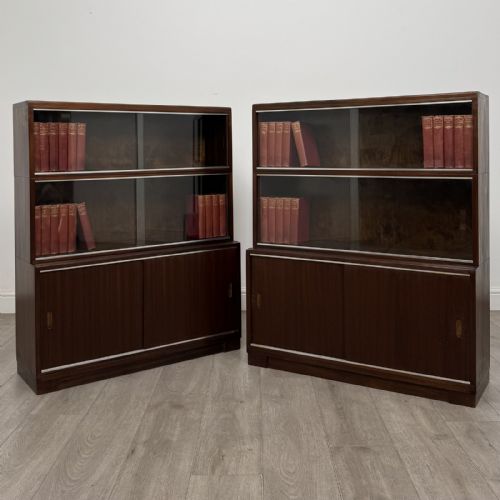
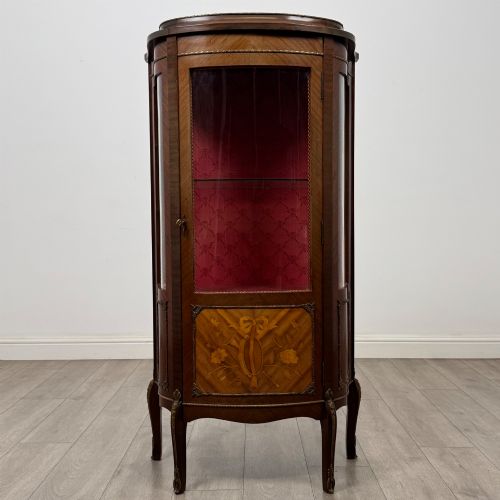
Decorative surfaces frequently incorporate satinwood inlay, fruitwood marquetry and stringing to accent the rich red-brown grain of the mahogany. More elaborate examples from the French taste integrate ormolu mounts and marble tops, while sectional stacking designs rely on functional mechanical elements for modular assembly.
Mahogany bodies frequently incorporate satinwood inlay, brass hardware and fabric-lined interiors.
What Varies in Quality
The standard of timber selection and inlay work defines the upper tiers of these cabinets, where finely figured grain and intricate satinwood or fruitwood banding demonstrate superior craftsmanship. Simple architectural lines distinguish well-proportioned Georgian and Victorian library furniture from standard commercial production.
Glazing technique and the delicacy of astragal bars also mark the distinction between everyday storage and finer display pieces. The integration of specialised hardware, such as original brass locks and functioning sectional mechanisms, separates standard workshop output from exceptional examples.
Globe Wernicke·Edwards & Roberts·F. Sage & Co.
The Glass Front Mahogany Cabinet Glossary
- Astragal
- Moulding framing the individual panes of glass within a glazed door. These narrow timber strips create geometric patterns across the cabinet front.
- Breakfront
- A piece of furniture where the central section projects forward from the flanking wings. This architectural arrangement adds depth and presence to large library bookcases.
- Marquetry
- Decorative patterns formed by fitting together thin veneers of various wood types. Cabinet makers utilised satinwood and fruitwood to create floral or linear motifs.
- Secretaire
- A desk disguised as a standard cabinet drawer or section, featuring a drop-down writing flap. It combines storage with a pull-out writing surface.
- Vitrine
- A glass-sided and glass-fronted display cabinet intended for porcelain and curiosities. These French-influenced pieces prioritise visibility from multiple angles.
Glass Front Mahogany Cabinet: Frequently Asked Questions
How do I date a glass front mahogany cabinet?
Dating relies upon architectural style, construction methods and timber characteristics observed across the piece. Georgian examples show heavier cornices and hand-cut joinery, while Edwardian versions often incorporate lighter inlaid decoration and delicate glazing bars.
Secondary woods inside drawers and the type of glass used also offer clues to the period. Machine-sawn timber and plate glass typically point towards late Victorian and 20th-century manufacture.
What is a barrister bookcase?
A barrister bookcase is a modular shelving unit featuring glass-fronted doors that lift and slide inward above each shelf. This sectional design allowed legal professionals to transport their libraries easily.
Originating in the late 19th and early 20th centuries, these stacking cabinets enable owners to add or remove tiers as their collection of books expands.
Are these cabinets solid mahogany?
Most cabinets combine solid mahogany framework with mahogany veneers applied to secondary structural timbers. Cabinet makers utilised veneers to display striking grain patterns without risking the warping associated with large solid boards.
Internal partitions, drawer linings and backboards frequently employ secondary woods such as deal or oak, which was standard practice in traditional cabinet making.
How should I care for a mahogany cabinet?
Mahogany furniture benefits from stable indoor environments away from direct sunlight and sudden temperature shifts. Regular dusting with a dry, soft cloth preserves the finish without requiring heavy polishes.
Applying microcrystalline wax occasionally helps nourish the timber surface and protects the veneer without creating a sticky buildup that attracts dust.