
Glass Door Vitrine
A glass door vitrine protects precious collections behind clear panels while offering a formal stage for display in the principal rooms of a home.
Glass Door Vitrine
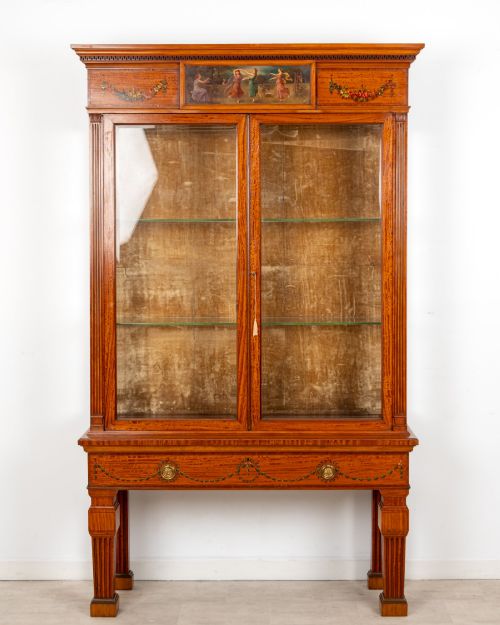
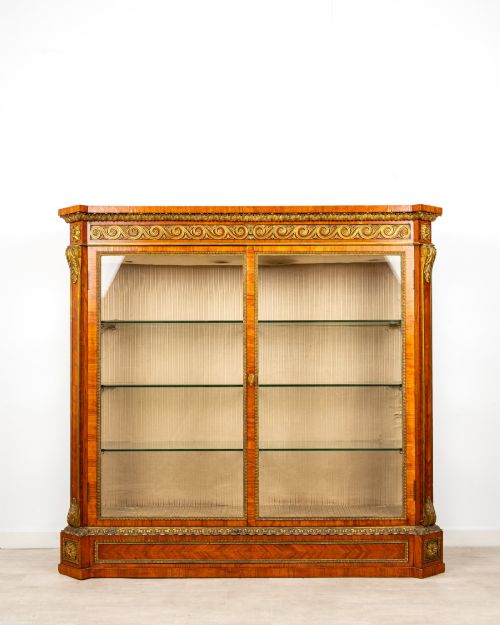
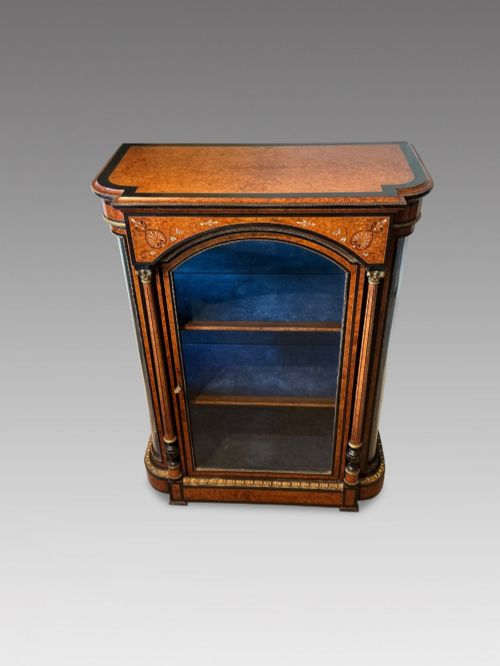
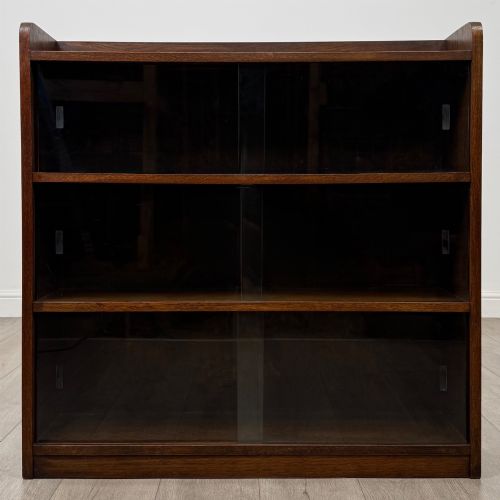
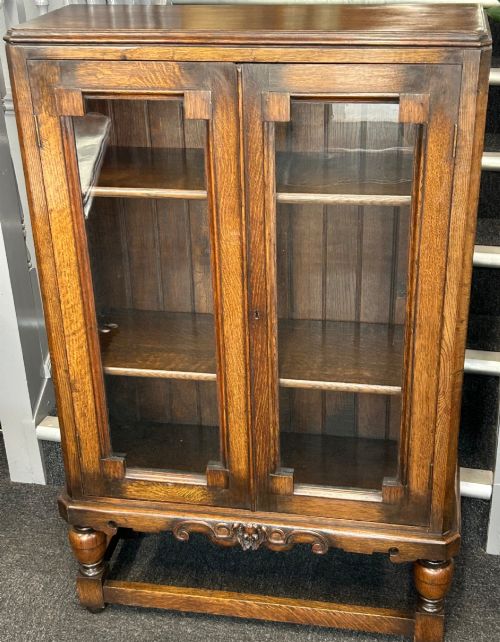
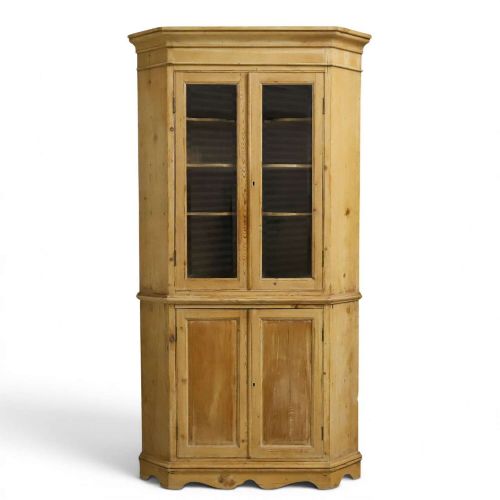
A glass door vitrine brings together centuries of cabinet-making traditions designed to exhibit books, ceramics, and personal treasures. The pieces on this page span the Victorian and Edwardian eras through to the early twentieth century, taking the form of tall upright display cabinets, corner cupboards, and two-part bookcases.
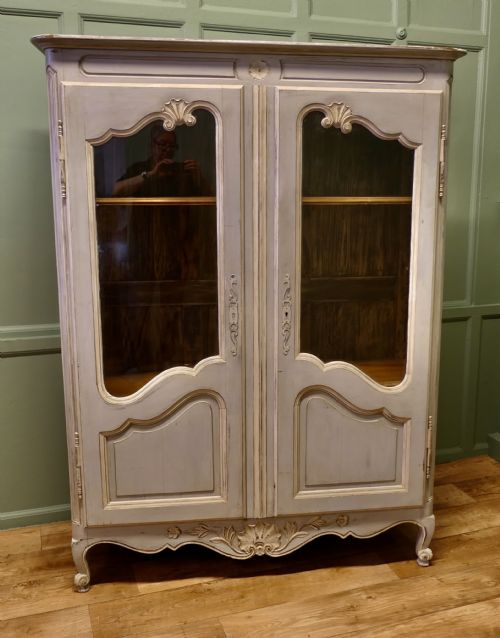
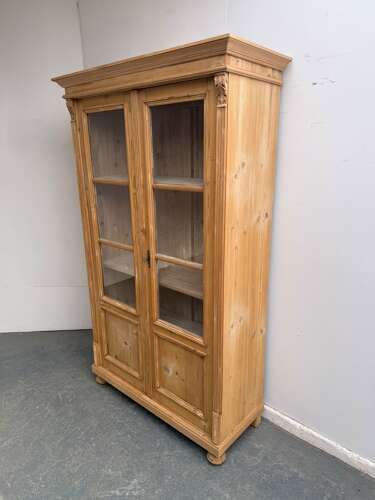
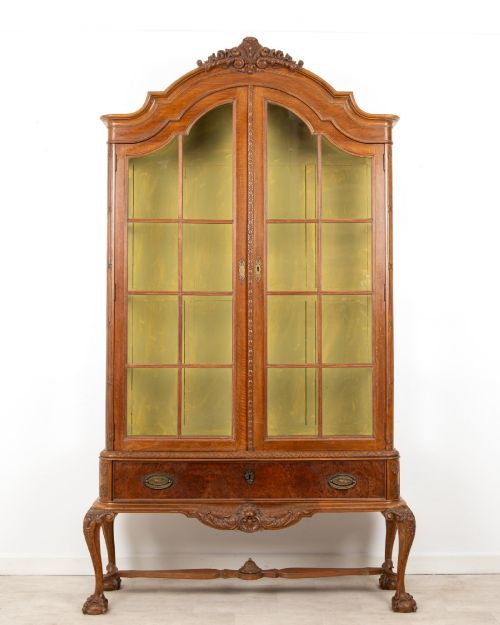
Makers utilised various regional styles ranging from straightforward English oak and pine workshop builds to elaborate French-influenced formats featuring gilt bronze and fine timbers. Buyers frequently encounter Edwardian mahogany and satinwood examples alongside substantial nineteenth-century pieces designed for domestic libraries and drawing rooms.
Materials and Construction
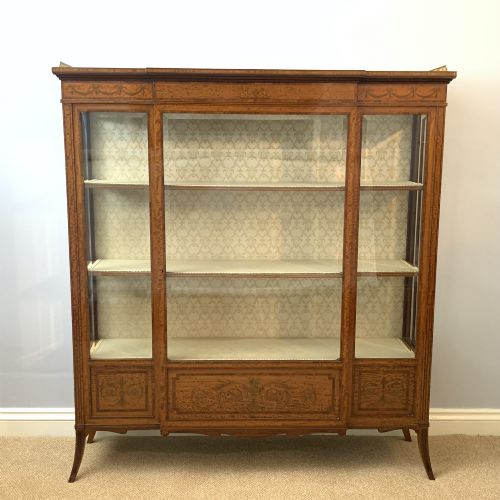
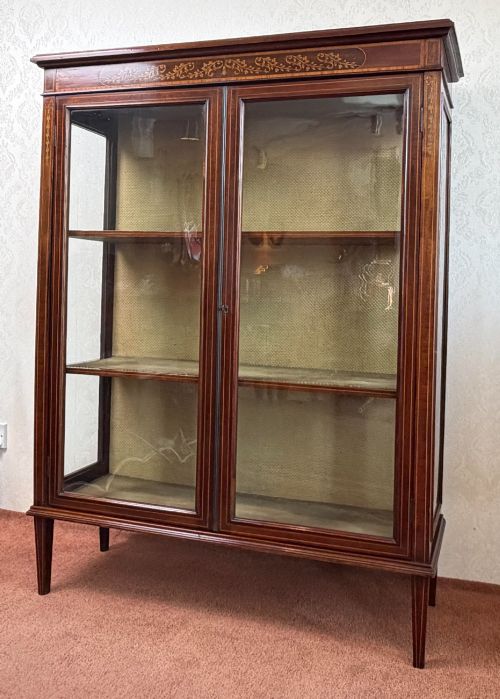
Cabinet makers built these vitrines using structural carcasses of mahogany, oak, walnut, and pine, frequently embellishing the surfaces with satinwood inlay, kingwood veneers, or painted finishes. Glazed doors formed the central operational feature, allowing light to reach internal shelves while keeping dust away from delicate contents.
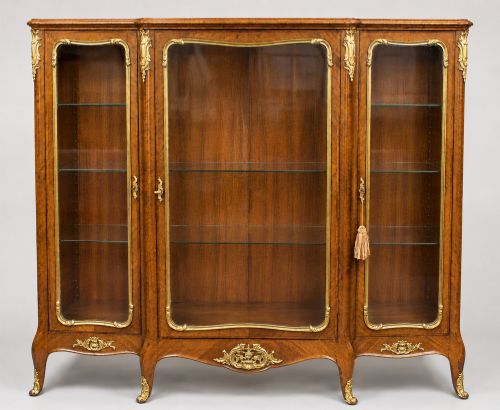
Metal mounts in brass, ormolu, and gilt bronze often reinforce corners and frame glass panels on grander examples, particularly those referencing French aesthetic traditions. Internal arrangements rely on fitted wooden or adjustable glass shelving housed securely within panelled or bowed frames.
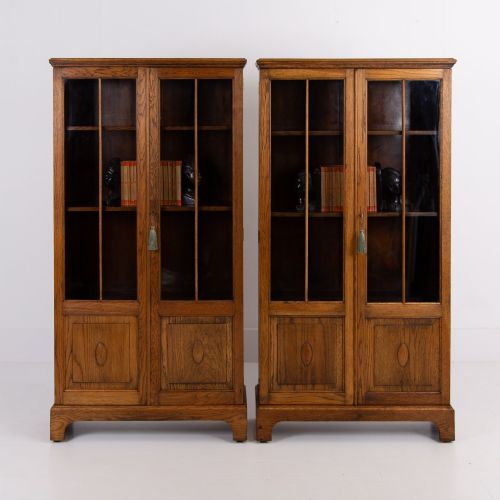
A sturdy bamboo bookcase stands ready for botanical specimens or light reading.
Craftsmanship and Proportion
Quality rests upon the selection of cabinet timbers, the precision of inlay work, and the structural integrity of the glazed doors and frames. Superior examples display balanced proportions, delicate stringing, and well-cast mounts that sit flush against the primary wood.
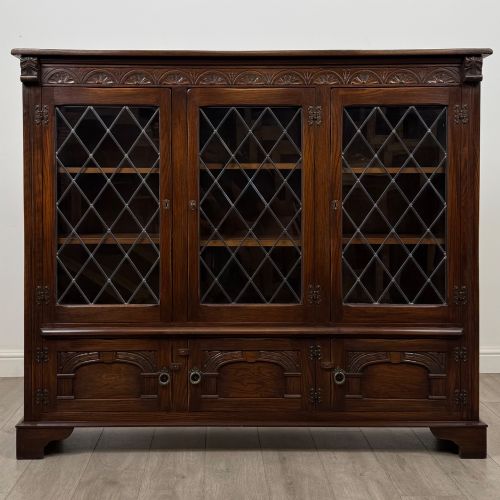
Simpler vernacular pieces rely on honest pine or oak construction without elaborate embellishment, whereas workshop-attributed cabinets demonstrate meticulous attention to internal joinery, shelving adjustments, and decorative brassware.
Hampton & Sons, London·Edwards & Roberts·H. J. Hatfield & Sons
The Glass Door Vitrine Glossary
- Vitrine
- A glass-fronted cabinet designed specifically for the display of objects and curiosities. These pieces often feature glazed sides as well as doors to maximise illumination.
- Inlay
- A decorative technique where contrasting strips or pieces of wood, such as satinwood, are inserted into recessed portions of a primary timber surface. This creates delicate geometric or botanical patterns.
- Ormolu
- Gilt bronze ornamentation applied to furniture mounts and architectural details during the nineteenth century. It adds metallic contrast to dark woods like mahogany and kingwood.
- Glazed
- Fitted with glass panes held securely by wooden glazing bars or metal framing. This term describes the doors and side panels of exhibition cabinets.
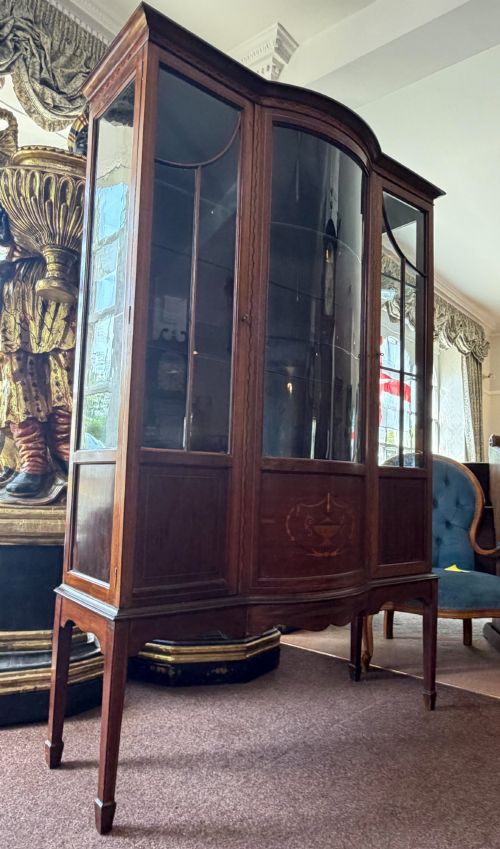
- Bow front
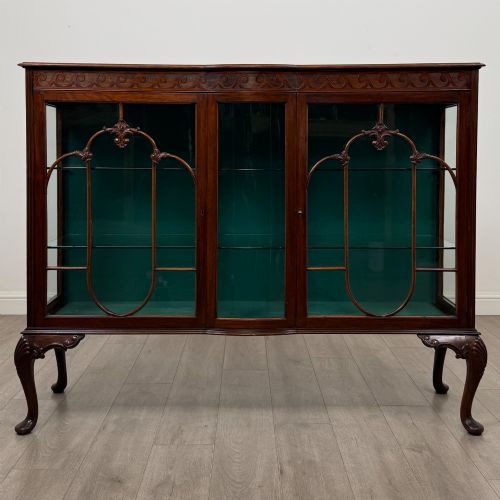
- A cabinet front curved in a convex sweep across its width. This styling softens the geometric lines of a room and expands internal display angles.
Glass Door Vitrine: Frequently Asked Questions
What is a glass door vitrine?
A glass door vitrine is a glazed display cabinet designed to exhibit porcelain, silver, books, and collections while protecting them from dust and handling. They function primarily in drawing rooms, studies, and reception areas as decorative storage.
Cabinet makers developed these vessels in various scales, from compact corner cupboards to grand multi-door bookcases and freestanding display furniture.
How do I date a vitrine?
Dating relies on identifying the prevailing timber fashions, structural hardware, and stylistic revivals present in the construction. Pieces originating in the Victorian era typically utilise solid mahogany, walnut, or pine, whereas Edwardian examples frequently incorporate satinwood inlay and lighter framing.
Revival styles offer further clues, with Jacobean, Queen Anne, and Sheraton revivals pointing towards specific late nineteenth and early twentieth-century workshop periods.
Where should I place one?
These cabinets suit rooms with good natural light where the glazed panels can illuminate internal displays effectively. Drawing rooms and studies provide traditional settings for housing book collections and decorative objects.
Care should be taken to position them away from direct sunlight to protect sensitive timber finishes and displayed items from fading.
Can shelves be adjusted?
Many glazed bookcases and display cabinets feature adjustable shelving formats to accommodate varying heights of books or decorative objects. Workshop pieces often incorporate traditional wooden support racks or metal shelf-strips.
Earlier vernacular pieces may have fixed internal shelves built directly into the structural carcass during initial assembly.