


Gilt Mounted Vitrine
A gilt mounted vitrine is a glazed display cabinet framed in metal mounts that turns precious objects into interior architecture.
Gilt Mounted Vitrine
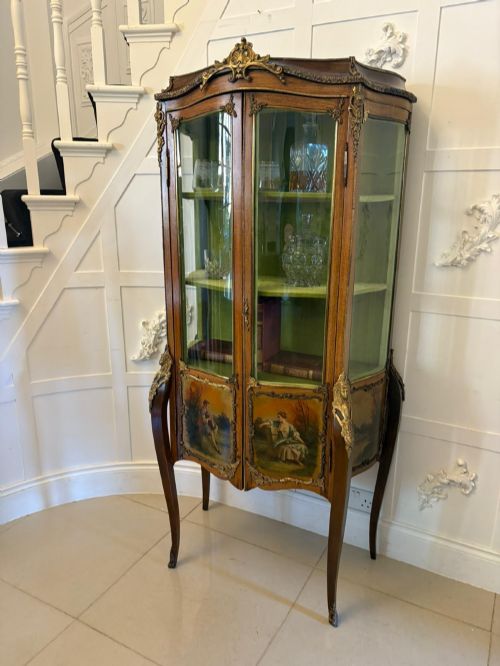
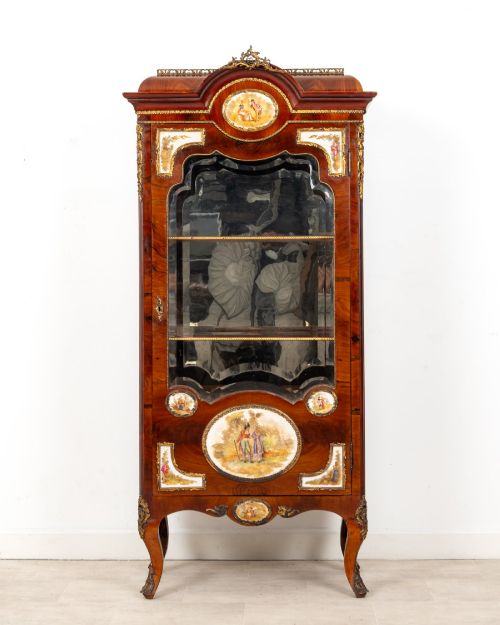
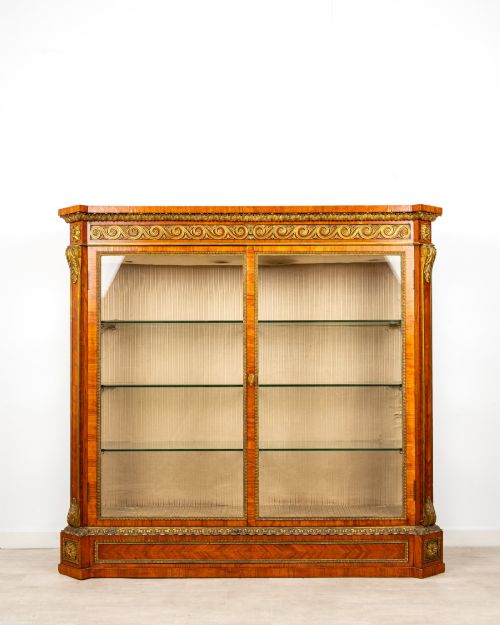
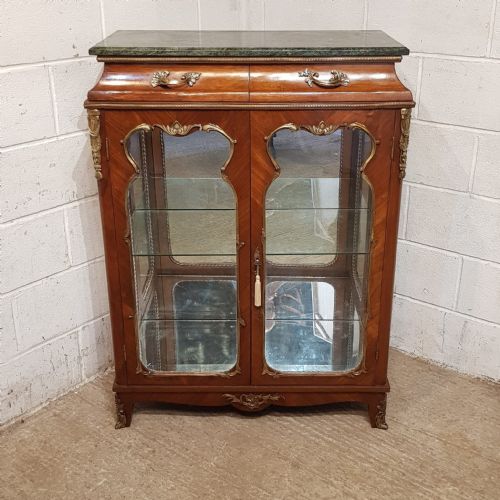
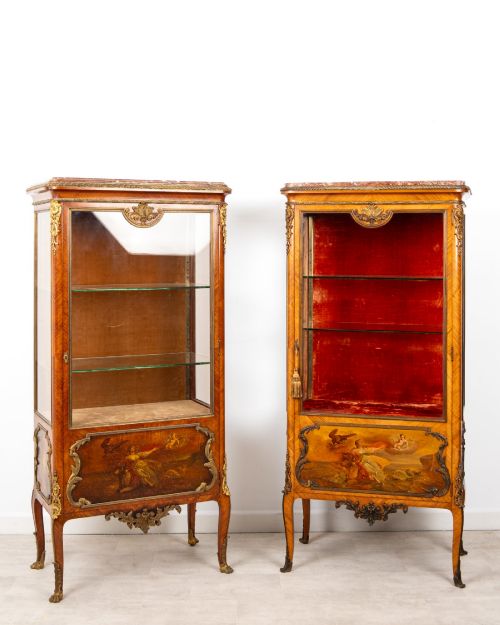
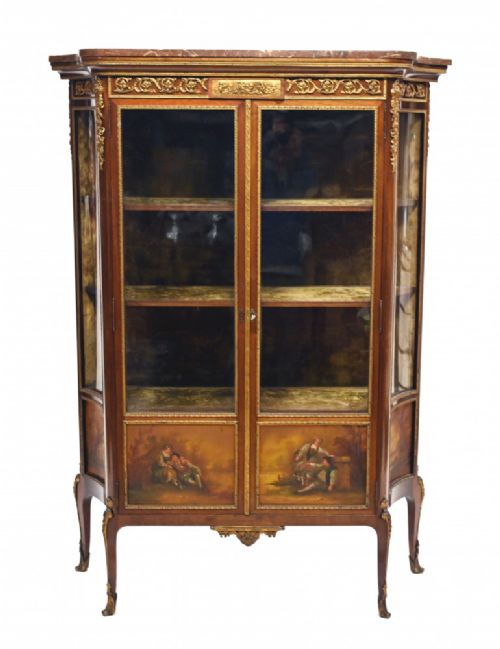
A gilt mounted vitrine is primarily a display cabinet built to showcase porcelain, bijouterie and curiosities behind glass panels. These pieces span the nineteenth century and the Edwardian period, drawing heavily on French revival styles such as Louis XV and Louis XVI.
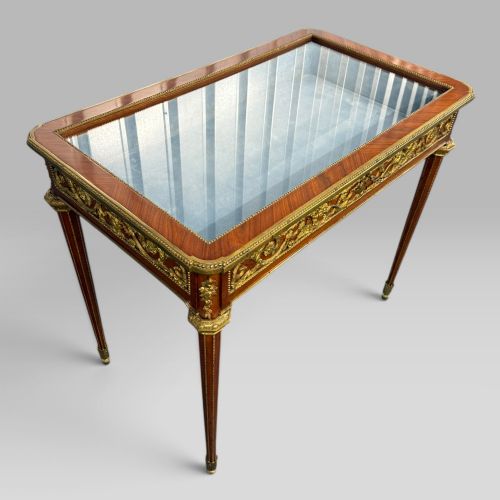
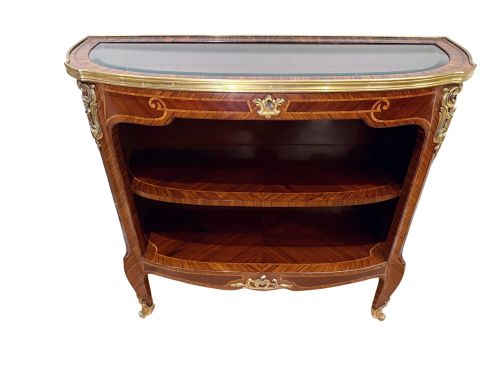
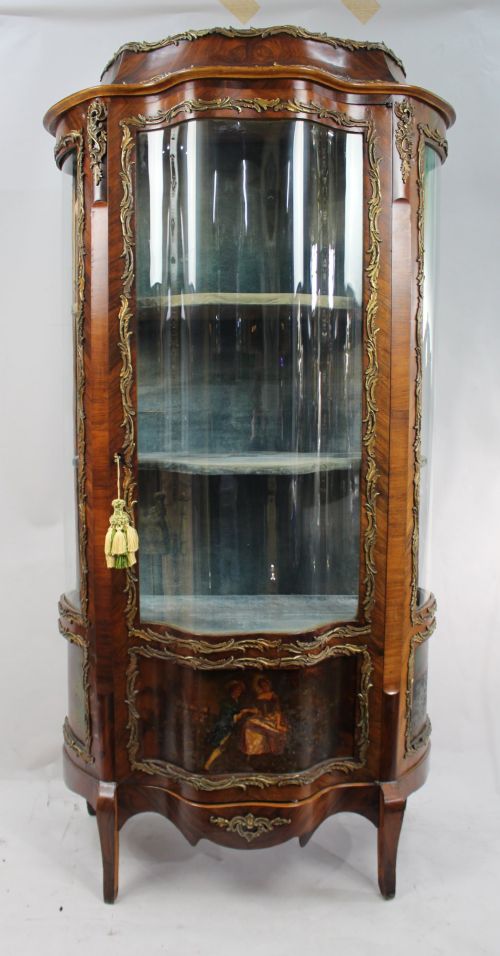
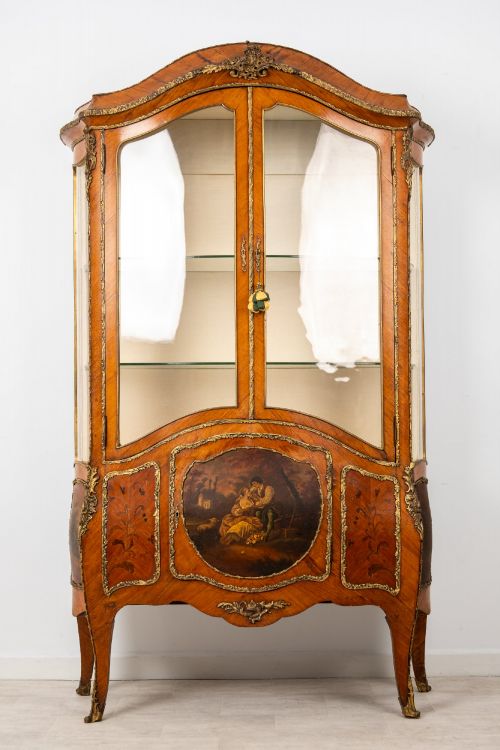
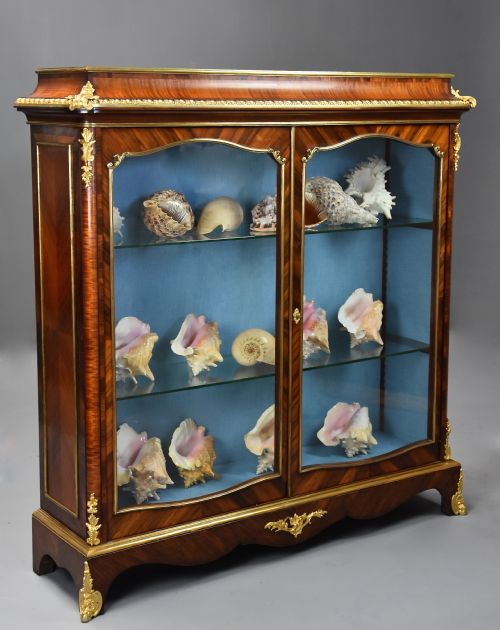
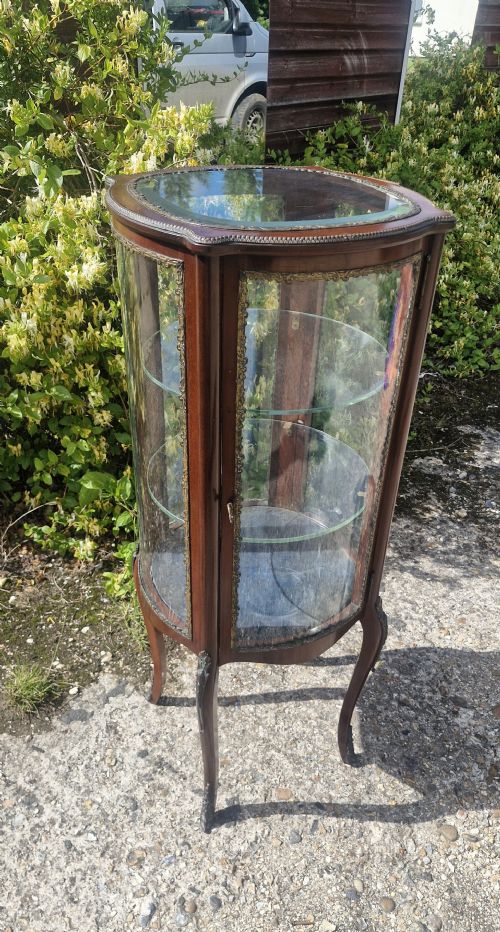
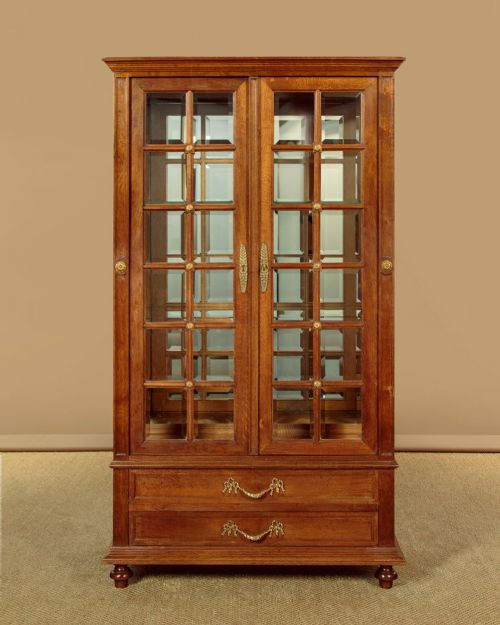
The forms vary from serpentine fronted freestanding display cabinets and pier cabinets to specialised table vitrines and tall bookcases with glazed upper sections. Kingwood, walnut and mahogany form the carcass woods, frequently combined with marble tops and velvet lined interiors.
How they were made
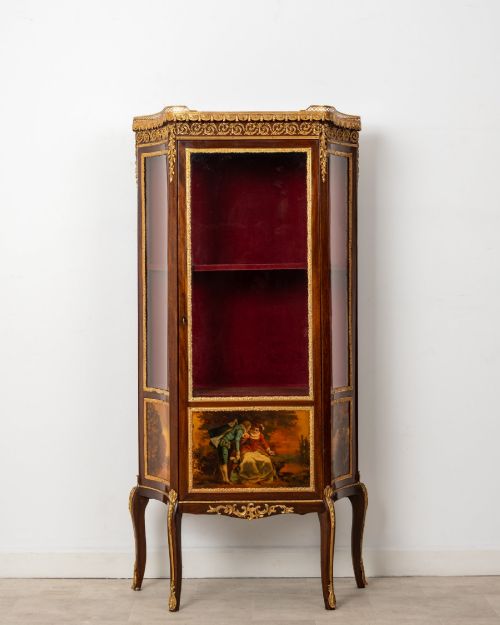
Cabinetmakers constructed the foundational frames from dense timbers such as kingwood, mahogany and walnut, often applying intricate marquetry or painted Vernis Martin panels. Ormolu and gilt bronze mounts were cast, chased and secured to the exterior angles, friezes and feet to accentuate the curved contours.
Glass panels were fitted into doors and side panels to maximise light penetration, while marble slabs were shaped to fit the upper surfaces of many freestanding cabinets.
Many of these cabinets spent decades guarding tiny porcelain dogs and silver spoons without ever holding a single real secret.
What varies in quality
The distinction between ordinary and exceptional examples rests on the crispness of the bronze casting and the precision with which the mounts follow the timber curves. Heavier hand-chasing in the metalwork and figured kingwood veneers distinguish the superior workshop productions from standard commercial pieces.
Proportion and the integration of painted decoration, such as classical pastoral scenes on Vernis Martin panels, dictate the overall sophistication of the surviving cabinet.
François Linke·H. J. Hatfield & Sons·Paul Sormani·G. Durand
The Gilt Mounted Vitrine Glossary
- Ormolu
- Gilded bronze cast and applied as decorative mounts on furniture. It provides a bright metallic contrast to dark cabinet timbers.
- Vernis Martin
- A type of simulated Japanese lacquer developed in France by the Martin brothers. It is used on panel doors to depict romantic or pastoral scenes.
- Bijouterie table
- A glass-topped display table designed for small personal ornaments and medals. These often feature hinged lids and velvet lined wells.
- Pier cabinet
- A narrow cabinet designed to stand against the wall space between windows. They frequently incorporate glazed doors and gilt metal mounts.
- Marquetry
- Inlays of different woods arranged in geometric or floral patterns across the surface. It forms the decorative skin of many kingwood and walnut carcasses.
Gilt Mounted Vitrine: Frequently Asked Questions
What is a vitrine used for?
These cabinets were designed to display porcelain, small sculptures and precious curiosities behind protective glass.
The enclosed shelving and glazed sides allowed collectors to showcase valuable items while keeping dust away from delicate surfaces.
How do I style a vitrine?
Place the cabinet against a neutral wall where natural light can strike the glass panels and illuminate the interior shelves.
Keep the arrangement inside sparse to let the timber veneers and metal mounts remain the primary visual focus of the room.
Are these cabinets French or English?
The majority of these pieces follow French designs and revival styles, though many were produced in English workshops during the Victorian and Edwardian eras.
French pieces often utilise kingwood and Vernis Martin panels, while English versions frequently feature mahogany or ebonised timber.
How do I care for the marble top?
Clean the stone surface with a soft, damp cloth and avoid using acidic cleaning solutions that can etch the polish.
Lift objects rather than sliding them across the marble to prevent scratching the polished finish.