



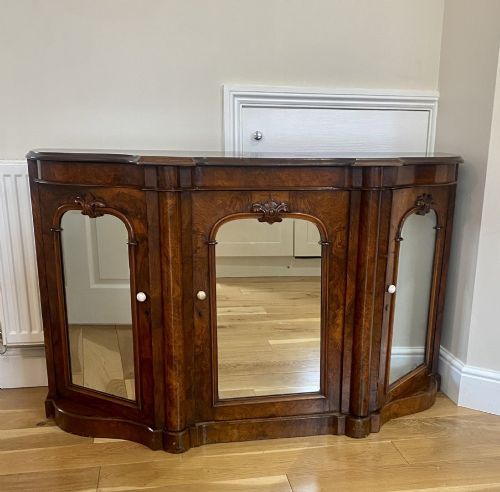


Glass Door Buffet Cabinet
A glass door buffet cabinet brings display and storage together, anchored by timber and clear panels.
Glass Door Buffet Cabinet
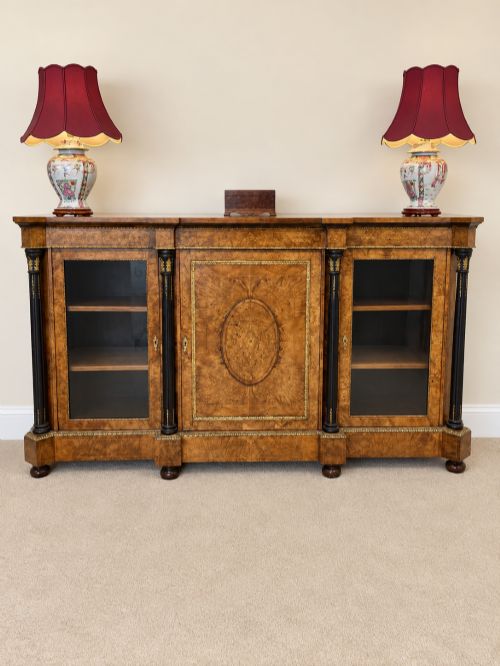
A glass door buffet cabinet combines the function of a sideboard with the visible storage of a display case. These pieces serve dining rooms and drawing rooms alike, holding china behind glass while concealing other items in cupboards below or beside the main display area.
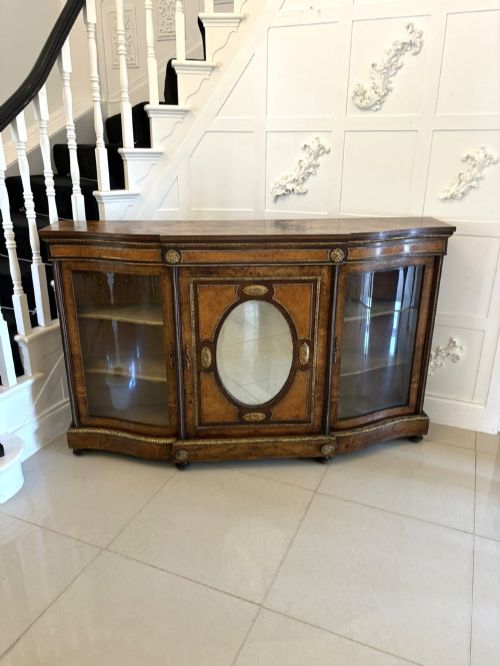
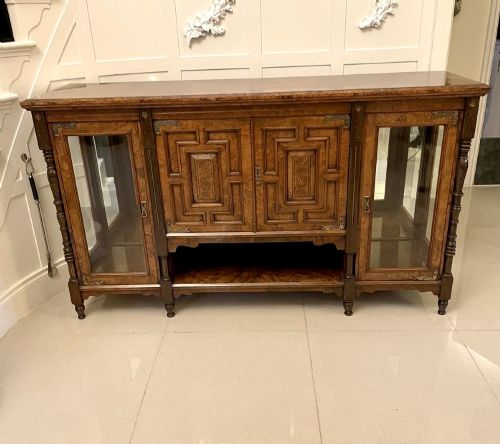
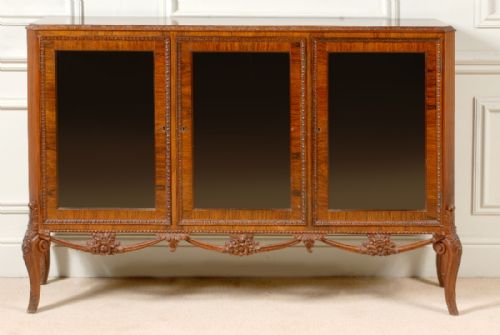
The pieces catalogued here lean heavily towards Victorian burr walnut credenzas and sideboards alongside Edwardian display cabinets. Walnut and mahogany predominate, often featuring glass panels, marquetry inlay and ormolu mounts.
Buyers encounter serpentine fronts, mirror backs and marble tops across nineteenth century and early twentieth century examples. The forms range from compact credenzas to larger architectural sideboard designs.
Materials and construction
Cabinet makers utilised figured walnut, burr walnut and rosewood veneers laid over secondary timbers to achieve rich patterned surfaces. Marquetry inlay in boxwood and other contrasting woods decorates the friezes and door panels on finer examples.
Ormolu mounts cast in bronze and then gilt are pinned to the corners, columns and central panels of mid-nineteenth century pieces. Glass panes are fitted into wooden doors or leaded frameworks, accompanied by mirrored backs inside display sections.
Glass Door Buffet Cabinet Retail Price Guide 2026
Typical asking prices for glass door buffet cabinet among the pieces listed under this phrase on Sellingantiques today, from the lower quarter to the upper quarter. They describe what is for sale here now, not the wider market.
Some Victorian makers hid tiny felt-lined compartments inside credenzas, presumably for secreting away a quiet stash of biscuits from the butler.
Assessing quality and execution
The choice of veneer dictates the visual impact, with tightly figured burr walnut commanding greater attention than plain timber surfaces. Crispness in the cast ormolu mounts and precision in the marquetry inlay separate standard workshop production from finer cabinet work.
Proportion and structural harmony define the better examples, particularly where serpentine fronts and mirrored backs meet cleanly without awkward joints. The quality of the interior fitments and the weight of the timber used in the carcase reveal the maker's initial investment in materials.
The Glass Door Buffet Cabinet Glossary
- Credenza
- A sideboard or display cabinet, frequently low in profile, developed in the Victorian era with glazed central doors and flanking curved cupboards.
- Marquetry
- The art of applying small pieces of veneer to a structure to form decorative patterns and pictorial designs.
- Ormolu
- Gilded bronze mounts utilised to enrich the corners and borders of nineteenth century furniture.
- Serpentine front
- A furniture front curving outward at the centre and inward at the sides in a continuous wave shape.
- Burr walnut
- Timber taken from the wart or growth on a walnut tree, yielding a swirling and highly decorative grain pattern.
Glass Door Buffet Cabinet: Frequently Asked Questions
What is a glass door buffet cabinet used for?
These cabinets serve to display porcelain, glassware and decorative objects behind glass panels while keeping other dining items stored away in the lower compartments.
They function as focal points in dining rooms and sitting rooms, offering surface space on top for serving food or arranging ornaments.
How do I date a Victorian credenza?
Dating relies on examining the timber veneers, the style of the ormolu mounts and the construction methods used inside the carcase. Mid-nineteenth century pieces often feature heavy burr walnut and gilt bronze mounts, while later examples show shifts in inlay style.
The presence of original mirror glass and hand-cut screws also helps establish the period of manufacture.
Can I fit a glass door buffet cabinet in a modern room?
Their low profile and rich walnut tones allow them to sit comfortably against plain walls in contemporary settings, providing useful storage with a lighter visual footprint than a tall wardrobe.
The reflective glass and mirrored backs help bounce light around smaller spaces.