


Glass Dome Cover
A glass dome cover preserves fragile objects from dust while framing them with clear, unhindered visibility.
Glass Dome Cover
A glass dome cover serves as a protective enclosure for delicate ornaments, taxidermy, clocks, and cheese dishes, keeping them secure from everyday dust and handling. These items appear across periods spanning the Georgian era, Victorian times, Edwardian years, and into the 1920s.
The versions most commonly met on this page are English display domes and cloches mounted upon wooden bases, alongside continental cheese dishes featuring glass covers. They take shapes such as round, oval, and ovoid forms designed to sit upon tabletops and mantelpieces.
Makers and manufacturers fashioned these protective covers for practical preservation as well as decorative display in period interiors. Collectors frequently encounter them housing specimens, clocks, and ornaments.
Materials and construction
The primary material is clear blown or pressed glass, shaped into tall, wide, or ovoid covers that fit precisely onto wooden bases. These bases utilise woods such as ebonised wood, beech, oak, and pine to anchor the glass securely.
Additional elements incorporate velvet, fabric, baize, and silver plate, particularly within display bases and specialised serveware like cheese dishes. Artisans combined these materials to provide stable foundations and protective linings for the enclosed objects.
Object forms include display domes, cloches, clock cases, and cheese dishes, spanning periods from the Georgian era through the 1920s.
Assessing quality
Quality rests upon the clarity and thickness of the blown glass cover, where superior examples display minimal distortion and even distribution across the dome. The integration between the glass and its wooden or silver-plated base also dictates the refinement of the piece.
Proportion and scale distinguish standard specimens from finer examples, especially in large clock domes and elaborate taxidermy showcases. The condition of original bases, fitted feet, and internal linings further influences the standing of an individual piece.
The Glass Dome Cover Glossary
- Cloche
- A bell-shaped glass cover traditionally used to protect food or delicate plants. It sits directly on a plate or surface.
- Taxidermy showcase
- A glass dome paired with a wooden base designed to display preserved specimens. These enclosures protect fragile displays from dust and moisture.
- Ebonised wood
- Timber treated to imitate ebony, producing a dense black finish. This material frequently forms the base of Victorian display domes.
- Silver plate
- A base metal coated with a thin layer of silver. It appears on the mounts and trays of period cheese dishes and claret jugs.
- Baize
- A coarse woolen material resembling felt, often fitted to the underside of wooden display bases to protect furniture surfaces.
Glass Dome Cover: Frequently Asked Questions
What fits under a glass dome cover?
These covers typically house mantel clocks, carriage clocks, taxidermy specimens, botanical collections, and small ornaments. They provide a clear barrier that keeps dust away from intricate or delicate items.
Larger versions accommodate tall specimens or groupings, while specialised dome covers serve dining functions such as protecting cheese dishes.
How are wooden bases matched to domes?
Bases are usually turned from timbers like oak, beech, pine, or ebonised wood, often featuring a groove where the glass sits securely. Many include fabric, velvet, or baize linings on the surface or underside.
During the Victorian and Edwardian periods, these wooden stands were tailored in circular, oval, or ovoid shapes to match the exact profile of the glass cover.
How do I clean an antique glass dome?
Glass covers require gentle cleaning with a soft cloth and mild glass cleaner to avoid scratching the historical material. Care must be taken when lifting the heavy glass away from its wooden base.
The wooden bases and internal linings benefit from dusting with a dry brush rather than liquid cleaners, preserving the original ebonised or polished finish.
Were glass domes used for food?
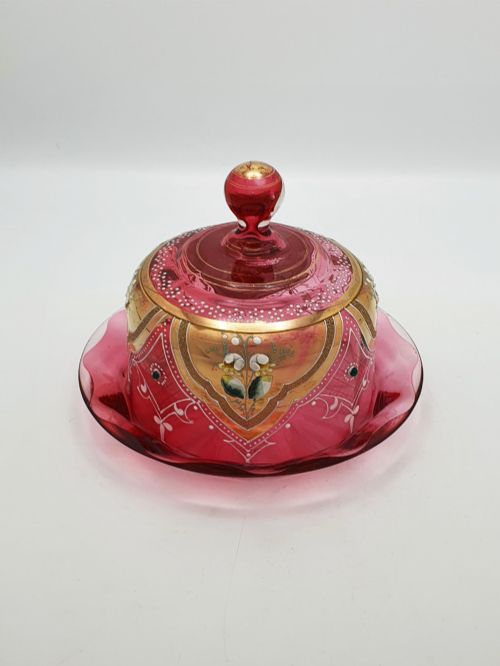
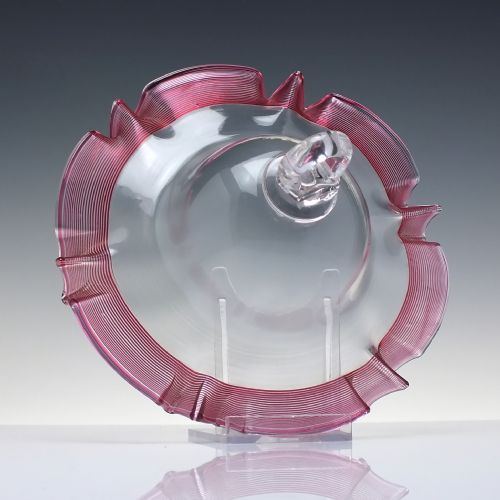
Certain glass dome covers function specifically as part of cheese dishes and serveware rather than display cases. These pieces combine a fitted plate with a small glass cover to keep food fresh on the dining table.
Continental and English makers produced these table domes in styles ranging from plain glass to cranberry glass and silver-plated mounts.
How do I identify a Victorian dome?
Victorian display domes often feature heavy blown glass with characteristic manufacturing bubbles, paired with ebonised wood or walnut bases. They frequently house taxidermy, clocks, or artificial flowers under tall oval profiles.
Later Edwardian and 1900s examples show similar craftsmanship but may utilise lighter oak or beech bases alongside refined glassblowing techniques.