
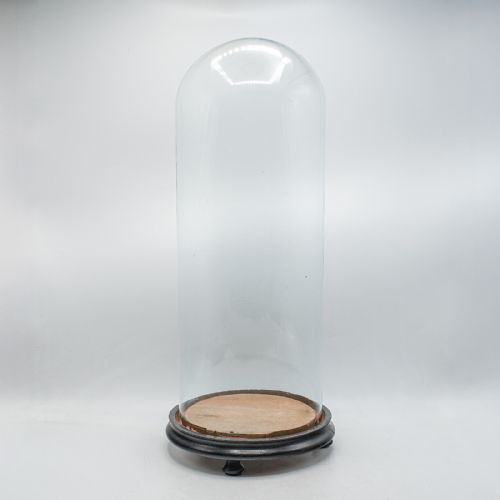



Clear Glass Bell Jar
A clear glass bell jar protects delicate objects and specimens while offering an unobstructed view from every angle.
Clear Glass Bell Jar
A clear glass bell jar functions primarily as a protective enclosure for fragile ornaments, taxidermy, and botanical specimens. These pieces appear across Victorian, Edwardian, and nineteenth-century periods, often serving as showcases for preserved displays.
The selections found here frequently take the form of display domes and cloches mounted on wooden bases made from oak, beech, pine, or ebonised timber. Buyers encounter tall specimens designed for taxidermy alongside wider versions originally intended for mantel clocks or still-life arrangements.
Materials and Construction
The primary components combine blown or moulded glass covers with timber bases fashioned from materials such as oak, pine, beech, and ebonised wood. Some examples incorporate brass mounts or fabric linings including velvet and felt.
Makers shaped the glass into smooth rounded domes or bell shapes, sometimes utilising hand-blown techniques that resulted in characteristic surface textures and weight. Bases were turned or joined to accommodate the fitted glass covers securely.
Listings span the Victorian and Edwardian eras, utilising glass, timber, brass, and velvet.
Factors That Distinguish Quality
Quality rests in the clarity and consistency of the glass, where older hand-blown pieces exhibit subtle ripples, bubbles, and variations absent in uniform modern manufacturing. The weight and proportion of the glass relative to its base dictate the overall stability and presence of the object.
The craftsmanship of the wooden base significantly influences the piece, with well-turned mouldings, sound timber selection, and original feet or linings separating standard utility items from finer display pieces.
The Clear Glass Bell Jar Glossary
- Cloche
- A bell-shaped glass cover traditionally used in gardening or indoor display to protect delicate items.
- Taxidermy showcase
- A specialised glass dome and base combination built to house preserved birds, animals, or botanical specimens.
- Ebonised wood
- Timber treated with a finish to imitate ebony, commonly utilised for display bases in the Victorian period.
- Clock dome
- A specialised glass cover designed specifically to fit over mantel or carriage clocks while permitting visibility of the dial.
Clear Glass Bell Jar: Frequently Asked Questions
What were clear glass bell jars used for?
These glass covers served primarily to protect delicate decorative objects, clocks, and biological specimens from dust and handling in domestic and scientific settings.
Over time, collectors adapted them to display taxidermy, still-life fruit arrangements, and botanical specimens while keeping them fully visible.
How do I date a glass dome?
Dating relies on observing the characteristics of the glass itself, such as small bubbles and irregularities typical of older hand-blown production methods. The construction style of the wooden base and any accompanying labels also provide clues to the Victorian or Edwardian period of manufacture.
Comparing the timber types like oak, pine, or ebonised wood helps align the piece with documented periods in the inventory.
Can I use these domes for modern displays?
These glass covers accommodate contemporary ornaments, sculptures, and plants just as effectively as their original Victorian contents. Their clear glass and timber bases blend into various interior settings while offering physical protection.
Placement simply requires a stable surface proportionate to the base dimensions of the specific dome.
How do I clean a fragile glass dome?
Cleaning requires lifting the glass carefully from its base and using a soft cloth with mild glass cleaner to remove dust. Care must be taken due to the weight and potential brittleness of older hand-blown glass.
The wooden base should be dusted with a dry cloth rather than exposed to excessive moisture.