


Glass Display Urns
Glass display urns are striking vessel forms that anchor a room, bringing light and historical texture to a surface.
Glass Display Urns
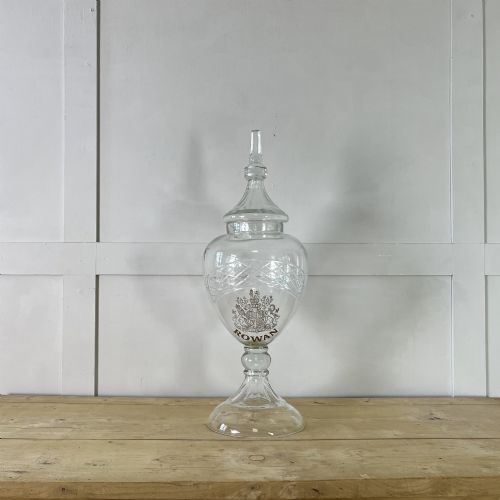
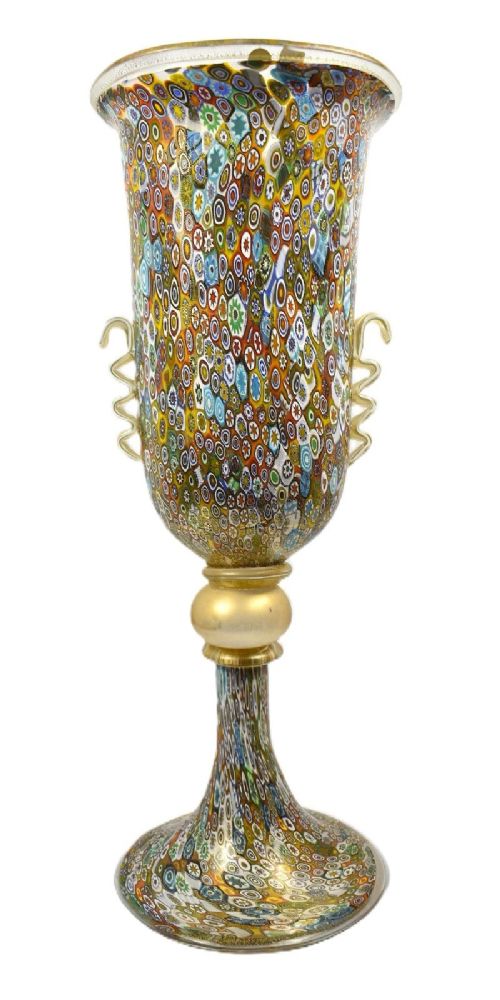
Glass display urns encompass a diverse selection of vessels and receptacles spanning the nineteenth and twentieth centuries, including Victorian cut glass lidded jars, Edwardian apothecary jars, and Art Deco opalescent pieces. When you search for glass display urns, you encounter everything from clear lead crystal storage jars to coloured Venetian and Murano pieces, often mounted on brass or alabaster bases.
The pieces listed here lean heavily toward Victorian cut glass and 1930s continental design, alongside related display furniture like inlaid side cabinets and serpentine front display cases that house such objects. Forms range from heavy handled vases and chalice urns to tall lidded storage vessels and geometric etched vases.
How they were made
Makers shaped these objects primarily from clear and coloured glass, lead crystal, and opaque glass, applying techniques such as deep cutting, acid etching, and enamel painting directly to the surface. Many pieces feature overlaid colours, such as green over crystal, or incorporate delicate gold leaf detailing.
Support elements often include brass mounts, alabaster bases, and satinwood or fruitwood inlay on the associated cabinetry, demonstrating a combination of glassblowing, lapidary cutting, and fine cabinetmaking skills.
Some vessels double as botanical storage while others mimic fruit entirely, proving that past generations took their kitchen ornamentation with a dash of whimsy.
What varies in quality
Quality reveals itself in the crispness of the glass cutting, the weight and purity of the lead crystal or opalescent material, and the precision of any enamelled or etched geometric decoration. Finer examples display superior clarity in the metal of the glass and more complex optical effects, whereas simpler vessels rely purely on basic mould-blown shapes.
In fitted or mounted examples, the integration of brass, alabaster, or inlaid wood separates standard production items from exceptional workshop pieces, where every material works in harmony to elevate the visual presence of the vessel.
Charles Graffart for VSL·R Lalique·Edwards and Roberts
The Glass Display Urns Glossary
- Cut glass
- Glass decorated by grinding facets or patterns into the surface using a rotating wheel. This technique creates sharp light refraction and a tactile texture.
- Opalescent glass
- Glass that milky or translucent appearance with shifting iridescent tones, frequently utilised in Art Deco vessels to catch ambient light.
- Lead crystal
- Heavy glass containing metallic oxides that increase brilliance and softness for deep cutting. It rings when struck gently.
- Apothecary jar
- A lidded container originally used for storing medicinal drugs or dry goods, often featuring a generous bulbous body and a fitted stopper lid.
- Millefiori
- A glasswork technique producing multicoloured mosaic patterns through the use of bundled and fused glass rods.
Glass Display Urns: Frequently Asked Questions
How do I date a glass display urn?
Dating relies on observing stylistic markers such as Victorian deep hobnail cutting, Edwardian proportions, or 1930s Art Deco geometric enamel motifs. Examining the pontil mark at the base and the composition of the glass further clarifies the period of manufacture.
Associated cabinetwork, such as late Victorian fruitwood inlay, also provides firm chronological context for pieces designed to sit within larger display settings.
What is the difference between an urn and a vase?
Urns traditionally feature a footed base and often include a distinct body shape meant for stately display, sometimes accompanied by a fitted lid. Vases generally focus on holding floral arrangements or standing alone as decorative objects without covers.
In historical glass production, these terms frequently overlap, particularly with large decorative vessels designed primarily for visual impact.
How should I display heavy glass urns?
These pieces require stable, level surfaces capable of supporting substantial weight, particularly when dealing with lead crystal or pieces mounted on stone or brass bases. Positioning them near natural light sources allows cut facets and coloured glass layers to refract illumination fully.
Pairing them with period furniture, such as inlaid side cabinets, helps anchor their visual presence in a modern interior.
Are these urns suitable for holding liquids?
While many historical glass jars and vases were functional containers, antique and vintage pieces often feature delicate interior surfaces, hand-applied enamel, or metal mounts that discourage daily practical use. It is best to treat them primarily as decorative display objects to preserve their historical integrity.
Lidded apothecary jars and storage vessels are better suited for dry placement rather than regular exposure to moisture.