
Glass Display Showcase
A glass display showcase gathers objects behind clear panels, protecting treasured collections while placing them entirely in view for the room.
Glass Display Showcase
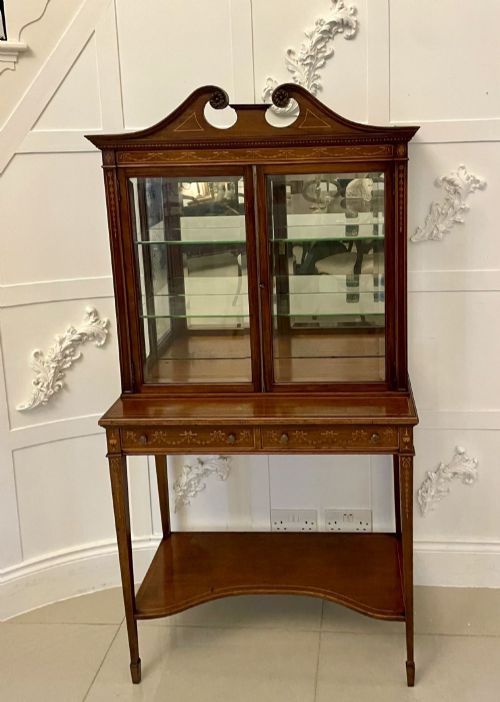
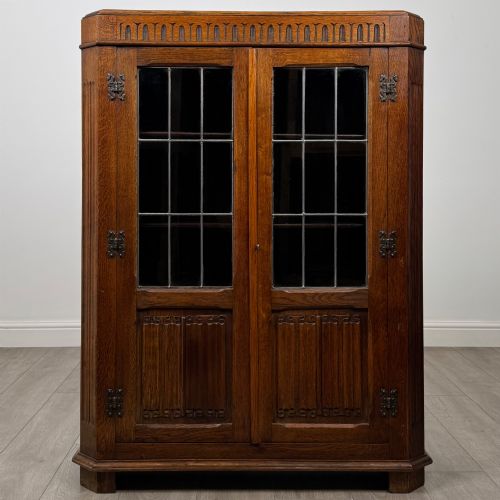
A glass display showcase encompasses a wide variety of furniture types designed to present objects securely, ranging from tall freestanding vitrines to compact countertop cases.
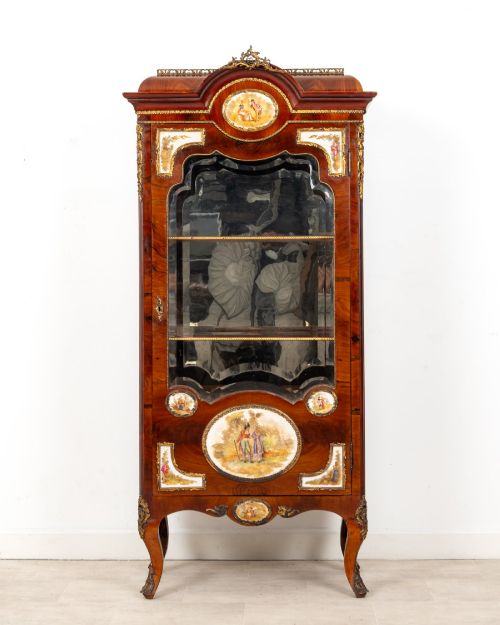
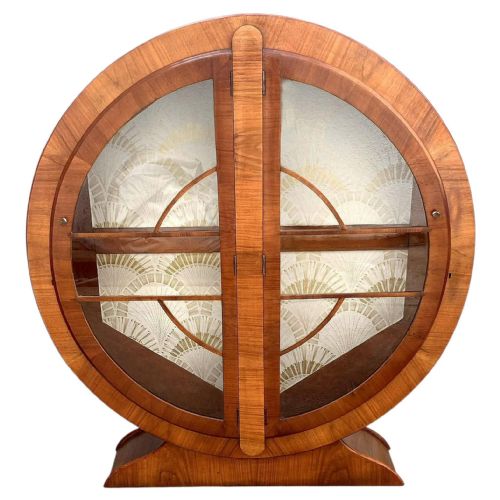
Buyers frequently encounter Edwardian and Victorian pieces alongside items from the 1930s, reflecting both domestic drawing room cabinets and commercial retail fittings.
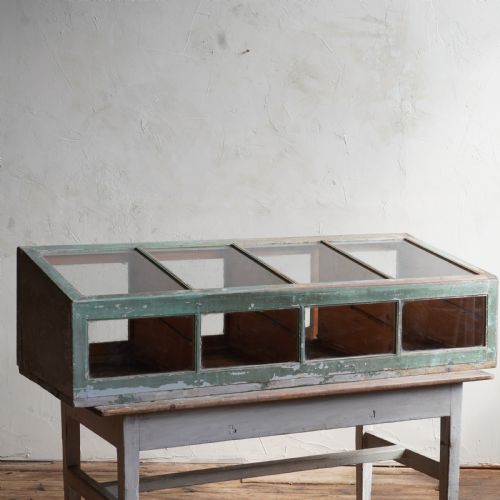
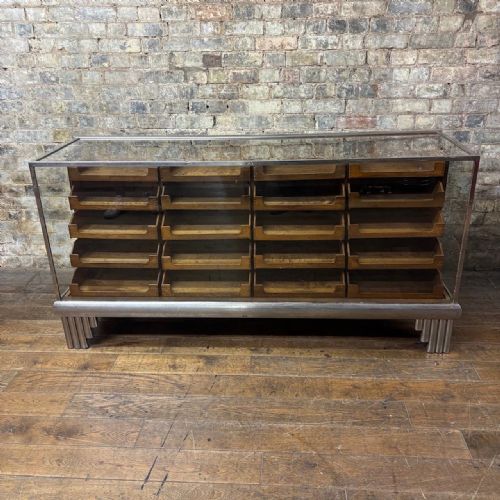
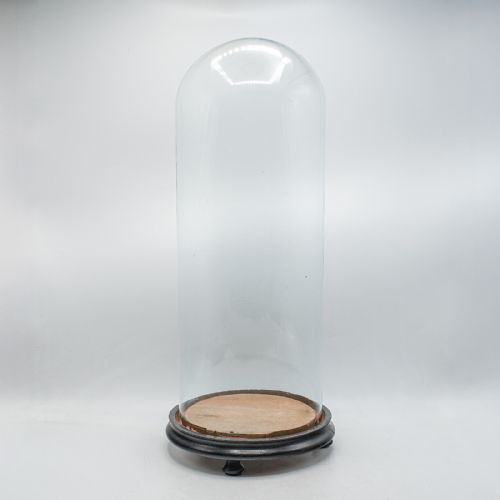
The selection includes specialised forms such as display domes for taxidermy, haberdashery counters with multiple glass tiers, and corner cabinets built to utilise difficult spaces.
Design and execution
Distinction across the range rests upon the ambition of the joinery and the selection of timber veneers, from simple commercial oak to finely figured mahogany and kingwood.
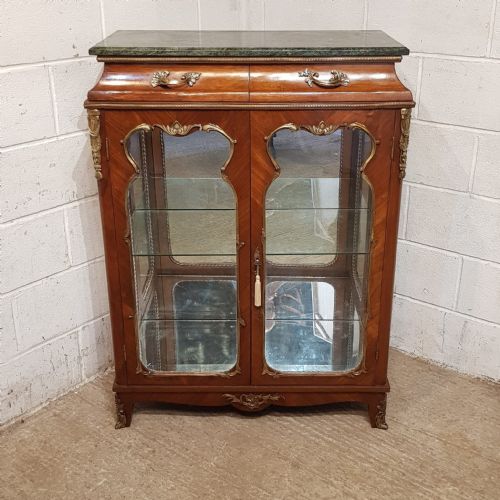
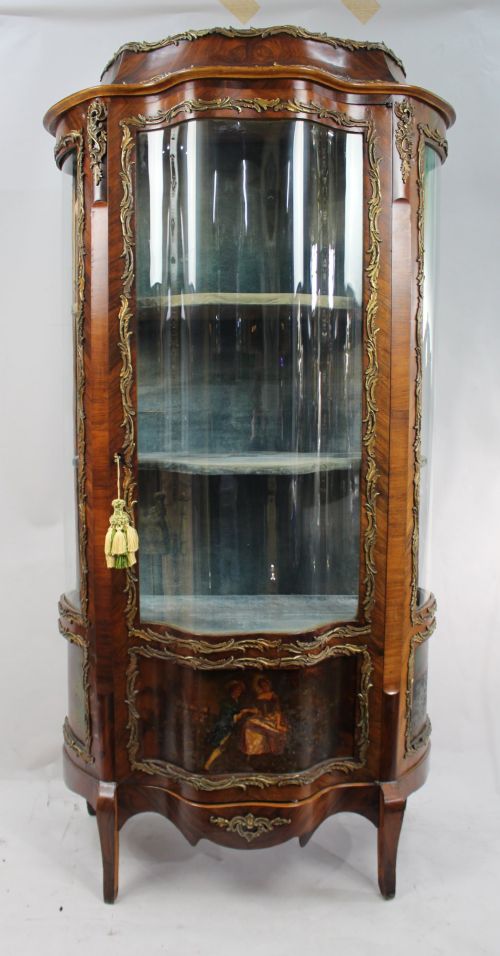
Detailing creates divergence between standard retail counters and elite parlor furniture, particularly in the application of hand-carved mounts, marquetry, and specialised painted decoration like Vernis Martin.
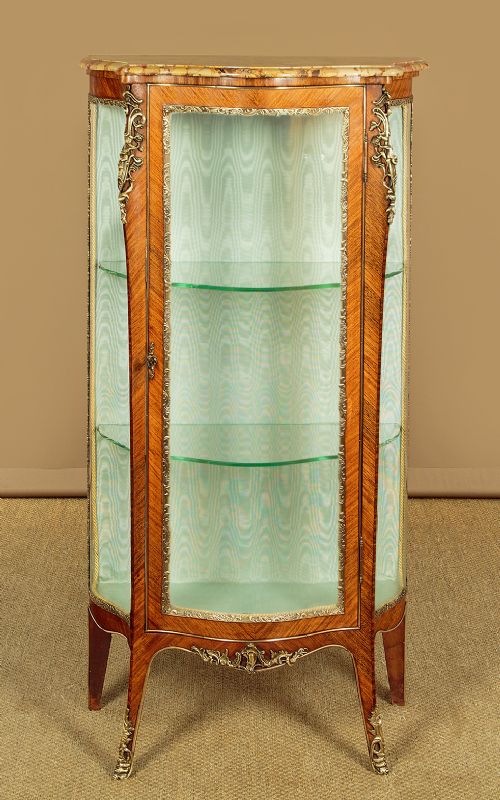
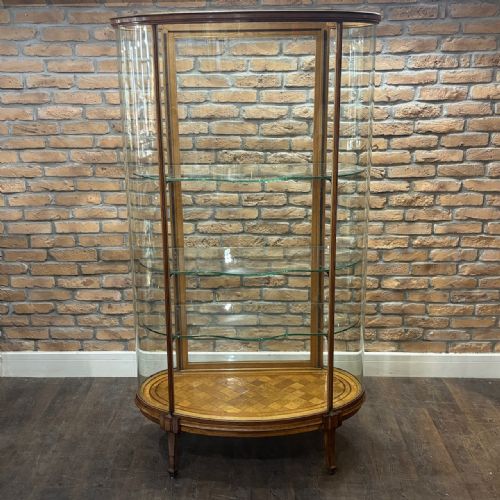
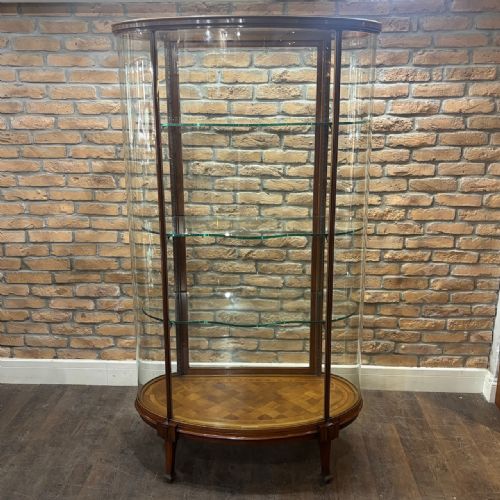
Proportion and the handling of curved glass, such as bow fronts or serpentine shapes, demonstrate the maker's technical capability.
Some display domes are known as bell bottoms due to their flared lower glass rims.
F Sage And Co·Dudley And Co·James Hicks
The Glass Display Showcase Glossary
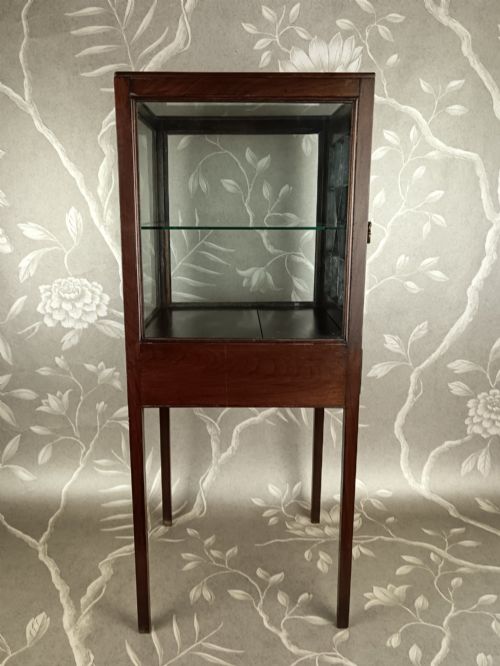
- Vitrine
- A glass-fronted cabinet designed specifically for displaying fine porcelain, curiosities, or objects of art. These pieces often feature glazed sides to maximise light transmission.
- Bijouterie table
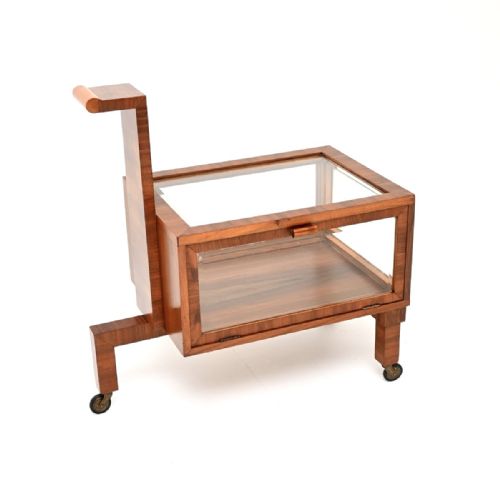
- A glass-topped display table intended for holding small valuable items, jewellery, or medals at a comfortable viewing height. They frequently include hinged lids and fabric-lined interiors.
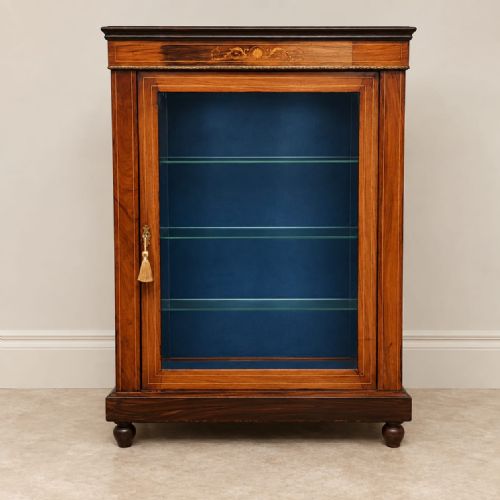
- Pier cabinet
- A low or medium cabinet built to stand against the solid section of wall between windows. Victorian examples often incorporate amboyna, ebonised wood, and gilt metal mounts.
- Display dome
- A blown glass cover resting on a wooden or leather base, utilised for protecting delicate items such as taxidermy or clocks from dust. They are sometimes called cloches.
- Ormolu
- Gilded bronze mounts applied to furniture for decorative effect, common in French revival pieces. The technique involves treating metal with a mercury and gold amalgam.
- Marquetry
- The art of applying small pieces of veneer to a structure to form decorative patterns or pictures. Craftsmen selected contrasting woods like satinwood and mahogany to achieve tonal depth.
Glass Display Showcase: Frequently Asked Questions
How do I choose the right size?
Consider both the floor space available and the scale of the objects you intend to place inside. Taller freestanding cabinets suit open rooms, while countertop cases work well on existing furniture.
Measure the height between internal shelves to ensure your collectibles will fit comfortably through the doors.
Were these used in shops or homes?
The category spans both domestic and commercial origins. Pieces built by firms like F. Sage & Co served retail environments, while satinwood and walnut vitrines belonged to private drawing rooms.
Commercial counters often feature robust oak frames and adjustable glass shelves designed for daily retail handling.
How do I date an Edwardian showcase?
Edwardian pieces, made between 1901 and 1910, frequently exhibit lighter satinwood or mahogany timbers with floral marquetry inlay. They often draw on earlier French revival styles while maintaining a lighter aesthetic than heavy Victorian furniture.
Construction methods also help, as early twentieth-century examples commonly feature machine-cut elements alongside traditional joinery.
Can I adjust the internal shelves?
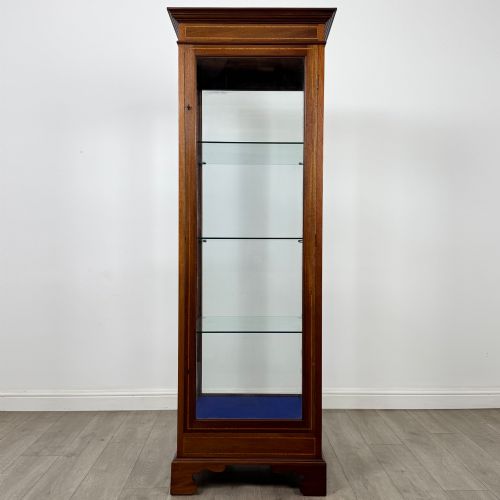
Many shop display cabinets and larger vitrines incorporate adjustable glass shelving to accommodate objects of varying heights. Domestic corner cabinets and older pier cabinets generally feature fixed wooden or glass tiers.
Check the specific description of the internal fittings if you plan to display items taller than standard spacing allows.