

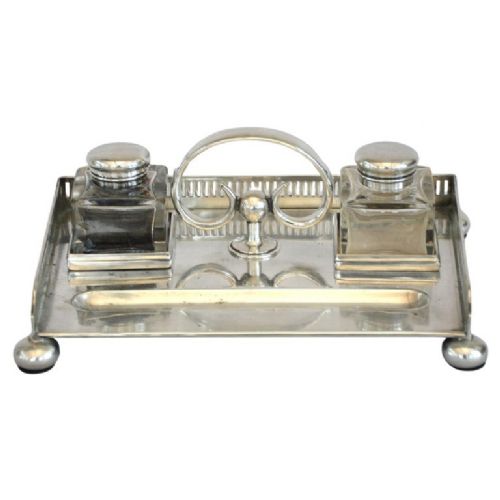


Glass Desk Pen Tray
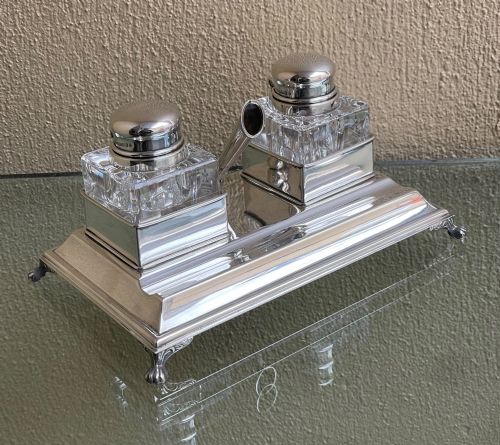
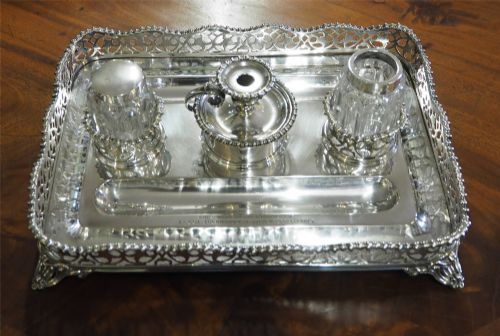
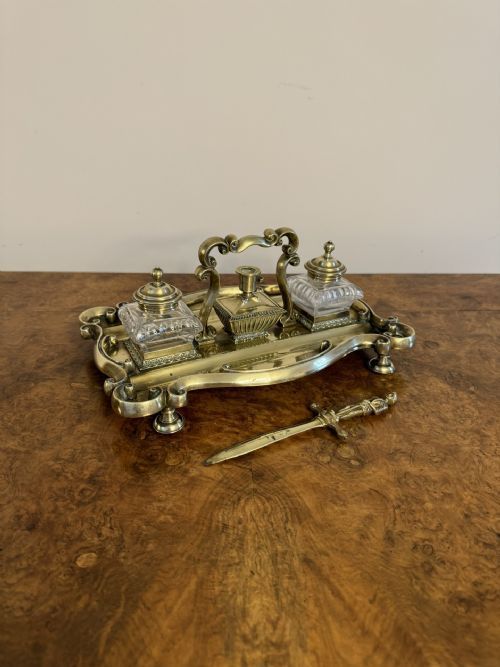
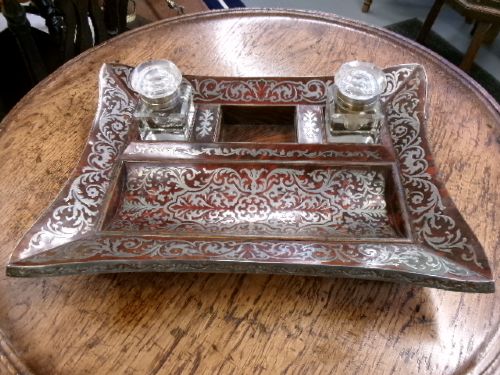
A glass desk pen tray offers a practical desk accessory, combining sturdy glass with decorative mounts to hold pens and inkwells.

Glass Desk Pen Tray
A glass desk pen tray belongs to a group of desk accessories designed to hold writing instruments and ink vessels, frequently appearing in forms like desk sets, inkstands, and inkwells.
The pieces on this page emerge from the nineteenth and twentieth centuries, spanning periods from the Georgian era through the Victorian period, Edwardian times, and the Elizabeth II era.
Most examples combine a glass body or insert with frames and mounts of brass, silver plate, sterling silver, or timbers such as coromandel, walnut, and mahogany.
Materials and Construction
Glass production involves moulding or cutting heavy vessels to form inkwells and trays, often paired with cut glass techniques to catch the light on a desk.
Metalwork utilises brass casting, Sheffield plating, silver plating, and solid sterling silver mounts, alongside ormolu and brass inlay in Boulle work pieces.
Cabinet makers constructed bases from hardwoods like coromandel, walnut, mahogany, and rosewood, sometimes incorporating decorative veneers of satinwood, tortoiseshell, mother-of-pearl, and papier-mâché.
Glass Desk Pen Tray Retail Price Guide 2026
Typical asking prices for glass desk pen tray among the pieces listed under this phrase on Sellingantiques today, from the lower quarter to the upper quarter. They describe what is for sale here now, not the wider market.
Listings feature Victorian, Edwardian, and Regency periods, utilising glass, brass, sterling silver, coromandel wood, and tortoiseshell.
Variations in Quality
Quality rests on the weight and clarity of the glass, the precision of the metal mounts, and the density of the cabinet woods utilised in the construction.
Superior examples demonstrate crisp casting in brass or ormolu, substantial silver weight with clear hallmarks, and intricate inlay work using mother-of-pearl or tortoiseshell.
Finer pieces maintain all original components, such as matching cut glass bottles and fitted silver lids, whereas lesser or adapted pieces show mismatched fittings or replacement parts.
Elkington·Walker And Hall·James Cartland And Sons·Rupert Favell·Daniel Holy
The Glass Desk Pen Tray Glossary
- Inkstand
- A complete desk stand incorporating one or more inkwells, pen trays, and sometimes a chamberstick or taper holder.
- Cut Glass
- Glass decorated by cutting facets or patterns into the surface using a wheel, creating a brilliant reflective finish.
- Coromandel
- A dense, heavily figured tropical hardwood native to Asia, prized for dark brown colouring and dramatic black grain.
- Ormolu
- Gilded bronze or brass mounts applied to furniture and desk accessories, typical of French Napoleon III and Empire designs.
- Sheffield Plate
- An early composite material made by fusing a thin sheet of silver to a copper base, prevalent in items from the eighteenth and nineteenth centuries.
Glass Desk Pen Tray: Frequently Asked Questions
What is a glass desk pen tray used for?
These trays sit on a writing table to hold dip pens, nibs, and related writing implements near the inkwell. They keep the desk surface tidy and protect wood from ink drops.
Historically, they formed part of a gentleman or lady's portable or stationary writing equipment, remaining close to the blotter and letter rack.
How do I date an antique desk stand?
Dating relies on a combination of material analysis, hallmarks on silver components, and prevailing decorative styles. Victorian and Edwardian pieces often display registration marks or maker stamps.
Changes in wood choice, such as the popularity of coromandel in the mid nineteenth century, also help narrow the period of manufacture.
Are inkwells removable from the stands?
Most glass inkwells lift directly out of their brass or wooden collars for cleaning and refilling. Some fitted stands secure the bottles beneath hinged metal lids.
Care is needed when handling antique glass inserts to prevent chipping the rims where they meet the metal mounts.
How should I clean antique glass and silver?
Glass trays and ink inserts wash safely in warm soapy water using a soft cloth. Metal mounts require careful polishing to avoid staining adjacent wood or glass surfaces.
Silver plate and sterling silver need appropriate creams applied sparingly, while wooden bases benefit from a dry cloth and occasional wax.