

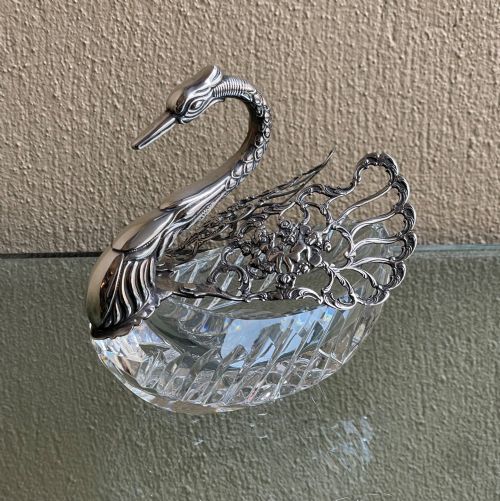


Glass Condiment Bowls
Glass condiment bowls bring period colour and sparkle to the dining table, pairing brilliant crystal and coloured glass with silver mounts.
Glass Condiment Bowls
When you search for glass condiment bowls, you are looking at small tableware vessels designed to hold salts, preserves, jams, and relishes for the dining table. The pieces found here span the Victorian, Edwardian, and Art Deco periods, alongside mid-century Scandinavian modern designs.
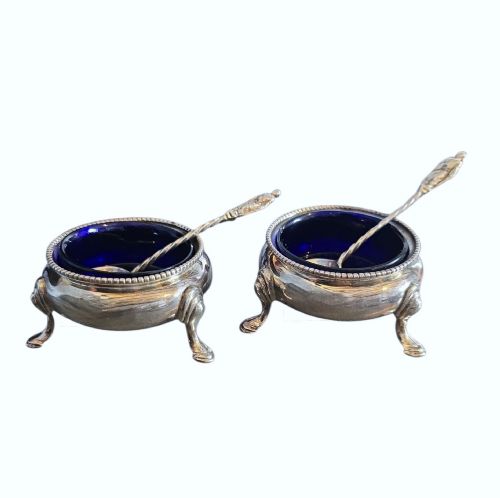
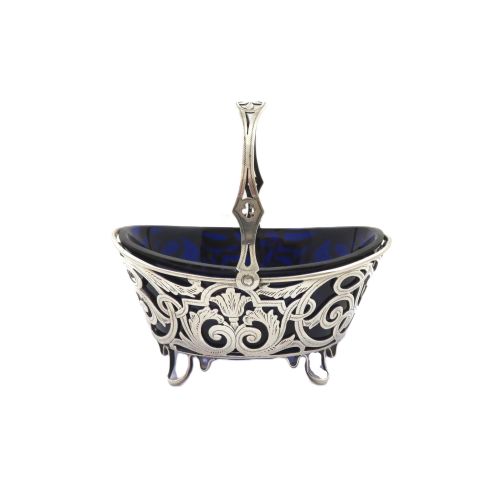
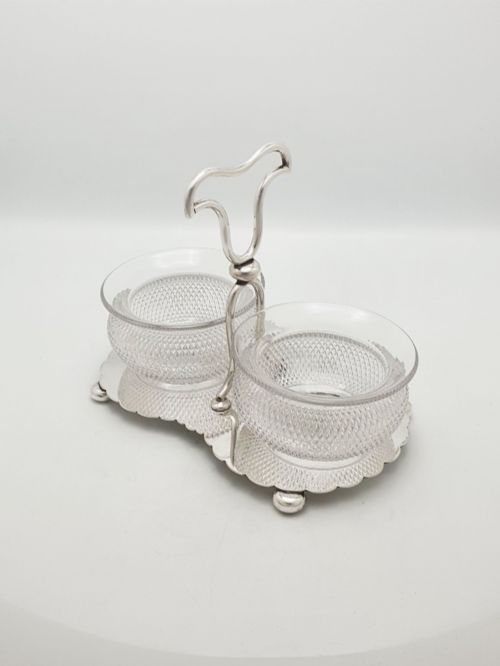
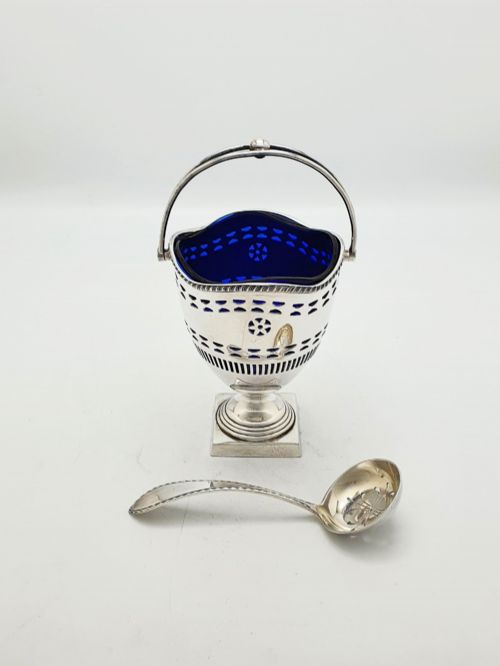
The most common forms on this page are open salt cellars and preserve dishes, often paired with matching spoons or silver stands. You will frequently encounter rich cobalt glass and cranberry glass liners nestled inside pierced silver plate or sterling silver frameworks.
Tableware from the nineteenth and early twentieth centuries dominates the selection, though occasional mid-century items appear. These domestic pieces served a practical purpose on the formal dining table while displaying the varied glass-working techniques of their era.
How they were made
Makers shaped the glass bodies through pressing, blowing, and deep cutting, producing heavy lead crystal or vibrant coloured vessels. Cobalt and cranberry hues were achieved by introducing specific metallic oxides into the molten glass batch.
Metal components were produced using sterling silver or silver plate, frequently finished with pierced galleries or cast Rococo Revival and Regency motifs. Some finer examples utilised silver gilt to line the interior of open baskets and stands.
Glass Condiment Bowls Retail Price Guide 2026
Typical asking prices for glass condiment bowls among the pieces listed under this phrase on Sellingantiques today, from the lower quarter to the upper quarter. They describe what is for sale here now, not the wider market.
Listings feature items spanning the mid-nineteenth century through the 1960s, incorporating sterling silver, silver plate, and lead crystal.
What varies in quality
The distinction between standard tableware and finer pieces rests on the weight of the lead crystal and the crispness of the cut facets. Sharp, deep cutting catches the light differently than softer, moulded patterns found on simpler vessels.
Quality also shows in the metal mounts, where hand-pierced silver galleries and heavier gauge sterling silver or silver plate outlast thinner stamped alternatives. Original matching glass liners and spoons elevate the integrity of a set.
Beare Falcke·George Fox
The Glass Condiment Bowls Glossary
- Salt Cellar
- A small open bowl used to hold dry table salt before the invention of free-flowing salt. These often feature coloured glass liners.
- Silver Gilt
- Silver that has been coated with a thin layer of gold on its surface. This technique protected the underlying metal from tarnishing by acidic condiments.
- Lead Crystal
- Glass manufactured with a high lead content to increase weight, brilliance, and refractive index. It rings when struck and allows for deep decorative cutting.
- Pierced Work
- Metalwork decorated by cutting or piercing patterns through the sheet silver. This technique lightened heavy stands while displaying the coloured glass within.
- Cranberry Glass
- A red or pink transparent glass produced by adding gold chloride to the molten batch. It is characteristic of Victorian and Edwardian tableware.
Glass Condiment Bowls: Frequently Asked Questions
What were glass condiment bowls used for?
These bowls held various table condiments, including dry salt, preserves, jams, and caviar during formal meals. They provided a hygienic and decorative way to serve portions to individual diners.
Larger vessels served as central jam pots or preserve dishes on stands, while smaller pairs functioned as open salt cellars alongside individual places at the table.
How do I identify Victorian glass condiment bowls?
Victorian examples often feature heavy cut crystal, cranberry or cobalt glass liners, and ornate silver-plated or sterling silver mounts. Stylistic clues include Rococo Revival scrolls and heavy floral chasing.
Checking for hallmarks on the silver components helps narrow down the production date, as British silver standards changed predictably throughout the nineteenth century.
Can I use antique condiment bowls daily?
Most glass condiment bowls remain robust enough for regular use on the modern dining table. Gentle hand washing preserves the delicate silver plate and coloured glass surfaces.
Harsh detergents and dishwashers should be avoided, particularly with pieces featuring silver gilt or delicate pierced metal galleries.
What is the difference between Edwardian and Victorian styles?
Edwardian designs generally reflect lighter proportions and simpler neoclassical motifs compared to heavy Victorian ornamentation. Pierced silver baskets and brighter cranberry glass became especially popular during this period.
Late nineteenth-century pieces often showcase denser cutting and heavier cast mounts, whereas Edwardian tableware tends toward refined elegance and open framework.