
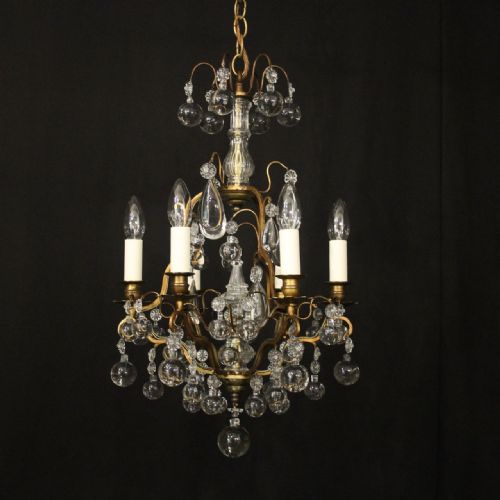


Glass Arm Ceiling Fitting
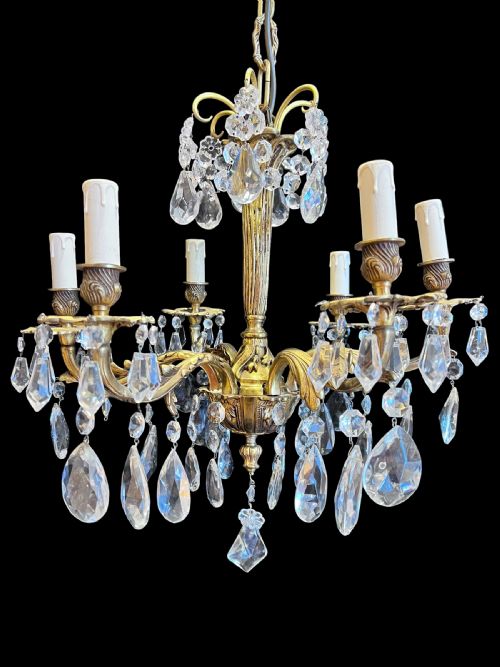
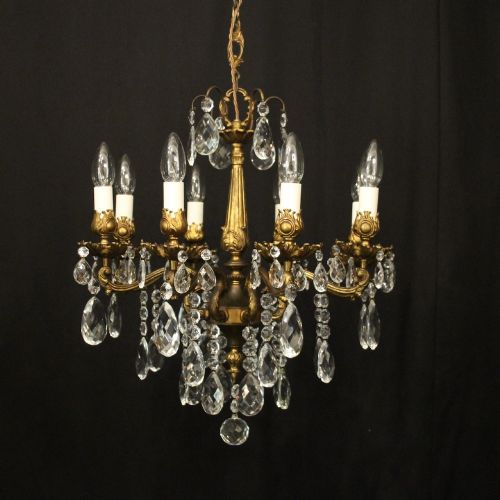
These glass arm ceiling fitting examples bring period grandeur overhead, combining cut crystal and gilt metal to catch the light in any room.
Glass Arm Ceiling Fitting
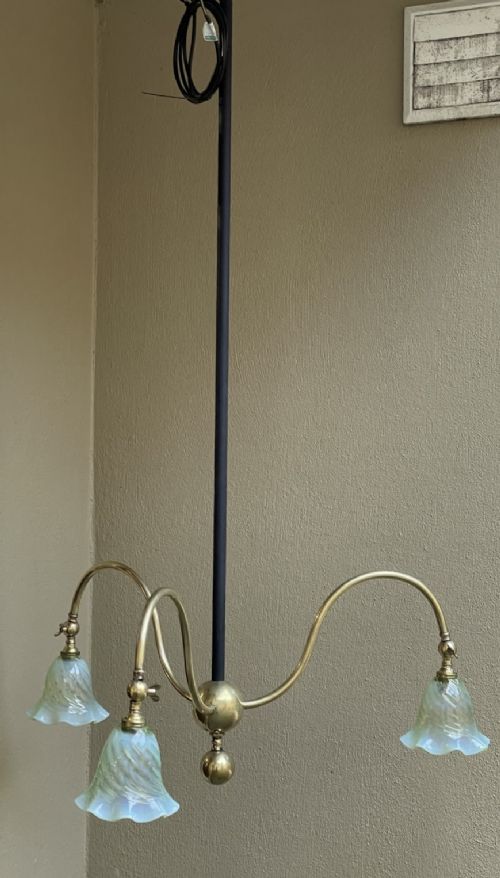
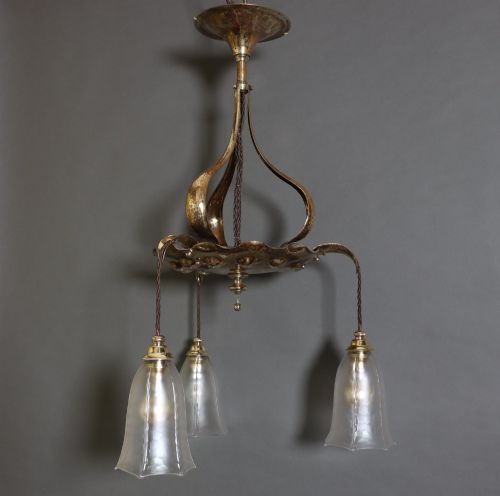
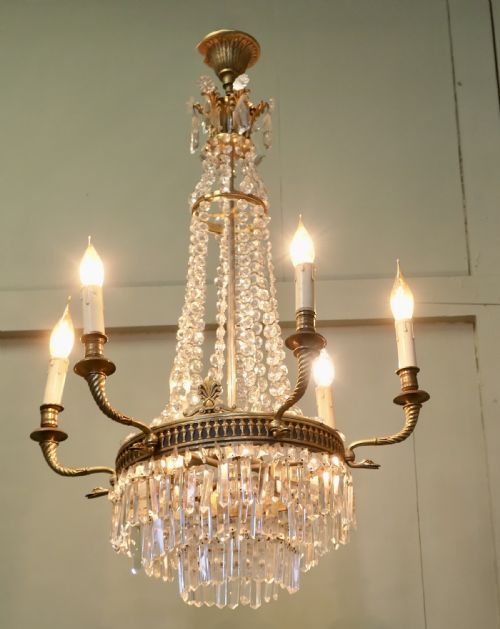
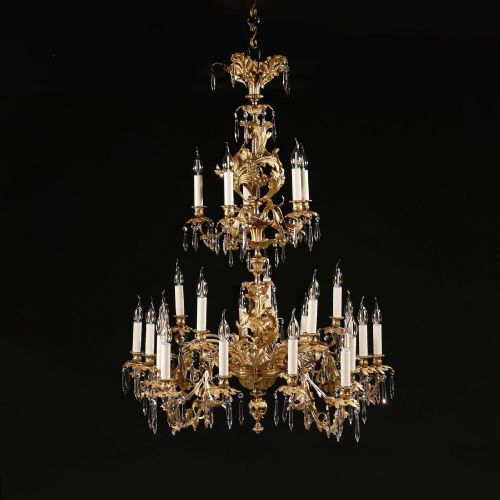
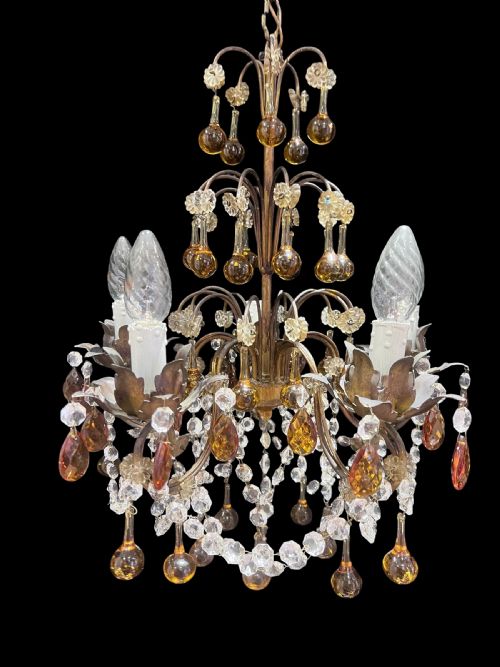
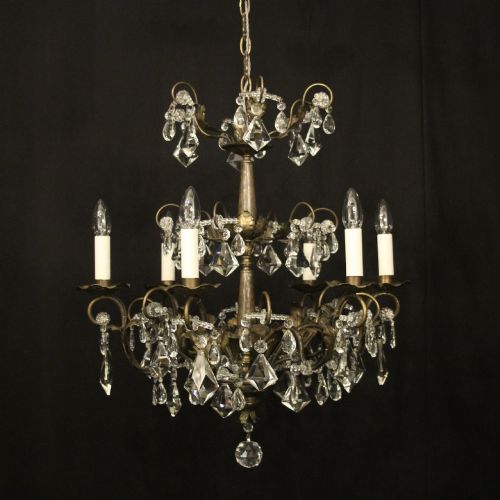
A glass arm ceiling fitting brings together multi-branched chandeliers and ceiling lights spanning the Victorian, Edwardian, and Art Deco periods, alongside 19th Century iterations. Buyers investigating this category encounter everything from intimate three-light fixtures to twenty-five-light French chateau showpieces.
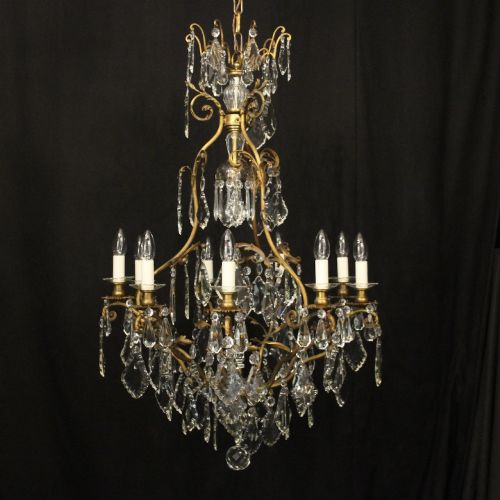
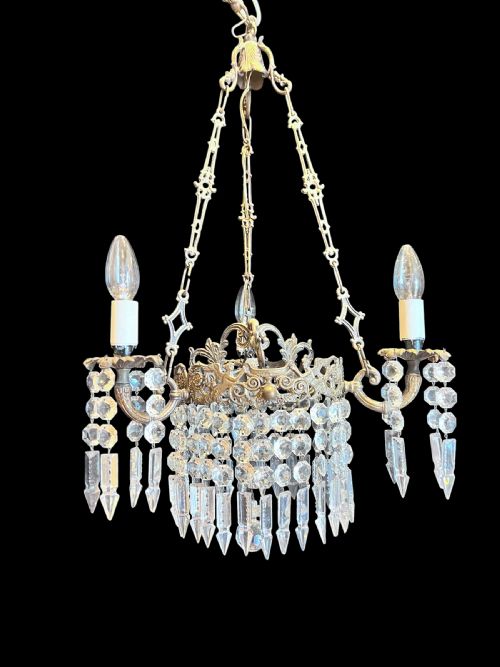
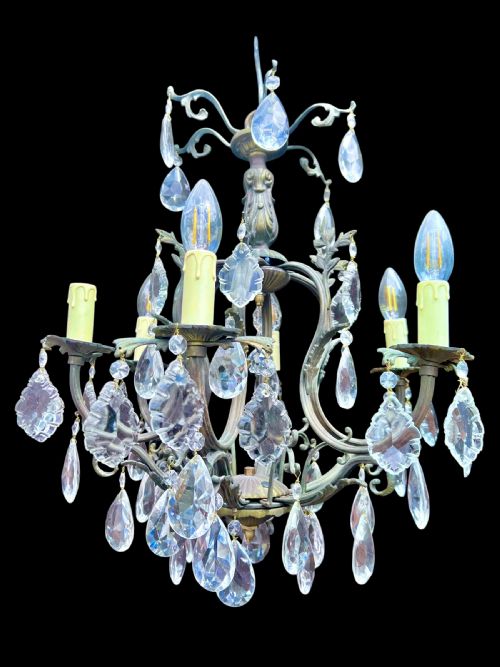
The selection leans heavily toward French Empire, Rococo, and Italian designs, often featuring symmetrical arms, birdcage frames, and tent-and-waterfall configurations. These overhead fittings serve as primary focal points in high-ceilinged rooms, utilising numerous branches to illuminate large spaces.
Materials and construction methods
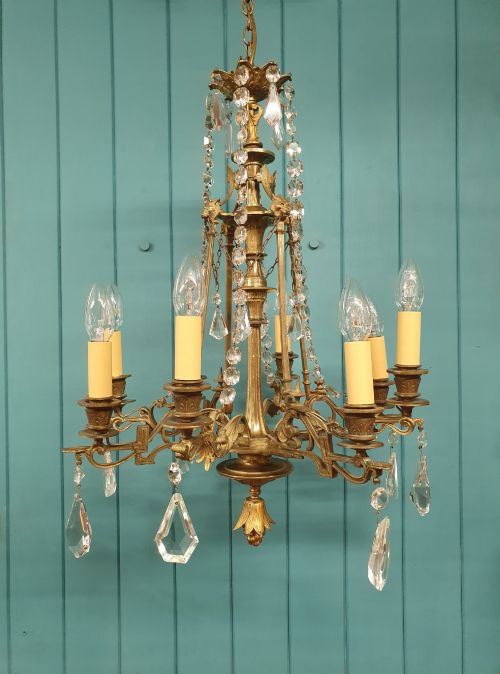
Makers built these fixtures around robust metal armatures of brass, bronze, gilt metal, and copper, which supported the weight of numerous branches and hanging adornments. Brass and bronze provided structural integrity for multi-tiered configurations holding up to twelve or more lights.
Artisans wired the frames with cut glass and crystal components, incorporating beaded arms, swags, and cut-glass drops that refracted the bulb light. Specialised elements like pink crimped glass shades or copper bowls completed the assemblies, fusing metallic structures with brilliant glasswork.
Listings feature glass and crystal fittings spanning from the Victorian era through the Edwardian period and into 1930s Art Deco.
Markers of distinction and finesse
Superior examples demonstrate greater complexity in their arm structures and glass dressing, utilising detailed cast brass or bronze work alongside heavily cut crystal drops rather than plain pressed glass. The integration of decorative motifs like lion masks or silver-gilt finishes elevates the visual weight of the piece.
Design cohesion separates standard output from exceptional pieces, visible in how seamlessly the glass arms match the central cage or tier. Heavier metal casting and intricate crystal draping indicate workshop output intended for grand municipal or residential interiors.
Jean Gauthier
The Glass Arm Ceiling Fitting Glossary
- Cage chandelier
- A style of light fitting where the metal frame resembles an open birdcage, often enclosed by glass drops and chains. This configuration was popular across 19th and early 20th century French lighting designs.
- Tent and waterfall
- A lighting arrangement featuring an upper conical tent of crystal beads cascading down into a wider waterfall of drops below. It maximises light refraction across expansive multi-light branches.
- Cut crystal
- Glass that has been laborously ground and polished on a wheel to create faceted surfaces that disperse light. Higher quality fittings utilise this material extensively along the arms and pendants.
- Gilt bronze
- Metal cast in bronze and subsequently coated with a fine layer of gold leaf or gilt wash. This technique provides a warm, durable metallic sheen characteristic of French Empire and Rococo revival pieces.
Glass Arm Ceiling Fitting: Frequently Asked Questions
How do I hang a heavy glass chandelier safely?
These multi-arm metal and crystal fixtures require secure anchoring directly into ceiling joists using rated steel fixings. Weight distribution must be calculated carefully before suspension.
Professional electrical installation is essential for managing the heavier brass and bronze frames found in Victorian and Edwardian examples.
What rooms suit a large multi-arm ceiling light?
High-ceilinged reception rooms, hallways, and dining spaces accommodate multi-light fixtures best, allowing the glass arms and drops adequate clearance. Grand proportions ensure the spread of light complements the room scale.
Smaller variants fit domestic bedrooms or parlours where twelve or more lights would overwhelm the spatial dimensions.
How do I clean an antique crystal chandelier?
Routine maintenance involves dusting the glass arms and crystal drops gently in situ using a soft cloth and a specialised spray cleaner. Harsh chemicals can damage gilt finishes on the brass or bronze framework.
For thorough restoration, individual drops and beaded swags are detached, washed in warm soapy water, dried, and reattached to the metal armature.
How do I date an antique glass ceiling fitting?
Dating relies on stylistic clues, combining period characteristics like Art Deco copper work with the complexity of the cut glass drops and arm configurations. Edwardian and Victorian pieces often display heavier cast brass and bronze components.
Maker signatures or specific stylistic revivals, such as French Empire or Grand Regency, provide further context for the decade of manufacture.