




Cut Glass Droplet Light
A cut glass droplet light brings sparkling refraction and period elegance into a room through suspended faceted crystal.
Cut Glass Droplet Light
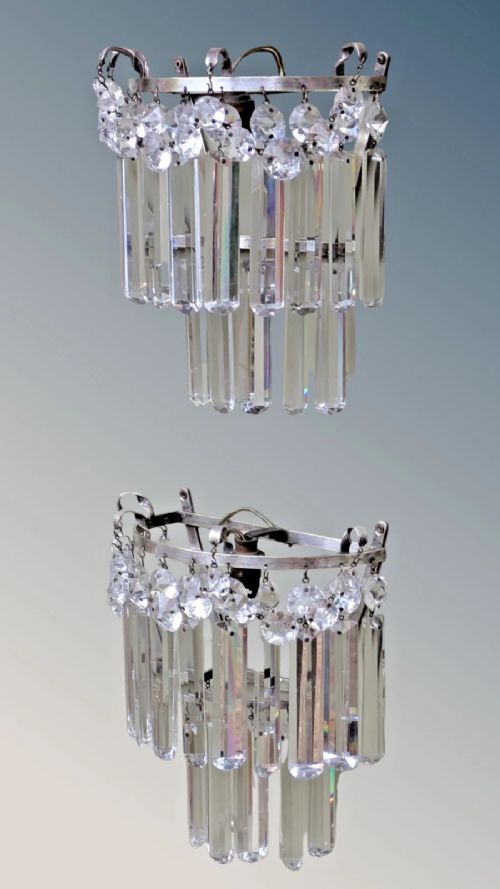
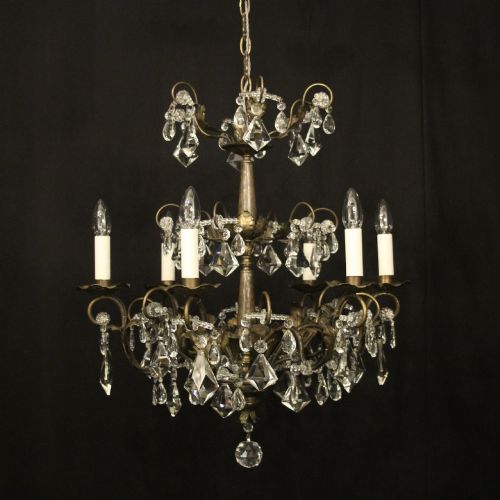
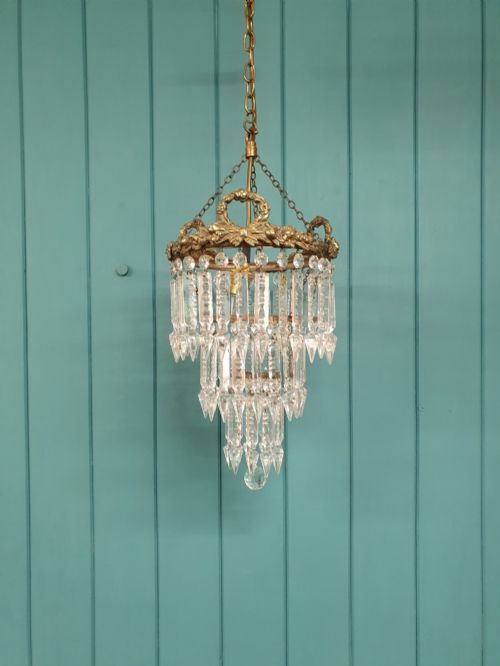
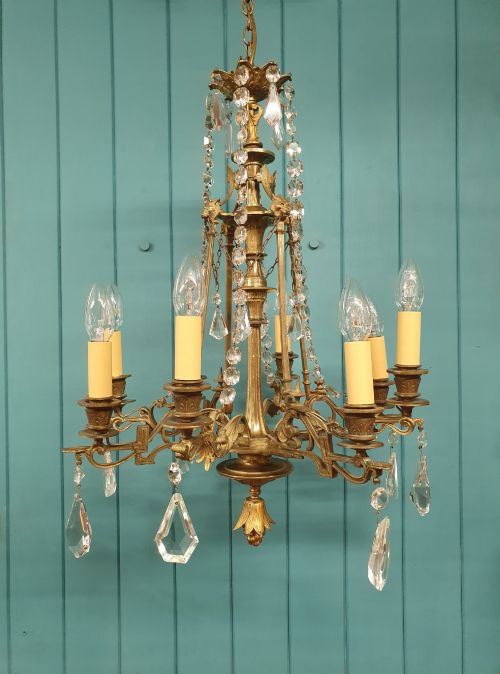
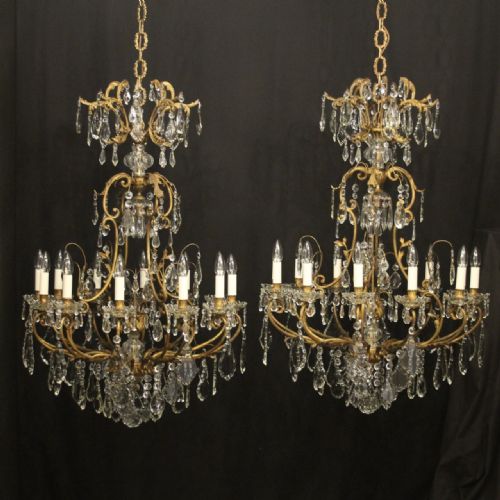
A cut glass droplet light encompasses ceiling fixtures, wall lights, and chandeliers designed to catch and scatter illumination. When you search for a cut glass droplet light, you encounter diverse forms ranging from compact wall sconces to multi-tiered chandeliers originating predominantly from the early twentieth century, the Edwardian era, and the 1920s and 1930s.
How they were made
Maker workshops constructed these fixtures using robust structural frames of brass, bronze, or silvered metal to support heavy glass configurations. Skilled artisans shaped the metal elements through casting and gilding, incorporating decorative motifs like lion masks and intricate birdcage frames.
The hanging components rely on crystal and cut glass shaped by hand-cutting and polishing to maximise light refraction. Installers suspended these droplets using fine wire or pins attached to rings on the main brass or gilt frame.
Some Edwardian chandeliers incorporate tiny hidden brass loops originally intended for attaching seasonal festive greenery.
What varies in quality
Quality separates fixtures by the clarity of the crystal and the precision of the facet cutting. Superior pieces exhibit high lead content in the crystal, creating sharp, prismatic light dispersion rather than dull reflections.
The craftsmanship of the underlying metal frame also dictates standard. Heavily chased brass or gilded bronze mounts and substantial arm structures distinguish finer fixtures from simpler commercial alternatives.
The Cut Glass Droplet Light Glossary
- Bag chandelier
- A lighting fixture featuring a lower gathered section of glass drops shaped like a bag or basket. This form became popular during the early twentieth century.
- Crystal
- Glass manufactured with mineral additives such as lead oxide to increase weight, brilliance, and refractive index. It forms the primary sparkling element in these light fittings.
- Maria Theresa chandelier
- A flat-armed chandelier style originating from Austrian influence, characterised by metal frames completely covered in flat glass plates and secured with rosette pins.
- Lustre
- A glass pendant or droplet hung from a light fixture to catch and reflect illumination. These droplets appear in various teardrop, spear, and button shapes.
- Gilt metal
- Metal coated with a thin layer of gold leaf or gilt paint to give a luxurious golden appearance. This finish frequently appears on French and Italian chandeliers from the 1920s and 1930s.
Cut Glass Droplet Light: Frequently Asked Questions
How do I clean a crystal chandelier?
Maintenance involves gentle wiping of individual crystal droplets using a mild cleaning solution while the fixture remains hung. Care must be taken around antique brass and silvered metal frames to preserve the original finish.
Regular dusting prevents grime accumulation that dulls the natural refraction of the cut glass. Technicians advise supporting each drop from beneath while cleaning to avoid straining the delicate hanging wires.
What periods do these lights represent?
The available fixtures predominantly date from the Edwardian era, circa 1900, and the interwar decades of the 1920s and 1930s. Design influences from these periods lean toward French Rococo, Arts and Crafts, and Italian Neo-Classical aesthetics.
Identifying the precise era relies on examining the wiring, frame construction methods, and metal casting styles. Earlier pieces often display heavier cast brass components, while later 1930s examples introduce streamlined bag and basket silhouettes.
Can these lights be wired for modern ceilings?
Most antique fixtures accept modern electrical standards through rewiring by a qualified professional. The internal channels within the brass arms safely conceal contemporary wiring without altering the exterior appearance.
Ceiling weight capacities must be checked before installation, particularly for large multi-armed chandeliers and ballroom fixtures containing extensive crystal weight. Proper anchoring to ceiling joists ensures secure suspension.