


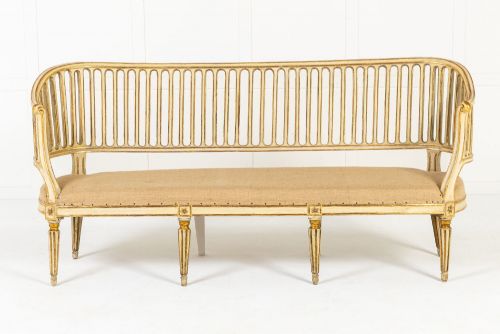


Giltwood Window Seat
A giltwood window seat brings gilded elegance and classical form to a hallway or drawing room.
Giltwood Window Seat
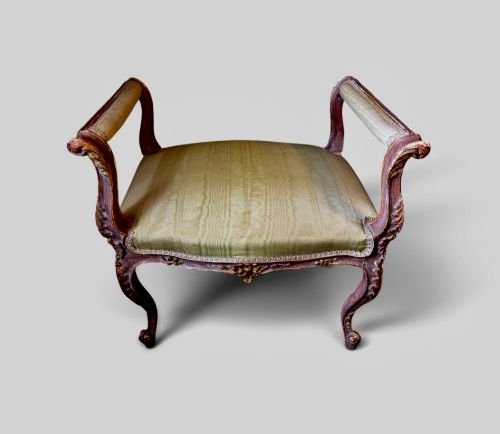
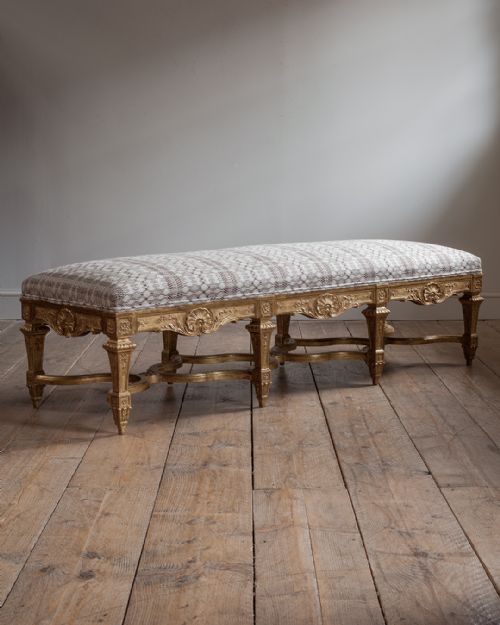
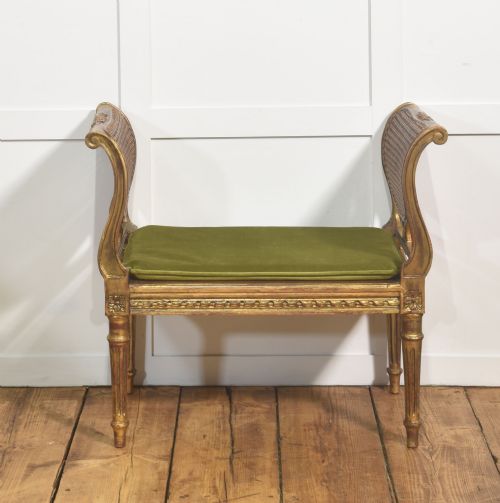
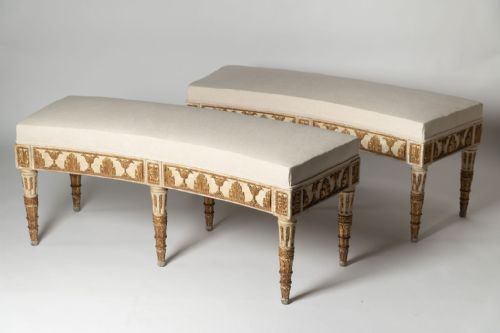
A giltwood window seat is an upholstered or caned bench designed to sit low beneath a window, combining decorative wood carving with functional seating. You will find examples ranging from compact single stools to longer two-seater window sofas.
The selections span the eighteenth, nineteenth, and early twentieth centuries, drawing heavily on French and Italian design vocabularies. Most pieces you encounter on this page date from the nineteenth century and reflect revivalist tastes.
The forms vary from simple rectangular frames to X-frame curule stools and grander settee-style window seats. Many originate from French workshops or Italian ateliers, showing classicism adapted for domestic interiors.
How they were made
The primary structural material is wood, finished with a layer of gilding over gesso or paint to create a metallic sheen. Artisans carved intricate details into the wooden frames, utilising classical motifs suited to the prevailing style of the period.
Seating surfaces incorporate traditional materials such as woven cane, painted wood, and upholstery fabrics including silk, velvet, and linen. Walnut also appears as a primary framing material alongside standard timber constructions.
Giltwood Window Seat Retail Price Guide 2026
Typical asking prices for giltwood window seat among the pieces listed under this phrase on Sellingantiques today, from the lower quarter to the upper quarter. They describe what is for sale here now, not the wider market.
Materials documented across the inventory include traditional giltwood, cane, painted wood, walnut, silk, velvet, and linen upholstery.
What varies in quality
Quality rests primarily in the crispness and depth of the wood carving, where deeply articulated acanthus leaves and fluted legs distinguish finer pieces from simpler ones. The application of the gilding itself, whether showing subtle burnishing or flat paint, dictates the visual richness of the surface.
Structural integrity and the retention of original components such as cane panels or early upholstery foundations separate standard production from superior examples. The balance of the proportions, particularly in longer duet stools and settees, marks the hand of a skilled maker.
The Giltwood Window Seat Glossary
- Giltwood
- Wood that has been coated with gold leaf or a gold-coloured metallic finish over a prepared gesso ground. This technique creates a luminous surface that catches the natural light from a window.
- Curule stool
- An ancient Roman chair shape featuring intersecting concave legs forming an X-frame. This classical form appears frequently in nineteenth-century revival pieces.
- Louis XVI style
- A French design period characterised by neoclassical straight lines, geometric symmetry, and classical ornamentation such as fluting and ribbon twists. It remains a dominant influence on many nineteenth-century window seats.
- Cane
- Woven material made from the peeled bark of rattan palm, often used for light and airy seat panels. It provides a durable and flexible surface that complements gilded wooden frames.
Giltwood Window Seat: Frequently Asked Questions
Where should I place a window seat?
These benches sit naturally beneath low windows, in wide hallways, or at the foot of a bed. Their compact footprints make them versatile accent pieces for empty transitional spaces.
Because many feature finished backs or ornate frames, they also work well floating in a room or positioned against a focal wall.
How do I care for giltwood?
Dust giltwood frames gently with a soft, dry cloth to prevent the accumulation of grit. Avoid chemical cleaners, moisture, and direct sunlight, which can degrade the fragile metallic surface over time.
Take care when moving the pieces to avoid chipping the delicate gesso and gold leaf layers applied to the carved wooden structure.
What is a curule stool?
A curule stool is a seat built with intersecting X-shaped legs derived from ancient Roman magistrate chairs. This form offers both structural stability and a distinct architectural silhouette.
In nineteenth-century interpretations, these stools frequently feature carved wooden X-frames enhanced with gilding and upholstered tops.
Are these seats comfortable for daily use?
Window seats with upholstered pads or traditional fabric cushions offer comfortable perches for reading or resting. Cane versions provide a firmer, more resilient surface suited for occasional seating.
Many historic examples utilise traditional stuffing materials, so contemporary comfort depends on the specific upholstery build of the individual piece.
How do I identify French versus Italian pieces?
French designs from this category often lean towards refined Louis XVI or ornate Rococo revival lines with precise carving. Italian pieces frequently display bolder neoclassical motifs, gesso details, or distinct regional painted finishes.
Examining the underlying timber, framing construction, and specific decorative vocabulary helps reveal the likely country of origin.