





Louis XVI Window Bench
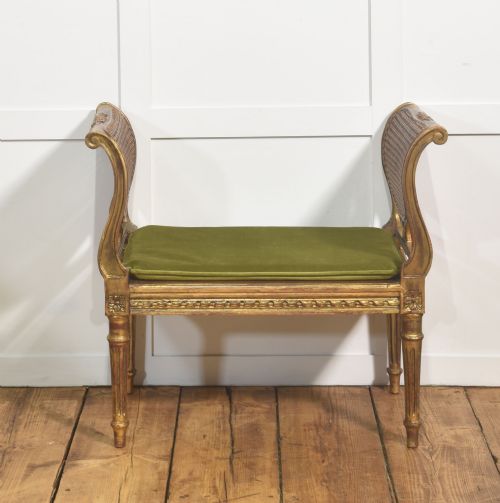
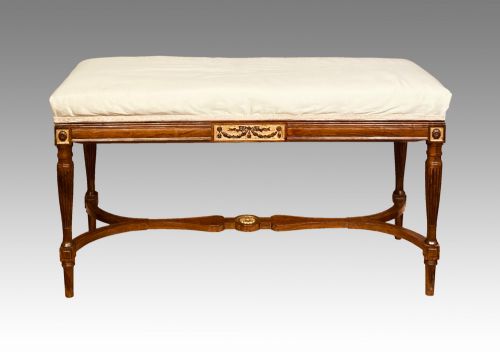
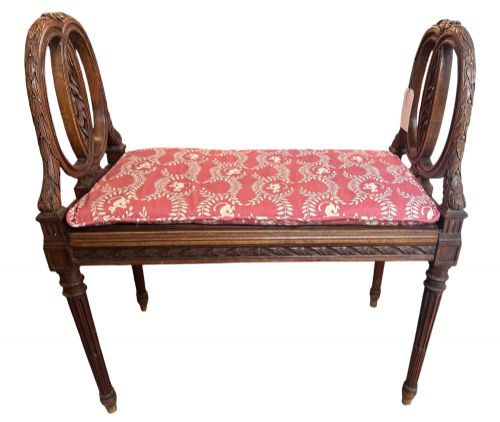
A louis xvi window bench brings French Neoclassical proportion and refined seating to a room, offering low profiles designed specifically for placement beneath sills.
Louis XVI Window Bench
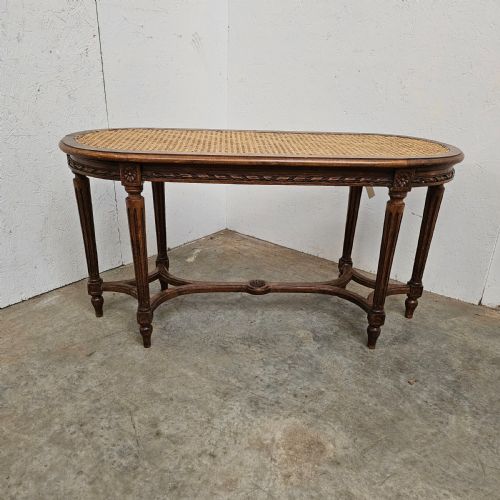
These pieces frequently display the straight tapered legs, fluting, and symmetrical frames characteristic of the Louis XVI style and Neoclassical revival periods. Makers adapted the aesthetic into various seating configurations, including cane-panelled frames and upholstered tops intended for halls, music rooms, and drawing rooms.
How they were made
Frames rely predominantly on hardwood foundations such as beech, walnut, and carved wood, which provide the structural rigidity necessary for slender neoclassical legs. Artisans shaped these timbers through hand carving to produce crisp architectural details like fluting and rosette motifs.
Surface treatments range from gilded finishes and painted layers to exposed natural wood grains. Seating surfaces integrate woven cane panels or padded upholstery upholstered in velvet, fabric, and rosewood frameworks.
Listings feature periods spanning the nineteenth century, Victorian era, and early nineteen-hundreds, constructed in giltwood, beech, walnut, and cane.
What varies in quality
The distinction between ordinary and superior examples lies in the crispness of the hand carving upon the wooden frames and the depth of the gilding or paint application. Finer pieces demonstrate careful joinery that conceals structural stress, maintaining stability without resorting to heavy bracing.
Material selection further defines the tier of a piece, particularly the tightness of cane weaving in panelled seats and the quality of timber selection in exposed frames like walnut and beech. Maker attribution, such as work bearing the stamp of Charles Nosotti, elevates a piece through documented workshop provenance.
Charles Nosotti
The Louis XVI Window Bench Glossary
- Giltwood
- Timber treated with a thin layer of gold leaf. This surface treatment was widely applied to Neoclassical furniture to achieve a bright, reflective finish.
- Cane
- Woven rattan material used for seat panels and backs. It provides a lightweight, breathable surface popular in traditional seating forms.
- Banquette
- An upholstered bench or long seat. These forms often feature padded tops and decorative wooden frames suitable for hallways and window recesses.
- Neoclassical
- A style reviving classical Roman and Greek motifs. It is characterised by straight lines, symmetry, and architectural restraint.
Louis XVI Window Bench: Frequently Asked Questions
What is a louis xvi window bench?
A louis xvi window bench is a low seating form designed to sit beneath windows, featuring straight tapered legs and neoclassical ornamentation.
These pieces emerged in various forms including duet stools, banquettes, and window seats during the nineteenth and early twentieth centuries.
How were these benches used?
They served as decorative and functional seating placed near low windows, in hallways, or beside music stands.
Their compact height ensured they did not obstruct natural light while offering convenient spots for resting.
What materials are typical?
Common materials include carved wood frames finished in giltwood, paint, or natural walnut and beech.
Seating areas frequently utilise woven cane or upholstered fabric and velvet pads.
How do you date a piece?
Dating relies on identifying revival periods such as the nineteenth century, Victorian era, or early twentieth-century production years.
Construction methods, tool marks, and stylistic adherence to French Neoclassical design help establish the era of manufacture.