



Giltwood Three Plate Mirror
A giltwood three plate mirror brings warmth and width to a room, offering the architectural presence of the eighteenth and nineteenth centuries.
Giltwood Three Plate Mirror
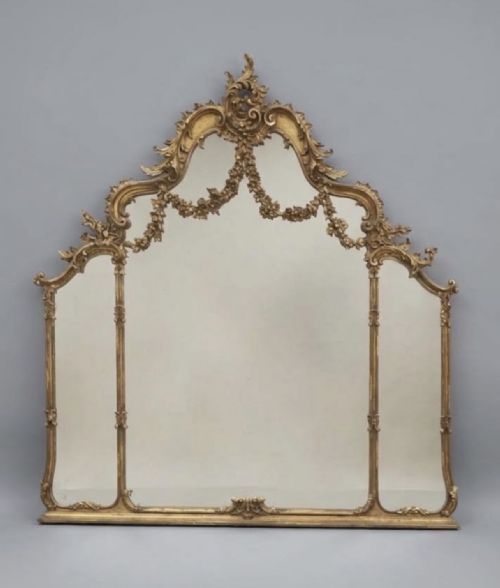
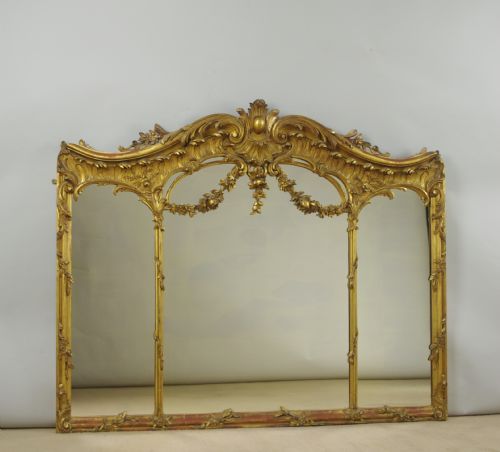
A giltwood three plate mirror functions primarily as a grand overmantel or pier glass, designed to sit above a fireplace or between windows to reflect light and expand interior space. These pieces span the eighteenth and nineteenth centuries, taking forms from Georgian and Regency eras through to Victorian revivals.
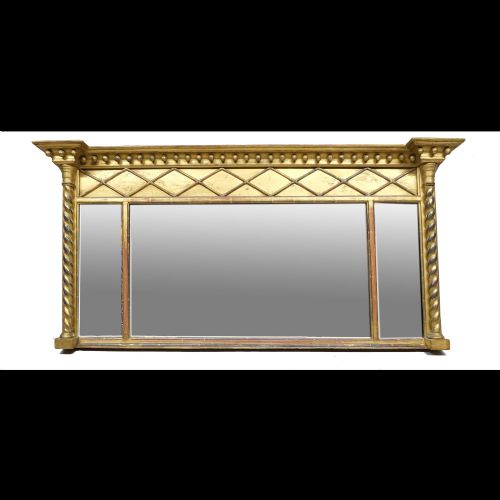
The format relies on a tripartite division where three adjacent glass plates sit within a single unified frame. The central section often dominates while the flanking plates maintain balance, frequently seen in Regency triptychs and large overmantel mirrors.
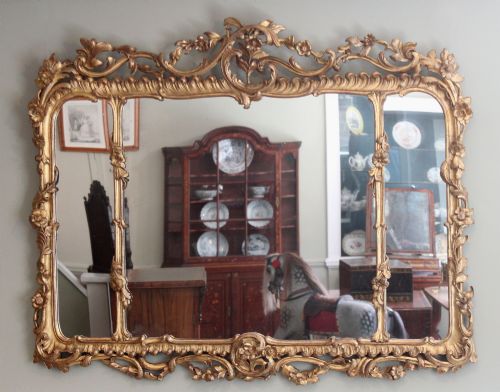
Origins stretch from English workshops to Scottish and continental makers, incorporating styles such as Rococo, Chippendale, and classical Regency. The most common survivals on this page date from the nineteenth century, though earlier Georgian and later Edwardian examples appear.
How they were made
Makers built the structural carcases of timber before applying layers of gesso to create a smooth surface for carving and moulding details. Composition ornament was often pressed into moulds and fixed to the wood to achieve crisp relief work on complex frames.
Gilding involved applying thin leaves of metal over a prepared bole ground, which was then burnished or left matte to catch the light. Original mirror glass was silvered by hand, resulting in the characteristic imperfections and softer reflections seen in older plates.
Listings feature giltwood three plate mirrors spanning the Georgian, Regency, and Victorian periods, alongside later twentieth-century interpretations.
What varies in quality
The depth and sharpness of the carved or moulded ornamentation separate standard production from superior work. Finer frames exhibit hand-carved gesso details with crisp relief, whereas simpler pieces rely more heavily on moulded composition.
The condition and retention of the original gilding and mirror plates heavily influence the character of the piece. Retaining early silvered glass plates and undisturbed gold leaf indicates a higher level of historical preservation.
Ciceri & Co.
The Giltwood Three Plate Mirror Glossary
- Giltwood
- Wood carved and coated with gold leaf applied over a prepared ground. This surface provides the bright, reflective finish characteristic of these frames.
- Gesso
- A mixture of plaster of Paris and glue used as a base for gilding. It allows for smooth surfaces and intricate moulded relief work.
- Composition
- A paste of whiting, resin, linseed oil and glue pressed into moulds. Makers used it as a faster alternative to hand-carving repetitive decorative motifs.
- Triptych
- A piece divided into three sections or panels. In mirror design, this refers to a frame holding three distinct glass plates.
- Overmantel
- A large mirror or painting designed to hang specifically above a fireplace mantelpiece. These pieces often anchor the decorative scheme of a formal room.
Giltwood Three Plate Mirror: Frequently Asked Questions
Where should a three plate mirror go?
These mirrors were historically designed to hang above a fireplace mantelpiece, where their length could balance the horizontal proportions of the hearth.
They also work well along long drawing room walls or above large sideboards to bounce natural light deep into the interior space.
How do I spot a Regency mirror?
Regency frames generally favour classical restraint, featuring architectural lines, ball details, reeded columns, and sometimes ebonised slips within the gilt framework.
They lean away from the exuberant curves of earlier Rococo designs towards a more structured, symmetrical aesthetic.
Are the mirror plates original?
Older mirrors often retain their original hand-silvered glass, which displays subtle foxing, minor pitting, and wavy distortions that reflect light softly.
Replacement glass appears clearer and lacks the characteristic dark spots and historical depth accumulated over centuries.
How do I care for giltwood?
Keep giltwood mirrors away from direct sunlight, damp environments, and sudden temperature fluctuations that can cause the gesso and wood to crack.
Dust the surface gently with a soft, dry brush and avoid all chemical cleaning products, which strip the delicate gold leaf.