


Giltwood Marble Console Table
A giltwood marble console table brings the sculptural presence of carved timber and stone into an entrance hall or drawing room.
Giltwood Marble Console Table
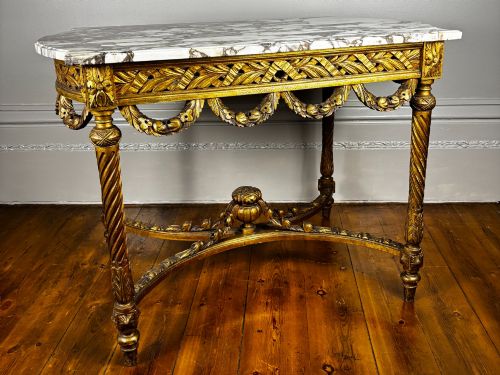
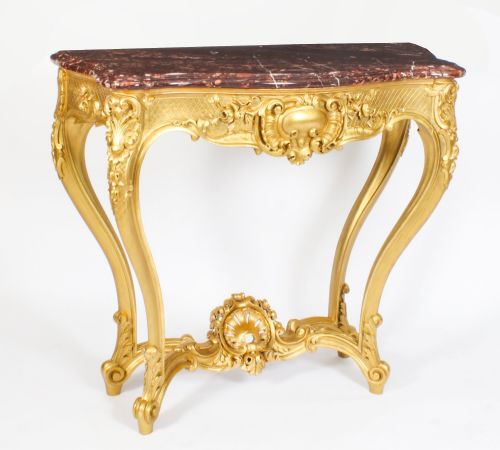
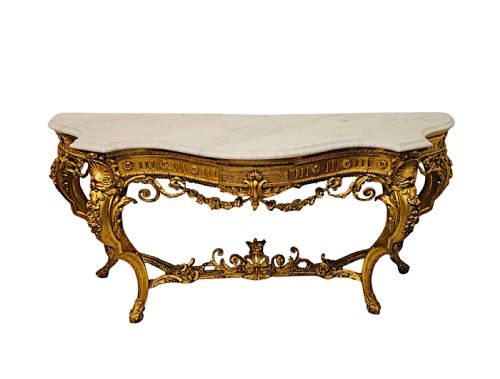
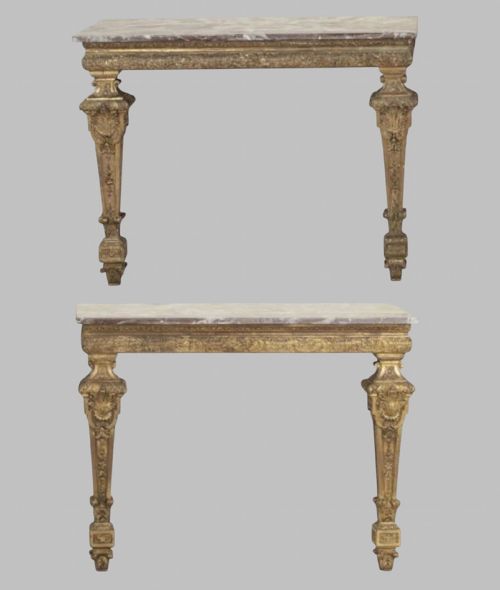
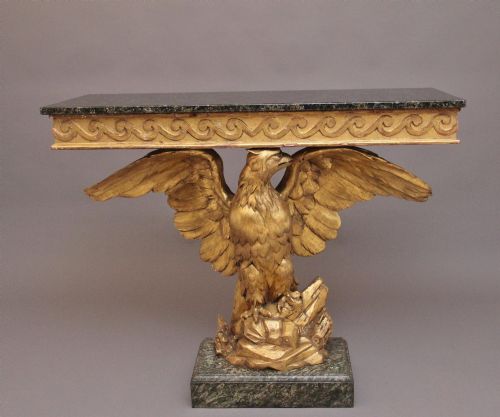
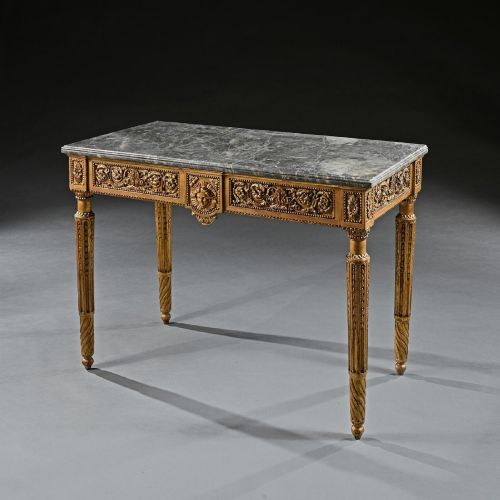
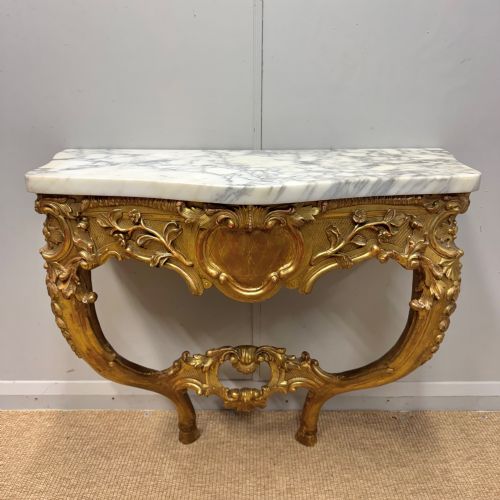
A giltwood marble console table combines a heavy stone slab with a carved wooden base finished in gold leaf or paint. These wall-mounted or freestanding furniture pieces date primarily from the eighteenth and nineteenth centuries, spanning revivals through to the early twentieth century.
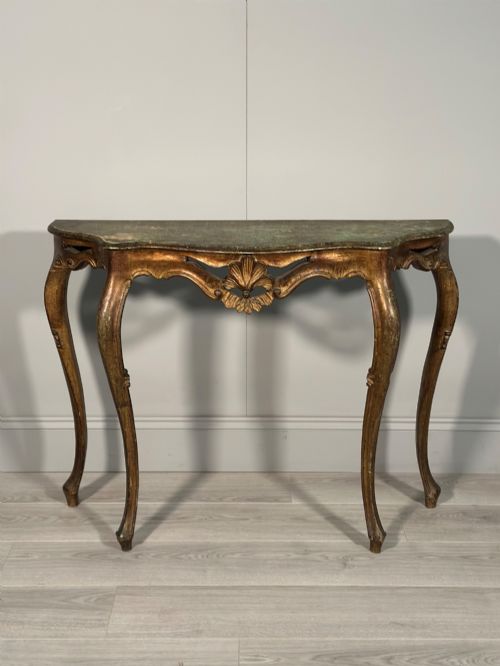
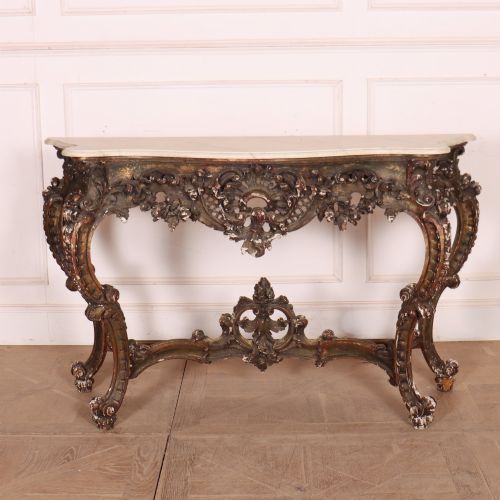
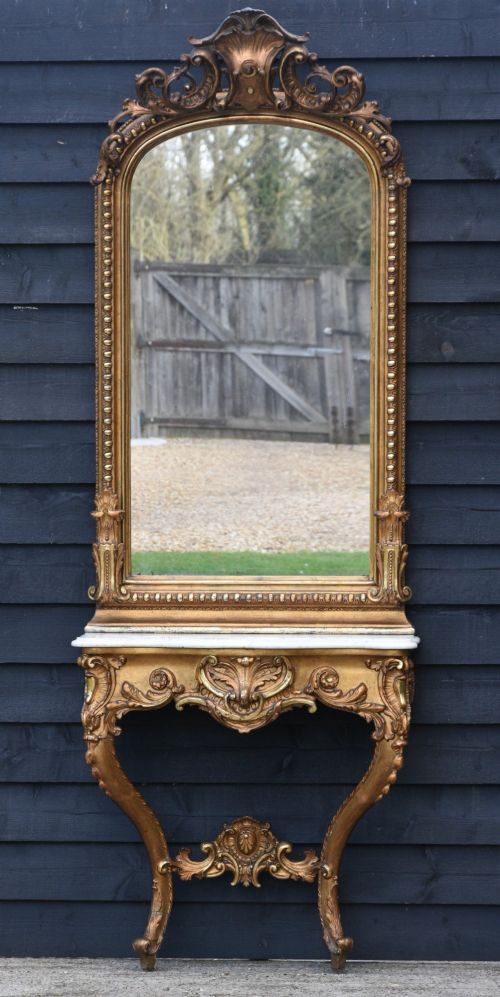
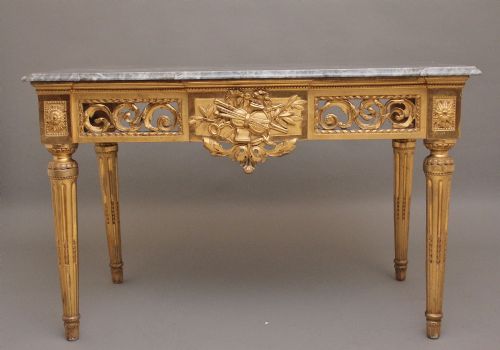
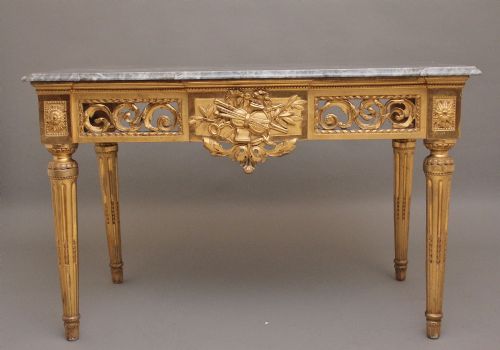
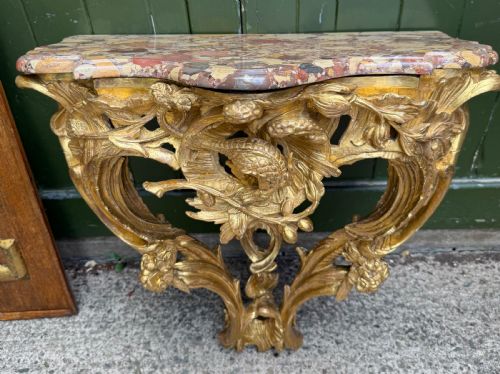
Originating largely from French and Italian workshops, surviving examples often follow Rococo or Neoclassical designs. Buyers frequently encounter serpentine fronts, demi-lune shapes, and occasional paired console tables with matching pier mirrors.
Materials and construction
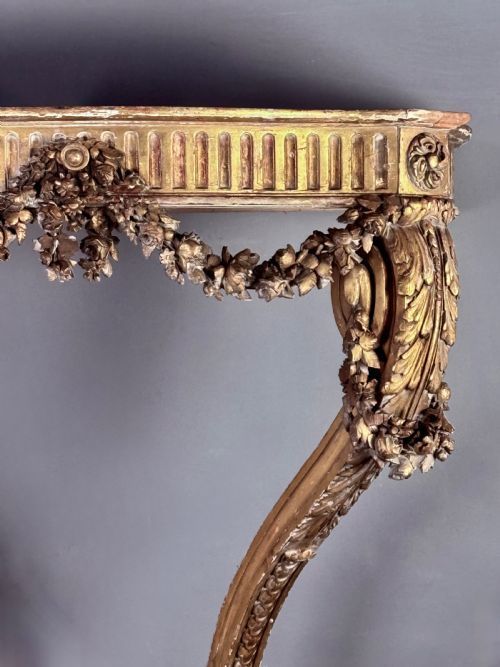
Makers carved structural frameworks from softwoods or hardwoods, applying layers of gesso to smooth the timber before laying down gold leaf. Many surfaces also received paint finishes, combining polychrome decoration with gilded highlights.
Heavy marble tops, including varieties such as breccia, siena, and breche d'alep, rested directly upon the wooden bases. These stone slabs often featured shaped edges and figured patterns that contrasted with the reflective metallic surfaces below.
Giltwood Marble Console Table Retail Price Guide 2026
Typical asking prices for giltwood marble console table among the pieces listed under this phrase on Sellingantiques today, from the lower quarter to the upper quarter. They describe what is for sale here now, not the wider market.
Listings include items from the eighteenth, nineteenth, and early twentieth centuries, featuring French and Italian regional designs.
Evaluating craftsmanship
The depth and clarity of the woodcarving separate standard production from exceptional pieces. Artisans who achieved crisp scrolling foliage, figurative elements like swans or lions' paws, and balanced proportions produced the most desirable examples.
The selection and thickness of the marble slab also influence the standing of a piece. Finer tables utilise richly coloured, figured marble types fitted precisely to the contours of the gilded frame.
Felix-Alfred Ternisien
The Giltwood Marble Console Table Glossary
- Giltwood
- Timber coated with gold leaf over a prepared gesso ground. This technique creates a luminous metallic finish that catches interior candlelight or daylight.
- Console table
- A table designed to stand against a wall, historically supported by front legs or wall brackets. These items often feature decorative carving on three sides.
- Gesso
- A plaster mixture applied to wood surfaces as a base for gilding or painting. It provides a smooth ground for intricate carved details.
- Pier mirror
- A large wall glass designed to hang directly above a console table. Together they form a unified decorative arrangement within a room.
- Breccia marble
- A multicoloured stone composed of angular fragments embedded in a contrasting matrix. It appears frequently on Italian and French revival tables.
Giltwood Marble Console Table: Frequently Asked Questions
Where should I place a console table?
These tables suit entrance halls, drawing rooms, or dining spaces where floor space is limited. Their shallow depth allows them to sit flush against a wall without obstructing walkways.
Pairing a console table with a matching mirror creates a balanced focal point on a blank wall. They also function well beneath tall windows or between architectural doorways.
How do I care for giltwood?
Giltwood requires gentle maintenance to protect the delicate gold leaf layer. Dust surfaces lightly with a soft, dry cloth rather than using liquid polishes or chemical cleaners.
Keep these tables away from direct heat sources and strong sunlight to prevent the gesso and timber underneath from drying out and cracking.
Are these tables wall mounted?
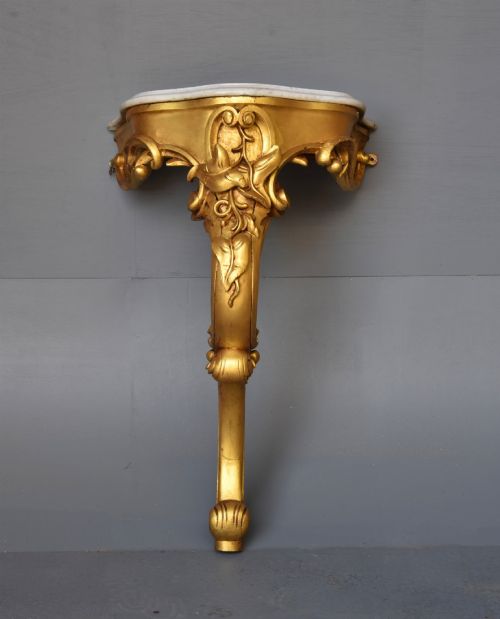
Some period examples require attachment to the wall for stability, relying on front legs or wall brackets for support. Freestanding versions possess four legs and stand independently.
Examining the underside and leg construction reveals whether a piece was built as a wall-fixed bracket or a standard table.
How do I identify a Neoclassical style?
Neoclassical pieces feature restrained geometric lines, symmetrical motifs, and classical architectural details inspired by antiquity. This style contrasts with the asymmetrical curves of earlier Rococo designs.
Look for straight fluted legs, urn motifs, and rectangular marble slabs when identifying this aesthetic.