
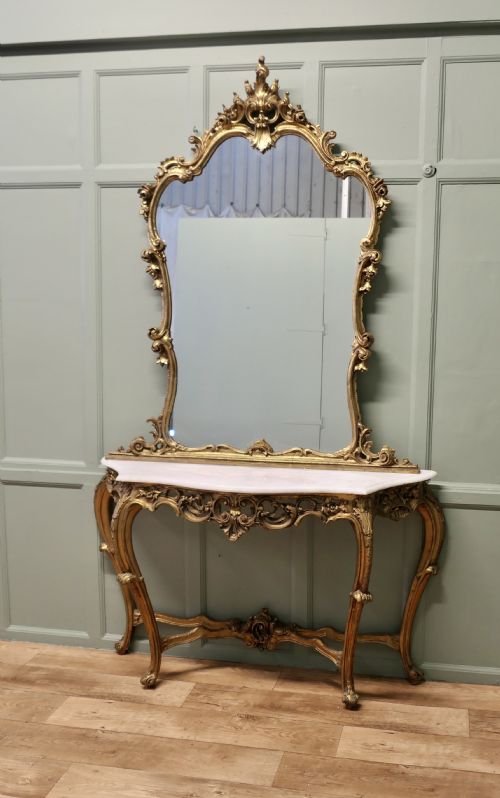
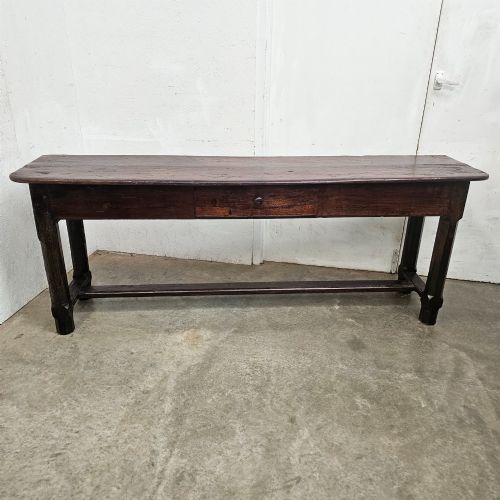
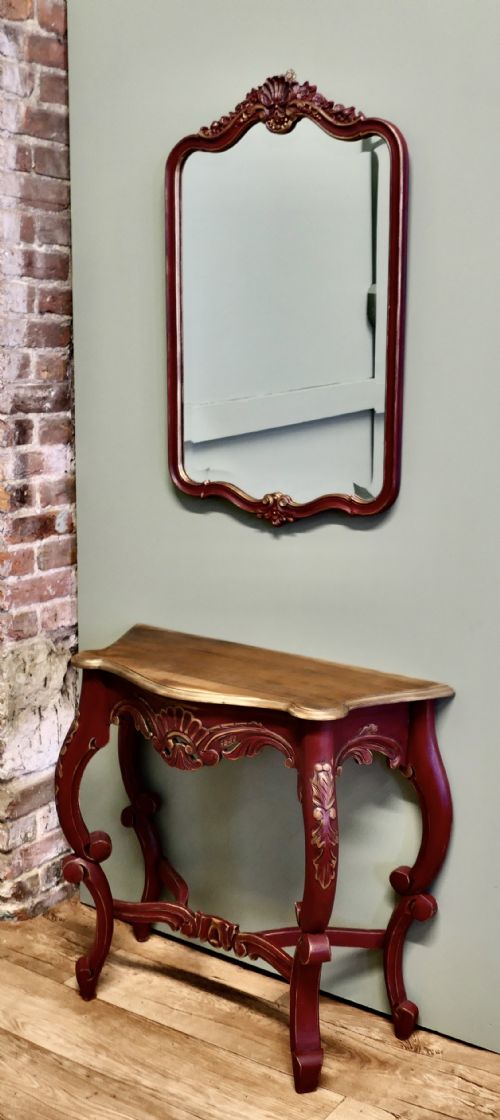
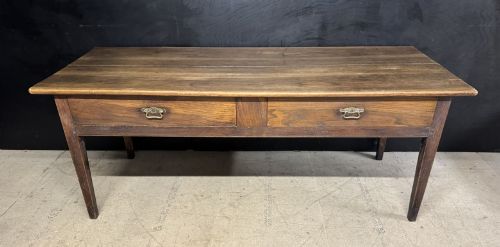
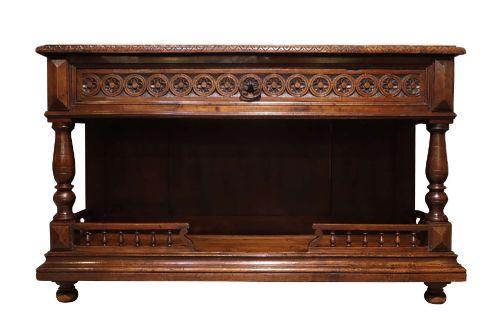
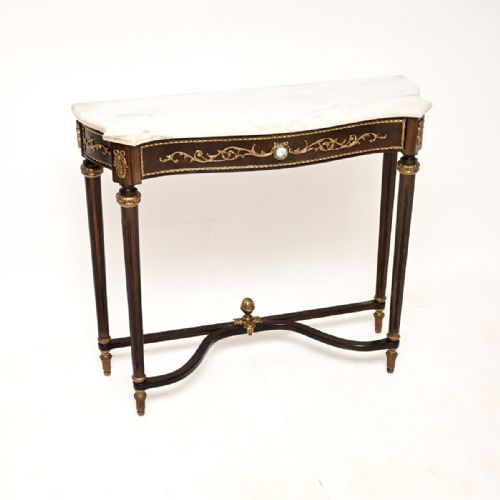
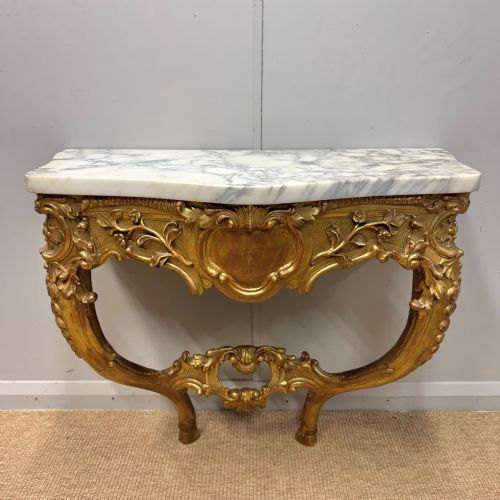
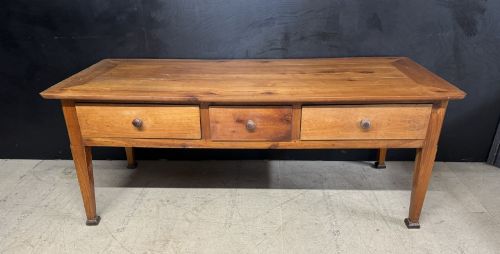
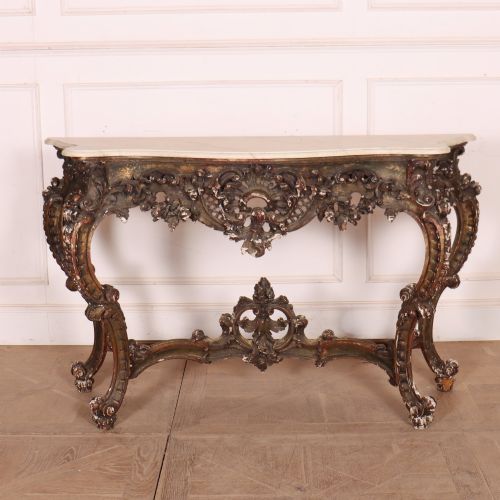

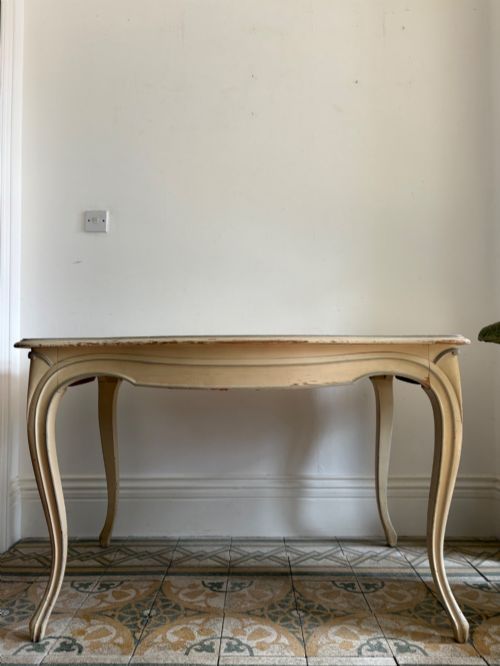
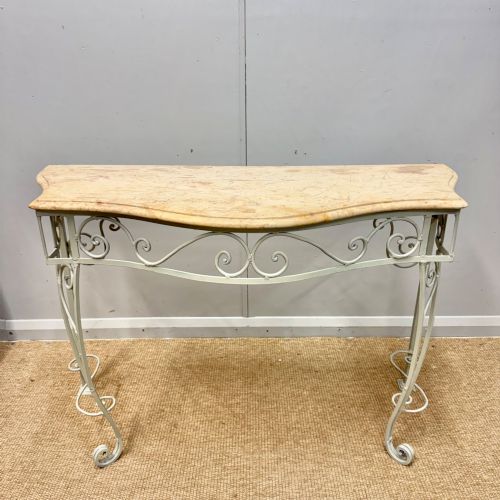
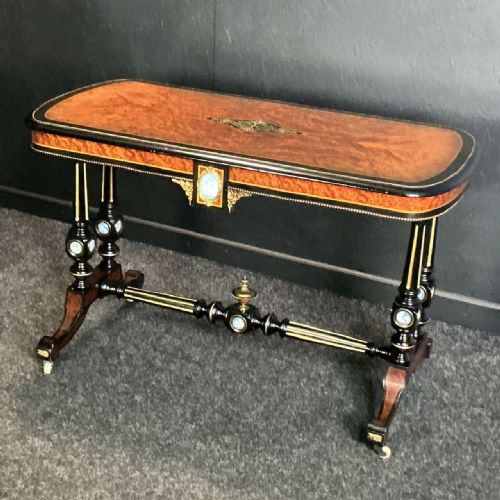
Antique French Hall Console
An antique french hall console anchors an entryway with continental proportion, offering a surface for lamps or mail against a narrow wall.
Antique French Hall Console
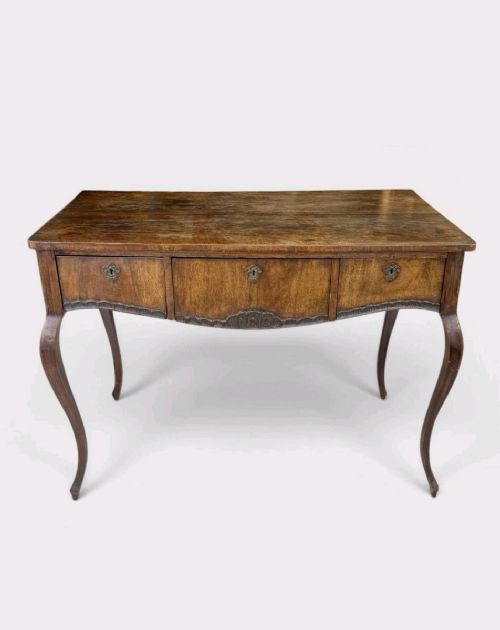
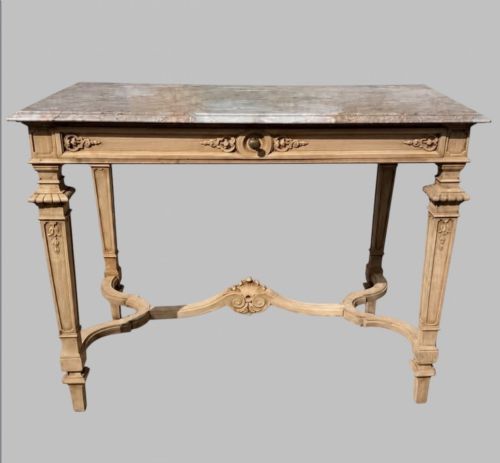
An antique french hall console is a narrow table designed to stand flat against an entrance wall without blocking passage. The pieces on this page span the eighteenth, nineteenth, and early twentieth centuries, encompassing styles from French Rococo and Louis XVI to provincial rustic forms.
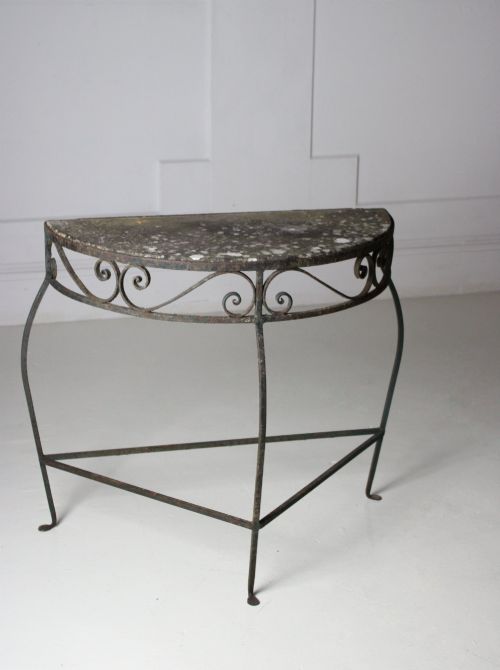
The most frequent versions encountered here pair a heavy stone top with a carved wooden or wrought iron base, often taking a demi-lune or serpentine shape. Console tables frequently feature wall-mounting brackets or flat backs, designed to remain steady in grand hallways or compact reception spaces.
Makers and workshops across France and Britain adapted these tables for domestic entryways, producing side tables, serving tables, and occasional writing desks alongside dedicated hall consoles. Oak, walnut, and mahogany provide the structural timber, while painted finishes and giltwood reflect grander salon tastes.
How they were made
Cabinetmakers constructed the wooden bases of these consoles using solid hardwoods such as walnut, oak, and mahogany, often shaping the aprons with hand carving or applying marquetry veneers. Giltwood and painted finishes required layers of gesso and pigment applied over carved pine or softwood frames.
Marble and rouge stone tops were cut, shaped, and polished to fit the exact contours of the wooden or iron frames beneath them. Wrought iron and cast iron variants utilise forged or cast metal supports, frequently paired with heavy stone or marble slabs for stability.
Ormolu mounts and brass detailing were cast and chased by hand, then secured to the timber carcasses of nineteenth-century pieces to accent corners and aprons. Joinery relied on traditional mortise and tenon construction, ensuring the narrow frames remained rigid against the wall.
Listings feature 18th century, 19th century, and 1930s periods alongside materials such as marble, mahogany, giltwood, and wrought iron.
What varies in quality
The distinction between ordinary and exceptional tables rests in the depth and sharpness of the hand carving upon the wooden frames and aprons. Crisp lines in giltwood or walnut indicate a skilled hand, whereas softened edges often point to mechanical reproduction or heavy over-finishing.
The selection of the marble top dictates much of the visual weight, with thick, figured slabs of rouge or white marble holding greater presence than thin or plain replacements. Original ormolu mounts that fit flush against the wood without gaps denote higher workshop standards during manufacture.
Felix-Alfred Ternisien·Bettenfeld Paris
The Antique French Hall Console Glossary
- Demi-lune
- A half-moon shape used for tabletops and console bases designed to sit flat against a wall. This profile maximises floor space in narrow hallways.
- Ormolu
- Gilt bronze mounts applied to furniture woodwork for decoration. Artisans cast and mercury-gilded these metal elements in the eighteenth and nineteenth centuries.
- Serpentine
- A furniture front or tabletop shaped with a wavy contour curving outward in the centre and inward at the sides. It requires precise woodworking to execute.
- Marquetry
- Inlaid wood veneers arranged in decorative patterns or pictorial designs across a surface. Craftsmen cut contrasting timbers to fit flush into a background veneer.
Antique French Hall Console: Frequently Asked Questions
Where should I place a console table?
These narrow tables suit entrance halls, narrow corridors, and passage spaces where depth is limited. Their flat backs allow them to stand flush against drywall or plaster.
They also function well beneath hallway mirrors or in reception rooms as serving surfaces for lamps and decorative objects.
Are marble top consoles heavy?
The stone tops on these tables add significant weight, which helps keep the narrow bases stable against the wall. Many period console tables rely on this mass rather than floor fixings to stay upright.
When moving these pieces, lift the marble separately from the wooden or iron base whenever possible to prevent structural strain.
How do I identify a nineteenth-century piece?
Nineteenth-century tables often display denser hardwoods, hand-cut joinery marks inside the drawers, and patinated bronze or brass hardware. Examination of the underside reveals tool marks and timber ageing consistent with the period.
Styles from this era frequently draw on earlier Louis XV or Louis XVI revivals, reinterpreting eighteenth-century proportions with nineteenth-century manufacturing methods.
Can these tables be used for writing?
Certain variations on this page double as writing tables or desks, featuring shallow drawers built into the apron beneath the top. Suede or leather inserts occasionally line the surface on these specific desk variants.
Pure hall consoles lack kneehole clearance for seating, operating strictly as display ledges rather than workspaces.