
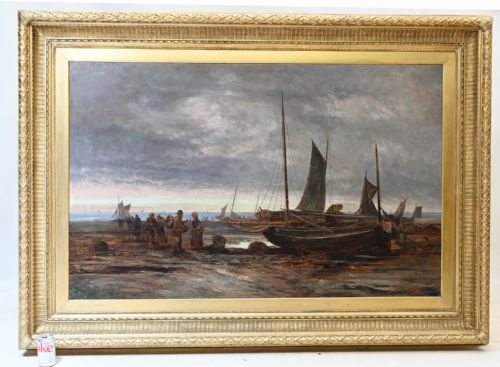


Giltwood Framed Seascape
These giltwood framed seascape pieces bring the movement and light of open water indoors, set inside ornate, gilded wooden surrounds.
Giltwood Framed Seascape
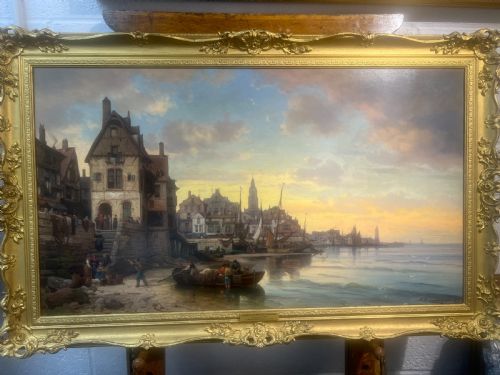
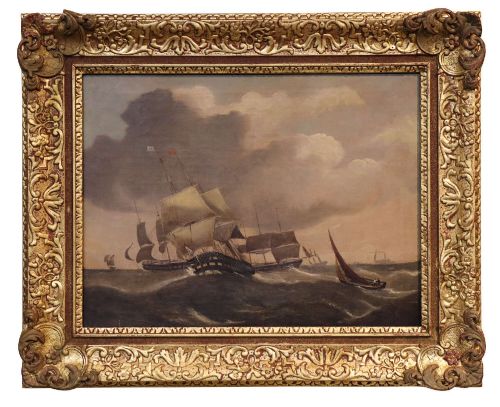
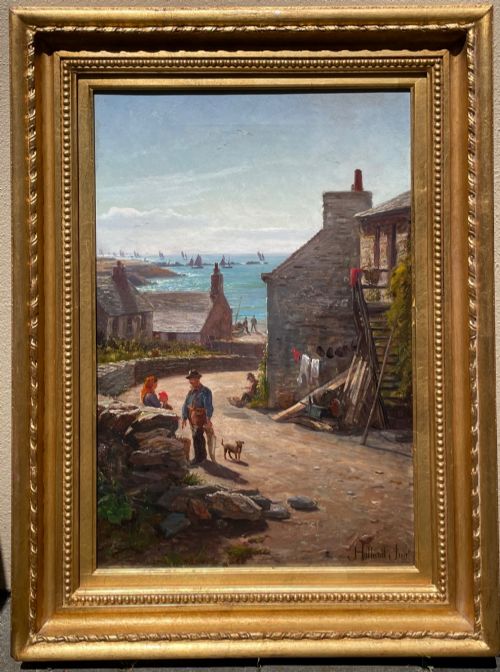
A buyer examining a giltwood framed seascape encounters oil paintings on canvas depicting maritime subjects, coastal scenes, and shipping vessels. These artworks capture heavy seas, calm lagoons, and bustling harbours through the medium of oil paint.
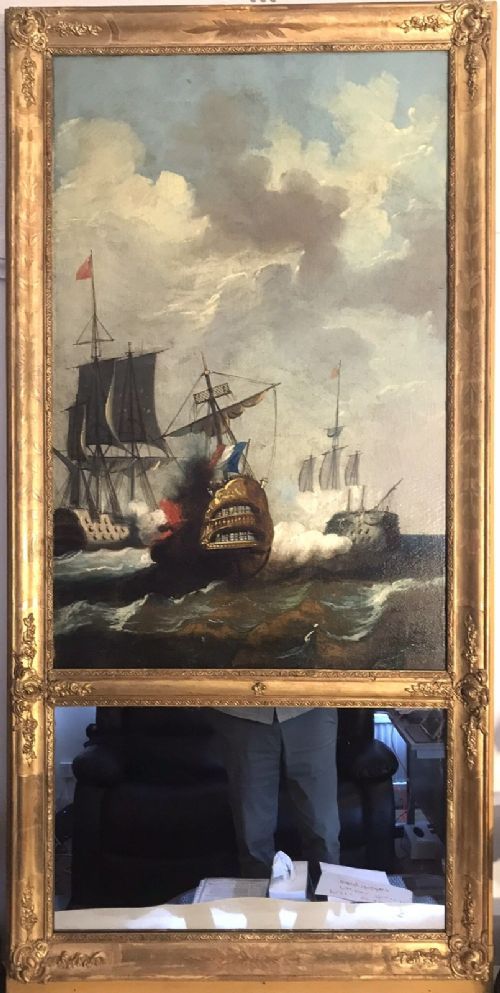
The pieces on this page span several centuries, with a strong representation of nineteenth-century Victorian marine art alongside eighteenth-century country house examples and mid-century French fine art. Forms range from standard framed canvas paintings to integrated trumeau mirrors incorporating maritime scenes.
Origins vary across British, Dutch, and French schools, reflecting different regional approaches to marine painting. Collectors find both intimate coastal views and large-scale canvases depicting galleons and fishing boats.
Materials and construction methods
The primary visual foundation of these works is oil paint applied to woven canvas supports. Artists built up textures using oils to render the churning motion of water, atmospheric skies, and the details of maritime shipping.
Frames are constructed from wood, frequently finished with layers of gesso and gold leaf to create the characteristic giltwood appearance. This traditional framing technique involves applying fine gold leaf over a prepared gesso base to achieve a brilliant, reflective surface that complements the painted subject.
The periods represented stretch from the eighteenth century through the Victorian era to mid-century French fine art.
Distinctions in craftsmanship and artistry
The skill of the brushwork defines the artistic merit of each maritime painting, separating routine topographical records from dynamic, atmospheric compositions. Superior works capture the weight of heavy seas and the play of light on water with convincing depth and fluidity.
Charles Euphraisie Kuasseg·John Holland·Pieter Cornelis Dommersen·George Morland·Roger de la Corbiere·Jane Vivian·George Henry Knight·E Tucker·Ebeneezer Colls·Frank Myers Boggs·William Dommersen
The Giltwood Framed Seascape Glossary
- Giltwood
- Wood that has been decorated with gold leaf or gold paint. This finish provides a bright, ornate border that frames and elevates the artwork.
- Gesso
- A plaster mix used as a base for moulding and gilding on wooden frames. It allows craftsmen to carve intricate decorative details before applying gold leaf.
- Trumeau
- A decorative wall mirror or panel featuring an oil painting set into the upper section. These architectural pieces originated in France.
- Marine Art
- Paintings or works of art that focus on the sea, ships, and coastal views. This genre encompasses historical naval battles, shipping, and coastal scenery.
Giltwood Framed Seascape: Frequently Asked Questions
What subjects do these paintings show?
These works depict maritime scenes, including shipping in heavy seas, coastal views, and Venetian lagoons. Vessels range from working fishing boats to historical galleons.
The compositions capture various weather conditions, from serene sunsets to the turbulent waters of the English Channel.
How do I care for giltwood frames?
Giltwood frames require a stable indoor environment away from direct sunlight and excessive moisture. Dusting should be done gently with a soft, dry brush.
Avoid using liquid cleaners or polishing agents, as these can damage the delicate gold leaf and underlying gesso layers.
Are all these pieces from the Victorian era?
While the Victorian period is strongly represented, the selection spans a broader timeline. Examples range from eighteenth-century country house canvases to mid-century French works.
Stylistic cues and framing techniques help distinguish nineteenth-century productions from earlier or later pieces.
What is a trumeau mirror?
A trumeau is an antique wall mirror that incorporates an oil painting into its upper wooden panel. These dual-purpose furnishings were popular in domestic interiors for adding light and artwork simultaneously.
The maritime paintings set within these mirrors often feature ships or coastal landscapes.