

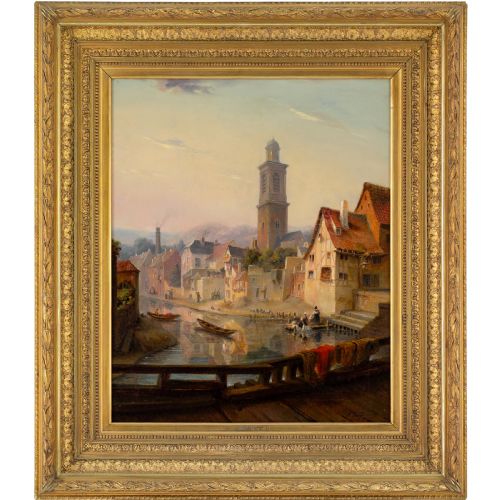
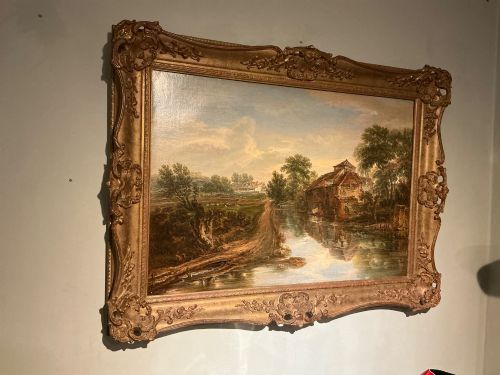
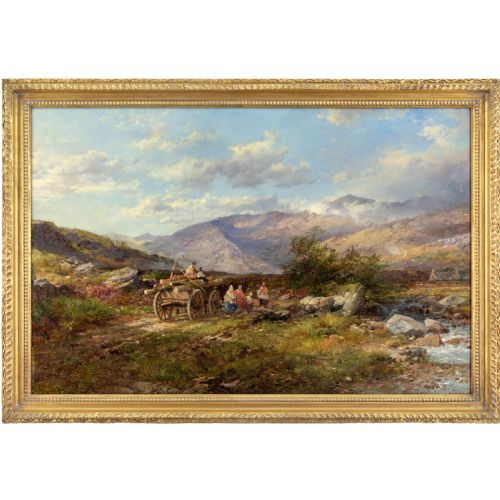
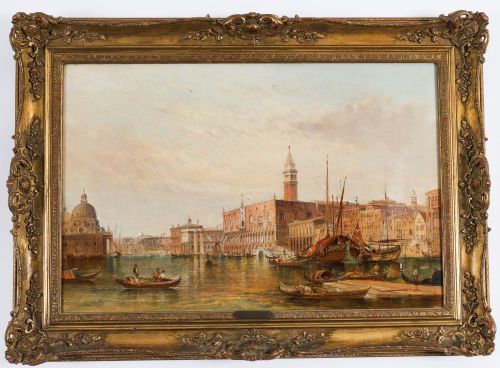
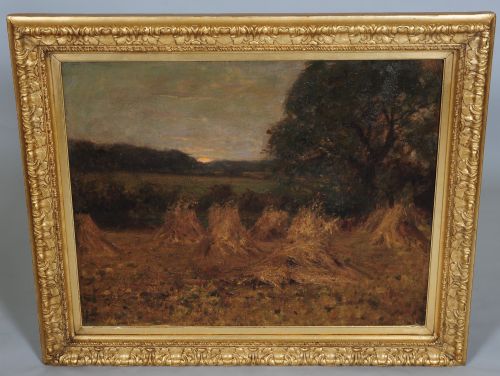
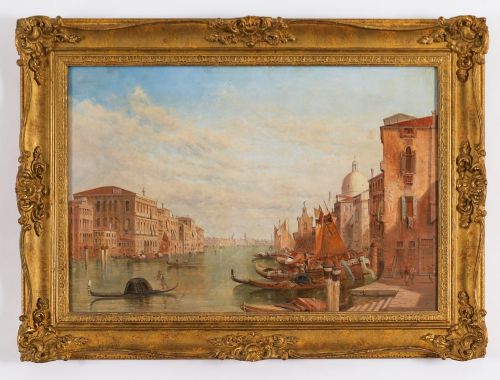
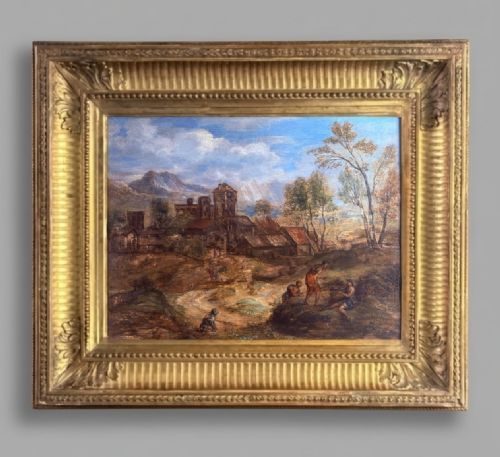
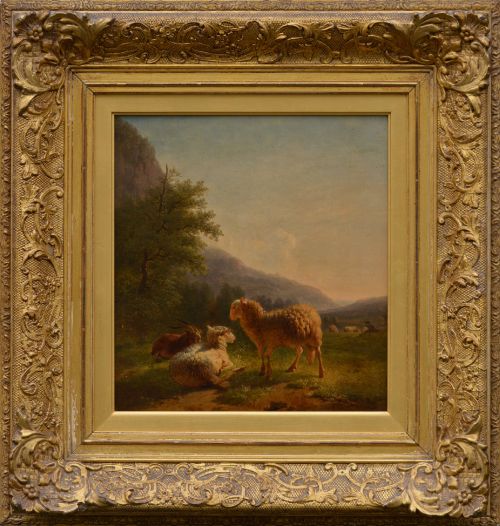
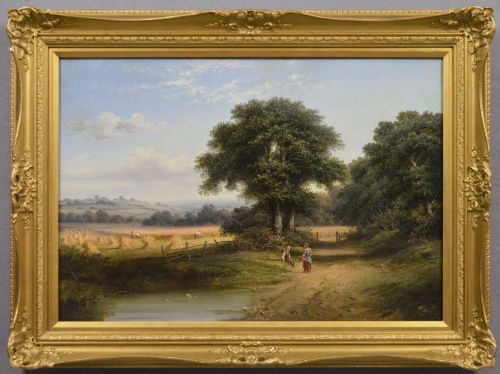
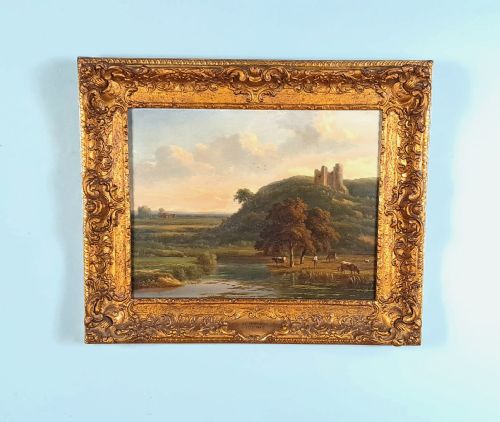
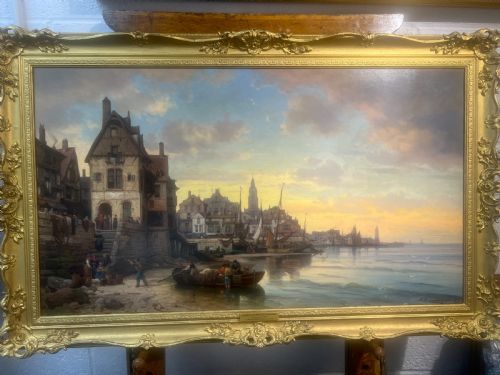
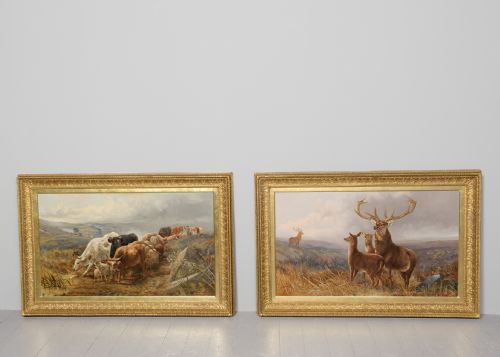

Giltwood Frame Landscape Painting
When you search for a giltwood frame landscape painting, you find oil paintings enclosed in decorative wooden surrounds finished with gold leaf.
Giltwood Frame Landscape Painting
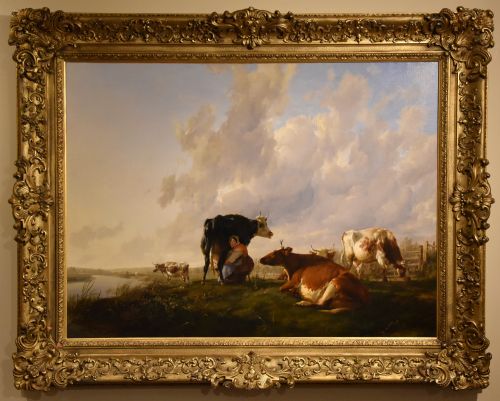
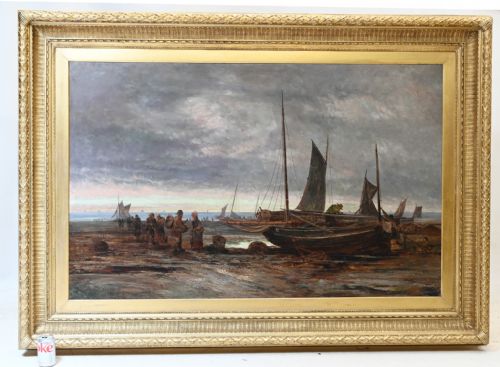
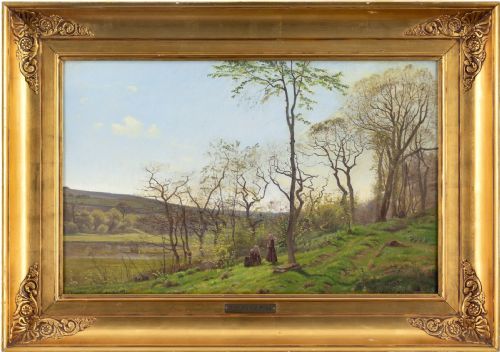
A giltwood frame landscape painting combines a scenic oil painting on canvas, board or panel with an ornate wooden surround finished in gold leaf or gesso. These works originate predominantly from the nineteenth century, encompassing Victorian pastoral, Georgian and Regency examples alongside seventeenth-century Venetian and Italianate school pieces.
The subjects range from British coastal scenes and Highland livestock to Dutch canals and rural tracks, often set within moulded or carved frames. Most pieces on this page stem from the Victorian era, displaying traditional pastoral or maritime motifs housed in contemporary or period frames.
Materials and construction
Makers built these works using oil paint applied to woven canvas, wooden boards or oak panels, supported by solid wood stretchers. The surrounds utilise carved wood or moulded gesso, which receives a layer of gold leaf to create the characteristic metallic sheen.
Craftsmen applied gesso as a fine plaster base over the wooden frame substrate to receive intricate decorative relief work before gilding. The oil pigment was layered on the canvas or panel to build depth in the skies, foliage and figures of the landscape.
Giltwood Frame Landscape Painting Retail Price Guide 2026
Typical asking prices for giltwood frame landscape painting among the pieces listed under this phrase on Sellingantiques today, from the lower quarter to the upper quarter. They describe what is for sale here now, not the wider market.
The selection includes rural tracks, coastal scenes, Dutch canals and Highland livestock studies by nineteenth-century British and continental European artists.
What separates the work
Quality rests in the precision of the brushwork and the depth of the composition, distinguishing accomplished academic artists from lesser hands. A master hand captures natural light and atmospheric perspective with subtlety rather than stiff formula.
The integrity of the frame matters equally, where crisp, deep mouldings and original gilding indicate superior workshop production. Surrounds that retain their original gesso ornamentation without excessive over-gilding hold greater physical authenticity.
John Syer RI·Alfred Walter Bayes·Eugène Verboeckhoven·Walter Heath Williams·Thomas Sidney Cooper·Harald Foss·Henry H. Parker·Charles Euphraisie Kuasseg·Robert Cleminson·Charles Leslie·T C Hofland·John Holland·George Morland·Pieter Cornelis Dommersen·Philipp Peter Roos·James Mallard Bromley·Henry John Boddington·Cornelis Christian Dommersen·Johannes Philippus Galjaard·Frederick Waters Watts·William Pitt·Roger de la Corbiere·Antoine Bouvard Senior·Tom Seymour·Sidney Yates Johnson
The Giltwood Frame Landscape Painting Glossary
- Giltwood
- Wood that has been decorated with gold leaf or gold powder. This surface finish defines the luminous appearance of the traditional picture frames.
- Gesso
- A plaster mixture used as a base for paint or for moulding decorative relief on frames. It provides a smooth white surface before gilding takes place.
- Oil on Canvas
- Pigment mixed with drying oil applied to a stretched cloth support. This combination forms the medium for the majority of the landscape paintings here.
- Trumeau
- A decorative wall mirror or panel containing an upper painting and a lower glass plate. These architectural elements often feature classical Italianate landscape scenes.
- Impressionism
- An art style characterised by relatively small, thin yet visible brush strokes and open composition. It focuses on accurate depiction of light in its changing qualities.
Giltwood Frame Landscape Painting: Frequently Asked Questions
Can I clean the gold leaf on the frame?
Dust accumulates gently within the recessed mouldings of ornate frames over decades. Remove surface particles using a very soft, dry artist brush without applying moisture or chemical cleaning agents.
Wiping giltwood with damp cloths or modern detergents can strip the delicate gold leaf and expose the underlying red or white gesso base.
How do I date a nineteenth-century landscape?
Examinations of the canvas stretcher, backboards, and framing nails provide initial clues to the age of the piece. Written signatures, artist biographical dates, and stylistic conventions of the Victorian period further narrow the decade of creation.
Examine the type of canvas weave and the ageing of the oil paint surface for craquelure under natural light to confirm nineteenth-century origins.
Should the painting and frame be kept together?
Historic frames and their respective oil paintings often share a long history that contributes to the overall character and aesthetic balance of the artwork. Preserving the pairing maintains the integrity of the object as it was displayed in period interiors.
Separating them can diminish the historical context, as nineteenth-century artists and patrons carefully selected surrounds to complement the tones of the landscape.