


Victorian Mountain Landscapes
Victorian mountain landscapes capture dramatic topography and remote wilderness, offering buyers a window into nineteenth-century romanticism through oil and watercolour.
Victorian Mountain Landscapes
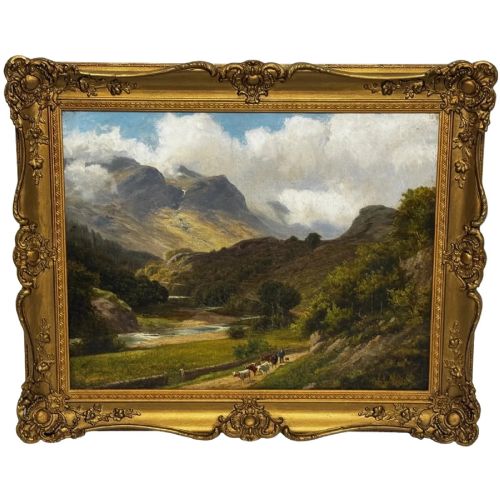
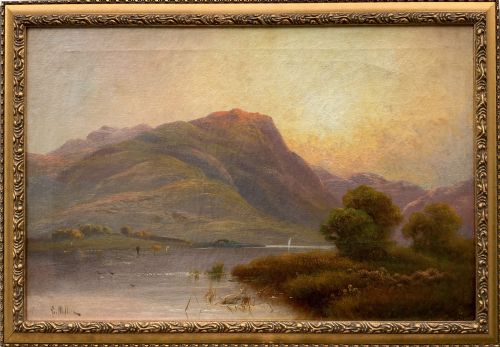
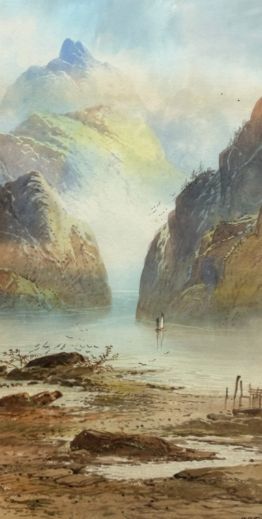
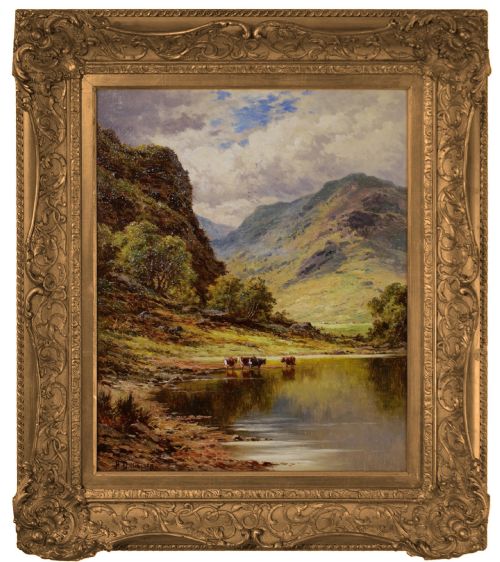
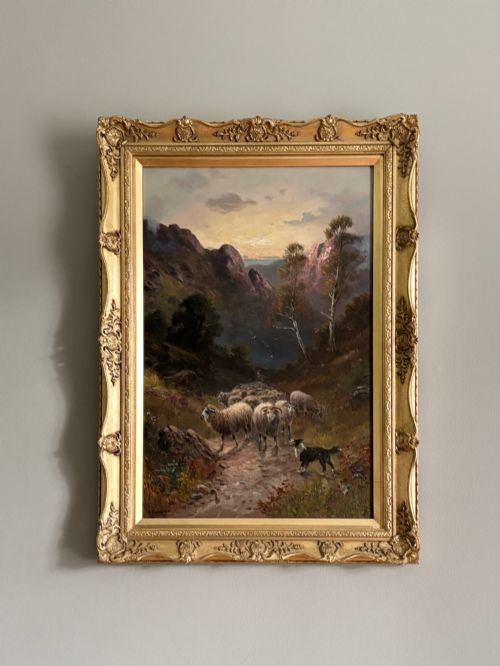
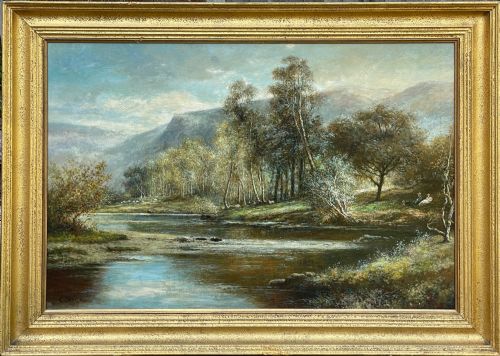
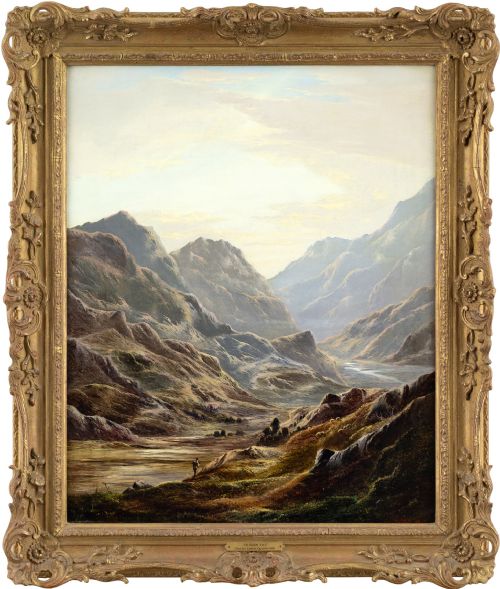
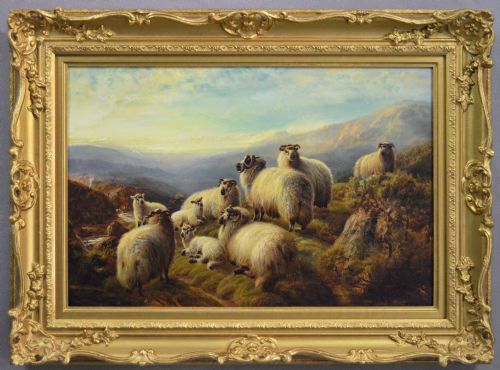
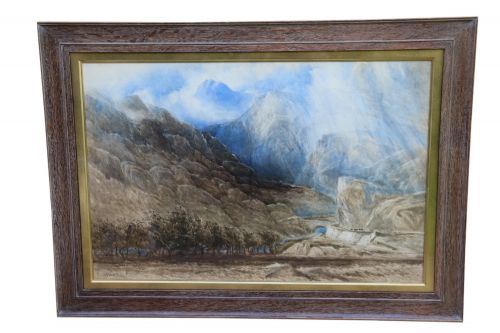
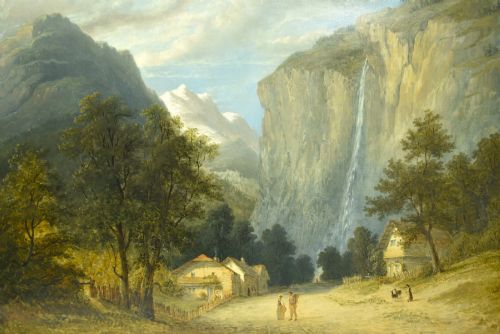
Victorian mountain landscapes span oil on canvas, oil on panel, and watercolour paintings originating across Britain, the Alps, and New Zealand. These works depict high peaks, rushing rivers, tranquil lochs, and rural grazing scenes featuring sheep or Highland cattle.
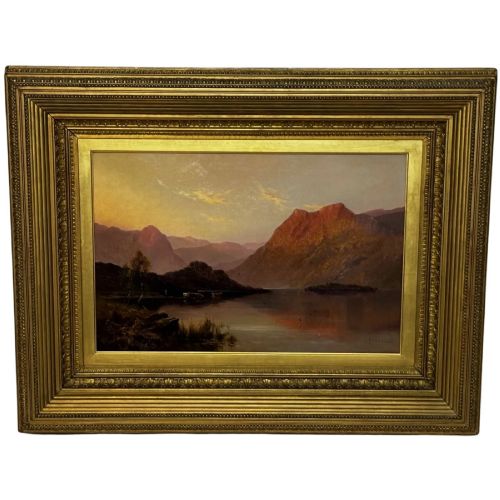
Buyers most frequently encounter oil paintings and watercolours housed within decorative giltwood and gesso frames. The majority date from the nineteenth century, reflecting the period fascination with sublime natural scenery and romanticism.
Materials and Technique
Artists painted primarily with oil on canvas or applied watercolour to paper, occasionally utilising wood panels for smaller compositions. Canvases received layers of pigment to build atmospheric depth, capturing changing weather over highland ranges and alpine valleys.
Finished works found housing in heavy wooden frames finished with moulded gesso and gilt highlights. These ornate surrounds complemented the dramatic scale of the mountain vistas.
Listings feature works spanning the nineteenth and early twentieth centuries, executed in oil on canvas, oil on panel, and watercolour on paper.
Quality and Execution
Quality rests in the handling of light, atmospheric perspective, and topographical accuracy. Master painters render distant peaks, rolling mist, and water reflections with convincing realism and tonal subtlety.
The sophistication of the framing also indicates quality, with original period giltwood and gesso frames matching the artistic ambition of the canvas within.
William Beattie-Brown·William Henry Earp·Alfred Fontville de Breanski Jr·Henry H Parker·Douglas Cameron·Charles Leslie·Robert Watson·Henry Martin Pope·William George Tennick·John Grenville Fennell·William Henry Mander·Sidney Richard Percy·Walter J Watson·J Barclay·John Syer·John Douglas Perrett·Karl Herrle·Thomas Lound·Stephen Enoch Hogley·James H Hulse·George Turner·Alfred de Breanski·Frederick Richard Lee·Thomas Sidney Cooper·Gustave De Brianski
The Victorian Mountain Landscapes Glossary
- Giltwood
- Wood carved and coated with gold leaf or a gold-coloured metallic finish. It forms the decorative border for many nineteenth-century paintings.
- Gesso
- A plaster-like mixture applied to wooden frames before gilding. It provides a smooth surface for intricate moulded ornamentation.
- Romanticism
- An artistic movement emphasising emotion, individualism, and the awe-inspiring power of nature. Mountain scenery served as a primary subject for this aesthetic.
- Watercolour
- Pigments suspended in a water-based solution applied to paper. This medium produced portable, luminous studies of lakes and mountain passes.
Victorian Mountain Landscapes: Frequently Asked Questions
Where were these painted?
Artists travelled extensively across the Scottish Highlands, Welsh mountain ranges, the Lake District, and continental locations such as the Swiss Alps and Italy. They recorded specific sites like Snowdonia, Loch Tay, and the pass of Llanberis.
Many compositions blend direct observation with studio convention to heighten the dramatic effect of the terrain.
How do I date a Victorian mountain landscape?
Dating relies on artist biographical records, framing styles, and canvas stamps or inscriptions on the reverse. Victorian examples typically exhibit nineteenth-century stretcher construction and characteristic pigment usage.
Subject matter and costume in accompanying figures also offer clues to the specific decade of execution.
Why do animals appear in these scenes?
Sheep and Highland cattle provided a sense of scale within vast wilderness compositions and reflected the rural economy of the highlands. Pastoral elements added a tranquil counterpoint to jagged peaks and stormy skies.
Artists often placed livestock deliberately to guide the viewer's eye through the spatial planes of the landscape.
How should I hang a framed oil painting?
Paintings require stable interior walls away from direct sunlight, heating vents, and damp conditions. Heavy giltwood and gesso frames need secure picture hooks anchored directly into wall studs or solid masonry.
Proper weight distribution protects both the structural integrity of the frame and the tension of the canvas.